
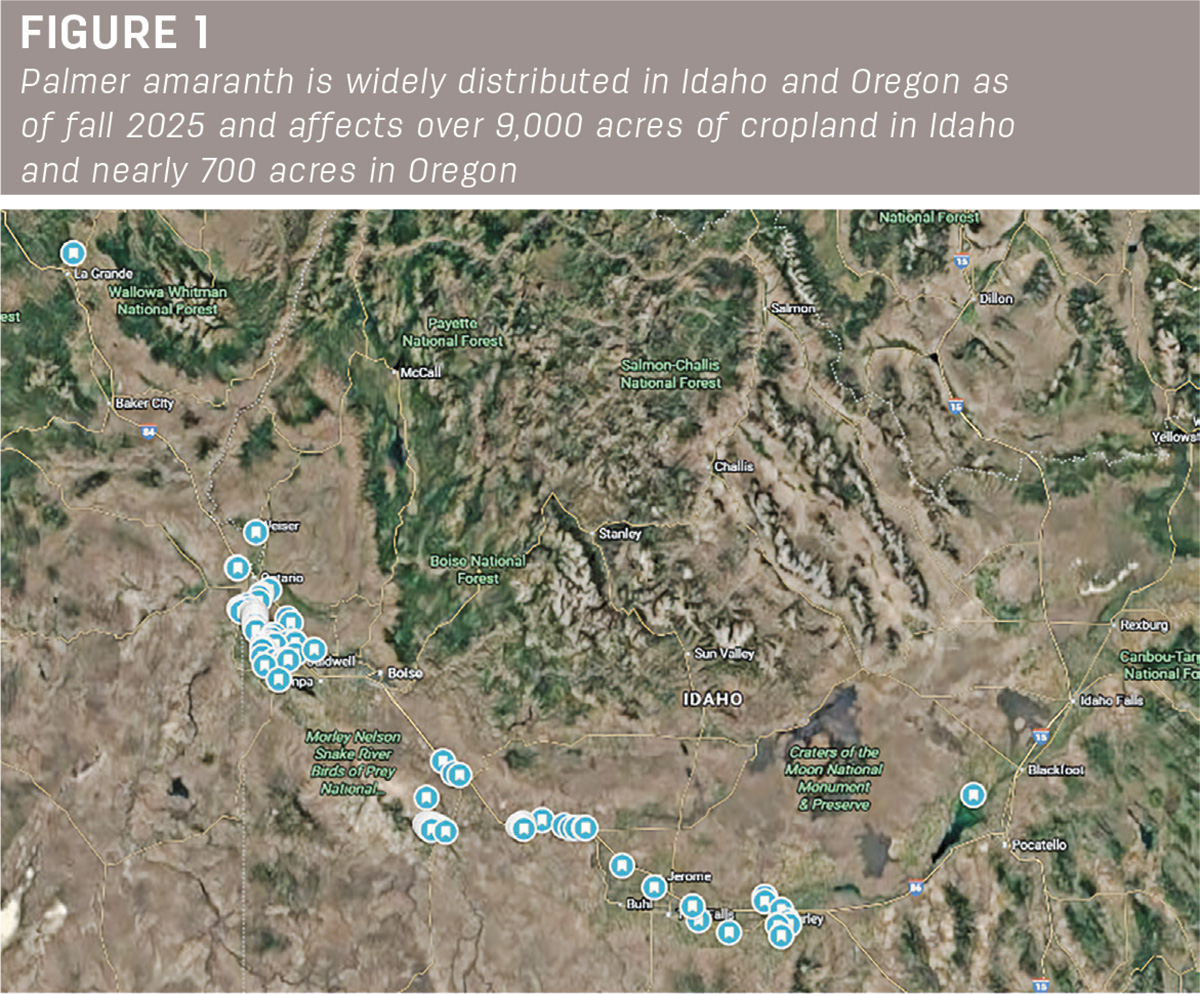
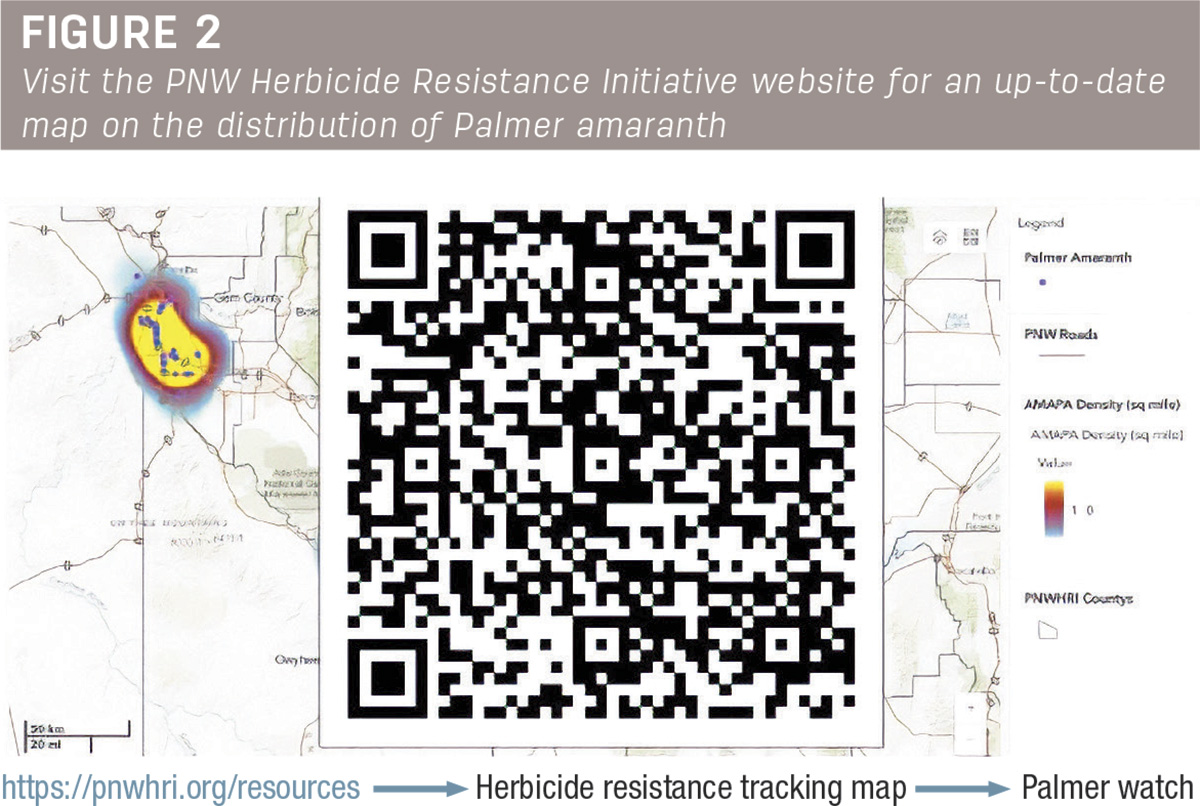
Palmer amaranth continues to pose a serious and growing challenge to crop production systems in the Pacific Northwest (PNW). As of the fall of 2025, there have been more than 160 Palmer amaranth detections in PNW, affecting 9,000 acres of cropland in Idaho and nearly 700 acres in Oregon (Figures 1 and 2). Its rapid growth rate, prolonged emergence pattern and resistance to multiple herbicides make it one of the most difficult broadleaf weeds to manage effectively. Recent research evaluating herbicide performance on Palmer amaranth populations collected from Idaho and Oregon highlights both the strengths and limitations of currently available control options for most Idaho crops.
Herbicide resistance in Palmer amaranth collected from the PNW
Since 2023, several Palmer amaranth tissue and seed samples have been collected and screened for resistance to commonly used herbicides in our cropping systems. We have confirmed that greater than 90% of all screened samples were resistant to glyphosate and group 2 (acetolactate synthase [ALS] inhibitors; e.g., rimsulfuron). In the case of glyphosate, some Palmer amaranth populations survived 16-fold higher than the field use rate, making it impossible for sugarbeet growers to control these weeds with glyphosate. We have also observed low frequencies of survival to 2,4-D, dicamba, metribuzin and mesotrione, and are in the process of confirming if the Palmer amaranth populations are indeed resistant to these herbicides.
Which herbicides are still effective for Palmer amaranth control?
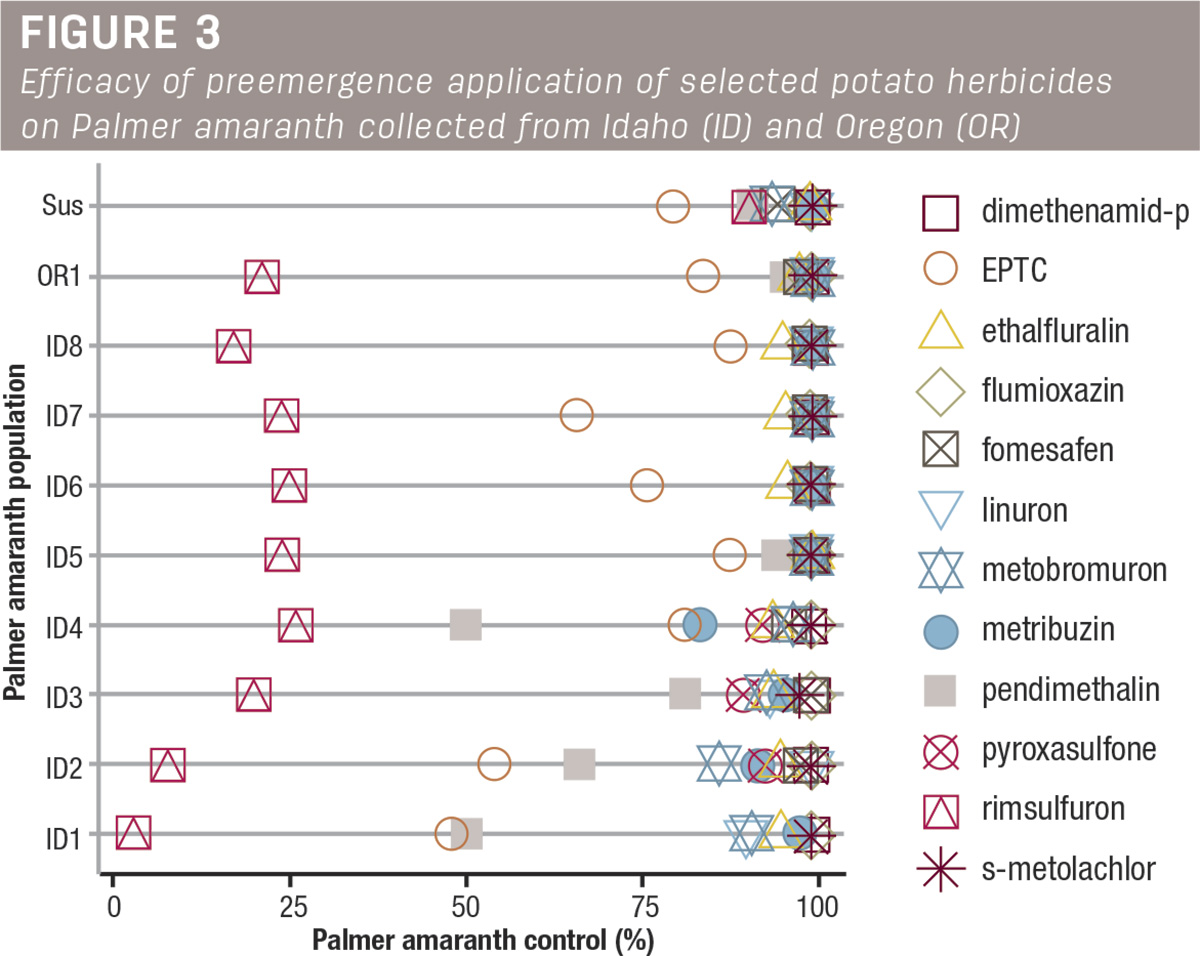
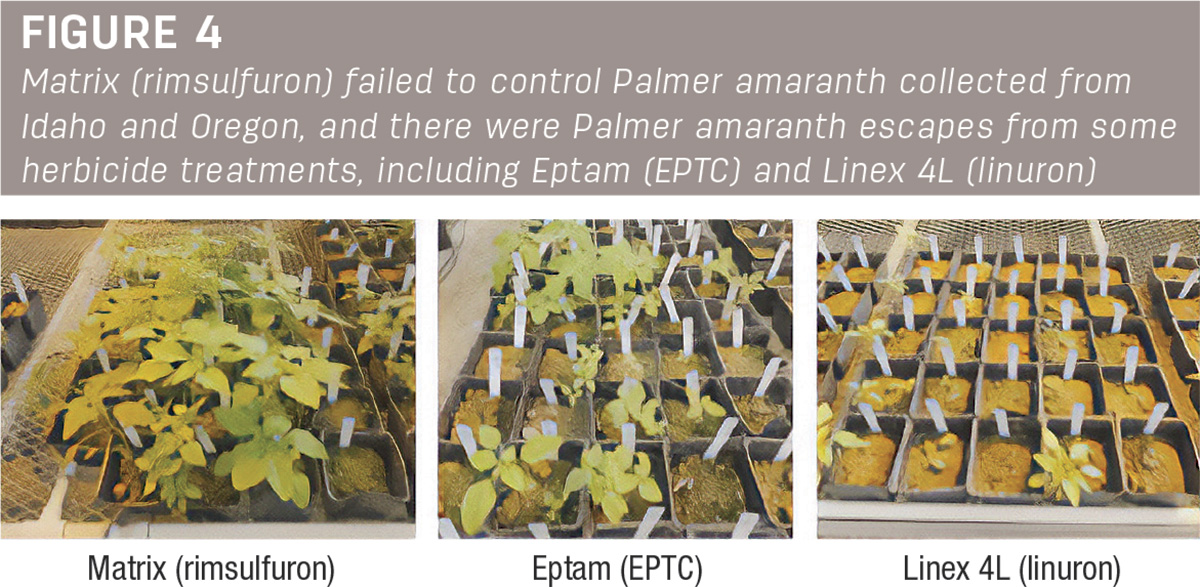
Results from preemergence efficacy trials at the University of Idaho demonstrated that the majority of preemergence herbicides used in Idaho crops are still capable of providing good early-season control of Palmer amaranth (Figure 3). However, few herbicides provided complete control. In other words, even some of the best-performing herbicides, such as linuron (Linex 4 L), left Palmer amaranth escapes that, under field conditions, need to be controlled to prevent weed seed production and resistance development (Figure 4). For example, in potatoes, we found that the best strategy to control escapes was to apply metribuzin at 0.5 pound active ingredient per acre when Palmer amaranth was less than 8 inches tall.
Why managing Palmer amaranth escapes is critical – sugarbeet case study
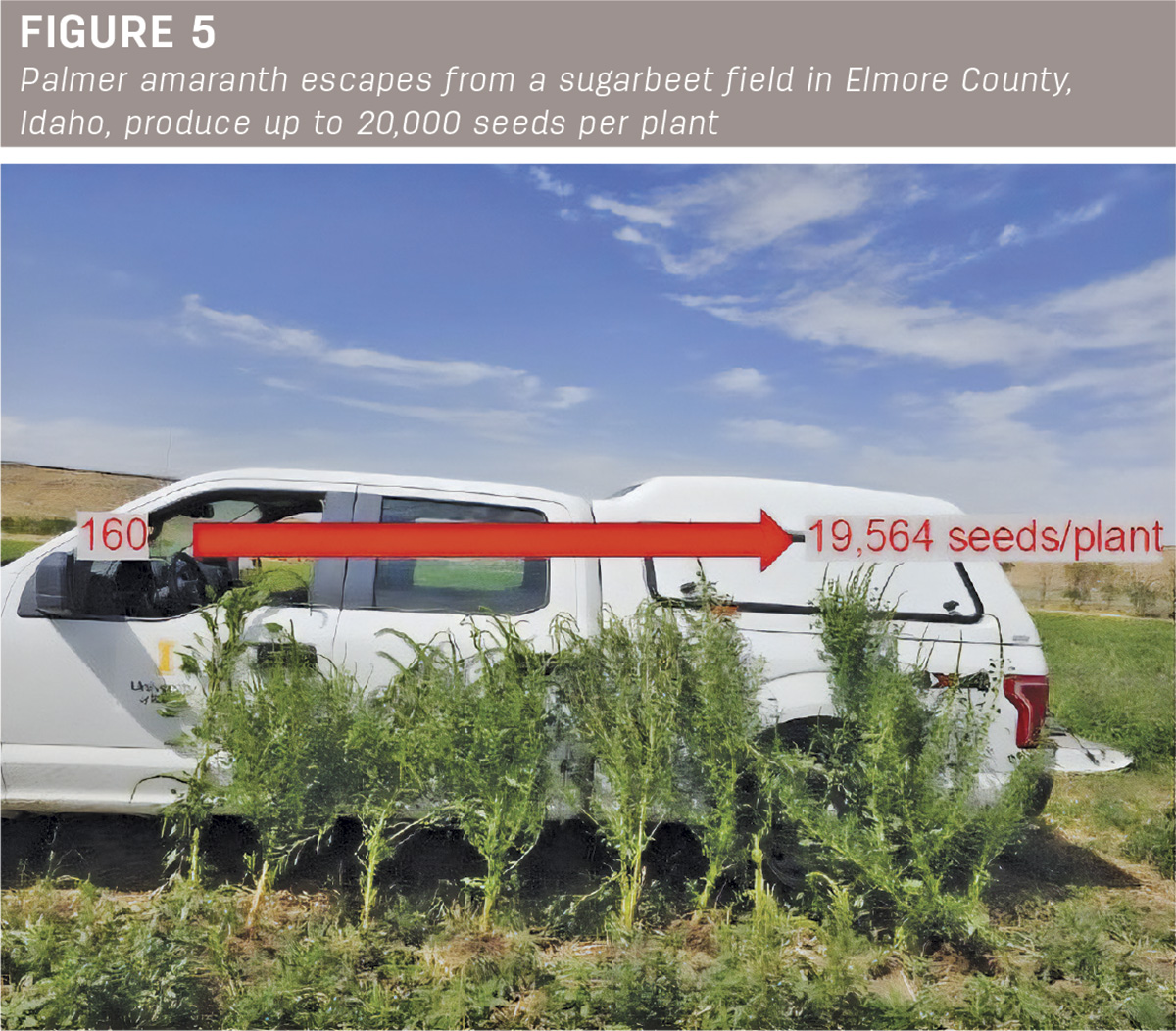
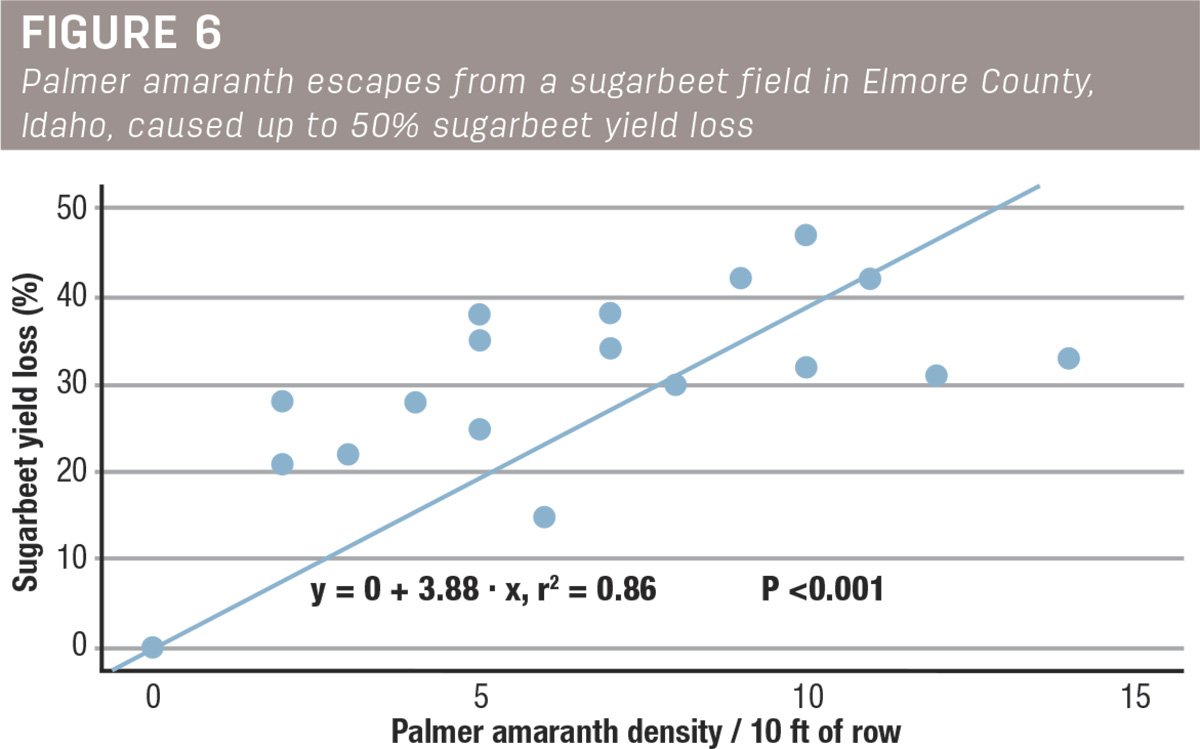
The presence of even a small number of Palmer amaranth escapes can have significant consequences for crops. Palmer amaranth grows rapidly above the crop canopy and aggressively competes for light, nutrients and water. Large plants can interfere with harvest operations and contribute substantial amounts of seeds to the soil seed bank. Palmer amaranth can produce up to 500,000 seeds per plant, and the seeds last, on average, for five years in the soil. Thus, one year of Palmer amaranth escape can undermine weed management efforts for many seasons. Consequently, effective postemergence control of Palmer amaranth escapes is essential for protecting short-term yield and reducing long-term Palmer amaranth populations in the field. In a case study in Elmore County, densities of Palmer amaranth escapes in sugarbeet were as high as 14 plants per 10 feet of sugarbeet row. These escapes were large enough to produce nearly 20,000 seeds per plant (Figure 5). We estimated up to 50% yield loss from these Palmer amaranth escapes at this location (Figure 6).
In conclusion, Palmer amaranth is spreading rapidly in the PNW, especially in Idaho. It appears that Palmer amaranth introduced into the PNW originated from states where this pigweed has already developed resistance to multiple herbicide groups. Herbicide resistance and efficacy screening results emphasize the importance of layered herbicide programs for Palmer amaranth management in crops. Preemergence herbicides play a vital role in reducing early-season infestations and lowering overall weed pressure. However, the consistent presence of escapes highlights the need for a planned postemergence follow-up. It is also important to emphasize that herbicides alone will not cut it against Palmer amaranth. We recommend an all-hands-on-deck approach, including rigorous field scouting, clean equipment practices and crop rotation, to outsmart this weed.