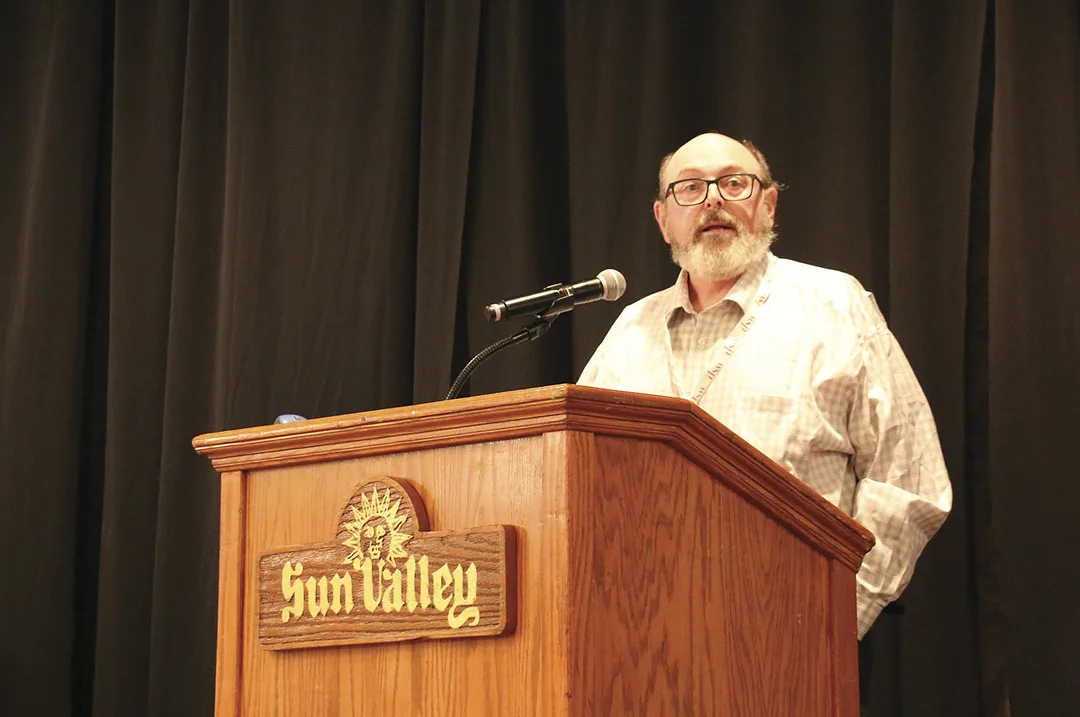
As water users look for ways to conserve water, Rob Sharpnack, state CREP manager for the Soil & Water Conservation Commission, outlined the benefits of Idaho's Conservation Reserve Enhancement Program (CREP) during the Idaho Water Users Association summer meeting in June.

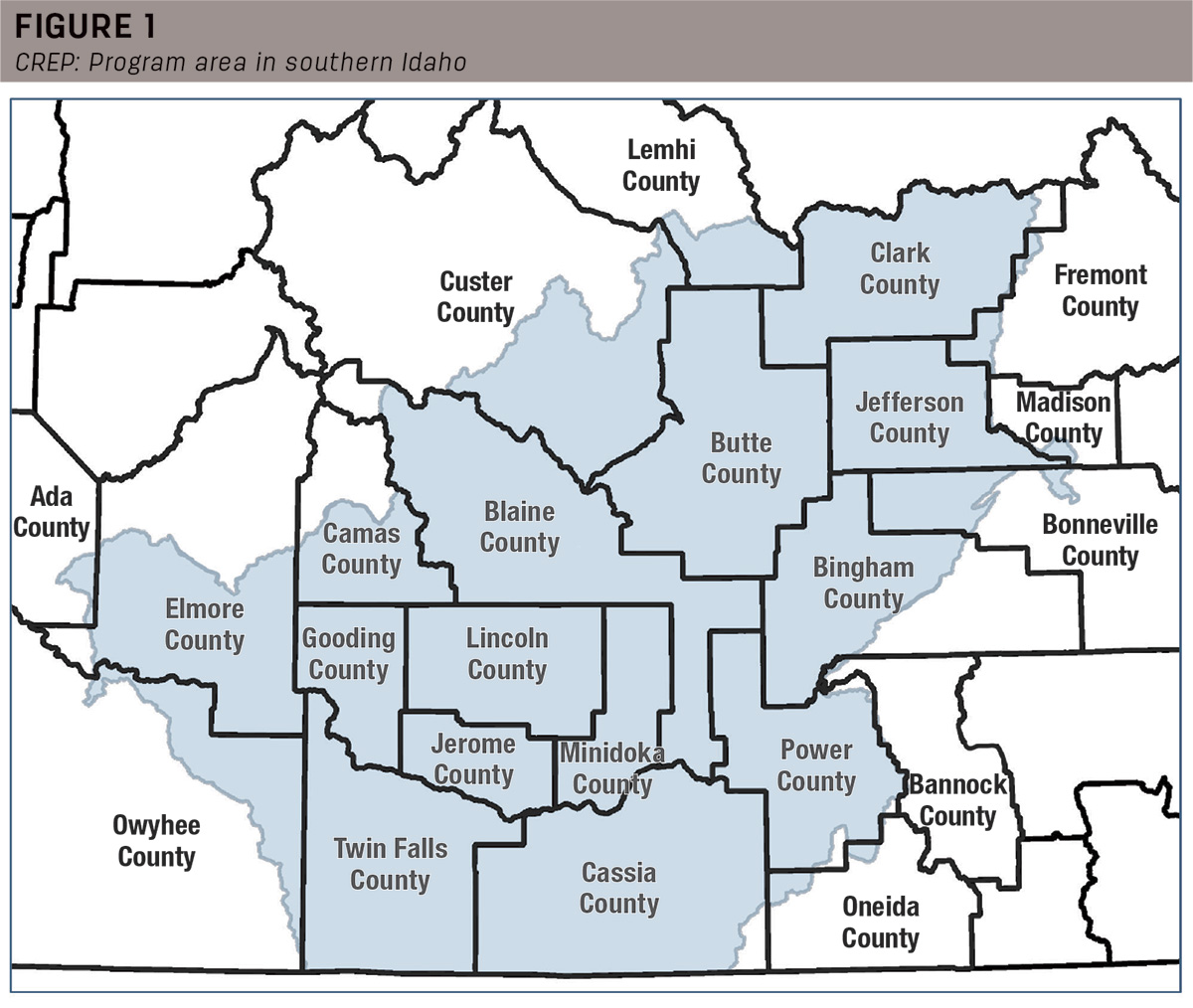
CREP is a groundwater savings program for the area of the Eastern Snake Plain Aquifer in southern Idaho. The Idaho CREP is a state and federal partnership program. The CREP area covers all or portions of 23 counties and 28 conservation districts in southern Idaho, with the goal to reduce irrigation groundwater usage and the demand on the ESPA. It also raises the local water table and improves spring flows, and improves water and air quality by protecting soil resources, provides habitat for wildlife, injects funds into the local economy and conserves energy.
According to Sharpnack, CREP has saved 624,546 acre-feet of groundwater since the inception of the program 20 years ago. “Right now, we have 123 contracts for 9,641 acres in southern Idaho, which works out to be about 19,283 acre-feet of groundwater savings per year. This number changes every year with more enrollments coming in and out of the program,” he said.
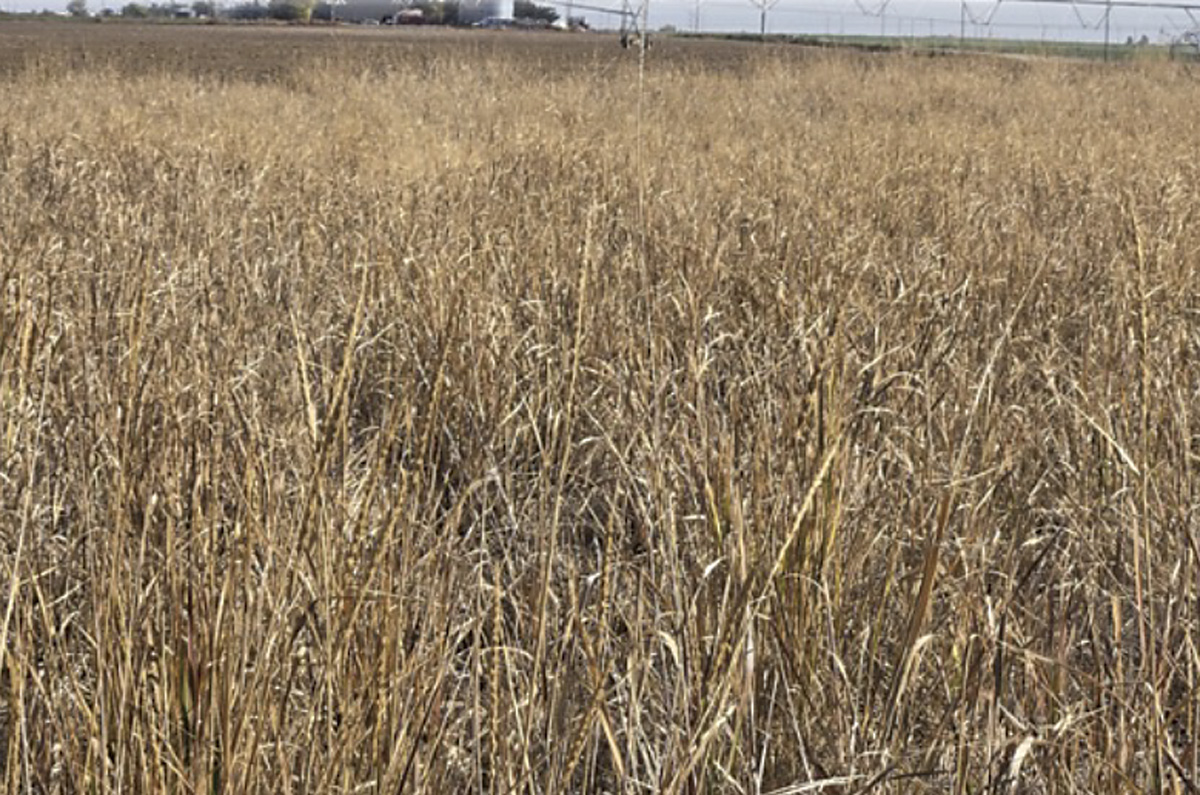
This is a fall field of Great Basin wild ryegrass in Minidoka County. Courtesy image.
This spring, the program held two open enrollments, increasing the program about 70% over its previous level. That breaks down to about 41 new contracts for about 6,700 acres across southern Idaho in five counties.
“Most of the contracts were in Bingham County, but we also had a sizable number of acres come from Cassia County this year,” Sharpnack said. “We’d like to take this program up to the cap of enrollment of 50,000 acres, which would be a savings across southern Idaho of 100,000 acre-feet of groundwater annually.”
Participants enrolling in the CREP program now enroll for a period of 10 years, instead of 15 years with the original contract. Something new to the program, Sharpnack said, is the Idaho State Legislature provides some of the funding for a match payment of up to 13% of the federal annual rental rate to the landowners enrolled.
Looking at the counties separately, Sharpnack pointed out that Gooding County pays the best, about $392 per acre per year, and the lowest payment is in Lemhi County at $62 per acre per year for a federal annual rental payment. State match payments of up to 13% of whatever the federal payment is. “This is a much better rate than what was originally started with the program 20 years ago,” Sharpnack said. “The average payment was 130 dollars per acre per year across the program. We’ve gotten a lot more competitive with land rental rates.” In addition, there is now a sign-up incentive payment (SIP) from our federal partners of 32.5% of the annual total federal rental payment for new participants (acreage) enrolling in CREP.
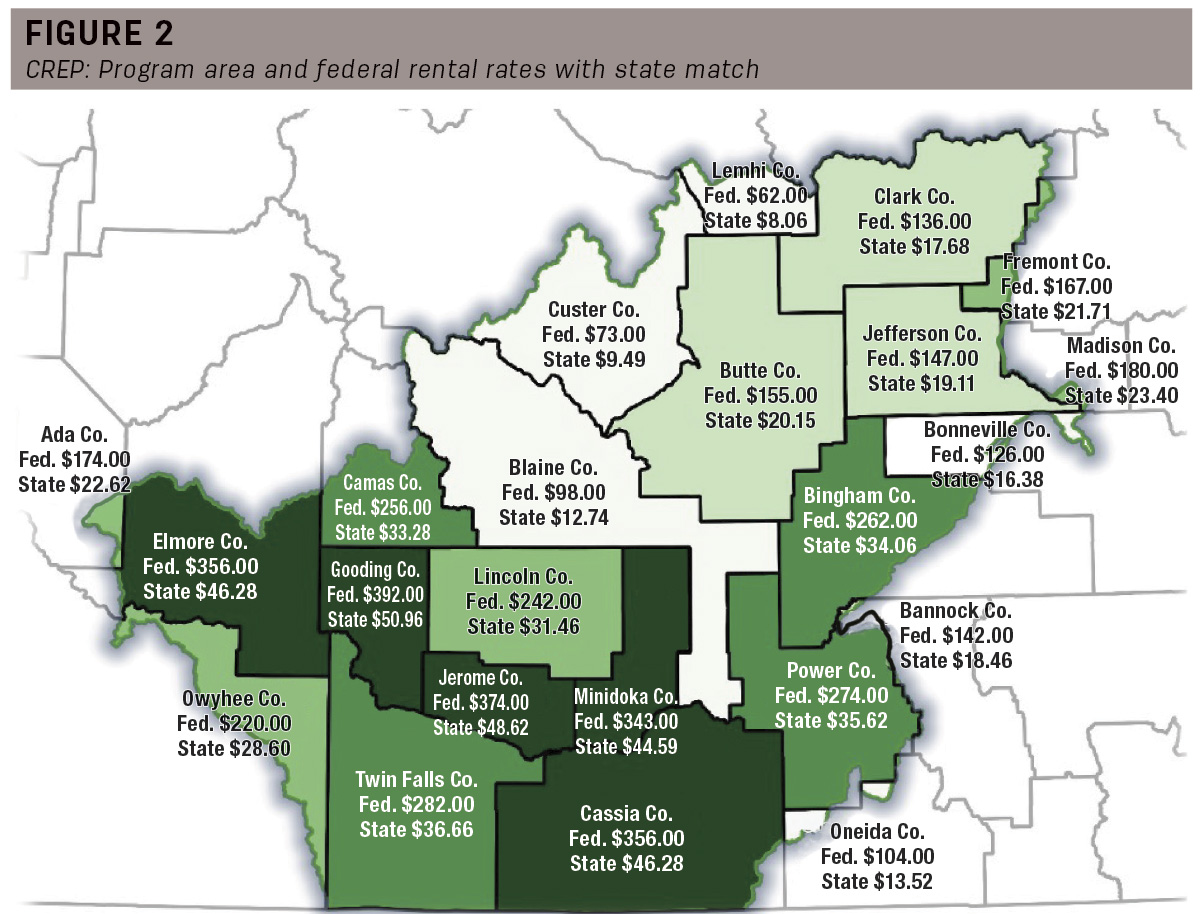
Using Cassia County as an example, Sharpnack explained that if a landowner were to enroll 100 acres in CREP, with the federal annual rental payment with a SIP and state match payment combined annually, it would be about $416,350 paid over the 10-year contract. “That’s not too shabby,” he said.
In conclusion, Sharpnack said, “CREP is a valuable tool for groundwater conservation in southern Idaho. Will it work for everybody? No. It’s got to work for your operation; it’s got to work for you. You’ve got to be able to put in the time, as it’s not a complete set aside deal or completely hands off.”
Frequently asked questions
What happens to water rights associated with land enrolled in CREP?
Water rights associated with land enrolled in CREP are held for the duration of the contract. During that time, the water rights cannot be used, sold, traded, gifted, transferred or banked. Once the contract ends, the water rights return to the landowner under the conditions and regulations in place at that time.
Does my land qualify for CREP?
To be eligible, cropland must be physically and legally capable of being irrigated under normal conditions at the time of enrollment. In addition, the land must have been irrigated using groundwater in at least four of the previous six years, with groundwater use exceeding one-half acre-foot. You must be able to show a cropping history for the land to be enrolled. The land must be owned or leased for at least one year prior to enrollment to be eligible.
Is there a minimum or maximum field size for enrollment?
There is no minimum acreage requirement. Some CREP contracts are as small as 1 acre. While there is no specific maximum acreage limit, enrollment is generally constrained by the federal CRP payment cap of $50,000 per year per participant. This cap includes annual rental payments as well as sign-up incentive payments. Some landowners are considering removing end guns, set aside corners or other marginal land as a feasible option for voluntarily reducing groundwater consumption.
What is the enrollment process?
Producers begin by scheduling an appointment with their local Farm Service Agency (FSA) office, where staff determine eligibility and complete the initial paperwork. The application is then reviewed by the Idaho Soil and Water Conservation Commission and the Idaho Department of Water Resources (IDWR), which verifies water rights and program eligibility.
If approved, participants complete state paperwork, including an Agreement Not to Divert Water, a Certification of Identity and Authorization to Release and a Conservation Plan. Once these documents are signed and returned, FSA completes the enrollment process.
After enrollment is finalized and a contract start date is established, participants work with program staff to develop a seeding plan for the conservation cover that will be established on the enrolled acreage.
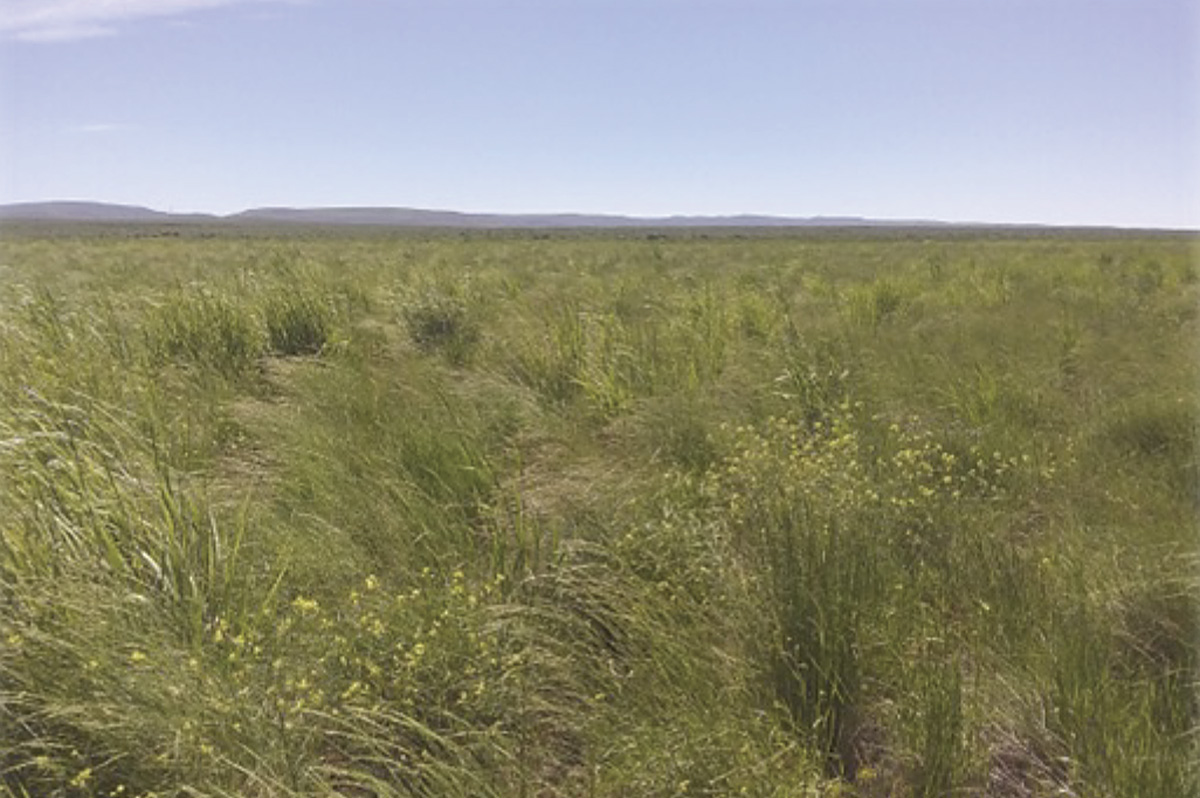
This is a CREP field in Twin Falls County. Courtesy image.


.webp?height=auto&t=1783636475&width=285 "63802-Thomas-GPS-equipment--Automated-Magnum-Tractor--Matt-Skinner-photo(1).jpg")