Billy Wolfe is worried. Or perhaps “worried” is too strong a word for someone as unflappable as Wolfe, but he’s staring down the 2026 summer farming season, and he knows this year is going to be difficult, hot and dry. So very dry.

Wolfe, whose family has been farming these great United States as far back as 1812, was born and raised on a dairy farm in Gooding. These days, you’ll find him tending to his alfalfa crops south of Mountain Home in Elmore County, nurturing the sprouts that will feed Idaho’s dairy cows, which will in turn feed Idaho.
But this season, Wolfe will be growing less alfalfa. Before the new year, faced with dual financial and environmental headwinds, he made the painful decision to dry up 450 acres – or about half a square mile – where he’ll plant nothing and consequently reap no income, but by God, the property taxes will still come due.
This excruciating choice looks like wisdom (albeit grim wisdom) as Idaho comes off the warmest winter since the middle of the Great Depression. In April 2026, Idaho Gov. Brad Little signed an emergency drought declaration for all 44 of Idaho’s counties, reflecting the dire snowpack levels, particularly in southern Idaho, where Elmore County sits.
“Everything we do revolves around water,” fellow Elmore County farmer Jeff Harper says as he prepares for his 46th crop. “More and more over the last 10 years, I’ve done countless things to save water and stretch it as far as I can make it go.”
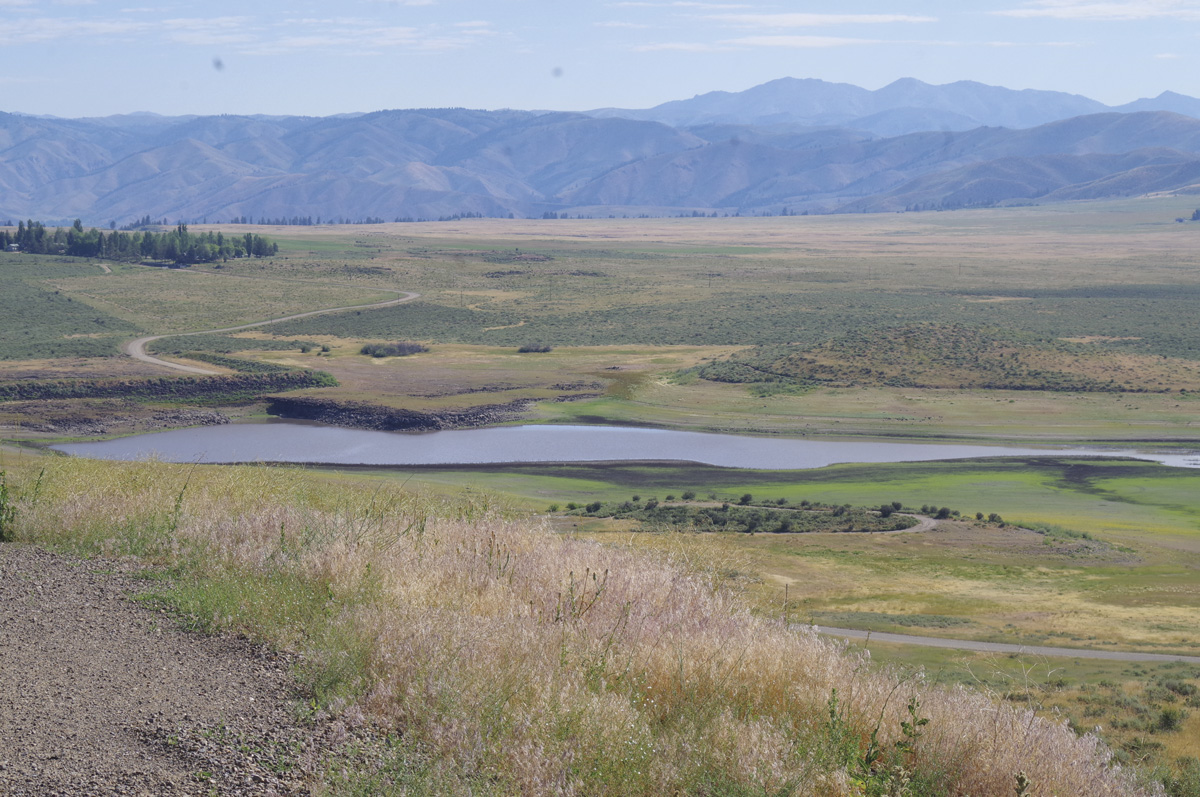
Little Camas Reservoir is the uppermost facility in the Mountain Home Irrigation District system. The county is working to build a pump station at Anderson Ranch Dam to pump storage water uphill into Little Camas. Image courtesy of Elmore County commissioners office.
In Elmore County, water troubles are nothing new. From the time that settlers first set their sights on the dusty Mountain Home Plateau, this tight-knit community has spent more than a century trying to tackle this problem – getting Idaho’s most precious resource into the hands of its residents.
In the late 1800s, Mountain Home leaders formally petitioned the federal government for assistance getting water to its farmers, ranchers and citizens. Through the years, multiple large-scale projects were developed, studied and approved. But time and again, promising projects met their untimely end.
As surface water reclamation projects failed to materialize, farmers and residents turned to groundwater as a necessary means to fill the gap. By the 1970s, aquifer levels were already in decline.
Today, the Mountain Home Plateau aquifer loses roughly 30,000 acre-feet per year more than nature puts back – a depletion rate of nearly 2 to 1. Wolfe's wells south of Mountain Home started at 580 feet and now extend down 790 feet just to reach water. At Cinder Cone Butte, some wells have been lowered as many as 400 feet. Nearby, Harper watches his deep wells start each spring at 2,000 gallons a minute, only to drop off by as much as 30% come fall. "The poor aquifer is going to take a hammering this summer," Harper warns.
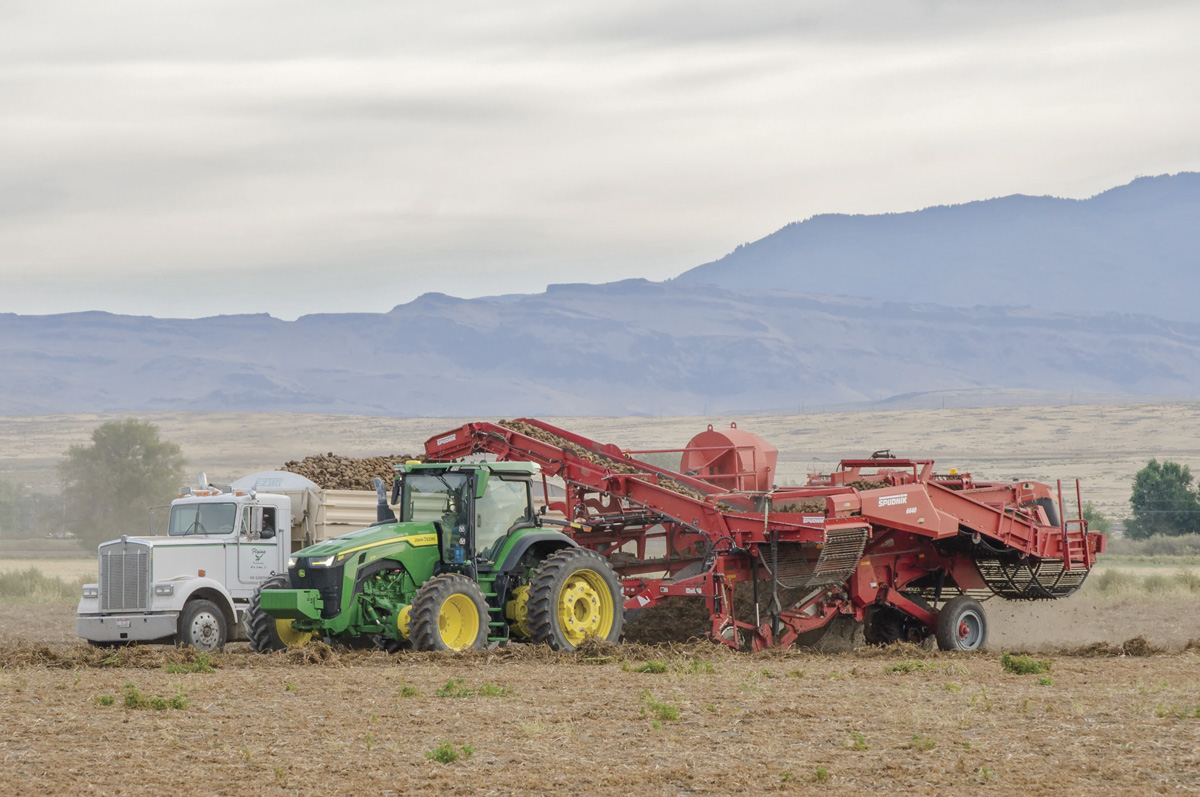
Harvest is in progress at Jeff Harper’s farm, Flying H Farms. Image courtesy of Flying H Farms.
The status quo spells disaster. But over the past several years, Elmore County commissioners have made solving the region’s century-old headache one of their top priorities. And for the first time in a very long time, there’s reason to have hope.
In 2019, Elmore County secured a permit to divert 200 cubic feet per second (cfs) from the South Fork Boise River through the Mountain Home Irrigation District's canal system during flood operations to replenish the aquifer and provide supplemental irrigation for farmers like Wolfe and Harper. In 2025, the county secured a separate permit allowing them to pull an additional 20 cfs from the Snake River, with an operational target as early as 2031. With the Anderson Ranch Dam Raise on the horizon, county commissioners have made the case that any dam raise should include water for Elmore County.
“We’ve currently asked for an additional 10,000 acre-feet of water from the 29,000 acre-feet of new storage that they’re creating on the Anderson Ranch Dam Raise,” said Elmore County Commissioner Bud Corbus. “If we could get this water, we could pump over a much longer period of time, rather than just a few months in the spring when there’s flood water. This would provide a more consistent water source and save taxpayers money.”
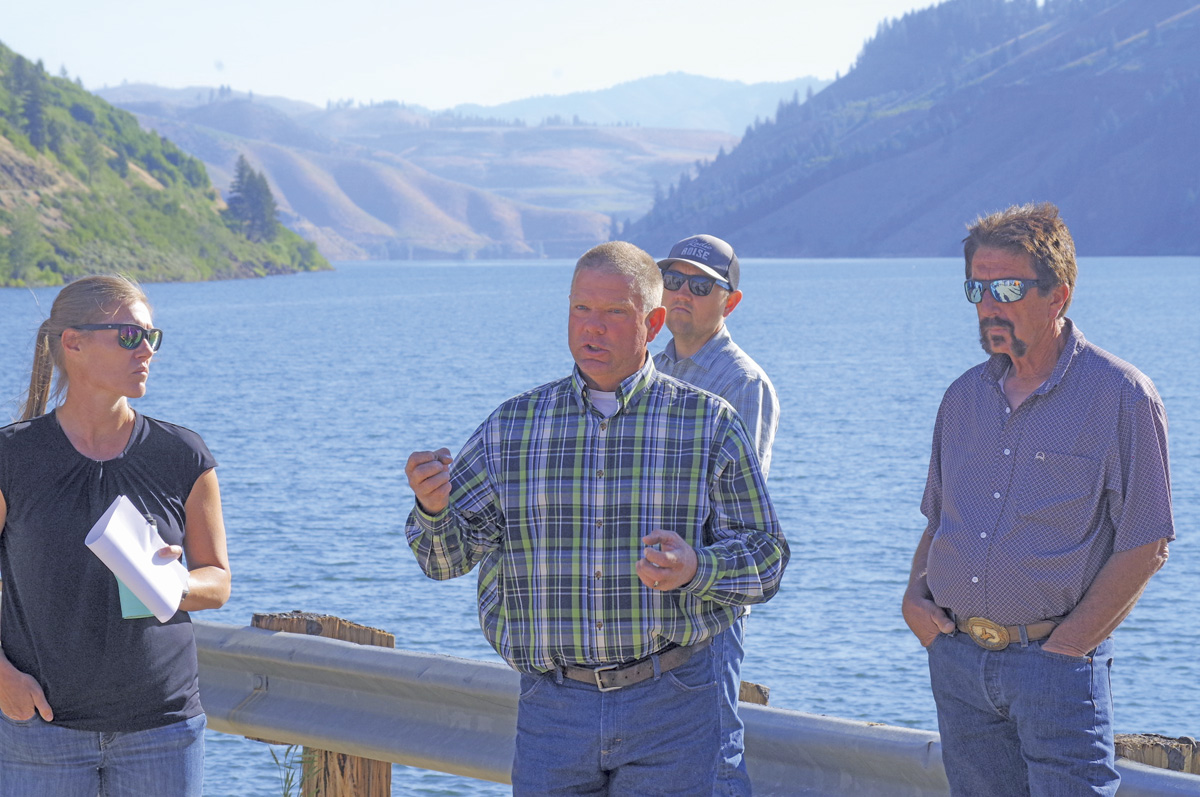
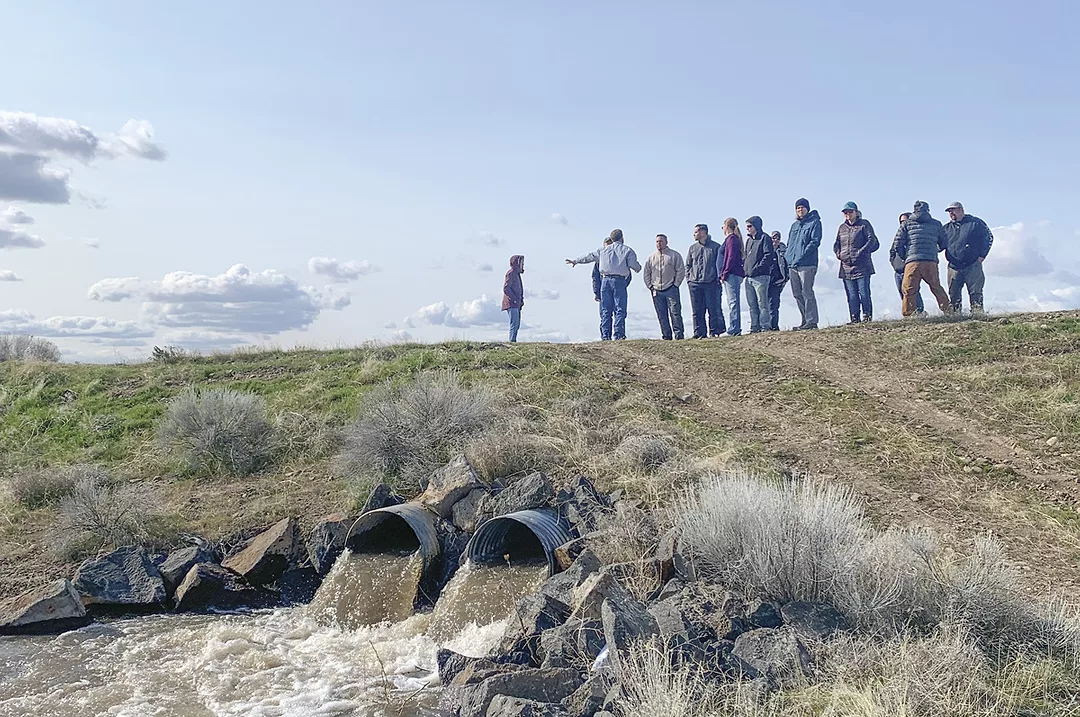
Elmore County Commissioners Bud Corbus (center) and Al Hofer (right) are on the South Fork Boise River Diversion Project tour at Anderson Ranch Dam. Image courtesy of Elmore County commissioners office.
This race against the clock has caught the attention of the Idaho Department of Water Resources. In March 2026, after the Mountain Home Air Force Base’s surface supply project was substantially completed, the Idaho Water Resource Board determined there were enough resources available to support the Mountain Home Plateau Aquifer more broadly. The board voted unanimously to create the Mountain Home Plateau Aquifer Regional Water Sustainability Program and commit $8 million from the state's water management account to fund it. The program establishes a dedicated state funding pathway for aquifer stabilization work in the region – the first of its kind for Mountain Home outside of mandated mitigation.
"We've secured real water rights, invested in data and shown the state that this aquifer can't wait,” said Corbus. "The fact that Idaho is stepping up with a dedicated program and real dollars before we're in full-blown crisis territory can help us tackle this generational problem before it's too late."
The $8 million isn't a finish line. Full implementation will take tens of millions more and construction of the infrastructure to move surface water into the system. But the permits are in hand and the funding pathway is real. For farmers like Wolfe, who understands that dependable irrigation means plentiful crops, and plentiful crops mean full bellies, this kind of progress matters.
"If I raise a crop of hay and it feeds a cow that produces a gallon of milk, then there’s food on the table for the kids,” Wolfe says. “People already talk about 5-dollar gas – but what about a 12-dollar head of lettuce or 12 dollars for a jug of milk? If farms lose their water, that can happen. Without water, it’s all for naught.”