If you’re looking for a quick way to lower your “feel-good barometer,” just read a forecasting article or sit in on a conference session for almost any ag industry outside of cattle. The mood has been somber for a while now – and for good reason.

Inflated prices across nearly every input are squeezing agriculture. Fertilizer, equipment, financing, land – you name it – all come with hefty price tags that are steadily eating away at producer profits. And if that weren’t enough, volatility – the industry’s angry stepsister – shows no sign of leaving.
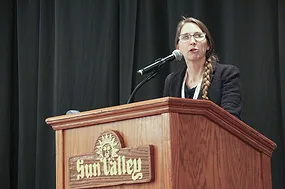
At the Idaho-Oregon Grain and Oilseed Convention in November, I attended Dr. Matt Roberts’ keynote address, titled “Surviving and Thriving in an Ever More Volatile World.” Roberts, a former Ohio State University professor and senior analyst for grains and oilseeds at American Ag Credit Association, is recognized for his expertise in grain and energy markets. And he didn’t mince words: “Volatility is never going away,” he said.
Like any good economist, he turned our attention to some graphs to illustrate his point. Starting in the mid-2000s, global events like droughts in Australia, Canada and Russia dramatically reduced global grain inventories. This triggered unprecedented price swings around 2007-08, and high volatility has persisted in the markets ever since.
Layering onto that, over the past century, the share of the world’s population living in extreme poverty has fallen dramatically. Extreme poverty is defined as $1.90 a day or less in purchasing power. In 2000, 33% of the global population lived in extreme poverty, and in 2015 it was under 9%. The past 30 years, Roberts said, have produced a global explosion of wealth unlike anything the world has ever seen.
That wealth fundamentally changes how people eat. Once basic calorie needs are met, food choices shift toward quality, preference and taste – not necessity.
Wealth also reshapes societal priorities. Concerns like environmental impact, animal welfare and food systems become more important. Political volatility – from deglobalization and populism to shifting trade policies and less predictable government support – also add to the weight. Add in declining global birth rates, rapid spread of misinformation via digital means and rising inflation and land values, and uncertainty becomes the defining feature of modern agriculture.
Oof. That’s a lot to digest.
Now, before you put this magazine down and want to hang up your hat, Roberts did offer some ways to actually thrive (yes, I repeat … thrive). And it’s not by running your business harder but by running smarter. Here is what he said:
- Thriving is who does the hardest work. It’s not determined by who works the hardest.
- If you can’t do it at your current scale, expansion won’t help you – it will hurt you.
- Office work matters a lot. Roberts recommends 20 to 25 hours per week of focused, concentrated time.
- Tough times on the farm are going to be trying times at home. Work on your marriage.
- Don’t try to produce your way out; manage your way.
I was hesitant to write on this topic because the last thing producers need is more weight on their shoulders. Still, understanding how we got here matters – because with every challenge are opportunities. They just might require thinking and operating a little differently.