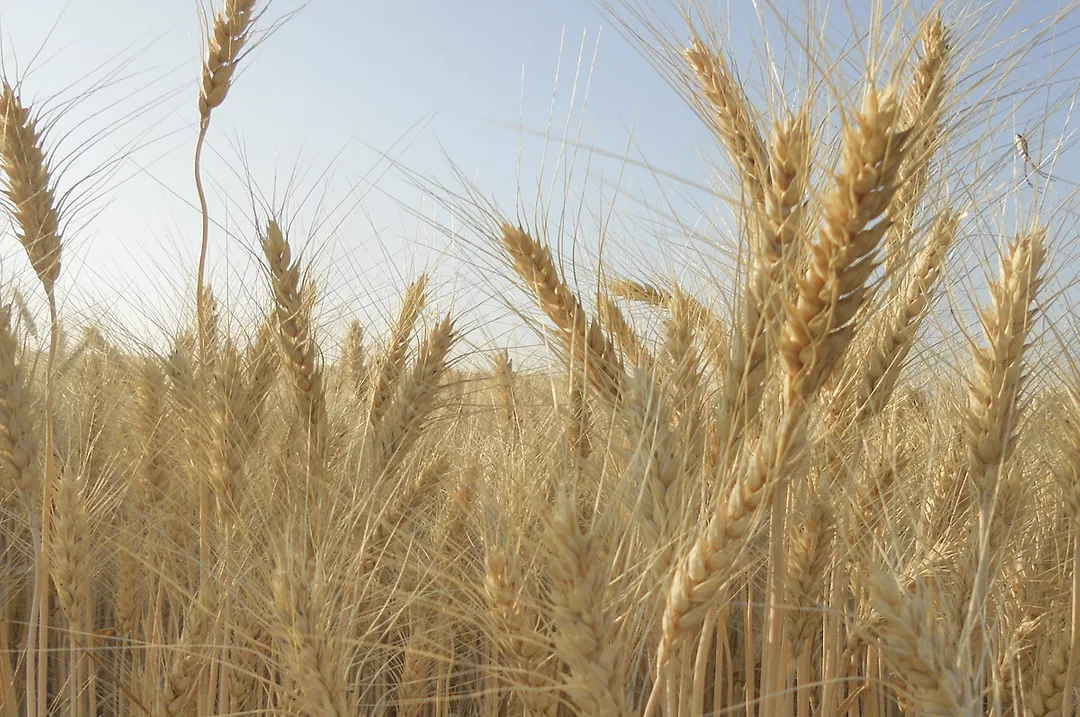
Genetically modified (GM) crops grown in the U.S. include corn, soybean, sugarbeets, canola, cotton, alfalfa, papaya, apples, potatoes, summer squash and pink pineapple. Following a decision released by the USDA last August, wheat could be joining that lineup within the next decade.

HB4 is a drought-tolerance trait that originated in sunflowers and has been successful in soybean. It has also been integrated into wheat in South America. Bioceres Crop Solutions, the company that developed HB4 wheat, has now received regulatory approval for cultivation for research purposes and consumption in the U.S. and will likely pursue approval for commercialization in the U.S. and other nations, including some of the U.S.’s export partners.
A slow start …
Though regulatory hurdles are cleared for HB4, U.S. farmers will not be growing GM wheat within the next year, or probably even five. It must first be bred into a U.S. wheat variety.
“It’s not a trivial process,” says Idaho Wheat Commission (IWC) research consultant Dr. Jim Peterson, of inserting a GM trait into a new crop. “Once you’ve got it into a recipient wheat plant you can work with, then you can begin conventional breeding with the trait.”
A program in Colorado is now in the early stages of the process, but conventional breeding takes time. “They have made some early crosses,” Peterson says, “but even if you fast-track developments, it will be a number of years.” To breed a spring wheat variety and bring it to market commonly requires six to eight years at minimum, and a winter wheat variety, eight to 10 years.
“There are few wheat varieties used as recipients for GM traits due to difficulties in regeneration from tissue culture,” says Peterson. Then, too, he says, breeders must consider other important traits that the HB4 trait could affect. The result must contain the agronomic and end-use traits demanded by U.S. producers and consumers.
… but a long reach
For agronomic reasons, HB4 wheat is unlikely to be planted in Idaho. Cory Kress is a dryland grower in Power County and District 5 Idaho wheat commissioner. “It’s really only beneficial in places that yield in the 20 to 30 [bushel per acre] range,” he says. “The benefit all but disappears when you get over 50 to 60 [bushels per acre].”
This means dryland producers on the High Plains will probably be most interested in HB4 wheat, which places the target for breeding efforts on hard red varieties. “Hard red winter wheat is the most widely grown class of wheat in the U.S. and is widely grown in the Great Plains,” says IWC Executive Director Britany Hurst Marchant.
But even if drought-resistant wheat never ventures beyond the High Plains, its effects likely will. Currently, nonuniform weather patterns across the U.S. stabilize the total wheat crop. “There is concern that a drought-tolerant wheat could upset the balance, increasing wheat supplies and driving down prices,” says Hurst Marchant. Another question is whether yields will impact protein levels, an important consideration for end-use quality in hard red varieties.
Whatever the direct impact of HB4 wheat, the precedent may be the most important aspect for Idaho ag. “Once we have approval to use GM technology in grain, it won’t stay in hard red wheat,” says District 4 Idaho Wheat Commissioner and U.S. Wheat Associates Chairman Clark Hamilton, a producer in Bonneville County. “It opens the door.”
Public perception
The big question is whether consumers are ready for that door to be opened. “The public has accepted [GM technology] in some areas, such as the medical field,” says Hamilton. Synthetic insulin, for example, has been produced by recombinant bacteria since the late 1970s.
But skepticism around genetic modification in food crops remains. “Just because USDA has approved it for the U.S. doesn’t mean our markets will accept it,” says Peterson. A 2016 Pew Research Center report stated that about a sixth of Americans “care deeply” about GM technology in food production, with a majority of those holding a negative view of GM crops. The same report showed that 39% of Americans believe GM foods are less healthy than non-GM foods. A 2019-21 study based on social media mentions yielded similar numbers.
“I think GMO technology is 100 percent safe, but public perception is reality,” says Kress. “Right now there is already a lot of questioning around our food supply – I wonder if now is the time for something like this.”
Protecting the export option
Pushback in the domestic market is not the only concern. About half of Idaho’s wheat – and half the nation’s – is exported. “I can’t overstate how important the overseas market is,” says Hamilton. Trade partners have come to expect consistently high-quality grain, and not all of them look favorably upon GM technology.
Mexico, the Philippines, Japan and China together purchased about half of the U.S’s 2024 wheat exports. Although some trade partners are open to importing GM food and feed, both Japan and China are expected to push back on purchasing GM wheat.
So it may benefit Idaho growers to wait and watch while Argentina pioneers this technology. “Let’s see how consumers around the world respond to what’s being done in other countries,” says Kress. “I don’t think there’s any harm in tapping the brakes a bit. It’s not a bad thing to be behind.”
That goes for other wheat sectors in the U.S., too. “By not introducing the trait into soft white wheat, we can preserve those export markets if there is pushback on it,” Hurst Marchant says.
Are we there yet?
The issue, says Hamilton, is about “balancing staying up on technology and being competitive versus maintaining those overseas markets.” Before growers move ahead, they will need destination markets to set the tolerances for contamination.
Another big issue will be infrastructure to maintain separation between GM and non-GM wheat, as the latter will likely maintain a niche market. This means everything from planting equipment to elevators to mills, as seen in the organic market.
Hurst Marchant says the growers she’s talked to seem to have mixed feelings about the development. “The more you talk about it, the more circular the conversation goes,” she says. While many are optimistic – and eager to compete with corn and soybeans – they are also cautious.
“I think GMO food is safe. It’s a way to feed the entire world with less chemicals, less erosion and less land,” says Kress. “I’m not anti-GMO in any way, and I think it’s perfectly safe, but I think we need to let the consumer tell us when it’s time instead of trying to dictate to the consumer.”
“I have no fear of raising GM wheat, no fear that it is unhealthy,” says Hamilton. “If the market demands it and I am confident that I am growing a quality product, yeah, I’d grow it. But I have enough respect for the people I sell wheat to, to listen to their concerns."