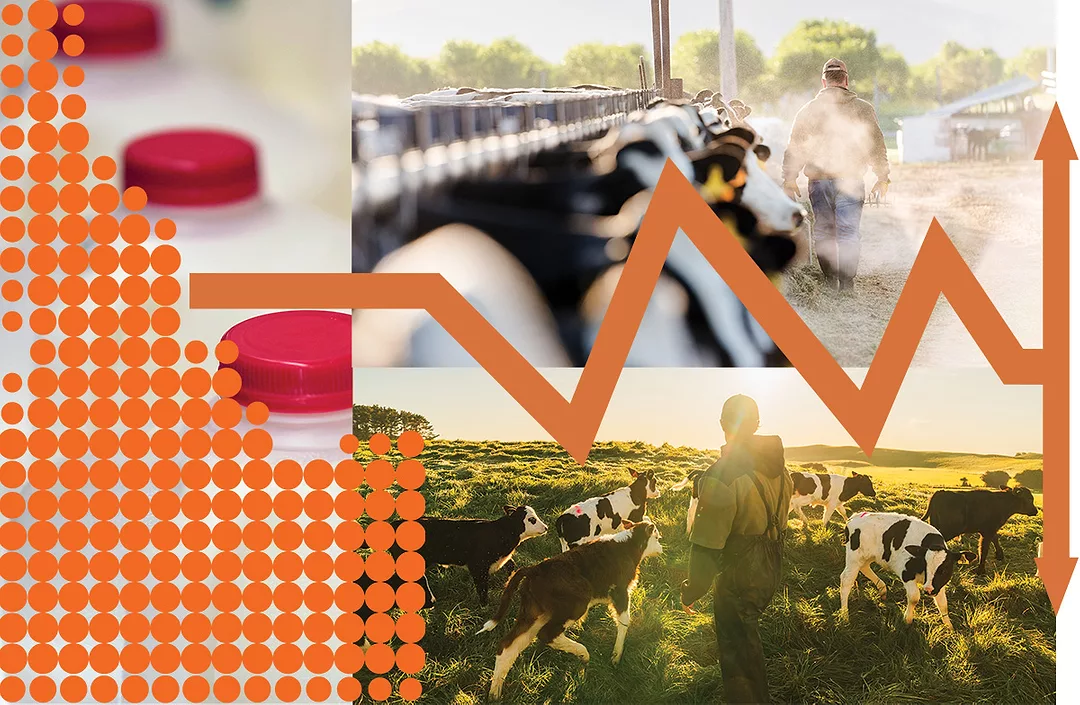
January is the time when many people look back before they look ahead. One useful approach is not to summarize the year in broad terms but to sort out which changes actually mattered. For Idaho dairies, 2025 brought pressures from both outside and inside the operation. Policy uncertainty, trade friction and shifting dairy processor expectations shaped the scenario, but the most lasting effects may come from decisions made in barns, feed centers and breeding programs.



What defined the year was not a single turning point but a set of adjustments that may have changed long-standing assumptions. Some changes were planned; others arrived whether producers planned for them or not. Yet all left producers with new questions heading into 2026.
This article doesn’t offer conclusions or recommendations. It highlights a few areas where 2025 shifted the conversation and raises reflections worth considering as a new year begins.
Beef-on-dairy
Beef-on-dairy has shifted from added value to a structural part of herd management. Four years ago, beef-on-dairy was primarily used to improve the value of calves already leaving the dairy, with day-old beef-cross calves selling around $550, contributing roughly $1.40 per hundredweight (cwt) of milk. In 2025, the picture looked very different. In some southern Idaho markets, day-old beef-cross calves were selling around $1,400, translating to approximately $3.60 per cwt for some herds.
Today, beef-on-dairy is a breeding strategy that changes how herds are managed, not just how calves are marketed. Across Idaho, many operations bred 60% to 65% of dairy cows to beef, and some moved higher without compromising replacement needs. The financial impact was no longer marginal; values that once seemed unlikely became part of routine planning.
But focusing only on calf price misses the more meaningful shift. Producers point to broader reasons for making beef-on-dairy a core strategy, including reducing exposure to raising heifers that may not be needed, lowering pressure on youngstock housing and labor, and aligning with more stable market demands rather than market swings. In other words, beef-on-dairy moved from adding value to removing uncertainty.
The reflection going into 2026 is less about breeding percentages and more about exposure if conditions shift. If calf values soften, will current ratios still make sense, or will another adjustment be required? At this point, the change appears less like a short-term trend and more like a redefinition of how herd inventory is managed.
Heifer replacement decisions
On a related topic, dairy replacements have become tricky. For decades, raising heifers followed predictable patterns: Maintain herd size, cover culling and allow for variation and planned expansions. In 2025, high heifer prices and tight availability pushed many Idaho dairies to reconsider assumptions that were held for years. Decisions that once felt routine, such as how many heifers to start, how long to raise them and when to sell, now require more deliberate consideration.
Operational changes were subtle but consistent. Some herds held mature cows longer when performance justified it, delayed culling unless necessary and prioritized cow longevity over rapid turnover. The shift was not about short-term savings but about maintaining flexibility when replacements were no longer inexpensive or guaranteed. What used to be a numbers game became a retention strategy.
The change in 2025 was not only about higher heifer costs. It was the recognition that breeding decisions, culling flexibility and heifer inventory are now linked in ways they were not before. The reflection for the year ahead is how replacement planning adapts when flexibility depends on both market conditions and breeding strategy.
Protein as a priority
Another shift in 2025 came from the processing side, as some Idaho plants placed more attention on milk protein. The change was not abrupt, but it became more noticeable as markets for higher-protein products expanded, and trade conditions pushed processors to prioritize components with greater value. For some producers, the conversation around milk components moved beyond "solids not fat or butterfat" and toward maintaining more consistent protein levels throughout the year.
As expected, the responses from dairies were not uniform. Some operations focused on diet formulation, including amino acid balancing and closer attention to forage quality, while others showed increased interest in genetics for components. In most cases, decisions led to incremental adjustments rather than immediate shifts. The focus tended not to be on pushing cows harder but on reducing variability that could limit opportunities when premiums were available.
This scenario raises a different reflection heading into 2026. The question is not whether protein will remain a priority, but how producers plan for a market where value may come increasingly from milk composition. For some herds, the consideration is whether consistency matters more than gains at peak production. For others, the reflection is how closely on-farm decisions should follow processor signals when those signals may continue to evolve.
As 2026 begins, the most meaningful changes from the past year may not be the ones that drew the most attention. Beef-on-dairy becoming structural, replacement decisions becoming more deliberate and processors placing more weight on milk protein all point toward the same underlying reality: Decisions made in one area of the operation now affect others more directly than they once did.
The reflections for the year ahead are less about identifying the right approach and more about recognizing where flexibility matters most. The opportunity may not be to anticipate every market movement, but to stay aware of which parts of the operation changed for a reason and which ones changed because the environment left little choice. The difference between the two may prove important in the months ahead.