On June 16, Gov. Brad Little and Idaho Water Resource Board (IWRB) Chairman Jeff Raybould and other officials visited American Falls Dam and the Highline Canal south of Filer to highlight major projects funded, in part, by the IWRB’s financial grant programs.

Over the last five-plus years, Little and the Idaho Legislature have supported the historic investment of more than $500 million on water quality and water modernization projects to upgrade century-old infrastructure and set up water users of all kinds, particularly canal companies, irrigation districts, groundwater districts and cities, for success in the 21st century.
Since 2023, the Idaho Water Resource Board has approved 90 projects under its Aging Infrastructure Grant program at a cost of $56 million. Little toured three of those 90 projects on Monday, including a Rubicon water measurement project installed by the Twin Falls Canal Co., all-new irrigation pumps for the Falls Irrigation District, located adjacent to American Falls Dam, and a multiyear project to repair the spillway gates at the dam.
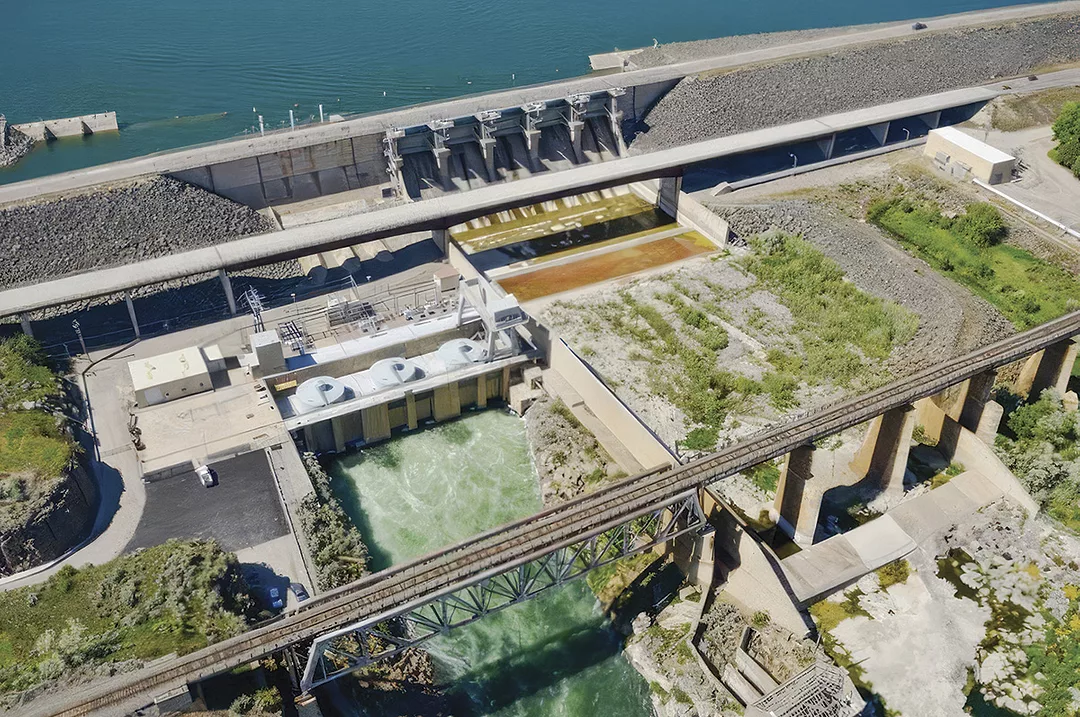
At American Falls Dam, the Bureau of Reclamation officials provided a tour of the ongoing $24 million spillway rehabilitation project. Built in the 1920s and expanded and reconstructed in the 1970s, the dam creates Idaho’s largest reservoir.
"We are making great progress as we strengthen the resiliency of our water system, which everybody knows is the lifeblood of the state of Idaho," said Gov. Little. "This dam, which is one of the workhorses of the Upper Snake [River] system – with 1.6 million acre-feet of storage for farmers, ranchers, cities and industry – is critically important."
The dam provides irrigation storage for 62,361 acres of farmland through the American Falls Reservoir District and also contributes to hydropower, recreation and aquifer recharge. To support the rehabilitation effort, the IWRB committed $12.5 million in federal American Rescue Plan Act (ARPA) funds as part of its Regional Water Sustainability Program.
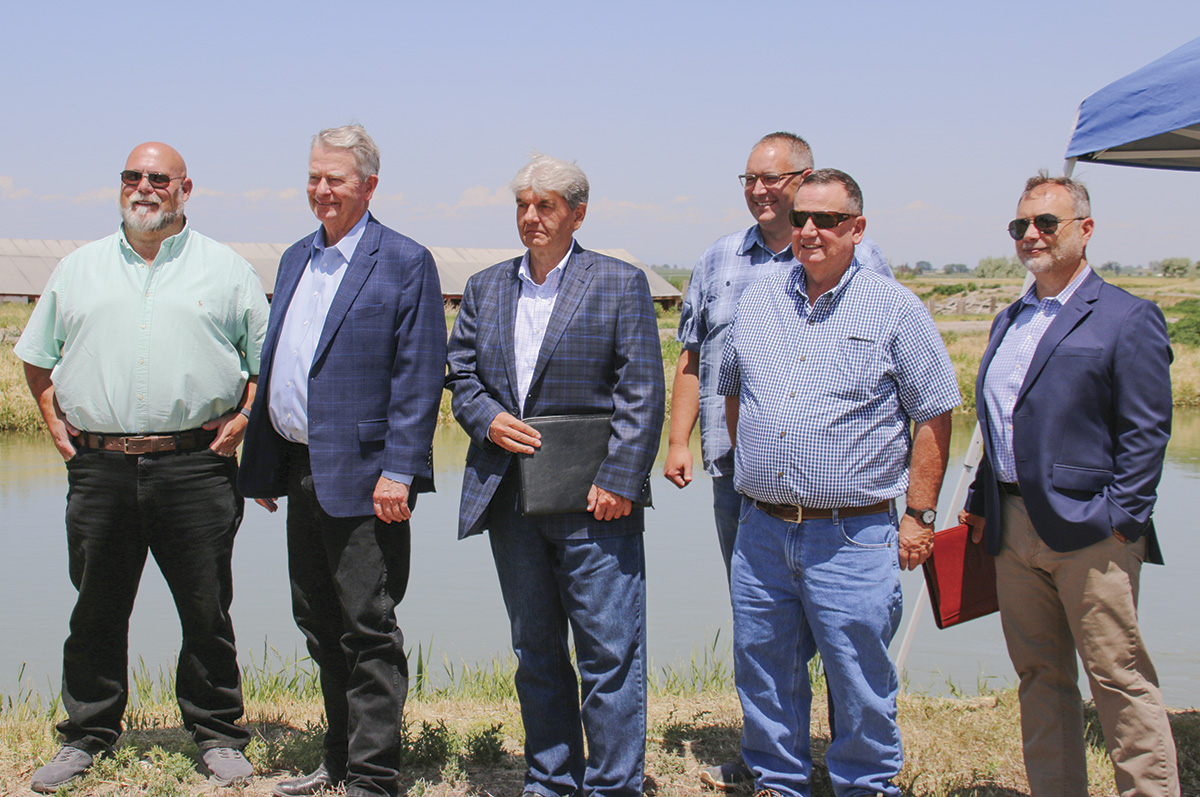
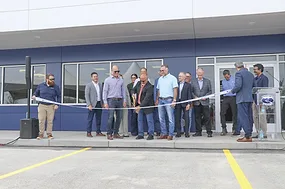
Pictured from left to right are Jay Barlogi, general manager of TFCC; Gov. Brad Little; IWRB Chairman Jeff Raybould; Jason Brown with TFCC; Dean Stevenson, Rupert farmer and IWRB member; and Brian Patton, executive officer, IWRB. Image by Cassidy Woolsey.
Details on the repairs:
- Spillway gate repairs: Over time, the trunnion pins and bushings on the five radial gates have become stuck in place and need to be replaced. The goal is to complete one gate each year beginning in 2023.
- Guard gate inspection and repair: There are nine low-level guard gates leaking in the closed position. These gates are about 45 years old and this will be the first major maintenance that has been done. One gate will be repaired per year beginning in 2023.
- Dam intakes replacement: The power plant intake gates are original to the construction of the dam and are having issues drifting closed and leaking oil. The design work will be completed in 2028, with construction happening between 2030 and 2032 in the nonirrigation season.
The full project is slated for completion in fall 2032.
Twin Falls Canal Company improvements
Twin Falls Canal Company (TFCC) serves water users across 203,000 acres in southern Idaho, including Murtaugh, Kimberly, Hansen, Filer, Buhl, Castleford and Twin Falls.
Roughly 10,000 irrigated acres on the TFCC tract lack the necessary progressive fall to properly measure water flow. These are typically located where the irrigated ground is higher than the water surface elevation in the canal system and require a pond to pump, complicating accurate delivery.
To address this challenge, TFCC recently installed three Rubicon SlipMeters along its Highline Canal – one near Hansen (TAP 64) and two in the Clover Tract southwest of Filer. These high-tech devices help ensure accurate flow measurements and prevent overdelivery of water at these locations.
“In our Water Management and Conservation Plan, finding ways to better measure and accurately deliver water is one of the major goals,” said Jason Brown with TFCC. “As the West and southern Idaho continue to experience drought conditions, it is critical that TFCC manages water sustainably.”
- At TAP 64, a custom 48-by-48-inch SlipMeter was installed in an existing concrete structure. This project, completed in winter 2024-25, cost $68,191 and $20,457 was funded from the IWRB’s Aging Infrastructure Grant Program.
- In the Clover Tract, two diversion structures and two SlipMeters were installed to provide precise flow control and water delivery using ultrasonic pulse technology. Completed in winter 2023-24, the total project cost was $171,106, with IWRB funding $51,332.
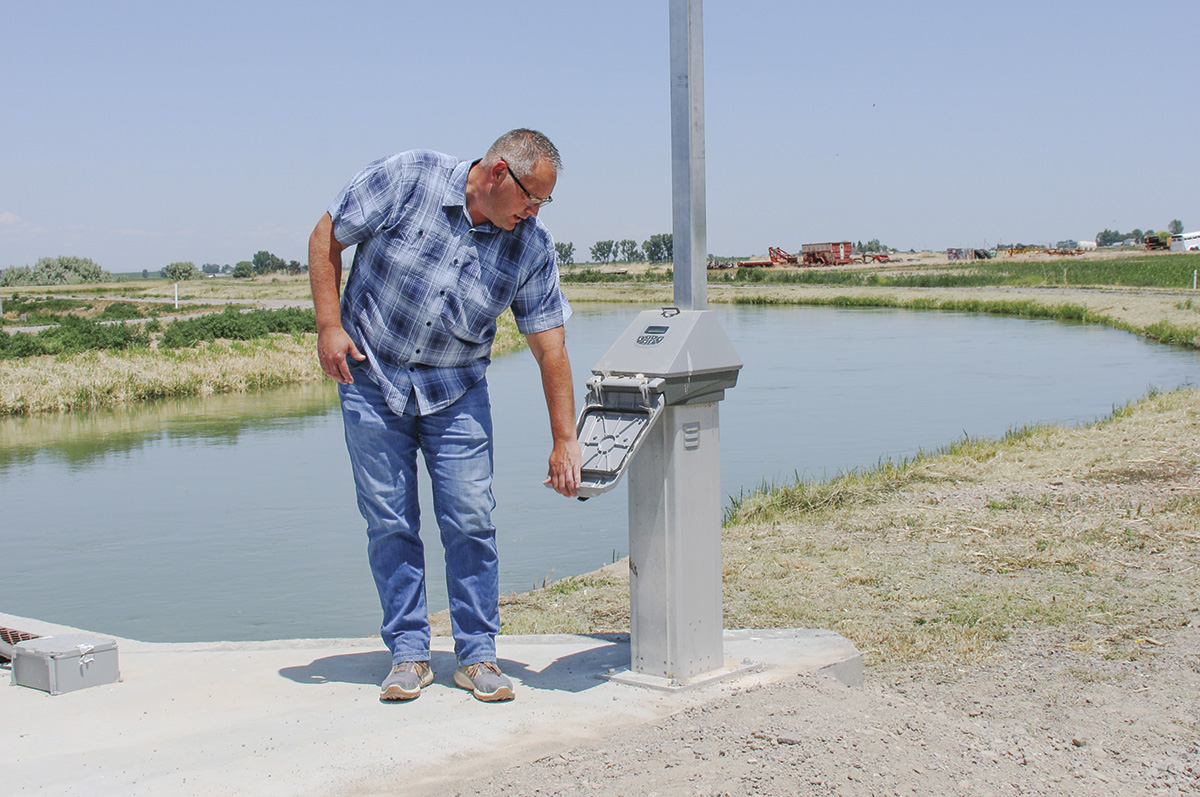
Jason Brown, field supervisor for TFCC, shows how the Rubicon water-measuring device works, including real-time readout on water flowing into the Clover Tract from the Highline Canal. Image by Cassidy Woolsey.
During the irrigation season, the flow through the Highline Canal can range from 1,050 cubic feet per second (cfs) to 1,450 cfs, depending on demand. The new devices will help provide consistent and accurate measurement and control throughout the irrigation season, which has historically been difficult.
“The improvements help us ensure water is being delivered fairly and equitably across the system and prevent users from drawing more than what they’re entitled to,” Brown said.
TFCC also partnered with the Twin Falls Soil and Water Conservation District and the Idaho Soil and Water Conservation Commission to modernize the Clover Tract’s irrigation system. In 2023-24, an old open-canal gravity system was replaced with a closed, pressurized underground pipeline. By doing this, it is expected to save about 4,000 acre-feet of water per year by reducing ditch loss, evaporation and spills. Additionally, the project will have a power savings of 25%.
Little said, “I recognize senior water right holders are doing a great service to the state by being forward-thinking in how they use water so all of Idaho agriculture can survive.”
During the 2025 legislative session, HB445 was passed, allocating $30 million to the Idaho Department of Water Resources for further improvements. Raybould noted at the event that these funds will help convert groundwater to surface water, aquifer recharge, canal efficiencies and water monitoring. New or existing grant programs will provide funding opportunities for water users to tap into those funds after the beginning of fiscal 2026, or July 1.
—Portions compiled from a Modernizing Idaho's Water Infrastructure report