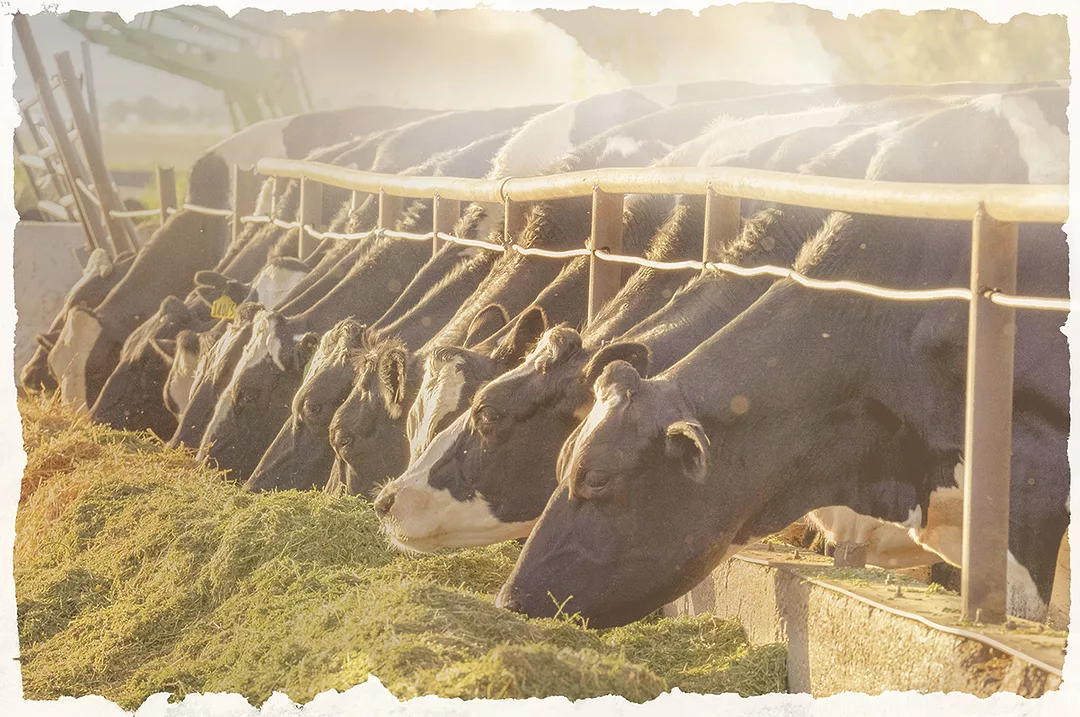
In early spring, cooler temperatures and low to moderate humidity often allow cows to remain comfortable and productive with minimal environmental stress. As spring turns into summer, however, conditions change. Rising temperatures, prolonged dry weather and increasing fire risk make wildfire smoke a regular part of the production environment for many Western dairies.


Wildfire smoke is no longer an occasional event in the western U.S. It has become a recurring seasonal challenge, and its effects extend well beyond reduced visibility or unpleasant working conditions. For dairy producers, smoke exposure represents a distinct environmental stressor, one that can influence milk yield, milk composition and nitrogen utilization, even when cows are otherwise well managed.
A large share of the U.S. dairy industry is located in regions that routinely experience wildfires. States across the West, including Idaho, account for a proportion of the national dairy cow population and also rank high in acres burned each year. This overlap means that wildfire smoke exposure is not an isolated concern but a widespread issue affecting dairy operations across the region.
Wildfire smoke is a complex mixture of gases, microorganisms and particulate matter. Of particular concern are fine particles known as particulate matter (PM)2.5, which are particulate matter smaller than 2.5 micrometers in diameter. These particles are small enough to penetrate deep into the lungs and, in some cases, enter the bloodstream. Because of their size and biological impact, PM2.5 concentrations are commonly used to assess air quality and potential health impacts during smoke events.
During wildfire season, PM2.5 levels can increase sharply over short periods, often reaching levels far above typical summer background conditions. While smoke exposure may last only days or weeks, its effects on cows can persist beyond the period when smoke is visible.
Producers and dairy professionals are generally familiar with heat stress and its effects on feed intake, milk production and cow comfort. Wildfire smoke represents a different type of challenge. Rather than limiting a cow’s ability to dissipate heat, smoke exposure primarily affects cows through the respiratory system and inflammatory responses.
When cows inhale fine particulate matter, their bodies respond by activating immune and defense mechanisms. These responses require energy and nutrients that would otherwise support milk synthesis. As a result, cows exposed to elevated smoke levels may experience reduced productive efficiency, even when temperatures are moderate and cooling systems are functioning well.
Recent research has begun to clarify how wildfire smoke affects milk production. In one study involving midlactation cows exposed to elevated PM2.5 concentrations during a naturally occurring smoke event, short-term reductions in daily milk yield were observed. In a separate study, the relationship between PM2.5 exposure and milk yield was described using a mathematical model developed from experimental data. Based on this published relationship, Figure 1 was created to show how increasing PM2.5 concentrations may be associated with declining milk yield. Figure 1 is intended to convey the general pattern of response rather than represent measured production data from a specific herd.

Across studies, milk losses tend to increase as PM2.5 concentrations rise, with larger and more prolonged declines occurring during more severe smoke events. Rather than reflecting a single threshold, the response appears to scale with both the intensity and duration of smoke exposure.
Importantly, milk production does not always rebound immediately once air quality improves. In several cases, reduced milk yield has persisted for days following smoke exposure, suggesting a short-term carryover effect on lactation performance. Repeated moderate smoke exposure across multiple summers may therefore contribute to cumulative production losses at the herd level.
Wildfire smoke exposure can also affect milk components. During smoke events, yields of milk protein, fat and lactose generally decline, largely reflecting the overall reduction in milk volume. Changes in milk component concentrations are often modest and should be interpreted cautiously.
In some cases, milk protein or fat concentrations may increase slightly during or after smoke exposure. These changes are not indicative of improved efficiency but instead reflect a greater proportional reduction in milk volume relative to component synthesis, resulting in more concentrated milk.
Another observed response is a reduction in milk urea nitrogen (MUN) during and after smoke exposure. Lower MUN values suggest changes in nitrogen metabolism, potentially related to reduced feed intake, altered rumen nitrogen dynamics or increased use of amino acids to support immune and detoxification processes rather than urea formation.
For producers and nutritionists, these responses highlight the importance of interpreting milk test results within the broader environmental context, particularly during wildfire season.
What producers may notice during smoke events
During periods of poor air quality, producers may observe:
- A drop in daily milk yield that cannot be fully explained by heat load alone
- Reductions in milk component yields, even when component percentages remain stable
- Slower recovery of milk production after the smoke clears
Recognizing wildfire smoke as a contributing stressor can help avoid misattributing these changes solely to ration formulation, management decisions or underlying cow health issues.
Looking ahead for Idaho dairies
Wildfire smoke is becoming an increasingly predictable feature of summer dairying in Idaho and across the western U.S. While individual smoke events may be brief, their effects on milk production and cow metabolism can extend beyond the days of visible haze.
This article does not aim to provide a comprehensive review of environmental stress in dairy cattle. Instead, it highlights wildfire smoke as a distinct and growing challenge that deserves attention alongside heat stress and other seasonal risks. As wildfire seasons become longer and more intense, understanding how smoke exposure affects milk yield, milk composition and nitrogen utilization will be essential for interpreting production data and supporting informed management decisions.
By recognizing wildfire smoke as part of the current production environment, producers and dairy professionals can better anticipate short-term production changes and place them in the proper context during the summer months.
This material is based upon work that is supported by the USDA National Institute of Food and Agriculture under award number 2023-38640-39571 through the Western Sustainable Agriculture Research and Education program under project number SW24-009. The USDA is an equal opportunity employer and service provider. Any opinions, findings, conclusions or recommendations expressed in this publication are those of the author(s) and do not necessarily reflect the view of the USDA.