Water shortages have been a rising concern throughout Idaho during recent years. What makes this matter even worse is when a canal is unable to effectively hold all the water that it does contain. Twin Falls Canal Company (TFCC) is in the process of solving that issue for many of their shareholders.

Rick Pearson, a crop producer in Buhl, explained that water being scarce everywhere in Idaho was the main apparent issue that drove the need to line the canal, along with the increase of domestic well use. “We need to be more efficient,” states Pearson. Aquifer levels in Idaho have been declining since the 1950s and it strongly impacts producers. Pearson claims, “The aquifer isn’t just an ag issue. It’s an Idaho problem. If more people would get together to fix the problem, the better it would be for everyone. Everyone uses water.”
“There are sinkholes in the middle of the canal that have been appearing. This has been ongoing for years,” explains Gary Reynolds, a producer in Castleford. “Water that is lost from the canal goes into Rock Creek. Once the water is lost to Rock Creek, it’s unusable by producers,” shares Reynolds. According to Jay Barlogi, the general manager of TFCC, “Due to the gravels in the area, there is significant water that works its way through the gravels and leaks out of the canal. Over the years, TFCC crews have worked to repair sinkholes that appear every year, allowing water to escape out of the waterway, eventually finding its way through underground fissures to Salmon Falls Creek.”
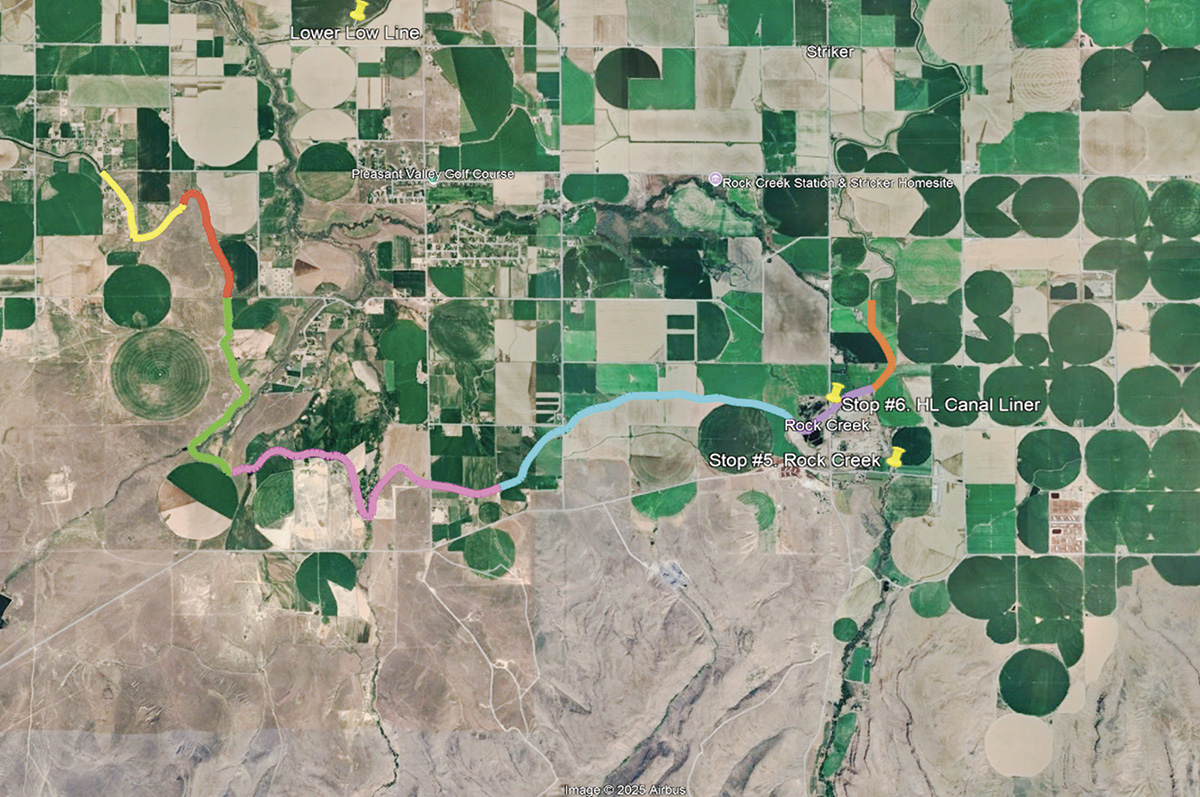
A map shows where the Highline Canal runs in Twin Falls County. Image provided by Jay Barlogi.
This canal lining project started in 2019, when TFCC lined a portion of the Highline Canal. In 2023, another three-quarters of a mile was lined on the same canal, just downstream from the 2019 portion, which is located south of Hansen, Idaho and north of the area where Rock Creek emerges out of the South Hills. The Highline Canal was developed in 1902-05 and TFCC has spent over 100 years lining canals. “In the 1920s, about three-quarters of a mile was lined with concrete. Now, more than 100 years later, that concrete liner has experienced nearly 120 freeze-and-thaw cycles, and has lived beyond its useful lifespan,” shares Barlogi. The portion that was lined in 2019 replaced that concrete liner. Barlogi goes on to explain, “Many times over the years, TFCC crew have lined different parts of the canal with clay liner, bentonite and cinders. In 2019, we used our first HDPE liner with a great deal of success. After 2019, we began planning to line the next several miles of the Highline Canal through the gravel area.” HDPE, which stands for high-density polyethylene, have become a great alternative to lining with concrete. HDPE is known to be cost-effective and durable, with an expected lifespan exceeding 100 years.
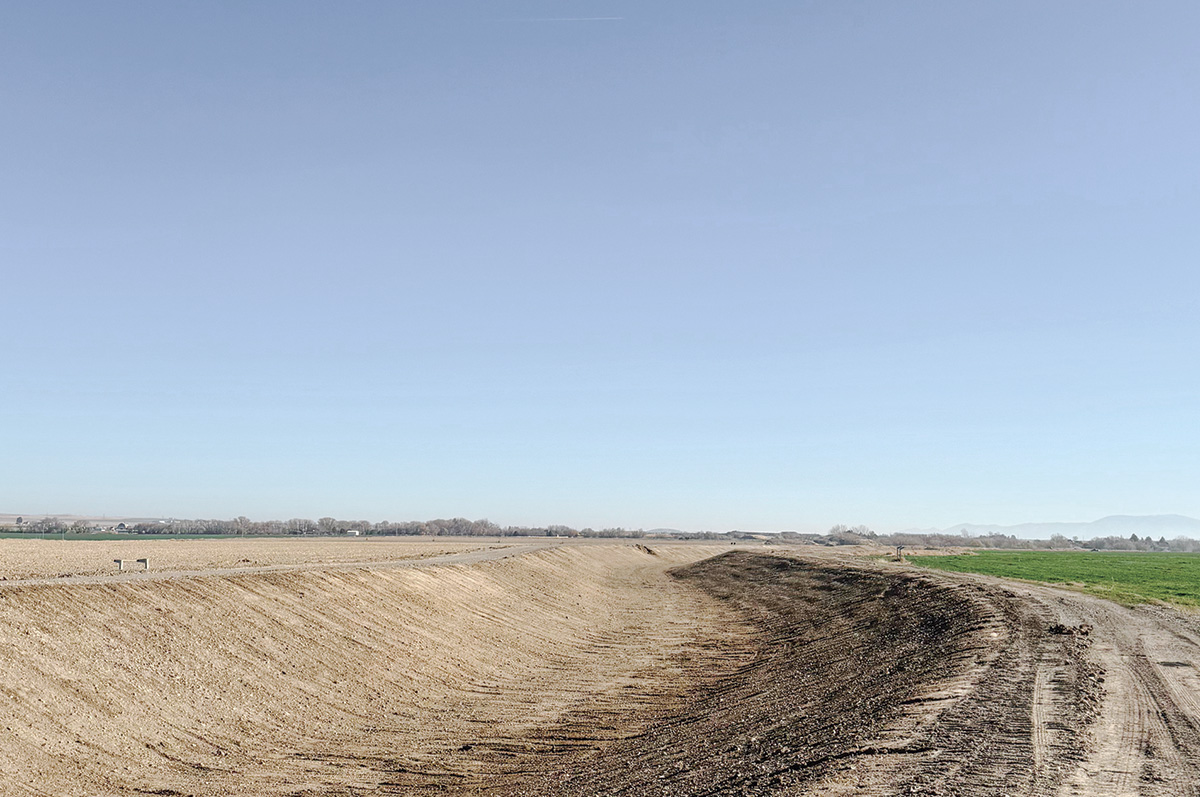
When there are issues of losing water from a canal, one of two solutions is usually mentioned: lining or piping. Reynolds stated that in order to pipe the Highline Canal, the piping would have to be huge, and it would deteriorate over time. “The Highline Canal is a very large canal. It is 70 to 80 feet wide and approximately 8 to 12 feet deep, conveying nearly 1,400 cfs (cubic feet per second) of water. To pipe a canal so large would be very difficult and expensive. Lining canals such as these is a much more realistic solution,” states Barlogi. The ongoing project includes 9.25 miles of the Highline Canal being lined with HDPE liner, and about 3 miles of lateral No. 1 near Castleford, to be lined. Lateral No. 1, a smaller canal, is located on the west edge of the TFCC tract, which flows near to and parallel to Salmon Falls Creek.
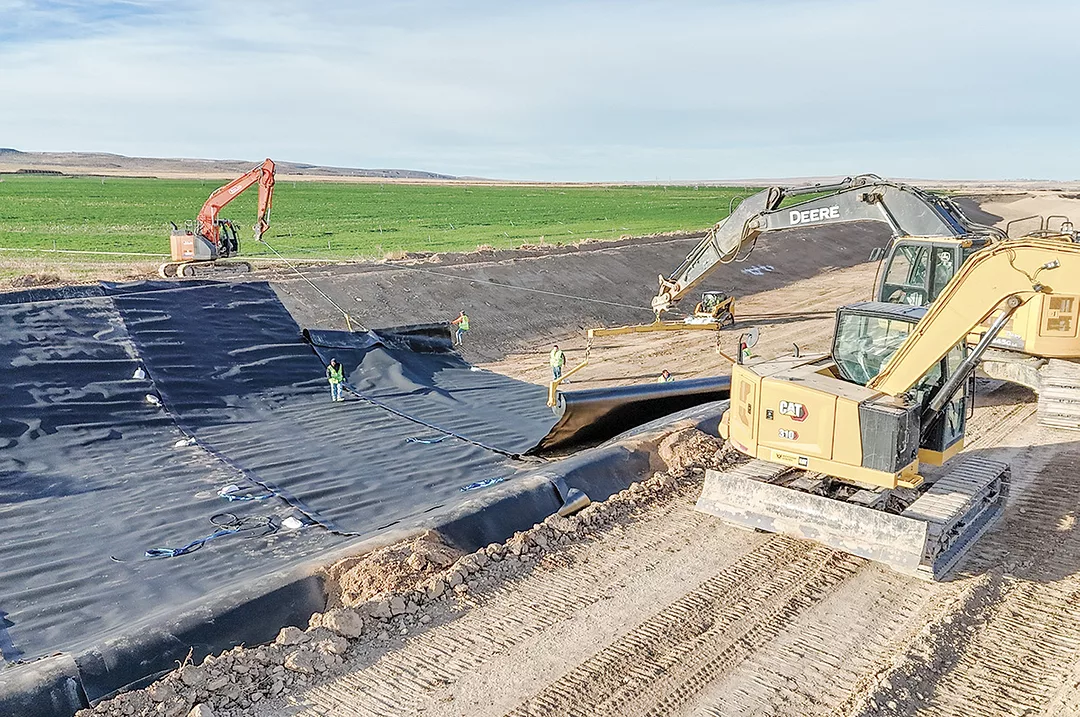
Lining is installed and covered in the Highline Canal. Image provided by Jay Barlogi.
At TFCC, it is important for water managers to understand how much water is exiting the TFCC system. Understanding this allows the TFCC water managers to create the most efficient use of the natural resource. There are 28 locations in the TFCC tract where canals discontinue at the edge of the Snake River Canyon, where Salmon Falls Creek and its flows enter the river and creek. “These 28 locations are measured daily in an effort to manage TFCC water supply responsibly. These return flow sites are to be fitted with telemetry as part of the overall project, giving water managers 24/7 data as to the amount of water leaving the system. In keeping with the theme ‘You can’t manage, what you can’t measure,’ we are excited to have better data on the return flow network in an effort to better manage the precious resource,” claims Barlogi.
Numerous landowners have been affected by the loss of water from the canals in the TFCC tract. “There are 200,000 acres on the Twin Falls tract, so this project benefits everyone. If we run out of water, everyone will take a cut,” shares Pearson. A portion of water used by producers comes from river flow, while the rest is from reservoir storage. Once water from the reservoir storage runs dry, producers are done using water for the season. Barlogi says, “The water supply shortages that TFCC shareholders have endured in the past have made it very difficult to finish crops on water-short years. TFCC has had to reduce deliveries to shareholders by one-third of their normal water delivery in dry years. Projects like this will give TFCC shareholders a higher likelihood of making it through the irrigation season without delivery reductions.”
Idaho Water Resource Board (IWRB) is funding this project through the Reasonable Sustainability Grant and the IWRB Canal Efficiency Grant. Through the grants, the project is scheduled as an eight-year project. Due to the mild 2025-26 winter conditions, the liner portion of the project is ahead of schedule. Producers within the TFCC tract are eager to see this project be completed in the coming years and acknowledge the benefits of using water, a precious resource, efficiently.