Grain producers in the Pacific Northwest know that marketing wheat is rarely straightforward. Prices move constantly, global events can shake markets overnight and input costs continue to rise. Over the past decade, these pressures have made it increasingly difficult for producers to lock in profitable prices.
One tool to help manage this uncertainty is understanding seasonal price patterns through a seasonal index. Similar to the way crop yields follow predictable growing seasons based upon crop conditions, grain prices often move in patterns throughout the year based upon marketing conditions. Studying these trends allow producers to make more informed marketing decisions.
Research from the past 10 years examining hard red winter (HRW) wheat markets in the Pacific Northwest suggests that seasonal price patterns, combined with futures hedging strategies, may provide producers with an optimal time for price risk management decisions.
A decade of price volatility
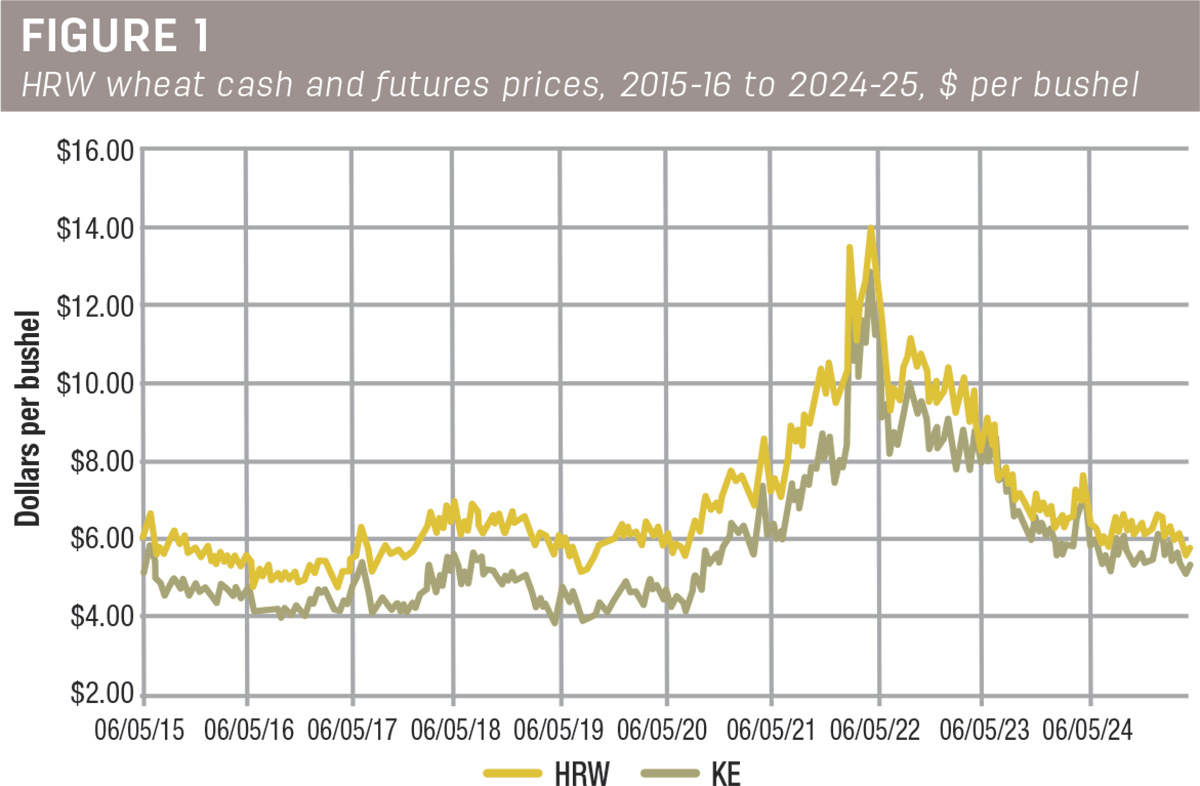
The past decade has demonstrated just how volatile wheat markets can be. Using data obtained from the USDA Agricultural Marketing Services (AMS), cash HRW wheat prices averaged $6.95 per bushel, but that average hides large volatility.
Prices reached a high of $13.92 per bushel during the 2021-22 June through May marketing year, largely due to global uncertainty following Russia’s invasion of Ukraine. At the opposite end of the spectrum, prices fell to $4.79 per bushel in the 2016-17 marketing year.
Even within a single year, price movements can be substantial. Within the same time period, the 2021 marketing year proved to have the largest range of $1.46.
Futures markets showed similar volatility with a high of $12.82 per bushel, a low of $3.87 per bushel and an average of $5.86 per bushel over the same period.
These dramatic movements highlight the reality many growers face: Global events, weather shocks and trade disruptions can significantly influence prices. The level of volatility experienced by all the various classes of wheat prices in the past decade has made it difficult for producers to capture viable returns (Figure 1).
Why seasonal trends matter
While markets can react to sudden shocks, they also tend to follow recurring seasonal patterns. A seasonal index is a statistical tool constructed to analyze how much a particular period within a year deviates from the average annual performance.
Energy markets provide a familiar example. Gasoline prices typically rise during the spring and peak in late summer when travel demand increases. By studying seasonal data, analysts can anticipate these changes.
The same approach can be applied to wheat markets.
For Pacific Northwest HRW wheat, seasonal analysis shows a consistent relationship between harvest timing, supply levels and basis movement.
Basis, the difference between the local cash price and futures price, reflects local supply and demand conditions, transport costs and export demand. When local grain supplies are abundant, basis often weakens – and vice versa when demand increases or supplies tighten.
Seasonal patterns in basis can create opportunities for marketing strategies such as short hedging.
What the seasonal data shows
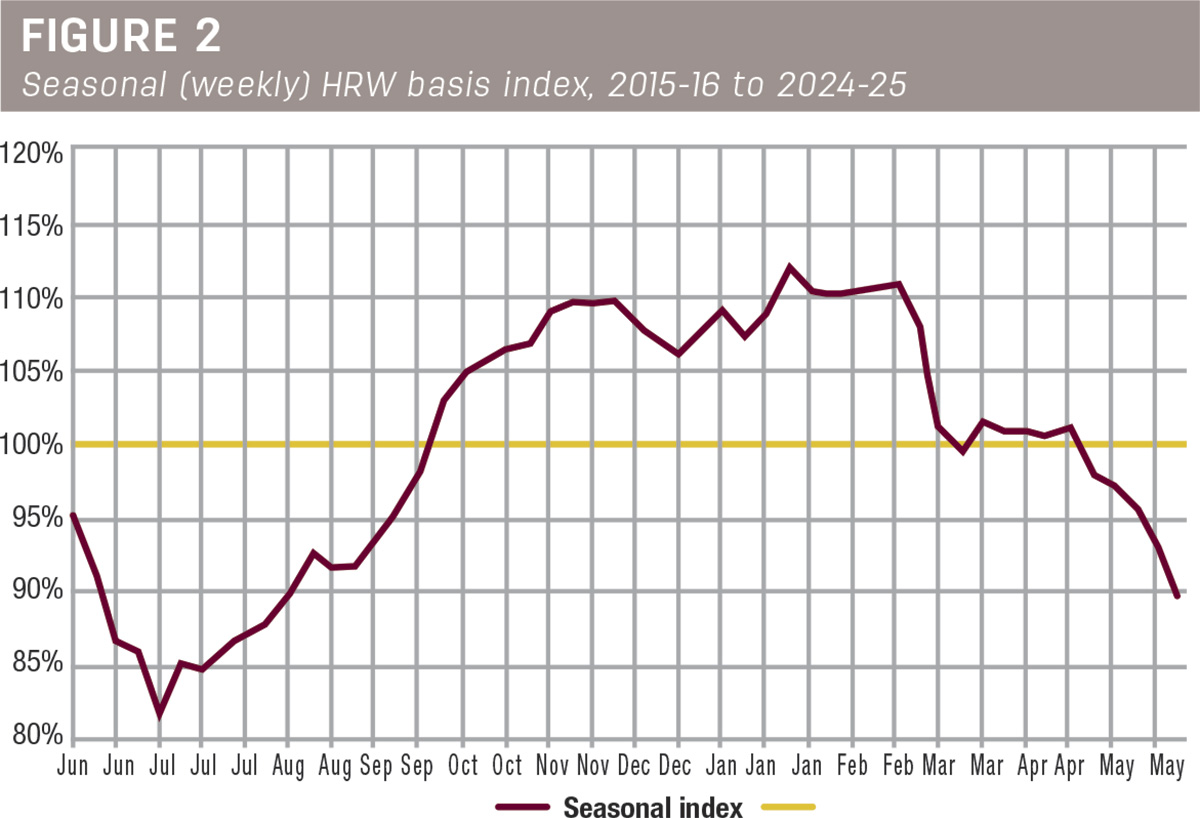
As depicted in the figure below, we can see how the basis typically behaves each week of the year relative to the average basis level. In a typical year, the HRW basis tends to follow a seasonal pattern.
Basis is often weakest during harvest months – typically late June to August – when supply is most abundant. Hence, the seasonal index during this period is at its lowest.
Conversely, basis tends to improve in fall through spring, when supplies tighten and demand from mills and export markets continue.
This seasonal pattern suggests that short hedging in late July and lifting the hedge in late January will produce optimal price outcomes (Figure 2).
Testing a hedging strategy
To further investigate the soundness of these patterns, the study turns to empirical data to examine a specific hedging window within the wheat marketing year.
The strategy involved:
- Placing a short hedge in the first week of July, shortly after harvest (week 5)
- Lifting the hedge in the fourth week of January (week 34)
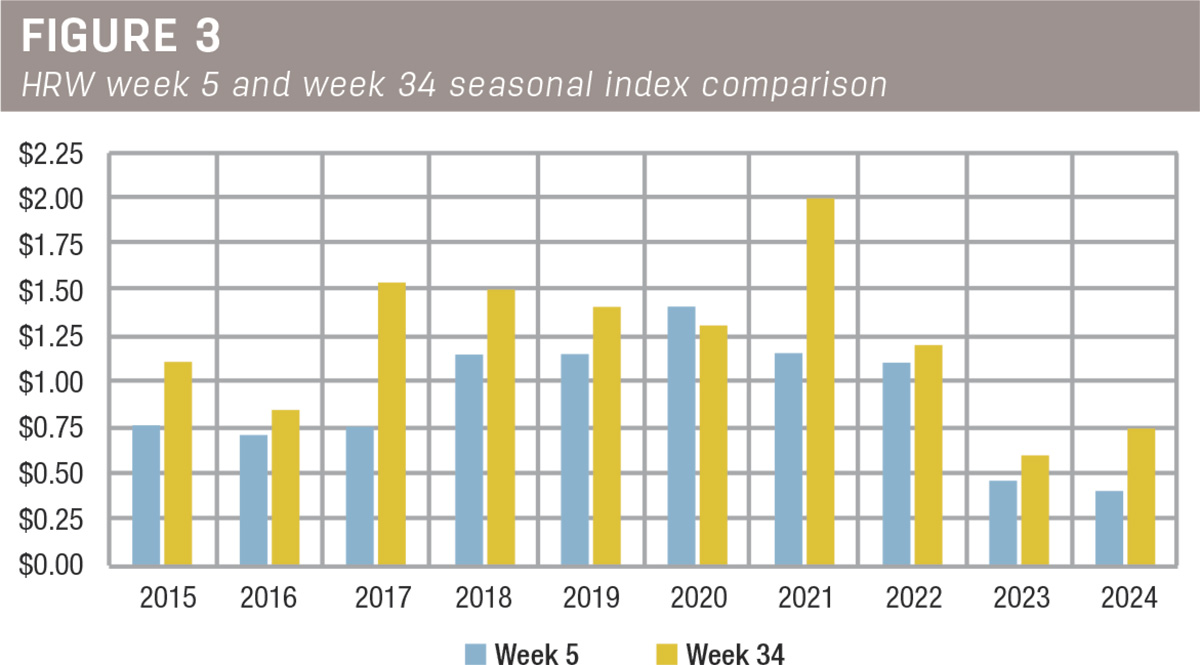
In the observed dataset, the seasonal index shows a strong tendency for the basis to strengthen from July to January. The results show that if a short hedge was placed and lifted following this time period, the producer’s effective price would improve by an average of 33 cents per bushel versus selling on the cash market in week 5 of early July.
Over the past decade, historical data shows that the HRW basis strengthened from July to January all but one year, indicating that a short hedge would have been profitable 90% of the time.
Notably, the 2020-21 marketing year deviates from the typical pattern, likely due to market disruptions caused by the COVID-19 pandemic (Figure 3).
Comparing two marketing strategies
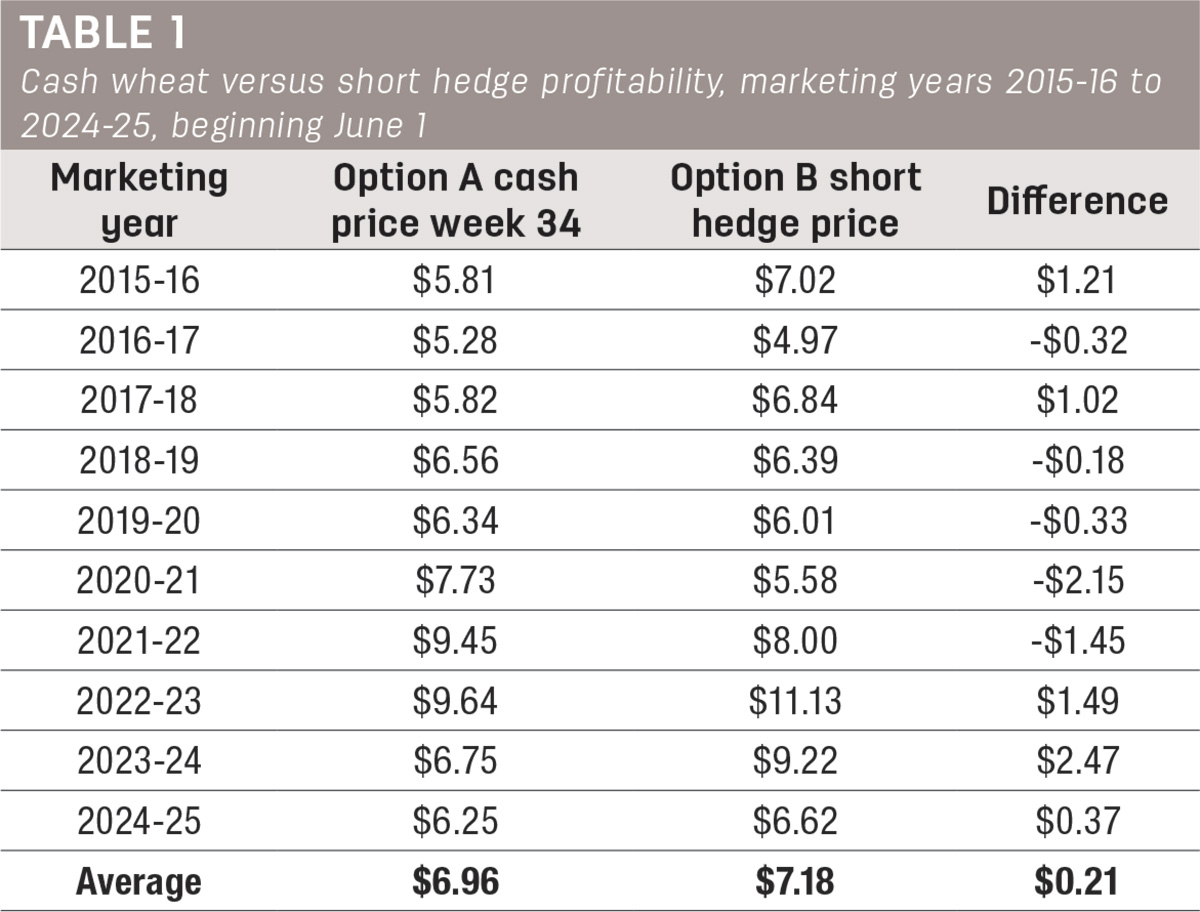
To confirm whether holding cash wheat without hedging performs better than short hedging, the price outcomes of both strategies were compared. Each price is determined by using the same weekly observation used to calculate the short hedging outcomes from the past 10 years for the June through May marketing year.
Option A: Traditional cash sale
A producer stores wheat after harvest and sells it in the cash market in week 34 in late January. Using the historical data, this option generated a revenue of $6.96 per bushel.
Option B: Short hedge strategy
The producer places a short hedge in the first week of July (week 5) and lifts the hedge in late January (week 34).
This approach produced an average price of $7.18 per bushel.
Results
That difference – 21 cents per bushel – may not sound significant at first glance, but across thousands of bushels, it can represent a great improvement in farm revenue.
The empirical analysis tells us that with a higher average net price, short hedging and lifting the hedge at peak seasonal basis is more profitable than using the traditional cash sale strategy (Table 1).
Summary
For many of the primary crops grown in the U.S., seasonality is the dominant factor influencing prices within a production period. This study confirms the presence of seasonal patterns in the Pacific Northwest HRW wheat market and identifies a consistent pattern for producers to apply to improve revenue through short hedging strategies.
Empirical results found that initiating a short hedge in early July (week 5) and lifting the hedge in late January (week 34) captured strengthening basis performance and averaged a 33-cent-per-bushel positive return, outperforming a strict cash sales strategy over the same period by 21 cents per bushel.
With profitability in 90% of the observed marketing years, this annual hedging window provides a statistically supported risk management strategy for wheat producers looking to navigate rising price volatility.
Looking ahead
Every marketing year brings new challenges. Global supply shocks, trade policy shifts and unpredictable weather will continue to influence grain markets.
However, better understanding seasonal basis behavior provides producers with an insightful edge. When combined with tools like short hedging in KC futures, seasonal analysis can help growers reduce risk and capture better prices.
For Pacific Northwest wheat growers, timing matters. Understanding seasonal trends can make a measurable difference in marketing success.
Gabrielle Tassinari, a University of Idaho graduate student, contributed to this article.