Weather patterns have been difficult to nail down with any degree of accuracy this year. In addition to the mid-May snowstorms across North America, tornadoes have appeared in Nebraska and South Dakota because of these cool air systems. While Saskatchewan in particular may not combat high incidence of tornadoes, late snowfall delayed thawing and therefore grass growth and typical seeding plans.

No matter the current weather, summer is approaching and sudden, hot weather may not only increase water intake – it may also reduce fertility and immune responses. As always, it is important to maintain proper mineral supplementation. Here are a few things to consider as we head into summer.
Heat stress has negative impacts on herd performance by altering metabolism, altering behaviour and ultimately decreasing consistent productivity. Heat stress reduces milkfat in dairy herds and decreases gain performance in feedlot beef animals. In commercial beef cows, heat stress disrupts hormones, can reduce ability to maintain an embryo and can decrease immune responses. No good. Let’s avoid these issues by planning how to avoid heat stress and how to recognize it in the herd.
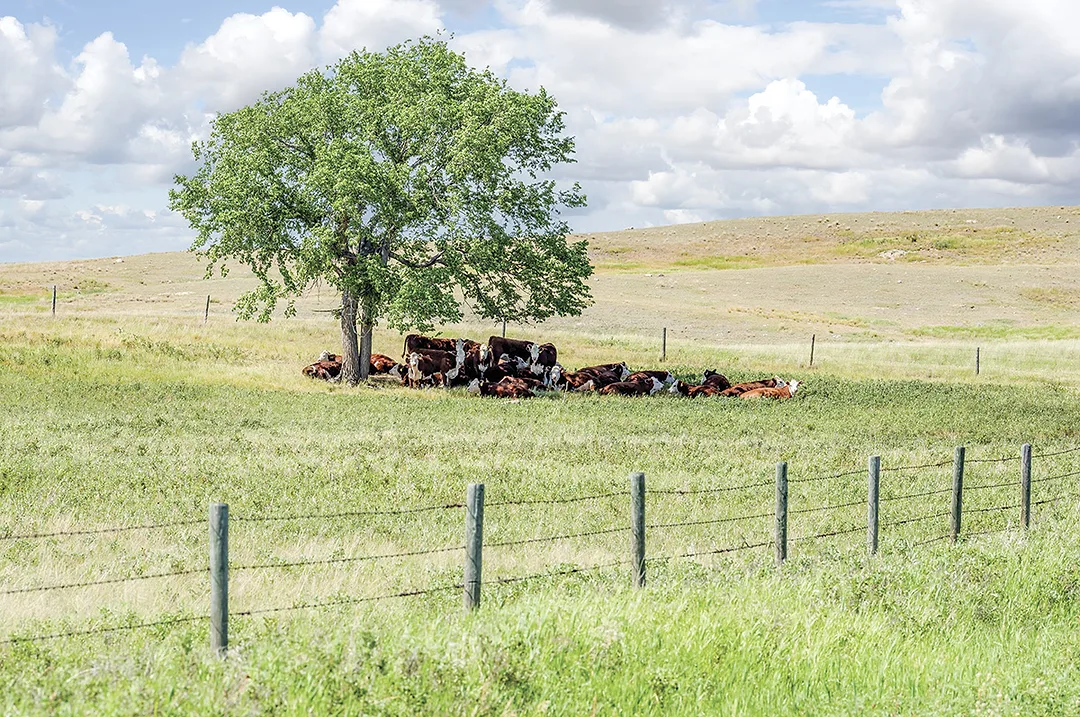
When driving by your herd in late July, you may observe them moving around a little, standing together swatting flies with their tails, appearing unbothered by the heat, just doing what cows do. However, these are also early indicators of heat stress – especially if you observe your herd standing for extended periods and not grazing. Remember, they are herd animals, and they are hardwired a bit differently than humans. When we get too hot, we grab some water, sit down, find shade and isolate a bit by distancing ourselves from the work we were doing. But cows, being part of a herd, don’t want to isolate when they are stressed. They don’t want to be seen as “different,” so they stand together and fool us to think they are all good. Watch your herd for a while to rule out heat stress. Does drool fly out their mouth when they toss their head at flies? Are they breathing open-mouthed and forcefully pushing breath with their flanks? Are they huddled near water? Are they letting themselves lie down in shade?
Heat’s cellular impact
For the majority of producers, herd breeding season will include July and most, if not all of, August. If your herd is experiencing heat stress, not only could this impact milk production for the growing calf, but it could also reduce fertility. Heat stress exists at the cellular level by causing DNA and protein damage, disrupting energy generation in the mitochondria and activating cell death (apoptosis). The cow’s physiology is changed by increasing stress hormones such as cortisol, altering metabolic and immune functions essential to reproductive health. Increasing cortisol impairs white blood cell function by decreasing their absorption into the required tissues, which means that the body receives the call for an immune response but doesn’t know what address to send help to.
Heat stress also increases the hormone leptin, which reduces feed intake, creating an energy deficit, leading to weight loss and reduced energy output toward the synthesis of the hormone progesterone. Progesterone is one of the important hormones for preparing the uterus for embryo implantation and sustaining pregnancy. Research in artificial insemination (A.I.) programs have proven the difficulty in manipulating progesterone because of the complexity and timing of hormone changes. The resulting effect of heat stress is disruption of these energy and hormone processes, causing decreased fertility.
Monitoring mineral intake
Of course, as summer heat and water intake increase, there is a sustained need for salt and minerals. Phosphorus in particular is important for breeding success, with deficiencies having similar effects to heat stress. From saliva rumen buffering to synthesizing cellular energy, phosphorus is required for a multitude of functions within the animal. If you have a downer cow, your veterinarian may mention the necessity of calcium for proper muscle function, and after administering a bolus of calcium, your cow will pop right back up good as new. Phosphorus is also vital in this process through its incorporation in molecules (ATP, phosphocreatine) that enable quick energy transfer for sustaining muscle contractions. However, it is unlikely that low phosphorus has caused a downer cow. These same energy molecules are related to fertility, and if phosphorus is deficient, it may reduce their supply to the ovary. Low phosphorus can also delay ovulation and impair follicle development, diminish oxygen delivery and decrease ATP-dependent functions.
Like heat stress, phosphorus deficiency can decrease appetite and impact immune responses by impairing white blood cell activity. During prebreeding season, this may be observed as higher rates of mastitis and blunted vaccine response, which is of concern, since a common practice is to vaccinate the herd before turning them out to summer grass. During breeding season, phosphorus deficiency can reduce production of white blood cell energy and ovary energy, and dysregulate ovulation signalling. Luckily, phosphorus is widely available in grasses and cereals.
Availability of phosphorus in feedstuffs varies depending on the form it is in, with phytate phosphorus being less available. However, rumen microbes, in their infinite wisdom, create phytase enzymes to access this phosphorus. This, in conjunction with the ability of cattle to retain the majority of phosphorus through reabsorption in the kidneys, results in effective monitoring of phosphorus status in the animal.
Many systems are linked together in cattle physiology, and managing heat stress and phosphorus supplementation are just a few steps toward breeding success. Ensure provision of a balanced mineral program that suits your operation and herd needs. Monitoring your herd and preparing for challenges will give you the advantage against adversity.
References omitted but are available upon request by sending an email to the editor.