We use cookies to provide you with a better experience. By continuing to browse the site you are agreeing to our use of cookies in accordance with our Cookie Policy.
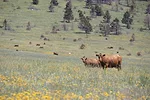
For generations, Saskatchewan’s Touchwood Hills have been cattle country, a place where rolling grasslands, sheltering aspen bluffs and dependable water shaped ranching livelihoods and rural communities.
Drought’s impacts on forages, animal health and management are varied and complex. But there are solutions to help get your operation through dry times.
Winter has faded in the rearview mirror, yet the summer road ahead is dogged by one unwelcome word: drought. Or, at the very least, excessive dryness. On beef ranches in parts of Alberta and Saskatchewan, producers are also facing forecasts of an El Nino effect, which could worsen conditions.
Whether up north in last summer’s ash or down south in the dust, winter feeding is nearing its end, and the need for a grazing plan is mounting. Year over year, producer efforts to balance grazing and growth will hopefully result in profitable calf crops as well as healthy grasslands.
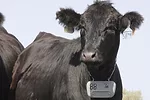
Virtual fencing is a new and fast-growing technology that can aid in grazing management by helping remotely implement adaptable and flexible grazing practices.
Fencing is a critical tool for enhancing grazing management through managing livestock access and distribution. However, constructing physical fences, both permanent and temporary, can be labor-intensive and costly. The introduction of virtual fencing into North America has many ranchers wondering how it works and whether it fits their operations.
With grassland availability in the Northern Prairie region at an all-time low, producers need to turn an eye to long-term conservation practices to keep their operations safe for the next generation.
Mindy Anderson spoke at the America’s Grasslands Conference in Kearney, Nebraska, about the Saskatchewan Stock Growers Foundation's efforts to start a conservation easement program.
Canada’s PFRA pasture system faded away after the federal government shuttered the program in 2012. The provinces of Manitoba and Saskatchewan took different routes in their efforts to allow their patrons to continue operations.
Canada’s federal government ended its Community Pasture Program in 2012, which had provided grazing for 220,000 cattle owned by 2,500 producers in the Prairie provinces. Months after the announcements, the involved governments initiated a plan to transition federal pastures to patron operation.
Time has a way of flying by, and as summer quickly approaches, cow-calf pairs are being readied for transport to pasture. Today’s nutritional and health strategies are important, but plans hopefully began long ago.
The calendar never lies. While it may feel like New Year’s celebrations have scarcely fizzled, the calf crop is on the ground, the winter feed supply is dwindling, and patches of green grass are beckoning.
As the year transitions from winter to spring, producers are ready to stop feeding hay, and the livestock are eyeballing the “weakest link” in the fences to get to the green grass.
It was a phone call that I didn’t want to receive. On a pleasant evening in June, a neighbor rancher – someone I’ve known for many years – phoned to ask my advice about some baleage.
As the seasons progress, the nutrient content of grazing forages evolves. Understanding what is going on in those plants can help you provide your cattle with the highest plane of nutrition possible throughout the year.
As the summer months progress, the forage quality for grazing cattle begins to change rapidly for much of the western U.S. Cattle performance is dependent on the consumption of digestible nutrients; thus, forage quality and availability are essential for grazing-based systems.

 RSS
RSS