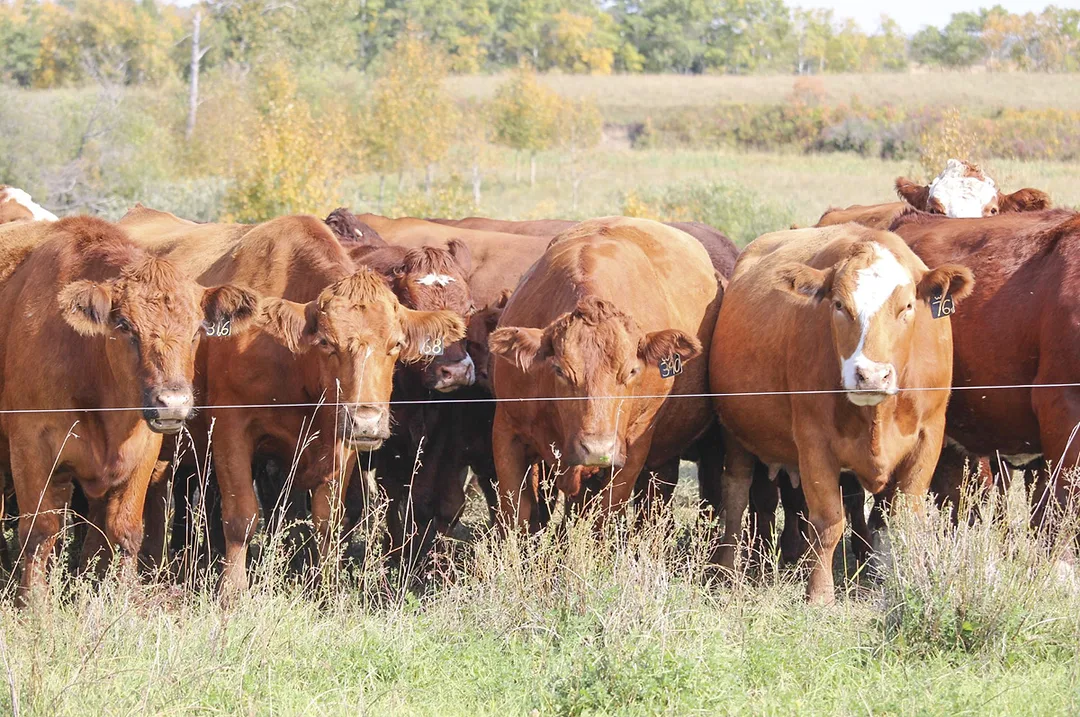
For generations, Saskatchewan’s Touchwood Hills have been cattle country, a place where rolling grasslands, sheltering aspen bluffs and dependable water shaped ranching livelihoods and rural communities.

Located roughly 90 minutes northeast of Regina, this scenic landscape is situated in the heart of North America’s Prairie Pothole Region. Defined by abundant small pothole wetlands, the area provides forage, shelter and water resources for cattle – as well as critical breeding habitat for continental waterfowl populations.
Recognizing the importance of the region to wildlife, Ducks Unlimited Canada (DUC) has delivered conservation programs in the Touchwood Hills since the 1990s. Then, just over a decade ago, a rare opportunity emerged to secure a large, contiguous block of ranchland. Building on 11 quarter sections already owned and managed by DUC, the organization acquired an additional 34 quarter sections, creating what is now the 6,400-acre Touchwood Hills Conservation Ranch (THCR).
More than a conservation property, THCR operates as a working ranch, providing a real-world setting to test land management approaches under the same conditions producers face on commercial operations.
“The goal from the beginning was to create a place where producers could see practical research happening at ranch scale,” says Jodie Horvath, DUC extension specialist serving as research coordinator at THCR. “We wanted projects that answer real management questions while still supporting habitat delivery on the landscape.”
Partnerships remain central to THCR’s development and operation. Collaborators including Canadian Forage and Grassland Association (CFGA), Living Lab Central Prairies, Birds Canada and multiple universities contribute scientific expertise, while local ranchers help ensure projects remain practical and relevant.
A decade later, THCR has become the hub for applied livestock and forage research that was originally envisioned, a proving ground where ideas like the following can be tested at scale and refined through experience.
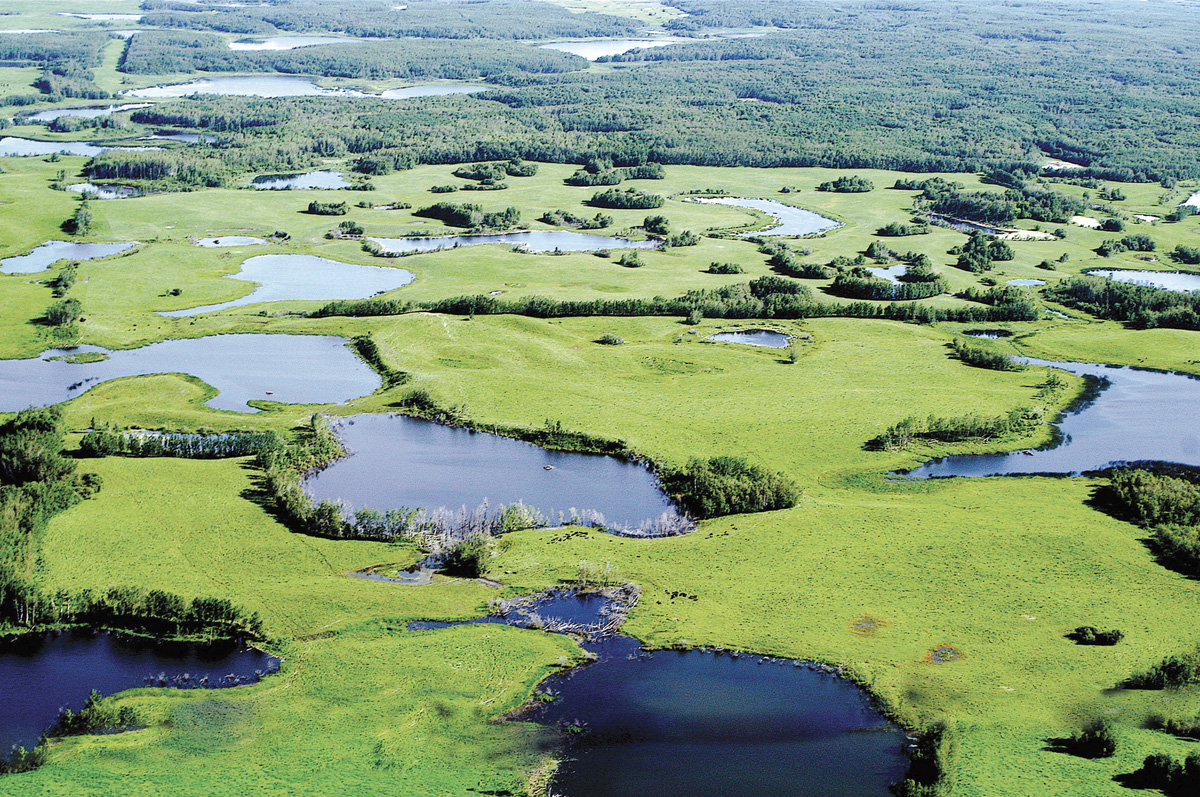
The Touchwood Hills Conservation Ranch operates as a working ranch in Saskatchewan's Prairie Potholes, providing a setting to test land management approaches under the same conditions producers face on commercial operations. Image courtesy of Ducks Unlimited Canada.
Demonstrating advanced grazing systems
In partnership with CFGA, researchers and a producer partner transformed a 300-acre THCR pasture into a carefully managed grazing system. The site had been seeded to alfalfa, meadow brome and crested wheatgrass roughly 25 years prior. Cattle tended to concentrate around wetlands and avoid the shrubbier, less palatable areas, allowing species like snowberry and willow to expand.
Using single-strand electric fencing, the team subdivided the pasture into 16 paddocks ranging from 10 to 20 acres. A solar-powered pump supplied water to portable troughs, reducing pressure on natural wetlands while improving livestock distribution.
In the first grazing season, the system supported 48 cow-calf pairs and two bulls, with cattle moved every two to five days, depending on forage conditions.
“Animal distribution improved almost immediately,” says Adrienne Hanson, program coordinator with CFGA. “Areas that had previously been underutilized were grazed more evenly, and we saw less pressure around wetlands and water sources.”
Hanson notes the project is one of the only studies of its kind, demonstrating rotational grazing in the province’s black soil zone and hummocky aspen parkland landscape.
“The topography worked in our favour,” she says. “The pothole wetlands meant we didn’t have to move water long distances, and the cattle performed very well on the forage base.”
Like any applied research project, the grazing system continues to evolve through experience. Early challenges related to cattle movement and bush-heavy paddocks led to adjustments in grazing timing and paddock use.
By 2024, bush-dominated paddocks were reserved for later in the season, when understory forage quality better matched herd nutritional requirements. Stocking rates also increased to 78 pairs after researchers observed more than 50% forage carryover in the first year.
Weather variability added another layer of learning. Dry conditions in 2025 delayed turnout until late June and required longer grazing periods before rotation.
“These systems aren’t static,” Hanson says. “You adjust based on rainfall, forage growth and what the cattle are telling you. That flexibility is part of what makes adaptive grazing work.”
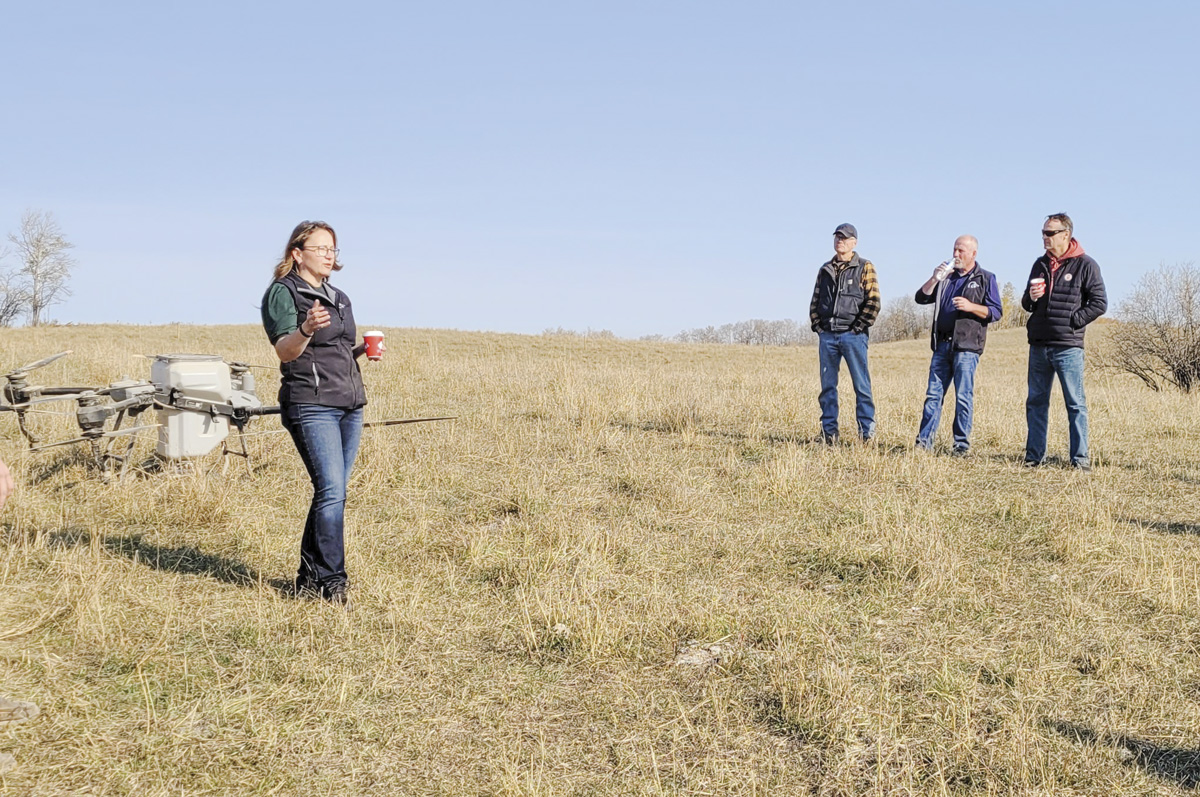
Ducks Unlimited Canada Extension Specialist Jodie Horvath demonstrates how drone technology can improve pastureland at a recent field day at the Touchwood Hills Conservation Ranch. Image courtesy of Ducks Unlimited Canada.
Exploring the potential of drone technology
Alongside grazing research, THCR researchers are exploring the ways in which emerging drone technologies offer benefits to livestock producers.
Modern agricultural drones are equipped with interchangeable tanks to apply liquid chemicals or dry granular materials with precision and autonomy. Ongoing and future research at THCR is exploring the possibilities of both applications, providing information to producers looking to derive maximum value from investment in the technology.
Through an ADOPT (Agricultural Demonstration of Practices and Technologies) project in collaboration with Saskatchewan Forage Council, the University of Saskatchewan Livestock and Forage Centre of Excellence and RJ Game Farm, DUC examined the effectiveness of seeding forage crops with drones, documenting the overall ease of operation, timing and equipment load capacity.
THCR was one of three study sites used to evaluate forage establishment under spring (June) and dormant fall (October) applications. A mixed grass-legume blend was applied at a recommended broadcast rate of 18 pounds per acre using DJI T40/T50 drones. Field areas were harrowed prior to seeding and again afterward to improve seed-to-soil contact.
Despite variable precipitation, good news was just around the corner.
“Spring-seeded sites at THCR established well by late summer,” says Horvath. “Fall-seeded sites were slower to germinate at first but still established adequately by fall 2025. Any establishment issues seemed mainly related to environmental conditions, not the seeding method.”
Early results suggest that drones can be an efficient means to broadcast forage seed, particularly when needing to access wet, low or irregular field areas out of reach of large seed drills.
“We learned a lot when it came to ease of operation, too,” explains Horvath. “By flying at a little over 10 feet and following the contour of the land, we were able to achieve a consistent spread pattern with the drone of roughly 30 feet, even with wind gusts over 35 kilometres per hour.”
The team found keeping drone batteries charged could be easily managed by swapping out batteries and charging them with a generator each time the drone’s hopper needed refilling. And a minimum seeding rate of 18 pounds per acre – ideally higher for fall dormant seeding – is required, followed by harrowing or rolling to ensure seed-to-soil contact.
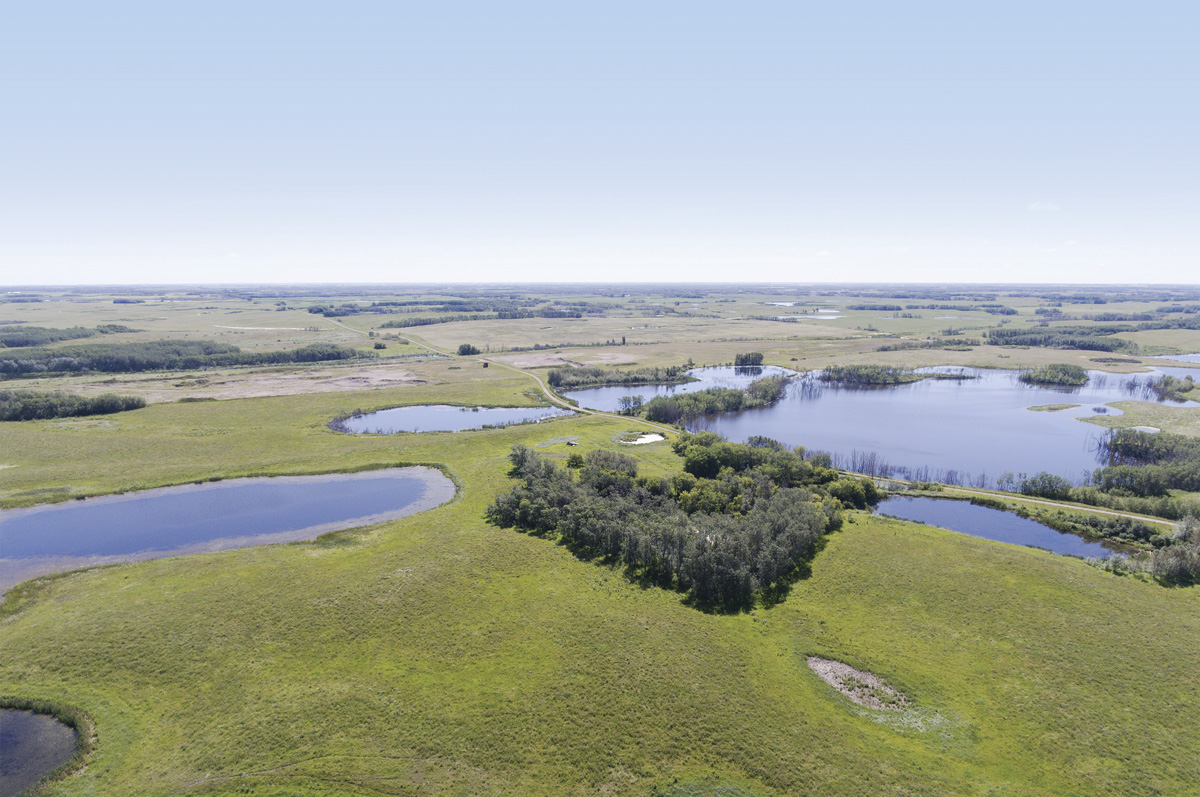
Image courtesy of Ducks Unlimited Canada.
Future potential for vegetation management
Particularly in the parkland region, unchecked woody encroachment from species like willow, snowberry and aspen can reduce forage productivity over time. Here, too, extension specialists see an exciting potential role for drone technology.
Historically, DUC has used a range of conventional control methods, including mowing, burning, bark scraping and quad spraying. Those approaches can be labour-intensive, costly or difficult to implement in wet terrain.
Future work at THCR will examine operational considerations of drone-based herbicide application: spray width, battery life and operational efficiency along long fencelines. Line-of-sight requirements present a possible limitation (operators can lose visual contact over extended distances), but the ability to access hard-to-reach areas remains a significant advantage.
While today regulatory approvals for UAV herbicide application in Canada remain limited, there is strong industry interest in drone-based herbicide application as a more targeted alternative.
“Right now, we’re watching the regulatory environment closely,” Horvath says. “As soon as that framework develops further, we’d like to explore how drones could fit into pasture vegetation management. … Once producers make the investment in this kind of equipment, there may be several practical applications beyond seeding alone.”
A model for the future
Nearly a decade after its establishment, THCR is delivering on its original promise: demonstrating that innovation in agriculture and conservation can work hand in hand.
By bringing together producers, researchers, conservation organizations and industry partners, THCR has created a space where practical ideas can be tested, refined and shared across the livestock sector.
For producers facing increasing pressure on perennial landscapes, the ranch offers a clear message: Adaptive management, backed by applied research and emerging technology, can support both profitability and environmental outcomes in the long term.