I’m not anyone’s vision of a social butterfly. If anything, I’m an extremely reluctant bookworm. I’d rather be washing dishes at the church social than out there sitting at a table chatting with other folks, and I’m chronically late to every event because I utterly dread the 10 minutes of small talk that takes place before things get started. There, my secret is out.

And by some bizarre twist of fate, I have landed a job where talking to people and attending events makes up a significant part of my work, whereas my ideal workday would involve being outside with cows or inside with a book. Lest I give the wrong impression, I am not a total hermit. I have been blessed with enough meaningful relationships with family and friends that I could not avoid socializing even if I wanted to, and heck, sometimes I even enjoy it!
I must confess to being a greenhorn when it comes to knowledge about the Canadian cattle industry, so as I prepared to write this editorial, I sifted through several ideas of what to say. With the current political divisions and economic upheaval around the world, what thoughts can I bring to the table? I started remembering when our team was making preparations for launching Progressive Cattle – Canada. There was so much to learn about the differences in management and production practices between Canada and the U.S. It was encouraging to realize through this process that although the processes may differ and each operation is different, some things always seem to remain universal truths.
The most comforting truth is that cattle people are the same, no matter where you’re from, and you can always rely on finding a friend, new or old, when you find a gathering of “your people” – in this case, cattle folks. Our columnist Paul Marchant illustrated this truth beautifully in a past column for our U.S. publication when he said, "No matter how deep into … cow country I may find myself, I can rest assured that I’ll never really be lost. I know there’s a friend close by."
I have experienced another version of this friendship. One time at church, a kind woman reminded me of something that saved me a lot of embarrassment down the line. Later that day, I ran into the same lady in a grocery store, but this time she had a son who couldn’t be older than 6 with her. We recognized each other, smiled, said hello and went on our merry ways, but as I was walking off, I heard the little boy ask his mother who I was, and without missing a beat, she said, “She’s Mommy’s friend from church.”
That may not seem like a big deal, but it was a powerful insight for me. It hit me that that random lady, whose name I did not know and who Iwould likely never meet again, had indeed been a friend when I needed one. I have endeavoured to be that anonymous friend to others, like she was for me, ever since – and I’ve learned that friendship, in its infinite varieties, is a key ingredient to a life well lived.
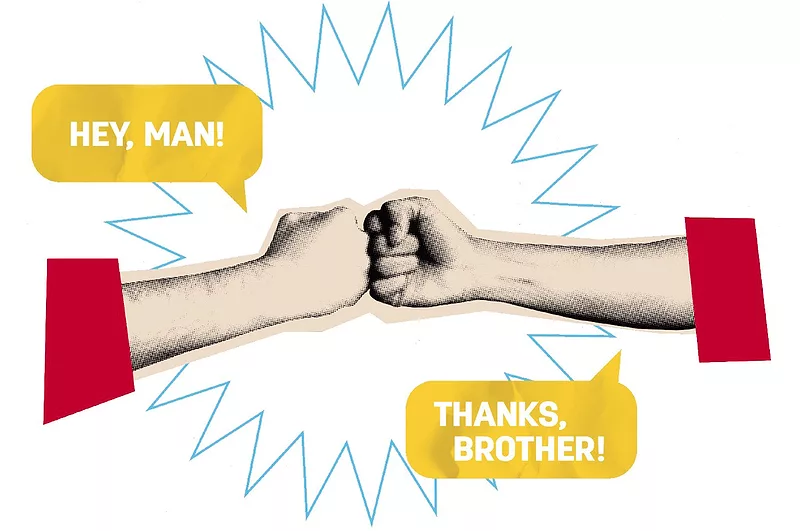
This can include friendships that span decades or a brief interaction with someone at the feed store or movie theatre. An example that has always mystified me is the strange sort of comradeship all men have where they will say “Hey, man” or “Thanks, brother” with zero interactions beyond that. The only female equivalent I can think of is the silent, eloquent meeting of eyes during a conversation where someone else is talking.
Being a friend, whether it’s a lifelong effort or 30 seconds of connection, might not seem like a big undertaking, but I can assure you that to those on the receiving end, it has a sincere impact. If you look for a friend, you’ll find one, and if you’re lucky, they’ll find you first. These friendships may not wrangle the suits in Ottawa or Washington, D.C. into submission or remedy the various tribulations in the world, but that goodwill does spread, neighbour to neighbour, province to province and maybe even border to border.