Animal welfare continues to be a substantial concern for the industry, policymakers and the general public when it comes to how beef products are produced in North America. This concern is vastly driven by how routine painful practices such as disbudding, dehorning, castration and branding are managed, particularly in regard to the use of pain mitigation strategies. While the aforementioned husbandry procedures remain essential for herd management, the question about how much pain should be tolerated – or rather, how much of the pain we can afford to mitigate – has evolved significantly in recent decades.

Whether any pain control measure was implemented at a farm during, for example, routine castration used to be a mere economic issue based on the cost associated with such a pain mitigation strategy and the economic return in the form of improved performance. Today, the beef industry must ponder other growing, and often intangible, elements in the equation. Public expectations, trade and market access, and the overarching concept of “social licence” are spearheading the need to prioritize animal welfare more than ever before. As a result, uptake of pain mitigation tools by producers continues to increase, signaling a shift toward more welfare-conscious practices. If we want to continue making progress in this direction, however, more efforts need to be put into finding solutions that are not only affordable in the context of current margins of operations but also that balance efficacy and practicality.
One of the challenges in implementing pain mitigation is the difficulty in measuring pain itself. There is no universally accepted gold standard, and indicators such as behaviour, physiological biomarkers of pain or inflammation of stress can vary widely between individual animals. This variability makes it harder to evaluate the effectiveness of different products and protocols. This may also be the reason there are no drugs in North America specifically labeled for alleviating the pain caused by common painful husbandry procedures, except for oral meloxicam in Canada, labeled for the alleviation of pain and inflammation following surgical and band castration in cattle. Despite these challenges, certain principles are well established based on the existing scientific evidence, and the off-label use of some of these drugs has proven effective at mitigating acute and chronic pain derived from some of procedures.
The practicality of existing or novel pain mitigation strategies also needs to be accounted for. Things like the route of administration of a pain control drug, or its time of onset, influences its uptake in the field by producers and veterinarians. Drugs that are administered via intramuscular or subcutaneous injections, or topically via pour-ons, will be favoured over intravenous or complex local pain blocks. Similarly, a drug that requires repeated or prolonged processing through the handling system at the farm could be deemed impractical or counterproductive for the animals.
Pain mitigation strategies during castration
Castration is one of the most common management procedures in beef production, and all existing methods (most prominently band or surgical castration) are associated with significant pain and distress, where surgical castration tends to cause more acute pain, and banding often results in more prolonged discomfort. There is, therefore, no recommended method to alleviate pain but rather individual preferences based on individual experiences, where producers often lean toward banding, while veterinarians frequently favour surgical methods, particularly in younger animals. More than the castration method, the first important consideration to alleviate the pain associated with any procedure is the age of the calves. Younger calves not only heal faster but also experience less overall pain and stress, making early castration a key recommendation.
Pain mitigation drugs used during castration generally fall into two categories: systemic analgesics and local anesthetics. Systemic analgesics, particularly nonsteroidal anti-inflammatory drugs (NSAIDs), provide longer-lasting relief by reducing inflammation and pain for hours or even days. Among these, meloxicam has demonstrated consistent efficacy across multiple studies, reducing behavioural and physiological indicators of stress. Local anesthetics such as lidocaine are effective at reducing procedural pain. When applied correctly, these products provide rapid numbness in the area, though their effects may require a few minutes to be fully effective. They are relatively short-lived and require more skillful administration, via ring block or local infiltration.
Recent research from our team at the University of Saskatchewan (USask) has tested novel incorporation strategies of lidocaine into the castration protocol of calves. As a result, we demonstrated that the injection of lidocaine immediately before surgical castration led to measurable benefits in the behaviour and mobility of calves, suggesting that lidocaine could be incorporated into the castration protocol without delaying the procedure, while still providing a significant benefit to cattle welfare.
Other emerging tools tested in our lab include the use of lidocaine-loaded bands (Lidobands) for the extended release of anesthesia over several days or weeks. While early results indicate moderate reductions in both acute and chronic pain, further research is needed to refine these technologies and determine optimal use.
Nevertheless, the literature on this area clearly suggests that the most effective approach is multimodal analgesia, which combines local anesthetics with NSAIDs. This strategy addresses both the immediate pain of the procedure and the longer-term discomfort that follows. Alternative approaches, including chemical- and immunocastration, are also being explored. However, these methods are not currently registered for use in cattle in North America, and additional research is required to assess their safety, efficacy and consumer acceptance.
Dehorning and disbudding: Timing, technique matter
As with castration, dehorning and disbudding are painful procedures regardless of the method used, and age is a key factor. Procedural methods range from caustic paste and hot-iron disbudding in very young calves to mechanical removal in older animals, but performing these procedures early minimizes pain and improves recovery outcomes. Combining local anesthetics with NSAIDs is also widely recognized as the most effective pain mitigation strategy, significantly reducing both immediate and postprocedural pain.
For this procedure, genetic solutions pose an excellent welfare-friendly alternative. The adoption of polled (naturally hornless) genetics has reached high levels in many herds, reducing the need for dehorning altogether. However, adoption appears to be plateauing, suggesting that pain mitigation will remain relevant for the foreseeable future.
Experimental alternatives, such as the use of liquid nitrogen or injected clove oil, or the combination of lidocaine with other local infiltration substances to increase its numbness effect, offer potential but require further validation before widespread adoption.
Branding: A persistent welfare challenge
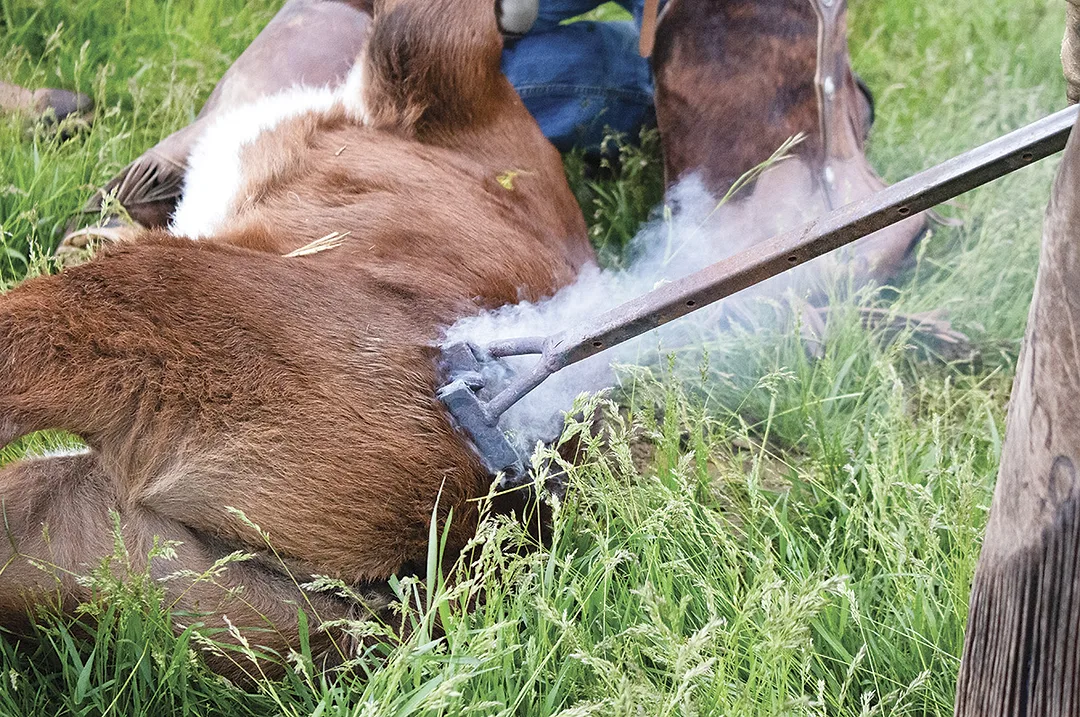
Among common management practices, branding presents one of the greatest challenges for pain mitigation. Research indicates that behavioural and sensitivity indicators of pain can persist for weeks or even months following the procedure. Unlike castration and dehorning, current mitigation options are less effective. NSAIDs, with or without local anesthetics, provide only limited relief and do not appear to accelerate healing significantly. This underscores the need for alternative identification methods.
Technologies such as radio frequency identification (RFID) tags and freeze branding offer viable alternatives that may reduce animal discomfort while still meeting traceability requirements. As consumer scrutiny intensifies, adopting such methods could provide both welfare and marketing advantages.
Practical considerations
For pain mitigation strategies to be widely adopted, they must be practical and cost effective. Route of administration, timing of onset and duration of action are all critical factors. Products that are easy to administer, such as oral or pour-on formulations, are particularly appealing in large-scale operations.
The field of pain mitigation in beef production continues to evolve. New products, delivery systems and strategies are being developed to improve both efficacy and practicality. Innovations such as transdermal formulations, long-acting implants and stress-reducing compounds like bovine appeasing substances show promise, though further research is needed.
Importantly, no single product or approach completely eliminates pain. Instead, the goal should be continuous improvement through evidence-based management and the adoption of multimodal strategies. Multimodal analgesia remains the most effective approach, particularly for procedures such as castration and dehorning. Early intervention, careful technique selection and ongoing evaluation of new technologies will be key to advancing animal welfare.
While cost remains a consideration, many producers are recognizing that the benefits of improved animal welfare can extend beyond immediate economic returns. Healthier, less-stressed animals may show improved performance, and proactive welfare practices can enhance market access and consumer trust. As expectations from consumers and supply chains continue to evolve, proactive pain management will become not just a best practice but a requirement for sustainable beef production.