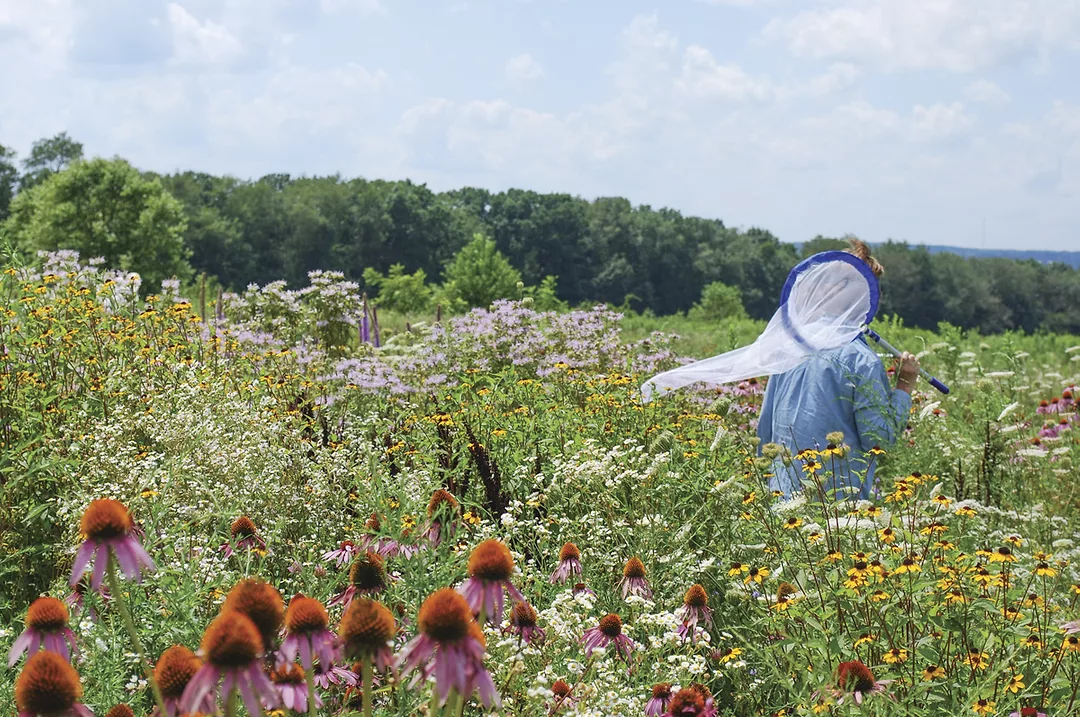
Pollinators are essential to healthy ecosystems and our food supply. Nearly 90% of the world’s flowering plants, including most food crops, need pollination. It isn’t just the familiar domestic honey bee doing that pollination; we also rely on the pollination services of the 4,000 different species of native bees and other pollinators in the U.S.

Other pollinating insects, including butterflies, moths and beetles, also help support healthy ecosystems that sustain native vegetation, which stabilizes soil, cleans the air and supports wildlife. We need pollinators to sustain our food supply and our ecosystems.
Pollinators also need us because their populations are in serious decline. Over one-fifth of native North American pollinators are considered at an elevated extinction risk. The loss of feeding and nesting habitat is one of the primary reasons for their decline, along with disease and parasites, the misuse of pesticides and changes in climatic patterns.
In agricultural landscapes, the loss of habitat from crop production and pesticide exposure has put pollinator populations under a lot of stress, leading to troubling losses in diversity and population.
The good news is, we know that conservation practices work to support and protect pollinators. As stewards of the land already, dairy farmers are uniquely positioned to support pollinators. The same land used for growing crops, forage and grazing can also provide vital habitat for pollinators. By using management practices that are also supportive of pollinators, or are pollinator-friendly, dairy farmers can provide food sources, nesting and overwinter sites and protection for pollinators – all while maintaining productive operations.
Courtesy image.
Practices that will help support or protect pollinators have at least one or more of these key goals in mind:
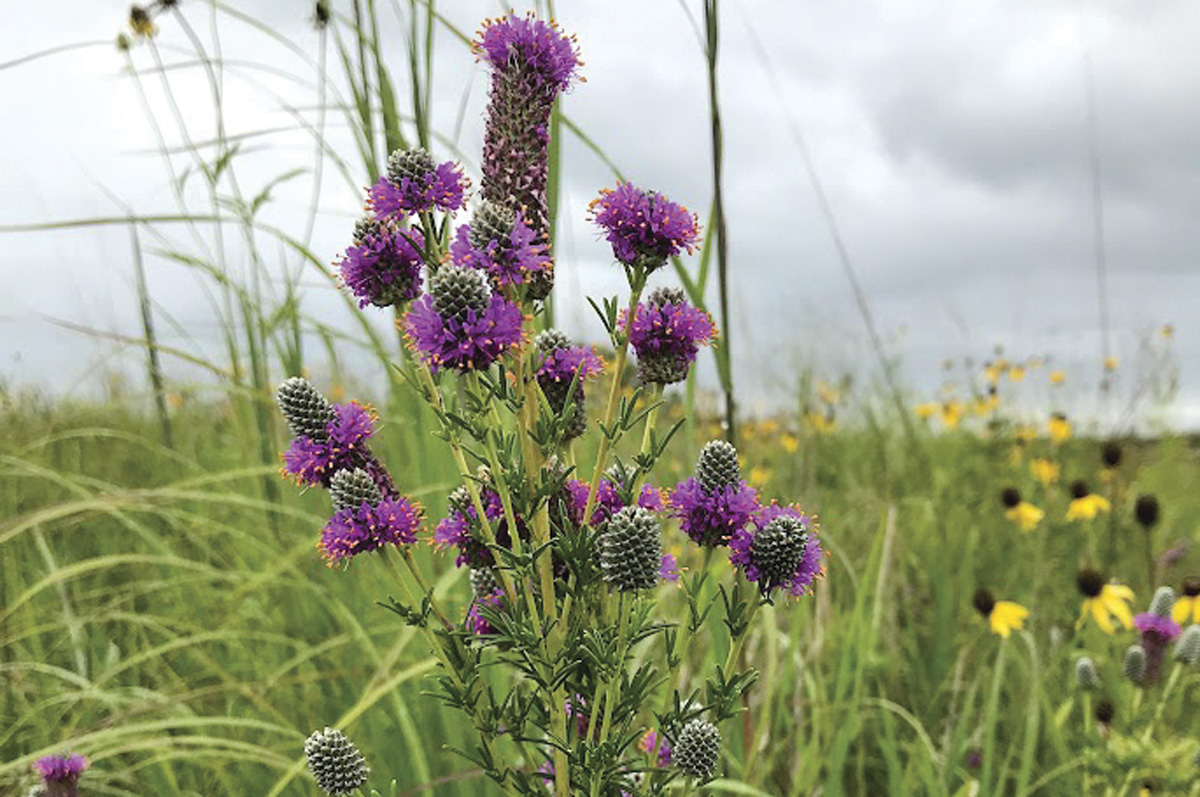
- Grow blooming species that are food sources for pollinators all season long, with the goal of providing continuous bloom from early spring through fall.
- Provide nesting and overwintering sites for pollinators.
- Reduce and eliminate pesticide use whenever possible.
Pollinator-friendly management not only benefits pollinators but also provides numerous advantages for farm productivity and ecosystem health. Healthier pollinator populations can boost forage and crop yields, while also supporting diverse communities of beneficial insects that help control crop and livestock pests. Additionally, land management practices that benefit pollinators enhance soil health by improving biological activity, water retention, erosion control and carbon sequestration.
To learn more about farmers' perspectives and willingness to incorporate pollinator-friendly practices on their operations, we arranged farmer interviews, focus-group discussions and an online survey to examine what is already being done on dairy farms and what information or resources are needed.
When asked, “Have you thought about the roles that pollinators play on your farm? If so, what role(s) do you believe they play?” we received some very insightful answers from dairy farmers:
- I believe when I see a vibrant community of wildlife or pollinators, it’s an indicator [that] I'm taking care of the land, which in turn produces healthy food and future.
- We cannot exclude any part of the ecosystem when designing holistic grazing plans. The pollinator is just as important as the soil microbes and fertility of the soil. And they give us a chance to pause and reflect on nature's design and the importance of making nature a key component to our production model and quality of life.
- We try to support complex ecosystem functions throughout the farm and recognize that although pollination might not directly impact dairy production, insect diversity will at the least tangentially benefit soil health and consequently animal health.
Courtesy image.
Talking with dairy farmers, a lot of on-farm conservation practices are already being done on their lands, and yet many farmers are keen to adopt or try more after learning about the benefits of these practices and the variety of options. Some farmers feel that taking land out of production to plant pollinator habitat is just unfeasible because of land cost or that it is just too risky. However, there is a wide diversity of practices that can be utilized to reach their goals of providing more support for pollinators, varying in scale and type and applicable to different types of dairy farms.
It is worthwhile exploring different options that work for each farming operation. Some options can even be dual-purpose, for example, planting blooming cover crops offers soil health benefits and grazing forage while simultaneously providing food sources for pollinators. Below are some suggested ways to support pollinators, specifically on dairy farms.
For all dairy farmers, and those who have mixed farming systems:
- Allow wooded, wetland, fallow and riparian areas to remain wild; these serve as nesting and overwintering sites for pollinators. Don’t spray pesticides in these areas.
- Plant or allow flowering trees and shrubs to grow as fencelines, hedgerows or windbreaks.
- Use pest management practices that reduce or eliminate the need for insecticides for livestock, such as prevention, biological control methods or organic methods.
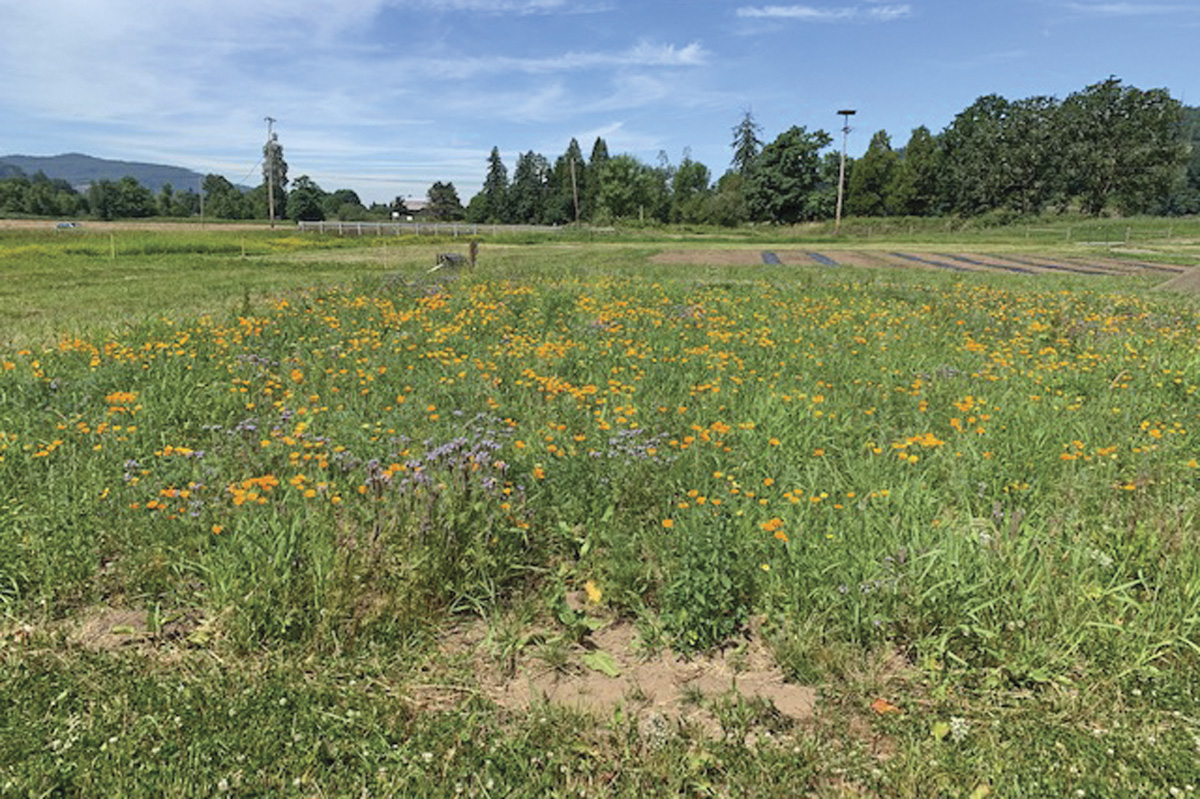
- Diversify pastures or hayfields to include blooming legumes and forbs. Native species are best for pollinators, but the more common forage clovers and other flowering forbs like chickweed add foraging resources for pollinators too.
- Maintain some bare soil patches as undisturbed nesting areas for native bees.
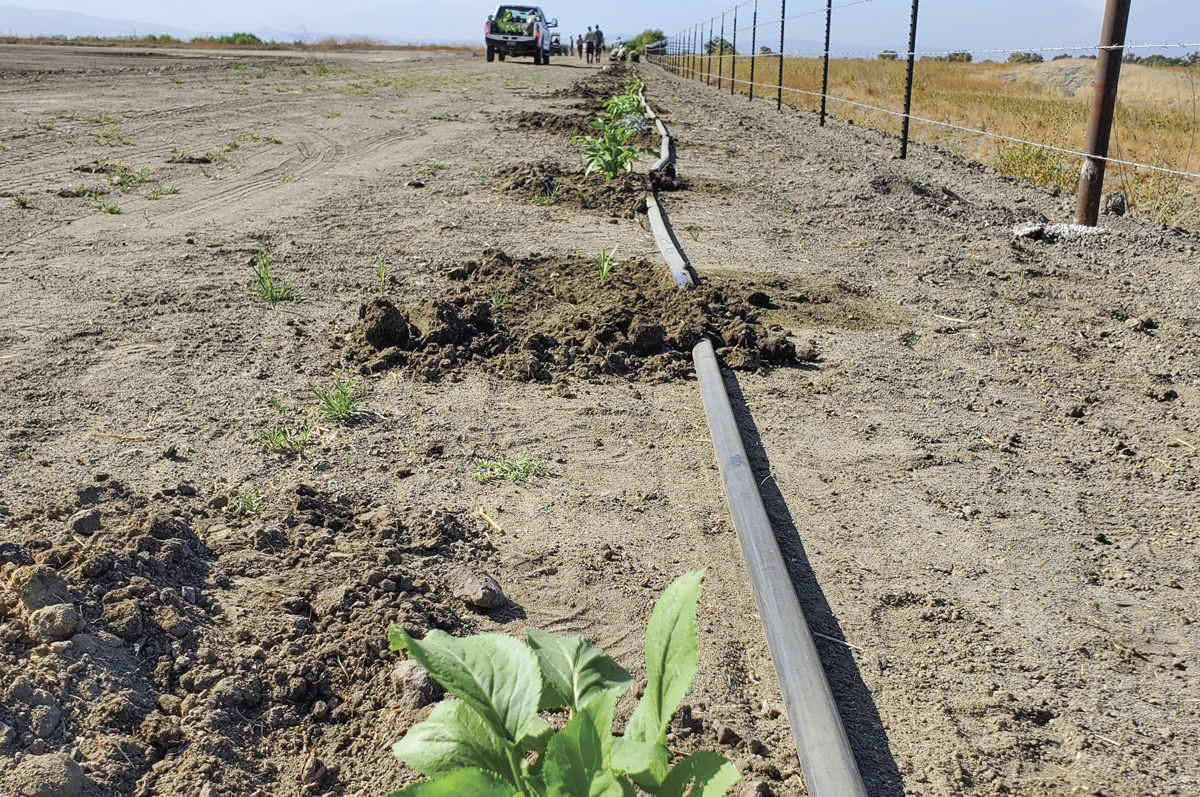
- Place pollinator plantings in less productive areas of the farm or install prairie strips next to crops to help reduce soil erosion.
- Allow ditches or set-aside areas to naturalize with wildflowers.
- Maintain a buffer between crops and pollinator habitat to provide protection from pesticide exposure.
Courtesy image.
For dairy farmers who grow crops for forages:
- Reduce tillage or use no-till practices to maintain undisturbed nesting sites. Many of our native bees use underground tunnels or old rodent holes for nesting sites.
- Choose blooming cover crops for intercropping to increase soil health and provide forage for pollinators.
- Establish pollinator or prairie plantings next to field crops like soybeans to increase yields and enhance beneficial insects that can help reduce pest pressure.
For dairy farmers who are grazing:
- Use smaller paddock sizes and frequent rotations to allow some species to bloom between grazing events.
- Try grazing cover crop mixes that include flowering legumes and forbs.
- Integrate trees and pasture – silvopasture combines pasture for grazing and trees for food (e.g., fruit or nut trees) or timber.
Adopting new practices on farms certainly comes with challenges. Dairy farmers have cited the cost associated with seed or planting materials, lack of technical knowledge and time as some of their primary constraints to adding new pollinator-friendly practices on their farms.
There are an array of incentive and cost-share programs to help offset some of the costs, such as farm bill programs through the USDA Natural Resources Conservation Service (NRCS) and technical help and resources available through a number of different avenues: Farm Bill Biologists – which is a partnership between Pheasants/Quail Forever, the Illinois Department of Natural Resources and the NRCS – and nonprofit organizations such as Pollinator Partnership and Monarch Joint Venture.
Supporting pollinators on farms and ranches can start small and be incremental – any amount of effort will be noticed. The decline of our pollinators is a situation we are all in together, and we all can do something to help support these essential pillars of our agricultural and natural systems.