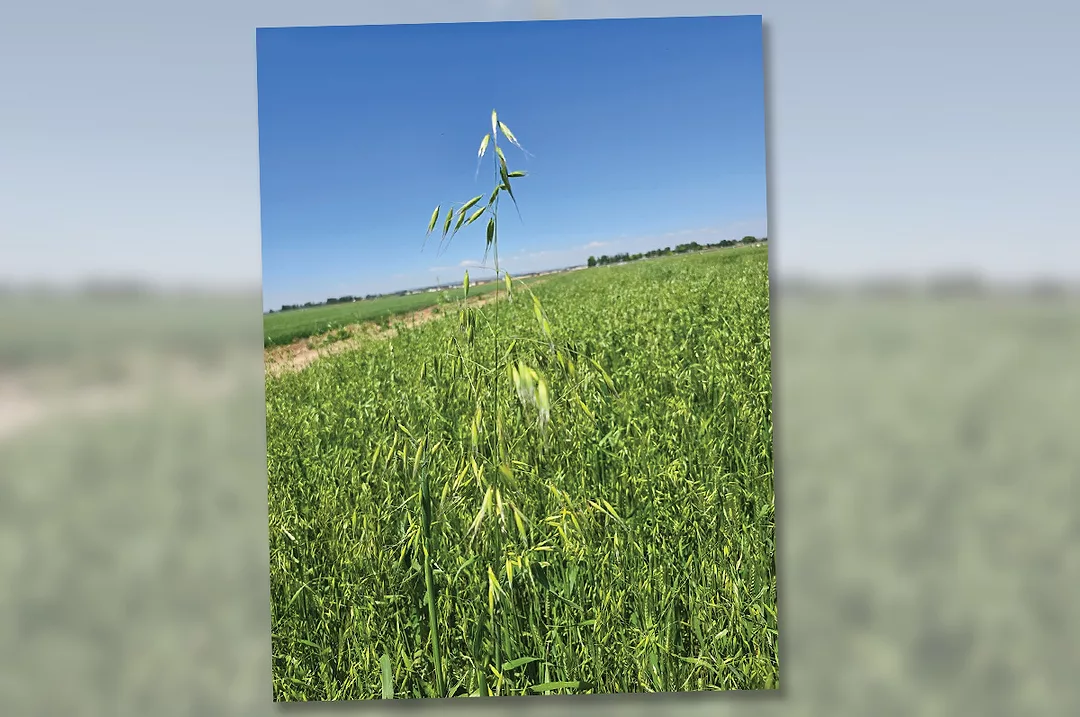
Wild oats (Avena fatua) – they’re fast, sneaky and persistent. If you’re a small-grain producer, you already know this grassy weed can rob you of yield, quality and profits. But here’s the good news: With smart strategies, you can turn the tables.

Why worry about wild oats?
Wild oats are one of the worst grassy weeds in small grains. A single wild oat plant can produce up to 250 seeds – and these seeds can survive in the soil for up to eight years! Even a small patch can explode into a big problem if left unchecked.
Wild oats compete hard with small grains, especially if they emerge with the crops. Wild oats can be a huge economic burden to farmers. Just 10 wild oat plants per square foot can reduce barley yield by 18% and wheat yield by more than 24%. Aside from crop yield reduction, they increase production costs (e.g., herbicide and application, seed cleaning, etc.), delay harvest due to slowed crop maturity, increase harvest time, produce dockage due to seed contamination (especially in malt barley), act as host to other pests, decrease grain quality and increase transportation fees for contaminated grain.
Wild oats can host cereal cyst nematode, stem nematode, rhizoctonia, crown rot and root lesion nematode. Plus, they complicate harvest, contaminate grain and reduce wheat quality. Herbicide resistance is also a major factor influencing the spread and impact of wild oats in small grains. In the Pacific Northwest alone, wild oat has developed resistance to at least four herbicide modes of action, including ACCase inhibitors (group 1), ALS inhibitors (group 2), microtubule inhibitors (group 3) and inhibitors of very long-chain fatty acid synthesis (group 15). Populations with resistance to more than one herbicide mode of action have also been reported.
Strategies for wild oat management
Clean seed, clean equipment
Start with the basics. Make sure your crop seed is clean – don’t import wild oat problems by planting contaminated seed. Also, clean equipment between fields. Wild oat seeds can hitchhike on combines, trucks and grain bins, ready to invade your clean fields. A few extra minutes of cleaning can save you years of trouble.
Early action counts
Wild oats germinate early and fast. Walk your fields early in the season, especially in known hot spots. If there’s a first flush before planting or grain emerges, control them with an effective postemergence herbicide (e.g., glyphosate, tiafenacil, paraquat, clethodim, quizalofop, sethoxydim, etc.). Remember: Timing is everything. A late spray, after the wild oats have set seed, is like closing the barn door after the horses are gone.
Apply effective herbicides, but beware of resistance
Several herbicides are labeled for selective control or suppression of wild oat in small grains. However, wild oat with resistance to some of these herbicides are now commonly found in Idaho.
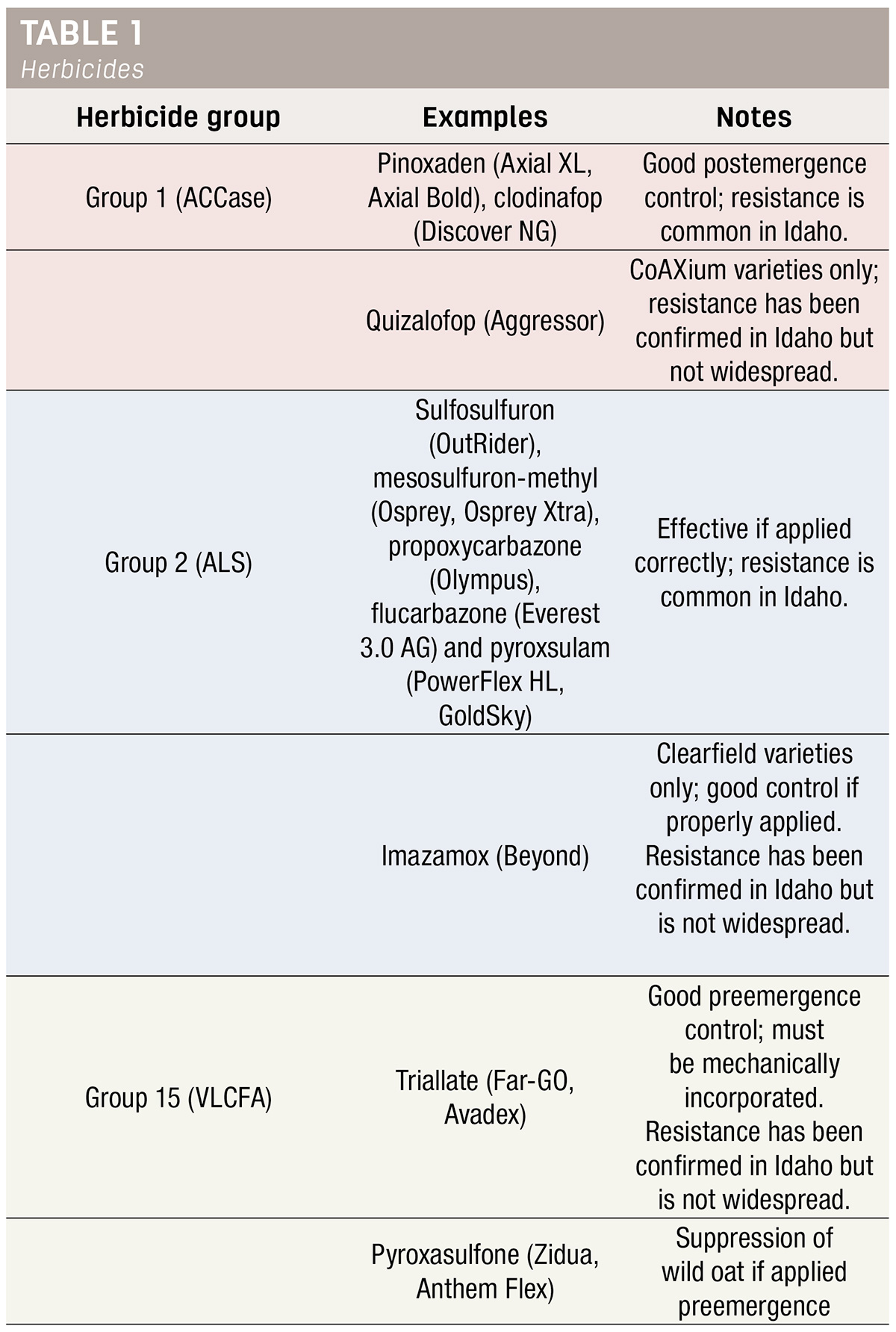
In broadleaf rotational crops, group 1 herbicides such as sethoxydim (Poast), clethodim (Select Max, Section Three, etc.) or quizalofop (Assure II, Targa) can be used to manage wild oat. In addition, group 3 herbicides (microtubule assembly inhibitors), such as ethalfluralin (Sonalan HFP), pendimethalin (Prowl H2O) and trifluralin (Treflan HFP); and group 15 herbicides (inhibitors of very long-chain fatty acid synthesis), such as dimethenamid-P (Outlook) and S-metolachlor (Dual Magnum), can be used to manage wild oat in rotational crops where these herbicides are labeled. For current herbicide control strategies for wild oat, refer to the Pacific Northwest Weed Management Handbook, PNW Extension Bulletins and contact your local county extension educators or agricultural professionals.
Remember these best practices:
- Apply at the right crop and weed stage.
- Follow label rates and guidelines.
- Mix or rotate herbicides with different modes of action.
- Scout after spraying to check results.
Rotation, rotation, rotation
Relying only on wheat year after year builds up wild oat pressure. Crop rotation is your friend here. Rotate to broadleaf crops like canola, pulses, sugarbeet, potato, dry bean, where you can use different herbicides and knock back the wild oats. Bonus tip: Try including crops with different planting or harvest dates than small grains to disrupt the wild oat life cycle even more.
Keep the pressure on
Even after spraying, you need to monitor and control escapes. Walk (or use a drone) to scout your fields midseason. Spot-spraying small surviving patches can make a big difference in reducing next year’s seedbank.
Think long term
Wild oats aren’t a one-year fight – they’re a long-term management challenge. Keep detailed field notes. Where are the worst patches? What worked and what didn’t? Integrate cultural, mechanical and chemical tools to avoid relying on any one method too heavily. This helps prevent herbicide resistance and keeps your tools effective for years to come.
Wrap-up: You can outsmart them
Wild oats are tough – but they are not invincible. By staying vigilant, using diverse control methods and thinking ahead, you can keep wild oats in check and protect your crop yields. So next time you walk your fields, remember: Every wild oat you stop today saves you a headache tomorrow.
Quick takeaways
- Use clean seeds and clean equipment.
- Hit wild oats early with herbicides.
- Rotate crops and herbicide modes of action.
- Monitor for escapes and apply patch or spot control.
- Think long term and beware of resistance.