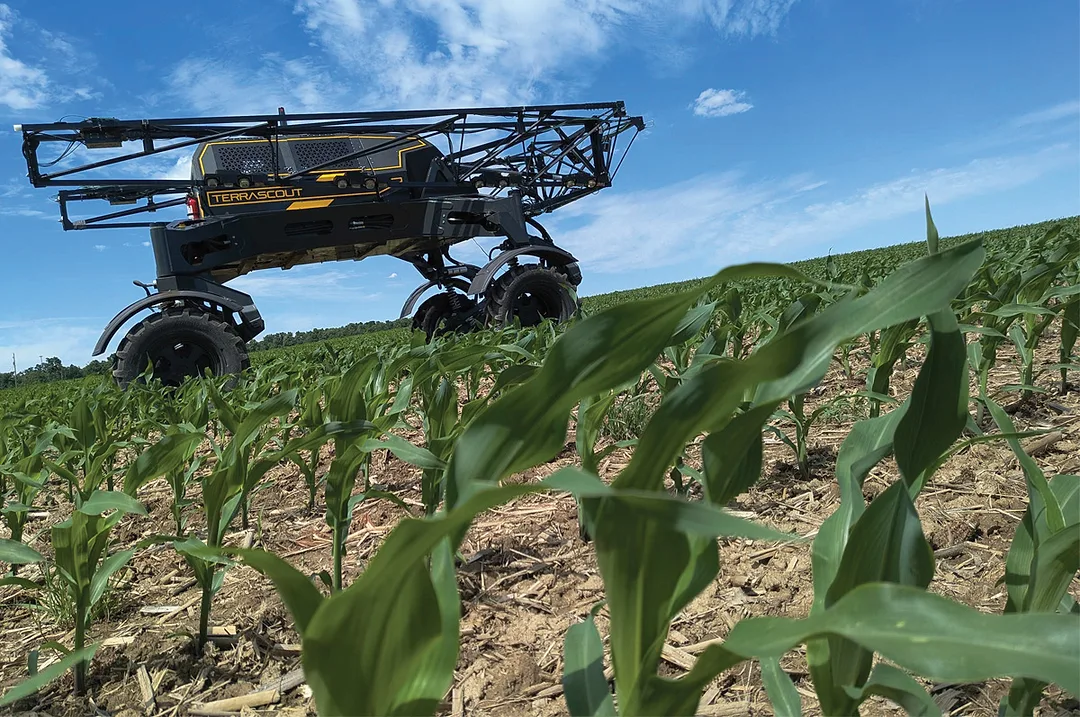
Every company has a founding myth, a moment when a problem is identified and an idea is born. For TerraClear, a company founded in 2018 to make picking rocks easier, that moment came when founder Brent Frei was taking a break from tech to visit the family farm near Grangeville. “The farm was running combines on GPS, and his 80-year-old dad was still out there walking with a tractor, picking rocks by hand,” says Don Scribner, director of product.

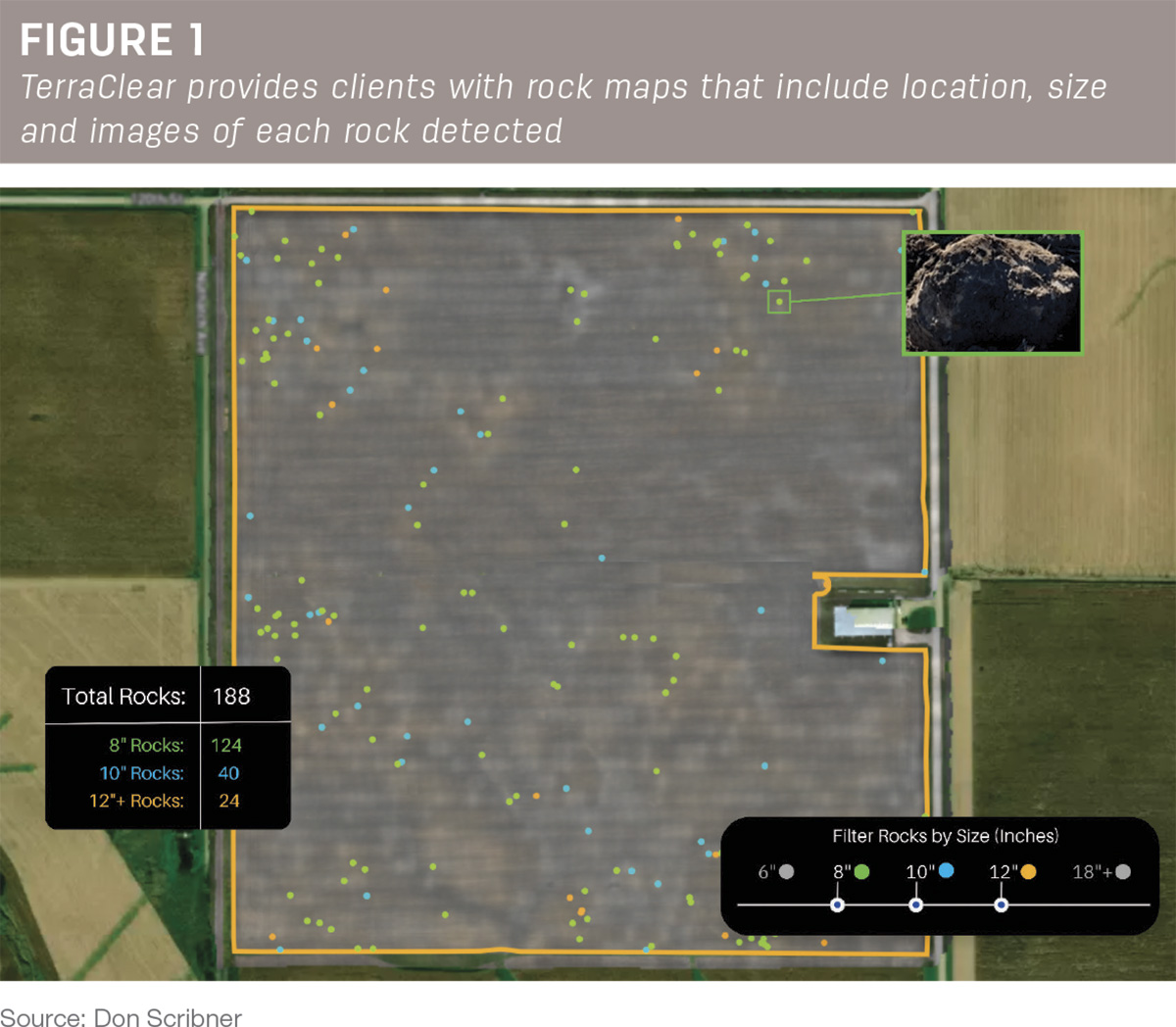
“We were founded as a rock-picking company, using robotics and technology to get rocks out of the field,” says Scribner. At its most basic level, this means using artificial intelligence (AI) to identify rocks in drone imagery of a field. The resulting “rock map” has many features, including the capacity to filter by rock size. Even if the producer is picking rocks by hand, the map can save steps and prevent skips. To add another level of autonomy, the company is now building pickers that can follow the maps.
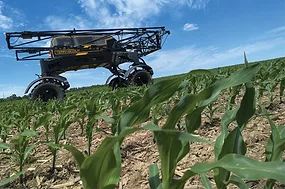
The next step for TerraClear is weed map production. Slated to go live for corn, soybeans and fallow next spring, weed maps will mark presence, counts and height index for target weed species in each square-foot grid space across the field. Like rock maps, weed maps will be available for the producer to download, send to a third-party contractor or input into another piece of equipment, such as a self-propelled sprayer with capacity to spot spray. “You can see it, make a decision and take an action,” says Scribner.
Resource management
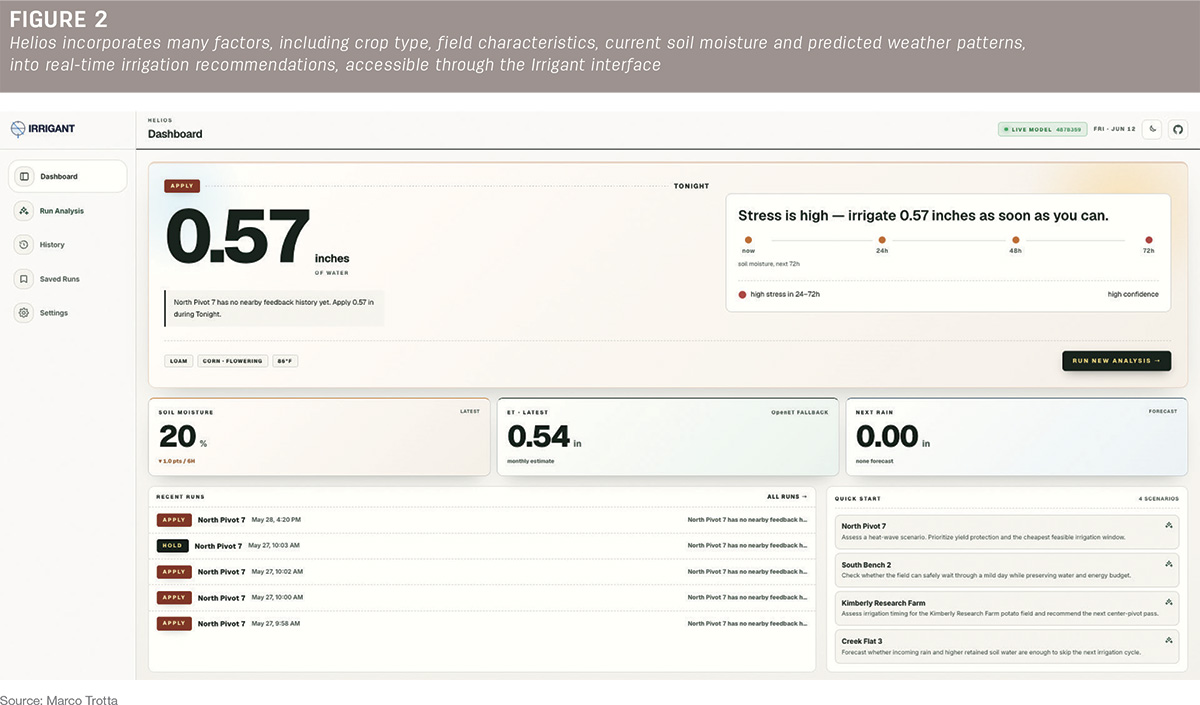
In Ada County, entrepreneurs are using AI to conserve water. High school students Marco Trotta and Henry Turcotte are the founders of Irrigant, a venture designed to provide AI-powered irrigation decision support. The company runs on Helios software, which Trotta and Turcotte developed in collaboration with experts from the University of Idaho (U of I), Oregon State University and Washington State University. “It’s trained off real Idaho farms,” Trotta says. “It ingests things like OpenET data and specific farm details.” Field area, crop type and growth stage, soil type, slope, current soil moisture and weather patterns are just a few of the factors incorporated into the model. Producers can even input specifications such as irrigation type, budget, pump type and water rights schedules. “When a farmer is using Helios, they’re able to understand what they’re doing and log it,” he says. He envisions the water-use data then being available for irrigation district managers, research and government reporting.
“From a really wide lens, water usage is becoming more crucial to pay attention to,” says Trotta. A 2015 USGS publication placed Idaho’s water withdrawals at more than 17 billion gallons per day, with 86% of that dedicated to irrigation. “Many farms are still watering like they did 50 years ago,” says Trotta. “The systems around irrigation are pretty archaic.”
Irrigant’s premise is that by optimizing water use, farmers will reduce cost, reduce waste and improve yields. “We forecast that a 10 percent to 15 percent savings in water usage would pay for Helios,” Trotta says. The software is slated to go public for the 2027 growing season.
In Pocatello, MOATiT is “the IT department for southeast Idaho,” founder Ali Khan said at a recent event. The company has locations in three states across the Intermountain West and offers multiple services, such as phone service, satellite internet, cybersecurity and developing AI models for its clients.
“AI has democratized tech so much,” says Khan. “A single farmer can walk into our office and say, ‘These are my pain points,’ and know I can solve it.” Whether that means guidance on remote irrigation controls or administrative work from ordering seed to harvest. “There’s a lot of very simple headache-based work farmers do. Ninety percent of their work I can eliminate, on the administrative side.”
Research and development
Research is also leaning more heavily on AI these days, in both universities and ag tech companies, particularly in data-heavy fields such as genetics and agronomy. For one client, MOATiT has built a searchable server to store data and research, extract images and even use the stored information to answer technical questions or run analyses. For another, MOATiT built a system to automate gene analysis in the lab, creating order and simplifying the process. A third commissioned MOATiT to build a model to identify plant growth patterns from on-farm photos to assist in long-term studies.
Meanwhile, at U of I’s Center for Agriculture, Food and the Environment (CAFE), Dr. Mireille Chahine, professor and extension dairy specialist, says, “What AI will do is allow us to make sense of data.” CAFE is still in the building stage, but its goal is to use cutting-edge technology for systems-level research in the largest research dairy in the country. “It’s rare to have a research lab at the scale of a commercial dairy,” she says.
Historically, researchers were most often limited by data collection constraints. Today, with automatic data collection via cameras and sensors, “There can be so much data, we can struggle with it,” says Chahine. “We have a sensor for everything, but they don’t talk to each other.” That is where AI comes in, for pattern recognition among diverse datasets, such as those for environmental and physiological traits. Chahine sees it as a valuable data management tool, when used wisely and with human validation. “We need to develop a hypothesis before analysis,” she says. “Sometimes a [statistically] significant difference is not relevant biologically. You have to look at it.”
Chahine is excited about the potential of humans using AI as a tool in dairy science research, likening it to the advent of the industrial revolution. One particular example she forecasts for its application is in helping identify early signals of disease or other health issues. “It could make a difference in farmers’ lives, a difference in animals’ lives and a difference in the environment,” she says. “But we need to evaluate it for, ‘Does it make sense?’ We need to develop critical-thinking skills.”
Trade-offs
As AI pops up everywhere from rock picking to research, the question is how AI use interacts with critical thinking. Studies in medicine and education demonstrate that using AI creates a “deskilling” effect, where people lose – or never gain – the brain capacity for the tasks they assign to AI. That may not be an issue for some tasks, but it is a real concern for others, particularly in a field that depends so much upon the producer’s knowledge, experience and ability to respond to crises.
We cannot turn time or technology backward, and the ability to automate or remotely control some tasks is a powerful tool in the agricultural toolbox. “We need to not be scared about it, but we need to be smart about it,” says Chahine. “It has limitations.”