
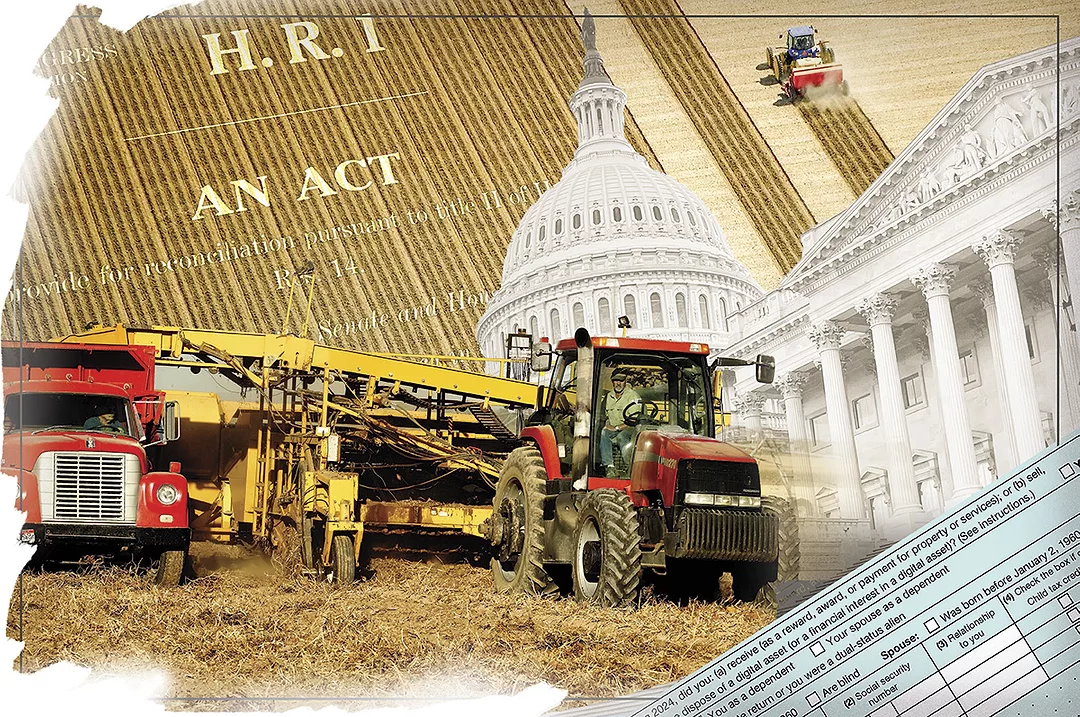
H.R. 1 of the 119th Congress – "The One, Big, Beautiful Bill" – was signed into law by President Donald Trump on July 4, 2025. This bill represents a cornerstone of Trump's second-term agenda, and the One Big Beautiful Bill Act (OBBBA) ranges from extending the 2017 Tax Cuts and Jobs Act to trimming programs such as the Supplemental Nutrition Assistance Program (SNAP) and Medicaid, and adding funding to border security. No doubt OBBBA is big. Beauty? Well, that’s in the eye of the beholder.

For those tilling the soil and herding the cows, OBBBA packs a punch, including $66 billion in new agricultural funding over the next decade. It sneaks in bits of a stalled farm bill, dubbing itself "Farm Bill 1.0.” Through OBBBA, Congress reshaped farm policy by enhancing safety nets, tax incentives and conservation efforts.
OBBBA extends commodity programs from the 2018 Agriculture Improvement Act through 2031. Beginning in crop year 2025, reference prices (price guarantees) for covered commodities like wheat, corn and soybeans will increase by 10% to 20% to better reflect inflation and input costs. Beginning in 2031, these reference prices will now inch up 0.5% annually on a compounded basis, with growth capped at 113%.
OBBBA tweaks Agricultural Risk Coverage too, bumping revenue guarantees from 86% to 90% and raises the maximum payment from 10% to 12% of benchmark revenue. Plus, OBBBA offers a one-time opportunity to allocate new base acres nationwide (up to 30 million acres), extends beginning farmer and rancher benefits (from five years to 10 years) and expands Whole Farm Revenue Protection insurance and Supplemental Coverage Options, allowing producers greater flexibility in tailoring risk management strategies.
Tax provisions are also central to the bill's agricultural impact. OBBBA makes 100% bonus depreciation permanent for farm equipment and machinery, allowing for immediate expensing of these items rather than gradual deductions. Section 179 expense maximum was also increased from $1.25 million to $2.5 million.
Additionally, OBBBA places a permanent extension of the estate and lifetime gift tax exemption to $15 million for single filers ($30 million for joint filers) for 2026 and adds a nice index for inflation going forward. This provides "death tax relief" as family farms are passed to the next generation.
Trade gets a nudge to open global markets, curb tariffs and level global competition. OBBBA directs the USDA to carry out programs to encourage the development, maintenance and expansion of commercial exports of U.S. commodities. OBBBA even provides $285 million of funding for these directives beginning in fiscal year 2027.
Conservation and risk management receive boosts too. The bill allocates $10 billion to programs such as the Environmental Quality Incentives Program (EQIP) and Conservation Stewardship Program (CSP), rescinding unspent Inflation Reduction Act funds while adding to baselines.
SNAP receives cuts – reducing benefits by $30 billion via stricter work requirements and state cost-sharing.
Idaho's $11 billion agricultural sector relies on dairy, potatoes, forage, wheat, barley and sugarbeets. While the above-mentioned provisions will benefit Idaho agriculture across the board, a closer look at these industries is meaningful.
OBBBA extends Dairy Margin coverage (DMC) through 2031, preventing any lapse in coverage that could occur under prior authorizations (previously set to expire in 2025). DMC coverage is raised from 5 million pounds to 6 million pounds to accommodate larger herds and higher per-cow production. Plus, production history for participating dairies is now based on the highest milk marketings from any one of the calendar years 2021, 2022 or 2023, providing a more favorable baseline considering recent production peaks. OBBBA polishes it off with a 25% discount on DMC premiums for producers committing to multiyear enrollment, promoting long-term participation and cost savings.
The USDA’s sugar program was extended through 2031 and includes priority allotments for beet processors, favoring Idaho’s producers. The USDA was also directed to modernize beet sugar allotment rules and improve the timing of quota reallocations. Additionally, the USDA was directed to provide a new study with respect to safeguards for refined sugar imports to protect the domestic sugar industry. Through these protections and directives, OBBBA offers predictability, allowing farmers to plan investments in equipment, land and operations without fear of policy cliffs.
Potatoes, Idaho’s celebrity, fall under the USDA’s Specialty Crops designation. Specialty crops stand to benefit from enhanced funding for trade promotion, tax relief, crop insurance and conservation programs. These provisions aim to bolster the farm safety net amid rising costs, pests and market volatility. However, the bill's broader context, including potential tariffs and SNAP cuts, could introduce challenges like export disruptions and reduced domestic demand.
The Specialty Crop Block Grant Program receives $85 million annually through 2025, then $100 million in 2026. This supports state-level initiatives for potato growers, such as marketing, food safety and sustainability projects. The Specialty Crop Research Initiative more than doubles to $175 million in fiscal year 2026, funding advancements in pest control (e.g., against potato beetles or late blight), crop breeding for disease-resistant varieties and mechanization to reduce labor costs.
Lastly, OBBBA makes permanent small-business tax deductions – a favorite for over 200,000 Idaho entrepreneurs – including family farms and ranches. The law boosts the standard deduction to $31,500 for families. Nationally, this provides up to $200 billion in new tax relief to the nearly 90% of taxpayers who claim it.
No doubt OBBBA is big, and if you appreciate tax cuts, improvements to commodity and insurance programs, and funding for trade and conservation promotion, OBBBA is beautiful. OBBBA certainly aims to provide a path for investing in the nation’s agricultural future – a future that looks to support many of Idaho’s farmers and ranchers.


.webp?height=auto&t=1783636475&width=285 "63802-Thomas-GPS-equipment--Automated-Magnum-Tractor--Matt-Skinner-photo(1).jpg")
