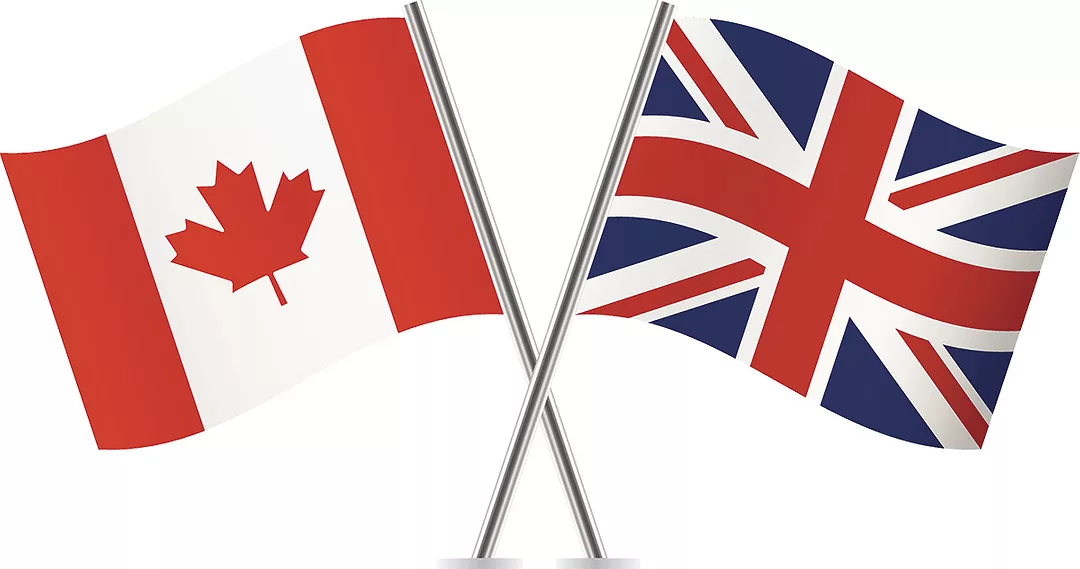
On Oct. 23, the Canadian Cattle Association (CCA) published a statement calling for the federal government to terminate the trade deal known as the Canada-U.K. Continuity Agreement, which has been in place since the United Kingdom’s (U.K.) departure from the European Union (EU) in January 2020. The organization says reestablishing meaningful trade with between Canada and the U.K. requires ending the current agreement and restarting bilateral negotiations.

No Canadian beef has been exported to the U.K., but imports of U.K. beef to Canada exploded 156% in 2024 and are up 19% so far in 2025.
“In July 2023, the Government of Canada announced the accession of the U.K. to the CPTPP agreement,” the CCA said in a press release. “CCA, our provincial members and beef producers across the country urged Canada to ‘say no to a bad deal.’ Since then, the U.K. has not made any effort to address the non-tariff barriers that are keeping Canadian beef out of the U.K. market. At the same time, U.K. beef imports into the Canadian market have increased from 16.6 million dollars in 2023 to 42.5 million dollars in 2024.”
After Brexit, the U.K.’s trade policy no longer fell under EU jurisdiction, but Canada agreed to continue offering the U.K. the same preferential trade terms it had benefited from under the Canada-Europe Comprehensive and Economic Trade Agreement (CETA). The new “continuity” agreement, though limiting formal trade barriers like tariffs, left open to interpretation which food safety standards would apply to cattle and beef crossing the Atlantic. Such regulations have now effectively blocked Canadian beef exports to both the U.K. and EU. The Canadian beef industry spent years securing policies and regulations that ensured cattle and beef met standards that lined up with the U.S. industry, and producers feel their product is being treated unfairly in British and European markets. Scientific and technical committees formed with the intent to reconcile these competing regulations have so far been ineffective in realizing any meaningful headway.
“This agreement was always meant to be temporary,” CCA President Tyler Fulton, a third-generation Manitoba rancher, said. He pointed out that it was the U.K.’s decision to walk away from the negotiating table in 2024 during the run-up to an election that saw a major defeat for the British Conservative Party. Talks toward a permanent bilateral trade agreement haven’t restarted under Britain’s new government under Keir Starmer. The CCA says it wants to resume those talks to bring closure to these market access issues.
The beef industry’s throwing down of the proverbial gauntlet follows the introduction earlier in the week of legislation to implement the U.K.’s accession to the Comprehensive and Progressive Trans-Pacific Partnership (CPTPP), a Pacific Rim trade deal the British government sought to join in the trade and political aftermath of Brexit. Seven member countries of the CPTPP have ratified the U.K.’s entry, which took effect last December, though the Canadian government held off its ratification for months.
If the U.K.’s membership in the CPTPP membership is ratified as expected, Canadian livestock producers could see more access to the British consumer market than the current continuity agreement provides – but likely only if the existing regulatory barriers are resolved. In return, British food and agriculture products could also find more tariff-free space in Canada.
“The U.K.’s non-tariff barriers are not compliant with the World Trade Organization (WTO), who ruled against the EU Hormone Ban in December 1997, which the U.K. continues to apply to Canada,” the CCA press release reads. “In addition, the U.K. refuses to recognize full systems approval for our meat hygiene system, which is recognized as world-class.”
“… Canada and the U.K. also committed, through parallel exchanges of letters, to work together on issues of relevance to trade in the meat sector and for biotechnology products with a view to facilitate trade, yet there has been no progress made on addressing any of the meat issues and ensuring meaningful trade access,” the release continues. “Following the prime ministers’ announcement to set up a technical working group to address market access issues, there has been no indication of progress.”
“We are calling on all parliamentarians to stand up for Canadian beef producers,” said Fulton. “In these uncertain geopolitical times, we need every opportunity to diversify our markets.”