
“What’s really striking is how effective the conservation districts are with how little funding they receive,” says Ada Soil and Water Conservation District Director Jessica Harrold. “We magnify our funding and support. There’s a great return for investing in conservation districts.” For every $1 received in state funding, conservation districts source $2.82 elsewhere.

“It’s incredible how much we do with part-time employees,” she adds, noting also that board members – 280 statewide – are volunteers, racking up around 7,000 hours in 2024. “They’re all local folks that are passionate about conservation and getting these resources out to other producers.”
Data from 50 districts
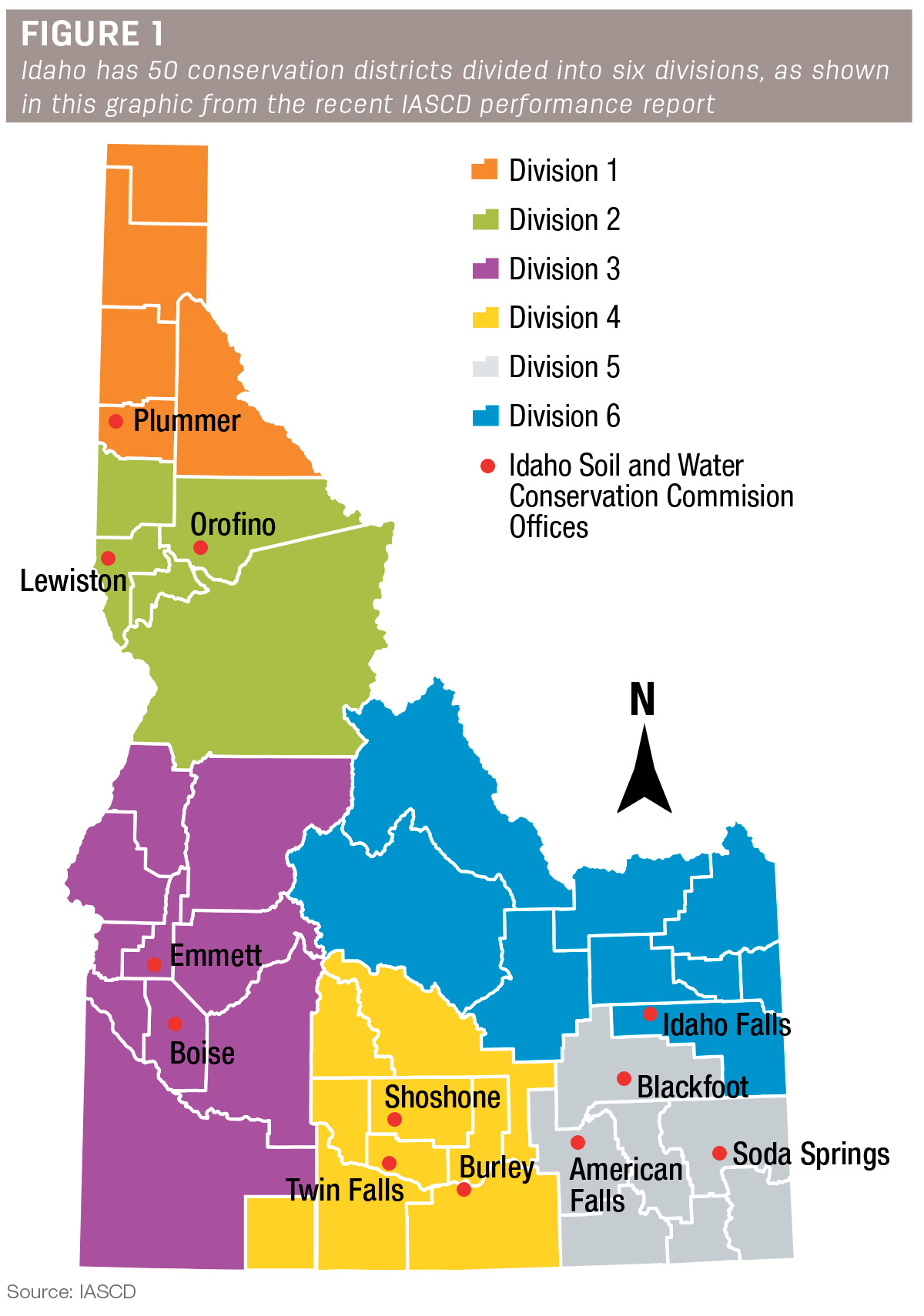
Harrold was the driving force behind a recent statewide, graphics-based performance report released by the Idaho Association of Soil Conservation Districts (IASCD), the first of its kind. “I had been looking at data because I was starting to prepare for the legislative session coming up,” Harrold says. Under Idaho code, each of Idaho’s 50 conservation districts must submit a performance report annually. These two-page, text-based reports are publicly available, but there is no comprehensive summary of the data.
As Harrold surveyed the individual reports, she was struck by the sheer volume of impact across the state. “The data kept growing and getting really impressive,” she says. With the blessing of – and funding from – IASCD, she compiled an eight-page report summarizing the work of Idaho’s districts for the 2024 fiscal year. The intended audience is the Idaho Legislature, but the report is also available for public viewing.
The response has been positive. “Jessica did a great job with that – I’m so glad she thought of it and did it,” says Devin Fielding, who is currently serving as the North Bingham Soil Conservation District chairman, the Division 5 director and the IASCD treasurer. “I would hope we could do it every two to three years. If we had the budget, I would do it every year.”
Water
The first section of the report breaks down each of the six divisions’ “outreach” (i.e., the people who were interacted with) into categories: producers, community, students and watercraft inspections. Subsequent pages break down those categories further.
Harrold found the differences particularly interesting. “If you look at some divisions, they have a lower outreach but a bigger budget. That means they are project-focused, out there on the ground. That’s really beneficial to the region,” she says. “It demonstrates how districts are meeting the needs of their communities.”
Division 2’s Idaho Soil and Water Conservation District is one of those project-heavy districts. “What we’re doing right now, over the last number of years, is we’re focused on point source pollutions,” says Chairman Tom Gehring.
This means improving water quality – and salmon and steelhead habitat – by reducing runoff into the Clearwater and Salmon Rivers from numerous local animal feeding operations (AFOs). “We’re prioritizing helping farmers and ranchers put in feed pads and manure storage,” Gehring says. In one case, they helped fund soil testing to compare the outcome of applying manure or commercial fertilizers. Another facet of the district’s work is improving animal-riparian interfaces by installing off-creek watering systems, hardened crossings or fencing.
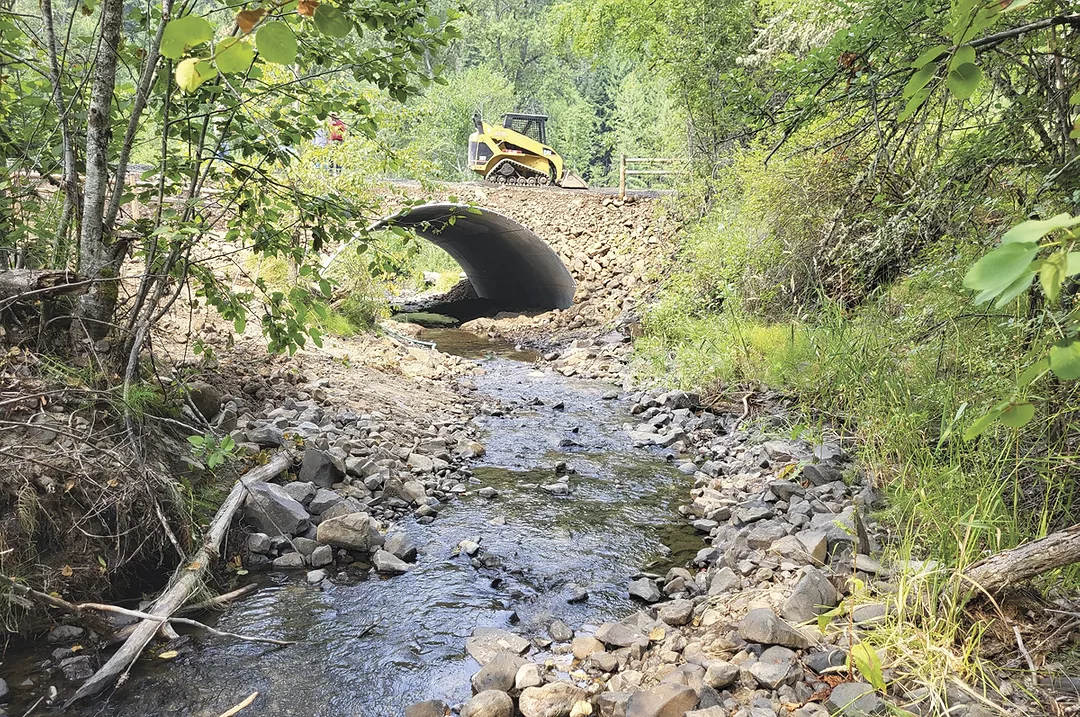
The Idaho Soil and Water Conservation District was also one of six districts to replace aging culverts in 2024. “We’re active in working with highway and road districts,” says Gehring. “There are a lot of culverts that are too high for fish passage, so we help find the funding to fix them.” Replacements have natural bottoms, are larger and avoid abrupt drop-offs – all factors that promote anadromous fish passage to historic spawning grounds.
Education
Meanwhile, in the North Bingham Soil Conservation District, water issues have more to do with irrigation than fish. “Idaho is such a diverse state,” says Fielding. “The difference between Grangeville or Bonners Ferry and Shelley is huge.”
To preserve the aquifer even as farm ground is subdivided, new owners of small parcels must use surface water for nonpotable applications. “What this gives you is a tremendous amount of interaction between the 5-acre owner and the irrigation district – or the quarter-acre owner and the irrigation district,” says Fielding.
The conservation district is working with the irrigation district to produce an educational video for new residents. “They don’t know what is an irrigation district or what is easement,” Fielding says. “We are answering some of these very basic questions and tailoring it to southeast Idaho and Bingham County.” The conservation district hopes to partner with other irrigation districts to continue the series.
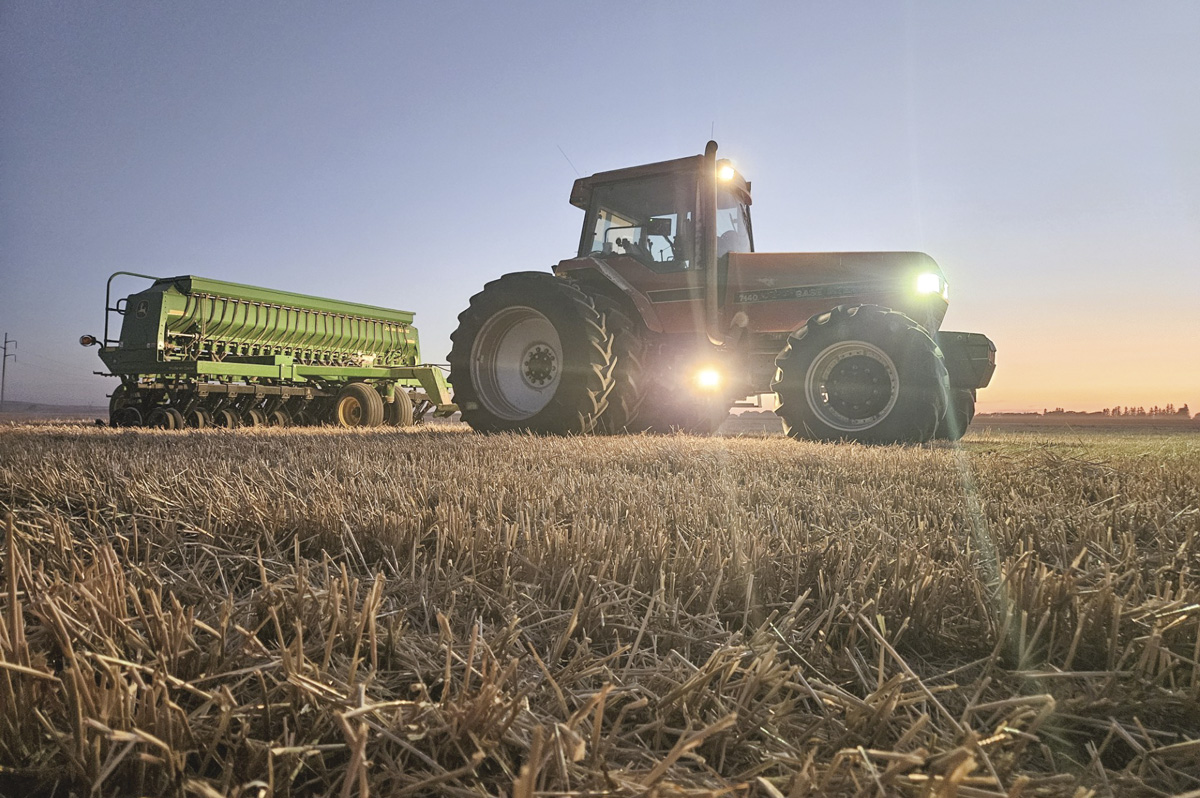
North Bingham Soil Conservation District’s no-till drill is an example of a district encouraging soil conservation practices by giving local producers access to specialized equipment. Image provided by Devin Fielding.
Like Bingham County, Ada County has its share of large producers but is rapidly urbanizing. “We are losing a lot of large farm pieces,” Harrold says. To reach a large percentage of the population, she frequently coordinates with cities and reaches out to homeowners and schools. Education programs targeting small landowners include Wise Water Workshops and the Treasure Valley Pollinator Project.
“Lots of people are moving here and reaching out to us,” Harrold says. “They are invested and interested in what we’re doing.”
Whether a district’s educational bent leans toward conferences, tours or workshops, all 50 partner with schools. “Almost half of students will receive a free education lesson at some point in their K-12 career,” says Harrold.
Soil conservation
However, even with all the water and education work, conservation districts aren’t forgetting their roots – or the soil. According to the report, conservation districts across the state owned 21 no-till drills that were used by 144 producers to plant nearly 24,000 acres in 2024. One is in the North Bingham Soil Conservation District. Fielding estimates it has been used to plant 500-1,000 acres per year since it was purchased about three years ago.
The drill benefits both large and small producers seeking solutions to “make their sand stay put,” he says. It allows larger operators to experiment with no-till seeding before committing to purchasing a new type of equipment. It also provides an option for smaller growers who may not be able to justify such a purchase at all. In either case, it puts more ground under reduced tillage, and it is versatile enough to plant 5 acres or 100 acres.
“A strength of our district is being able to recognize that there is a problem – like the sand blowing or the irrigation issues,” Fielding says. “We know that we need to make sure to make it better for our kids.”
“The strength of conservation districts is that they are locally led government who meet the needs of a specific area,” says Harrold. Whether those needs are education, watercraft inspection, invasive species management, irrigation improvement, healthier soils, fuel reduction, tree planting or fish habitat improvement, volunteers and professionals are working toward those changes in every corner of Idaho.
Additional resources
Visit the Idaho Soil and Water Conservation webpage to see the individual districts' text-based, two-page performance reports. To obtain a copy of the full eight-page IASCD performance report, send an email to Devin Fielding.


.webp?height=auto&t=1783636475&width=285 "63802-Thomas-GPS-equipment--Automated-Magnum-Tractor--Matt-Skinner-photo(1).jpg")
