The long battle with quagga mussels in the middle portion of the Snake River has been filled with countless casualties, which is precisely the point of its success, say officials from the Idaho State Department of Agriculture (ISDA).

For 2025, the third year of a lengthy effort to eradicate quagga mussels from the river, the battle showed immense payoff. Treatment methods saw reduced veliger counts of 50% in key treatment locations, and no sign of adult mussels have been found posttreatment, said Nic Zurfluh, bureau chief of invasive species for the state Ag Department.
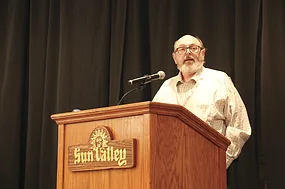
“Quagga mussels are extremely challenging. Any other state program probably would have thrown in the towel by now because what we're trying to do, essentially, hasn't been done before,” Zurfluh said to those at this year’s Idaho Water User Association Conference. “To see roughly a 50 percent reduction in size, on top of not seeing any signs of quagga mussels leaving the Snake River Canyon to adjacent water bodies, we’re considering that to be great news and an opportunity to stay aggressive.”
A key facet to the program’s success has been the proximity of ISDA’s Bureau of Laboratories to improve monitoring.
Using the state’s accredited lab of scientists, ISDA was able to find personnel with experience in microscopy to train the invasive species staff. Now with equipment and personnel located right on the river during the fall months, they were able to use an in-house lab in nearby proximity to river locations. Zurfluh said, “We can get real-time sampling using raw water, looking for viability of quagga mussel veligers within the water column.”
The detection then turns into a full delineation survey. The department sampled the Milner Dam complex in addition to Walcott and American Falls but didn’t find anything upstream of Twin Falls Reservoir. Treatments are now in four areas, Twin Falls, Shoshone Falls, the stretch of Shoshone Falls to Pillar Falls and another from Pillar Falls to Centennial Park, which is the total area that saw 50% reduction in mussel sightings.
Treatment of land and watercraft for quagga mussels requires the use of Natrix, a chelated copper-based molluscicide approved for flowing and nonflowing sites, and that can be used without irrigation or potable water use restrictions, according to Travis Fuller, aquatic technical specialist for SePRO Corporation, which is a contracted distributor for the chemical.
Treatments using copper sulfate are at a concentration toxic to mussels but below EPA drinking water standards, Fuller said.
“Chelated copper is effective on quagga mussels at all life stages; it's just a matter of the exposure time and the rates,” Fuller said. “So adult mussels, they actually are a problem in the sense that they have the ability to seal themselves up and hold their breath for an extended period of time, which can make getting that copper into the mussels very difficult.
“We have to maintain a low level of that Natrix product in the water column, surrounding the mussels, until they eventually open back up and they take that copper. … And that's the adult mussels; the veligers are a lot easier to control.”
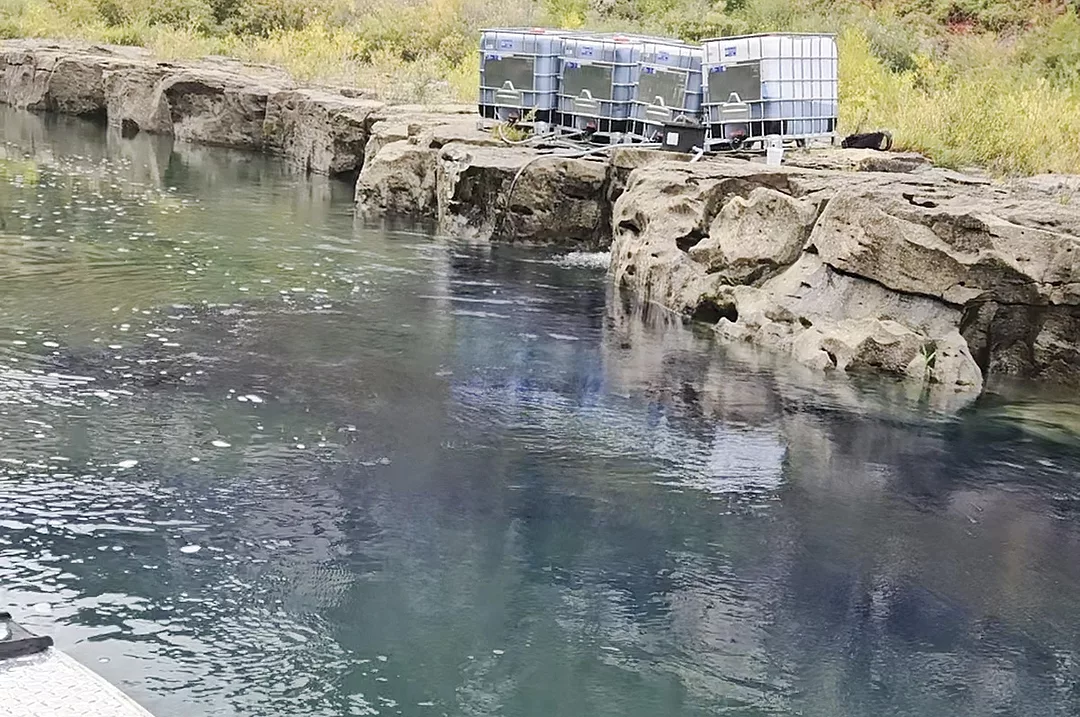
Jeremey Varley, chief treatment engineer for ISDA, described the treatment methods being used ranging from metered tote drip boxes, using watercraft to reach deep hole and pretreatment applications, shoreline applications of Natrix and deep injection fan sprays.
Treatment started last year on Sept. 30 and was conducted over a 200-hour exposure period targeting 1-part-per-million concentration of the copper sulfate. The treatment period ended Oct. 12, with 63,525 total gallons of Natrix applied. This past year marked the third year of the state's project along the Snake River, with boating restrictions in Twin Falls County locations being restricted in year one but restored at locations such as Twin Falls Reservoir and Centennial Park access points.
New monitoring efforts will begin in 2026 when water temperatures rise and adult quagga mussels initiate spawning events producing more veligers. In the meantime, ISDA continues underwater scuba diving adult surveys. "We've got multiple years of monitoring and some more story to play out for the mid-Snake and just appreciate the association's interest in the issue."
New concerns on golden mussels
A newly occurring invasive species is the golden mussel, which has some similarities to quagga mussels but comes from a different lymphoma genus, which means it has a bivalve, a shell and attaches to substrate with hair-like byssal threads. Native to China and now found frequently in the California water projects of the San Joaquin Valley, golden mussels have plagued that state's water users, Zurfluh said. California ag representatives are calling to see how Idaho's quagga mussel plan can be duplicated in the Golden State. Zurfluh said if golden mussels arrive in Idaho waterways, it's "most likely gold mussels are going to outcompete all the rest."
On the good side, Zurfluh said while no presence has yet been detected, the state is prepared with the right equipment, staff, lab facilities and visual detection resources to find golden mussel veligers, and they are monitoring how calcium levels adjust with the presence of mussels.
"Another good news is our watercraft inspection program also is adapted to be able to find golden mussels attached to boats and to react accordingly," Zurfluh said. "And our current decontamination standards that we use for cleaning watercraft also work for golden mussels."



.webp?height=auto&t=1783636475&width=285 "63802-Thomas-GPS-equipment--Automated-Magnum-Tractor--Matt-Skinner-photo(1).jpg")