The average cow herd turnout for Idaho producers with access to public lands is mid-to-late May, which means that most producers aim to have cows bred back by May 1, says Lauren Christensen, DVM and assistant professor at University of Idaho (U of I). Backing up from there to provide 60 days for recovery, she says, “Mid-March is the absolute latest to have time to reset after calving and get that cow bred by your bull.”

So with April now upon us, the tidal wave of spring calving is ebbing for most. Producers can draw a breath, take Ian Tyson’s “Springtime” off repeat, take stock of the season and gear up for spring turnout.
Considerations for a muddy spring
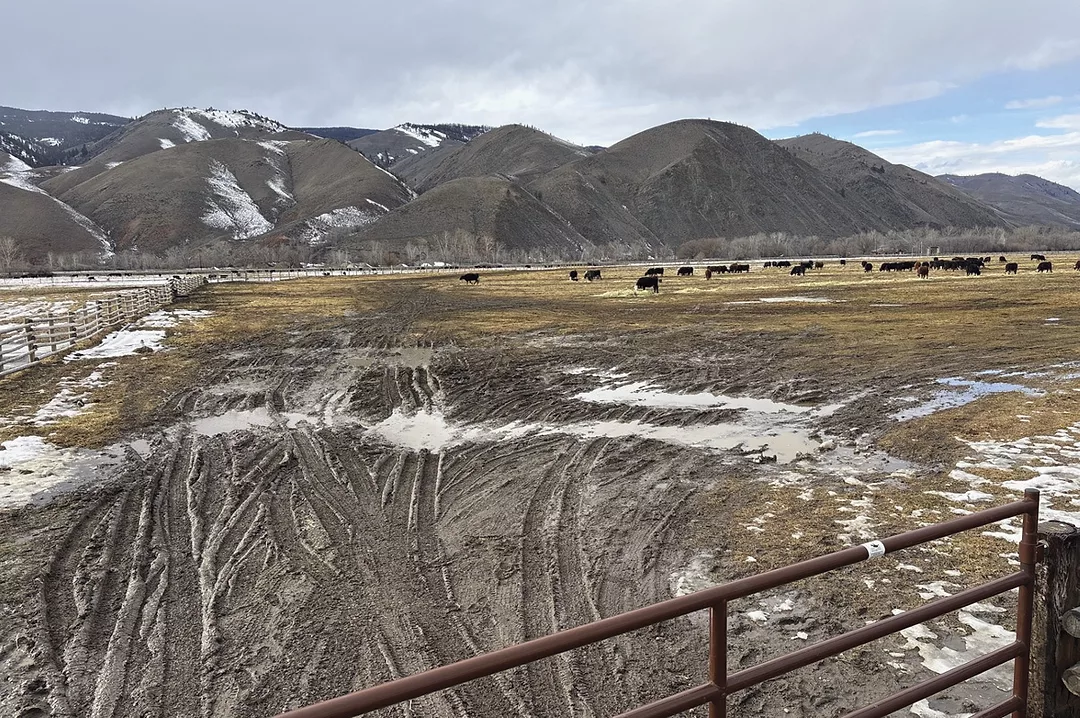
A remarkably warm winter into February allayed frostbite concerns but raised twin specters of scours and drought across the state. “In a normal year, it at least freezes every night,” says Christensen. “In a bad year, you’re putting out straw every night, and you’re worried about hypothermia.” 2026 has been at the opposite end of the spectrum.
“In my 20-plus years of dealing with beef herds, this year is the most relaxed, go-with-the-flow attitude that I’ve seen,” East Magic Valley U of I Extension Educator Brandon Brackenbury, DVM, said in mid-February. “We have not had a winter. It’s kind of a double-edged sword.”
What moisture Brackenbury’s region had seen at that time had come from rain, and calving beds were dry overall. In particular, he says, “People aren’t bedding them on straw patches, so we don’t have that incubation chamber for viruses and bacteria.”
From U of I’s Nancy M. Cummings Research, Extension and Education Center in Salmon, professor and extension specialist Dr. John Hall agreed that winter conditions were unusually warm statewide. “It’s not wet from a snow standpoint,” he says. “If it is wet, it’s wet from rain or because the soil was wet from fall.”
Unfortunately for calves, many places are cool but not freezing. “We’re seeing wet calving grounds and more mud,” says Hall – the perfect environment for the viruses that cause scours. “A lot of guys moved to calving in February to avoid [just such] wet, sloppy conditions.”
“This year has potential to be the worst year for scours,” Christensen predicts. “It is very important to dip navels.” This practice not only kills pathogens but also helps the navel dry out faster. “The umbilical cord is basically a giant blood vessel,” she says. At birth, hormones cause the cord to clamp off to prevent bleeding, but still, she says, “It’s a giant wick that causes anything it contacts to be carried straight into the bloodstream.” Christensen adds that it is “not incorrect to dip navels twice” and recommends speaking with a local veterinarian about the best product and concentration to use.
Looking forward to calving, she says producers need to think outside the box to head off the scours problem, particularly moving small calves into drier areas wherever possible. “You need to keep as clean of conditions as you can,” says Hall. “That means scattering cow-calf pairs out after calving as much as possible and limiting mud exposure so the udders stay clean.”
On the Moscow U of I campus, for example, the normal calving pen is very wet this year. “We might turn calves out into a dryer pasture where we’ve never put new pairs before,” says Christensen.
When it comes to treating scours, Hall says, “The big thing is to get those calves caught and treated in time.” If possible, he adds, producers should use a separate pen for sick calves and their mothers to break the cycle of spread.
He notes that while an electrolyte program is an important component of scours treatment, a calf still needs a source of energy and protein. “You need to make sure you have a four-hour gap between administration of electrolytes and feeding or letting the calf in with the cow,” he says. And, of course, sick calves should be treated with a separate tuber from the one used for newborn calves.
Christensen stresses the importance of correct diagnosis, as multiple bacteria and viruses cause similar symptoms in young animals; some are very fast acting, and not all are treated the same way. Coccidiosis, for example, has a very specific treatment program. “Talk with your vet and have a game plan ahead of time,” she says.
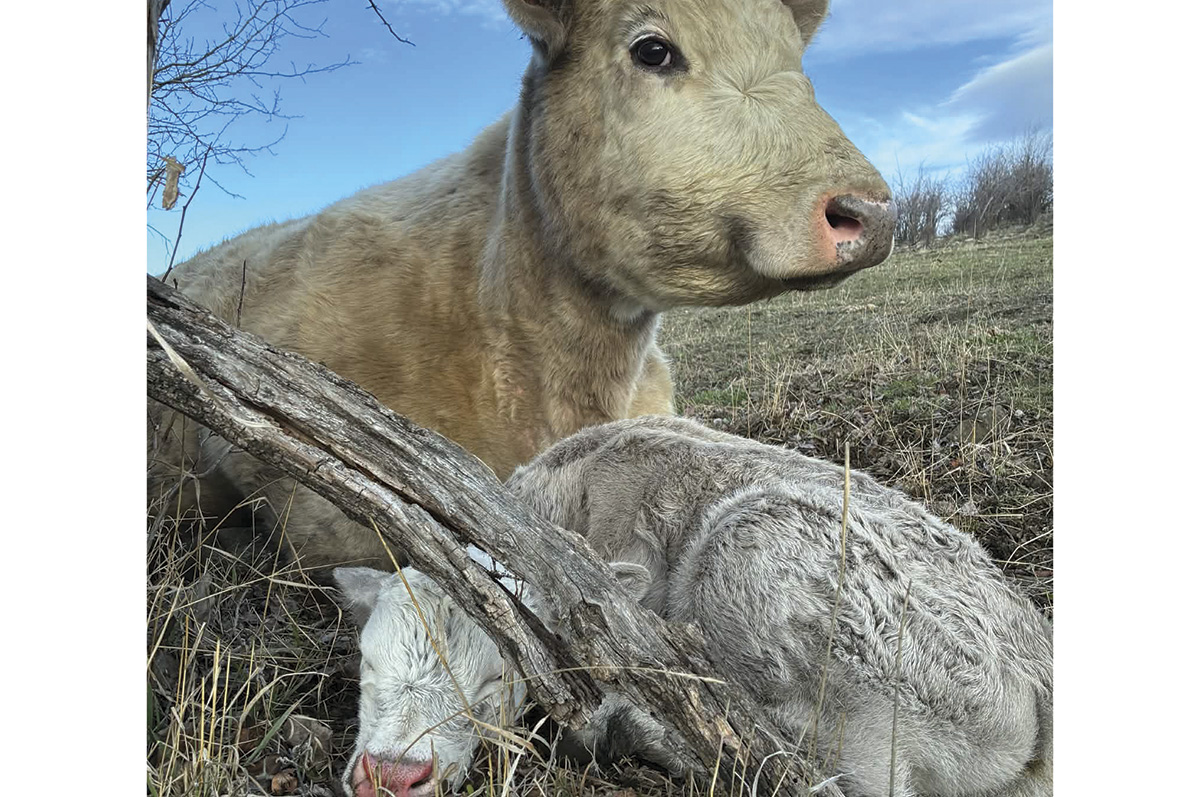
Scattering fresh pairs as much as possible to keep udders clean and calves out of the mud can help alleviate the scours pressure that vets and extension educators foresee for this spring. Image provided by Jill Bruegeman.
Looking ahead to a dry summer
But as producers move out of calving season and into summer, the second implication of the warm spring takes center stage. “We’re all really concerned about the water situation, especially the snowpack,” says Hall. “The water situation since October first is about normal, but it’s all been rain instead of snow.”
“We could get a lot of moisture in rain – we already have since fall,” says Brackenbury. “But usually, rain doesn’t come in a timely fashion when we need it down here.” Without snowmelt to provide moisture steadily through spring and early summer, grasses may grow and senesce quickly. In a worst-case scenario, he says, “We could have not much grass, and what there is could have not much value to it.”
If forage becomes a problem, Hall suggests producers consider protein supplementation or early weaning as fall approaches. “Nobody likes to think of that because it’s a lot of work and a big challenge to wean early,” says Hall. However, it’s a tool in the toolbox which can make a big difference to cow condition and range availability.
A 5-month-old calf is old enough to maintain good growth after weaning, Hall says. Backgrounding such calves gives a producer the opportunity to take advantage of compensatory growth, while allowing cows to recover body condition before next calving season.
Lactation demands make post-calving weight gain challenging to achieve at the best of times, so Hall aims for 5-6 body condition score (BCS) going into calving season. A good-conditioned cow is also better set up to avoid other complications, including dystocia, poor-quality colostrum and trouble rebreeding.
With such normal limitations, drought years are particularly trying for 2-year-olds raising their first calves. “They are still growing and trying to feed a calf,” says Christensen. “They are always the most challenging to get bred as a 3-year-old cow.” In fact, this class of heifers often does not have her nutritional needs met even under “normal” forage conditions. She suggests producers consider options that would allow them to provide these young cows with extra supplementation and oversight this summer.
With feed at a premium, and the cattle market high, says Hall, “We’re at a situation where heifers are worth so much money as feeders, it’s hard for people to justify keeping them from a cash-flow standpoint.” These conditions have already been in place for a few years, leaving some producers with aging cow herds – which may leave them with difficult decisions to make this fall.
Whatever the combination of market, forage and cow health conditions emerge as the year wears on, says Brackenbury, “That’s the beauty of livestock – you always have to be prepared and have a willingness to adapt. You never know what kind of event will come.”