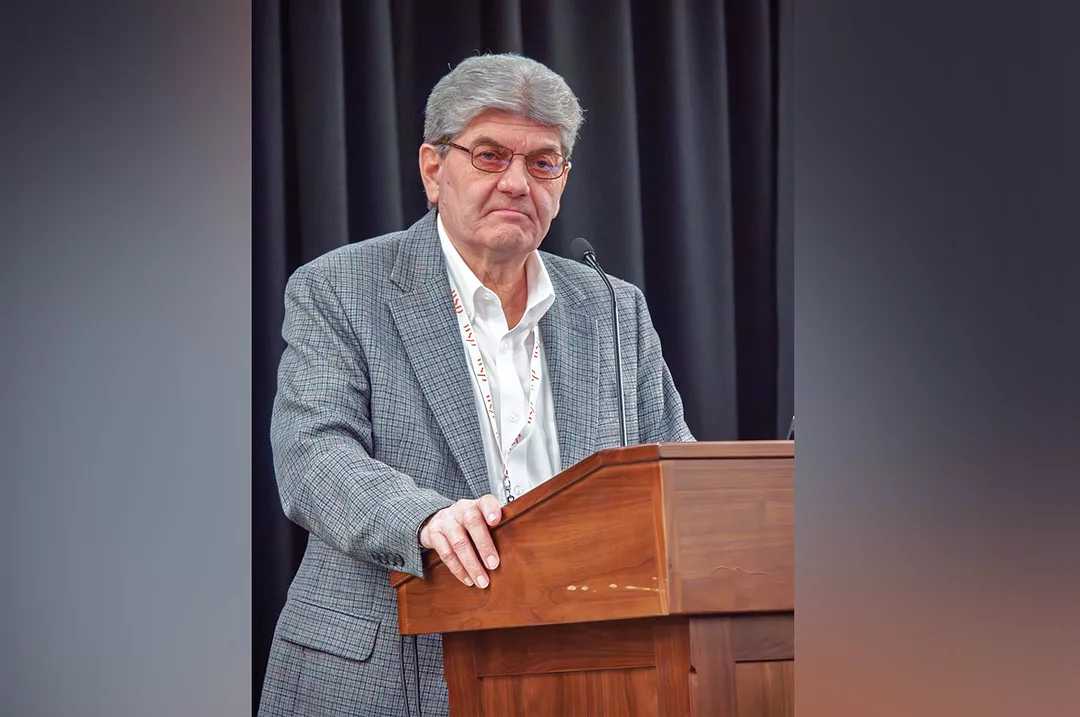
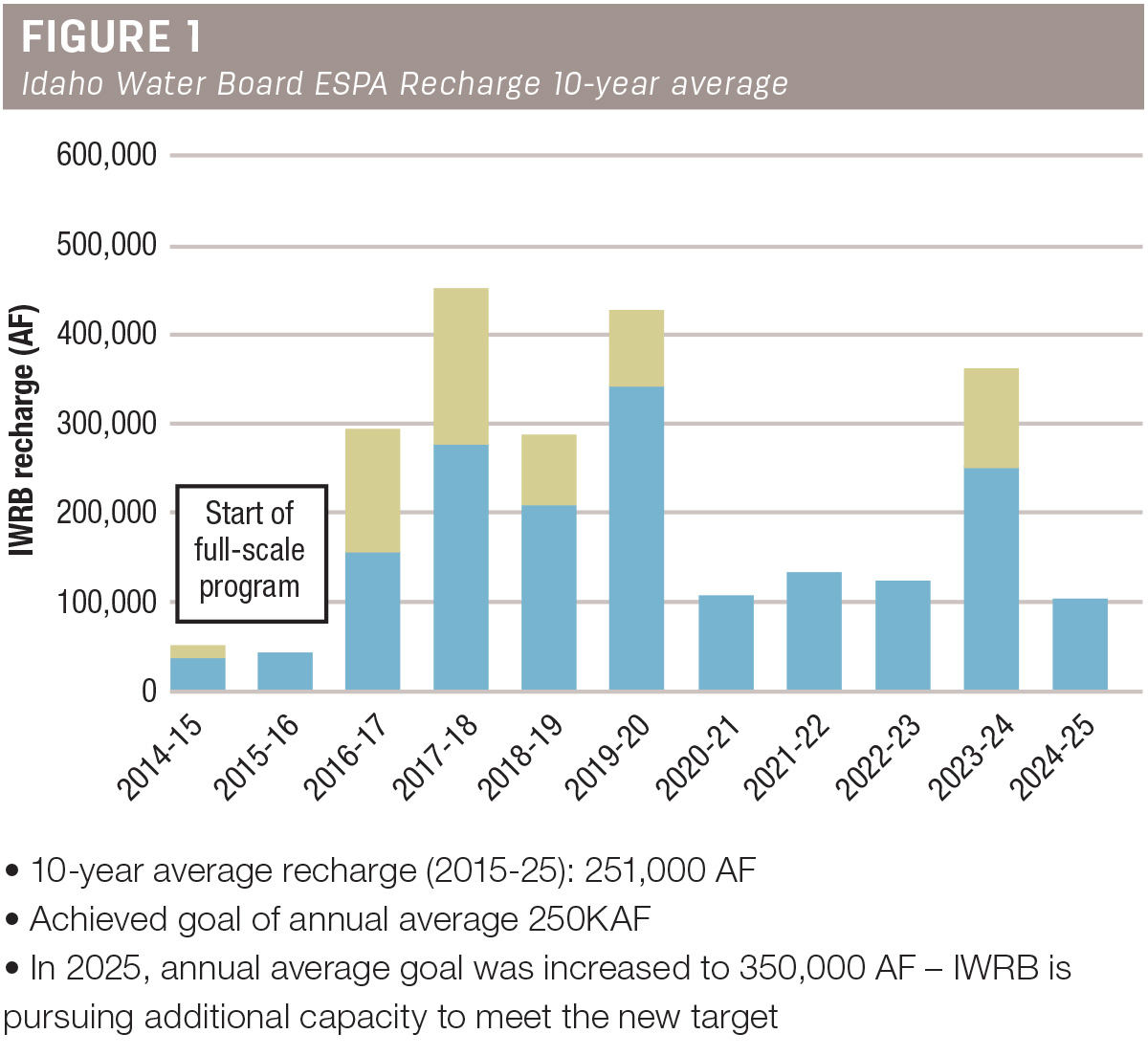
Idaho Water Resource Board (IWRB) Chairman Jeff Raybould said progress on water enhancement plans funded by federal and state appropriations continue in 2026, with one of the key goals focusing on lifting the Eastern Snake Plain Aquifer (ESPA) from 250,000 acre-feet in annual recharge up to 350,000 acre-feet.

Thanks to support from Senate Concurrent Resolution 110, passed and signed into law in 2025, the IWRB was authorized to change the water recharge goal to build more storage and aquifer stability after legal conflicts sparked in summer 2024.
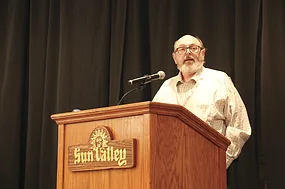
Raybould addressed the Idaho Water Users Association conference in Boise in January, highlighting efforts from the water board’s planning committee that presented ideas for public and written comment over summer and fall of 2025.
Getting more water back into the aquifer on an average annual basis means counting the inventory over a series of years between high and low snowfall, but the programs in place have Raybould and board members positive that the goal is achievable.
"Our 10-year average is 251,000 acre-feet, that's recharged in the Lower Valley, where we always have some water available every year," he said (see Figure 1). "During the winter, the [yellow] bars are when water is available in the Upper Valley and we can recharge in the Upper Valley. You can see the importance of that additional ability to recharge in the Upper Valley when we have water available, and we're continuing to build our capacity in the Upper Valley."
But as it commonly is with water projects in the Gem State, money is being dedicated at a constant basis on projects focusing in the short- and long-term future. Raybould presented an extensive review of how state funding has targeted specific projects across the state’s aquifers, streams and rivers.
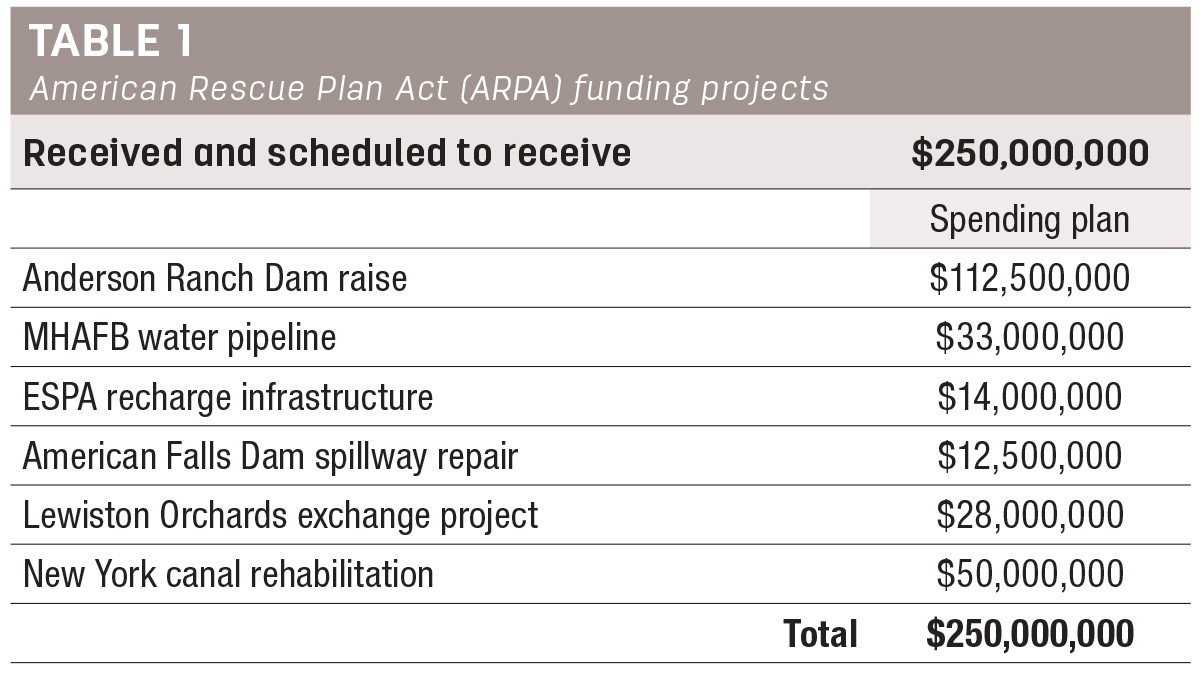
Since 2019, more than $640 million has been appropriated to the IWRB for water needs from federal and state governments. A significant amount – $250 million – came into Idaho when the $1.9 trillion American Rescue Plan Act (ARPA) passed in 2021 by Congress and former President Joe Biden for economic stimulus after the COVID-19 pandemic (states received $350 billion in the stimulus). The largest of those projects was $112.5 million to raise Anderson Ranch Dam (see Table 1), a pipeline from C.J. Strike Reservoir to Mountain Home Air Force Base (AFB), pump stations facilities and ESPA recharge.
The board currently has $397 million in indirect appropriations for statewide regional sustainability projects in the ESPA, aging infrastructure grants, capacity improvements to canal systems and flood management grants (see Table 2). Raybould said loans are taken from the IWRB Water Management Account and repaid for future accounts. “Those loans will be repaid and that money will be available for further water projects in the future,” Raybould said. “Then we have water quality that’s funded out of that account.”
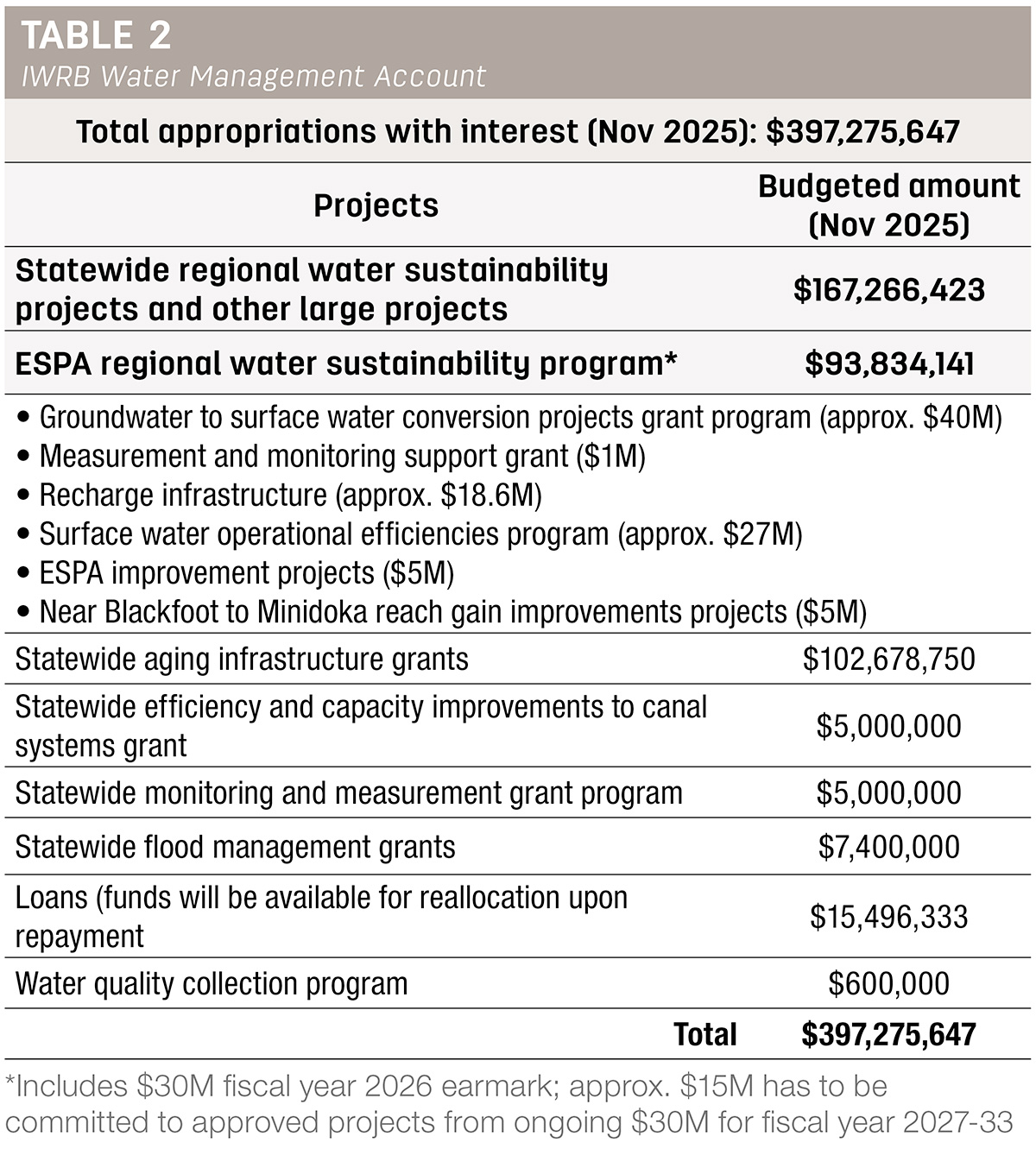
Of particular importance in the account is the ESPA Regional Water Sustainability Program, a $93.8 million fund earmarked for groundwater to surface water conversion programs and recharge infrastructure, among other obligations (see Table 3). The first two projects are the ESPA improvement program and the Blackfoot to Minidoka reach gain improvements, both funded via $10 million requested by Gov. Brad Little as part of the 2024 settlement agreement among state water users.
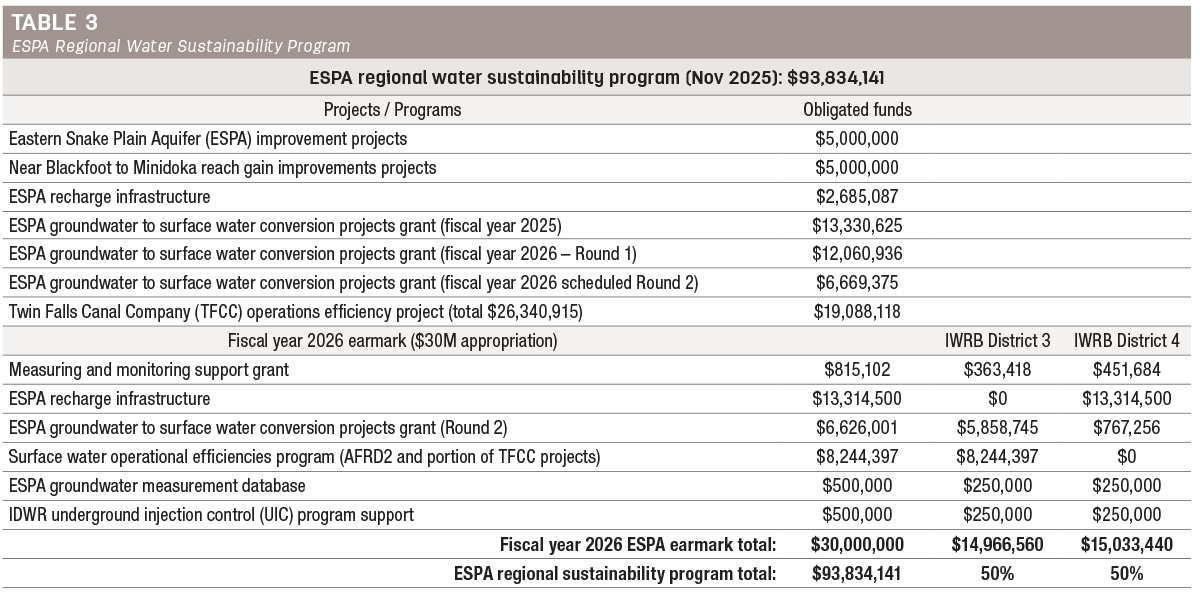
“There’s some money that’s obligated to that groundwater-surface water conversion project,” Raybould said. “We spent quite a bit of money helping people that have canal shares or have the ability to access surface water to reduce their reliance on groundwater and use surface water when possible.”
In 2025, the Legislature added a $30 million earmark to the sustainability program for additional projects aiming to improve recharge infrastructure and add efficiencies. “That money has all been allocated and divided evenly between water districts 3 and district 4.”
Aquifer recharge goals
The IWRB is constructing 13 new recharge sites in the canals in the ESPA. In the Magic Valley, the active sites currently have 2,050 cubic feet per second of recharge capacity, while the Eastern Snake sites provide 322 cubic feet per second (see Figure 2).
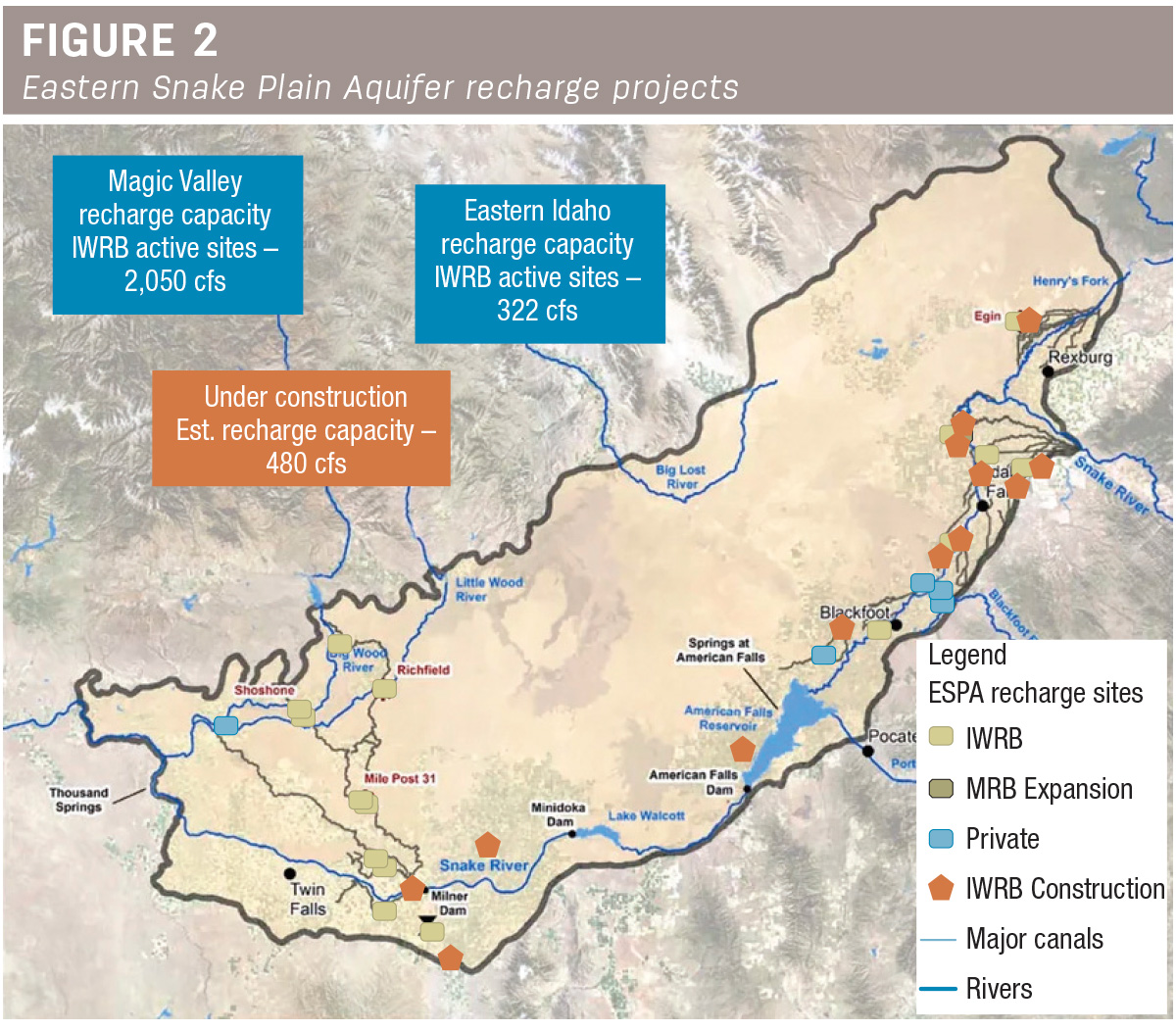
“We think we can increase that [2,050 cubic feet per second],” Raybould said. “We appreciate the cooperation of the canals in the Magic Valley to fill that water during the non-irrigation season. I know that causes some stress on their systems and their ability to manage the demands. But it's been a big help to us and achieving our goal to meet our average.”
The eastern side needs more flood control operations and more capacity in the Upper Valley, Raybould said. “Those recharge sites in the Upper Valley provide direct benefit to the Blackfoot to Milner reach that helps to manage the available water supply for those surface water users in the Magic Valley.”
Raybould lauded the Improve Surface Water Coalition (SWC) program, which reduces demand from the SWC against groundwater users without impacting incidental recharge in the ESPA. Twin Falls Canal Company (TFCC) has had a 10-mile canal stretch relined to avoid leaking into Rock Creek, thus avoiding reflow back to the Snake River below Milner Dam. This can reduce TFCC’s water use by as much as 40,000 acre-feet annually and has received $26.3 million in IWRB backing.
This year’s dry winter allowed TFCC to get nearly 50% of the entire project done. Initial estimates had the project at four or five years. By finishing half this year, “That’s 20,000 acre-feet of water to the good of the Twin Falls Company, which reduces the potential obligation for the groundwater districts to provide water.”
Aging infrastructure grants
Under the IWRB Water Management Account (see Table 2), the board also provides seed money to help improvement projects get off the ground, specifically with grants for aging infrastructure. The cost-share program gets federal funding and receives a number of bids. Raybould said board staff carefully reviews those and then covers up to 50% of the cost of repairs. “We kept that at 2 million dollars. We’ve awarded over 78 million dollars through six rounds, and we’ve helped 126 different projects move forward.” The projects must provide “significant regional, basin-wide or statewide benefits,” Raybould said.
The board also has completed a $40 million, 14-mile pipeline segment of surface water to Mountain Home AFB funded by the state to construct a pump station. The Air Force will construct a water treatment plant on the base, which is to be completed by this summer. The total federal funding will be $91 million for the project. Raybould said the state’s portion came in about $40 million under budget.
“The water board will maintain the water right and we will work out an arrangement for the delivery of the water to the base through that water right.”
Raising Anderson Dam
The biggest project partnership is the Anderson Ranch improvement being done by IWRB and the U.S. Bureau of Reclamation, to add 29,000 acre-feet of additional storage. Reclamation has completed 90% of the design level and looks to be at 100% by this summer. The cost is $125.8 million, with Raybould explaining that 11% of it is to be paid by the federal government and 89% by the state of Idaho with “most of it with ARPA money in the balance.” Construction is expected to start in 2027.
“So now comes the important work of determining how we’re going to allocate the water that the state has to various people who are interested in having a use of some of this additional water.”