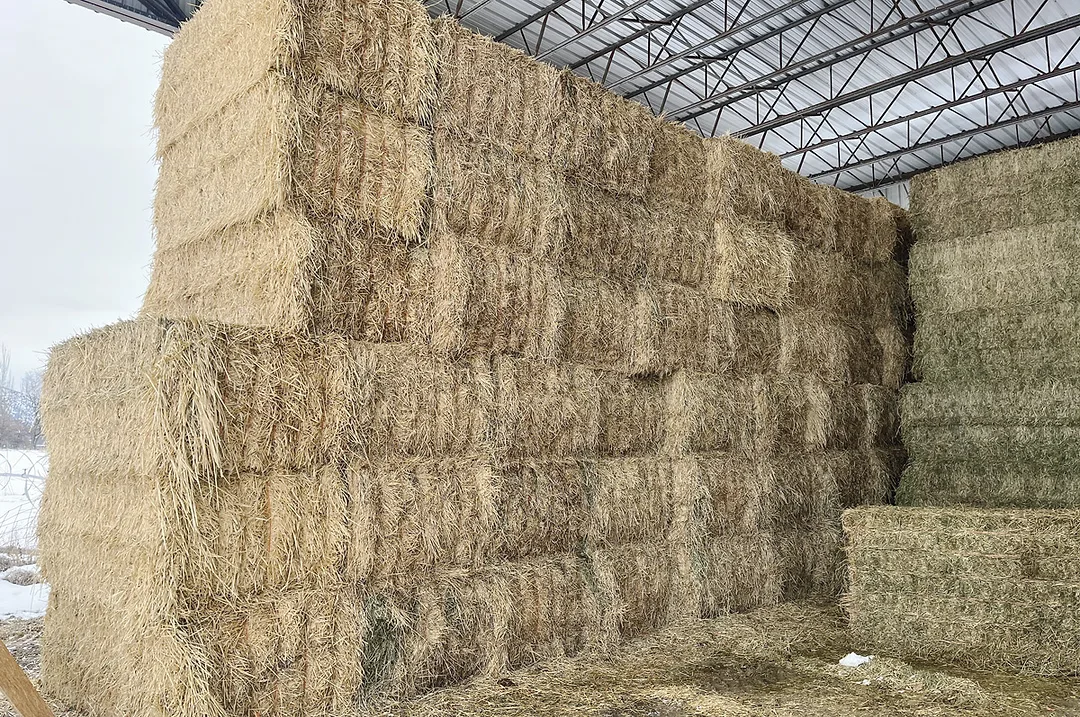
When growing forages, there comes a point prior to cutting when a decision must be made. Is your goal to get the greatest quantity of hay from your field or to get the maximum quality? The art of growing forages until they are in that sweet spot is a learned skill that has been acquired by many. However, even the most carefully planned schedules can be interrupted by the weather. This may delay harvesting and can cause a decrease in quality.

What are the forage quality values we should be most concerned about? The only sure way to know what kind of nutritional quality your forage may have, whether baled forage, chopped or silage, is to submit a sample for testing. Laboratory analysis provides you with numbers, percentages and results you can use to interpret what level of quality is contained in that new feedstuff. The importance of a specific value depends on the goals of your growing operation or the goals of the people who will be buying these forages to then feed to livestock animals. It should be these measurable goals that drive your harvest management.
These goals will vary depending on what the feedstuff is designed for. For example, an individual purchasing hay for dairy cattle or a high-performance horse will be interested in a baled forage that has higher levels of crude protein (CP) and energy, which is measured through total digestible nutrients (TDN). The goals of these individuals will contrast with those of a cow-calf operation that are feeding hay to cows in the second trimester of pregnancy where the nutritional requirements are lower than the previous months or the upcoming months of the third trimester. Having discussions with an animal nutritionist or your veterinarian can be very beneficial to determine the nutritional needs of the animals your forages will be going toward.
Forages provide structural carbohydrates in the diet of cattle, sheep, horses and other animals that have a gut microbiome that can break these structures down to provide essential nutrients for the animal. The amount of structural carbohydrates and their degree of digestibility are identified on a forage test with the acid detergent fiber (ADF) and neutral detergent fiber (NDF) values. While high values in both of these categories reduce the value and usage of a forage, you don’t want them to be near zero. This is because ruminants and hindgut fermenters have a microbiome within their digestive systems that depend on those nonstructural carbohydrates to survive. Based on hay grading standards, ADF values at or below 27% of dry matter indicate a Supreme quality forage. Good hay has 29% to 32% dry matter and Utility hay (the poorest category) is greater than 35%. NDF values are similar with Supreme at less than 34%, Good at 36% to 40% and Utility at greater than 44%. The goals and nutritional needs of the livestock animals will determine which standard of hay you should be feeding. Hay with higher ADF or NDF values are plants that were more mature at cutting and therefore will have more fiber and less energy available.
To that point, not all fiber is created equal. Some of these structural fibers can be digested more readily than others. If one of your goals is to add more readily digestible fiber for the livestock it will be fed to, thereby increasing the amount of energy and the dry matter intake, then you may be interested in how digestible that fiber is. Thankfully, there is a value on some feed tests called neutral detergent fiber digestibility (NDFd). This test is usually done with a wet chemistry analysis and directly measures the amount of NDF fiber digested after sitting in rumen fluid for a period of time. This timing is commonly 30 or 48 hours since this is an average amount of time forage remains in a high-producing cow's rumen. NDFd is directly used in the equation for relative feed quality (RFQ).
RFQ and relative feed value (RFV) are determined by different equations. RFV was the first created and takes into account both digestible dry matter and dry matter intake. RFQ is based off the total digestible nutrients and dry matter intake and can be a more representative formula for grass forages. While these two numbers are not used in the calculating of feed rations by themselves, they do provide a way to standardize the ranking and comparison of forages.
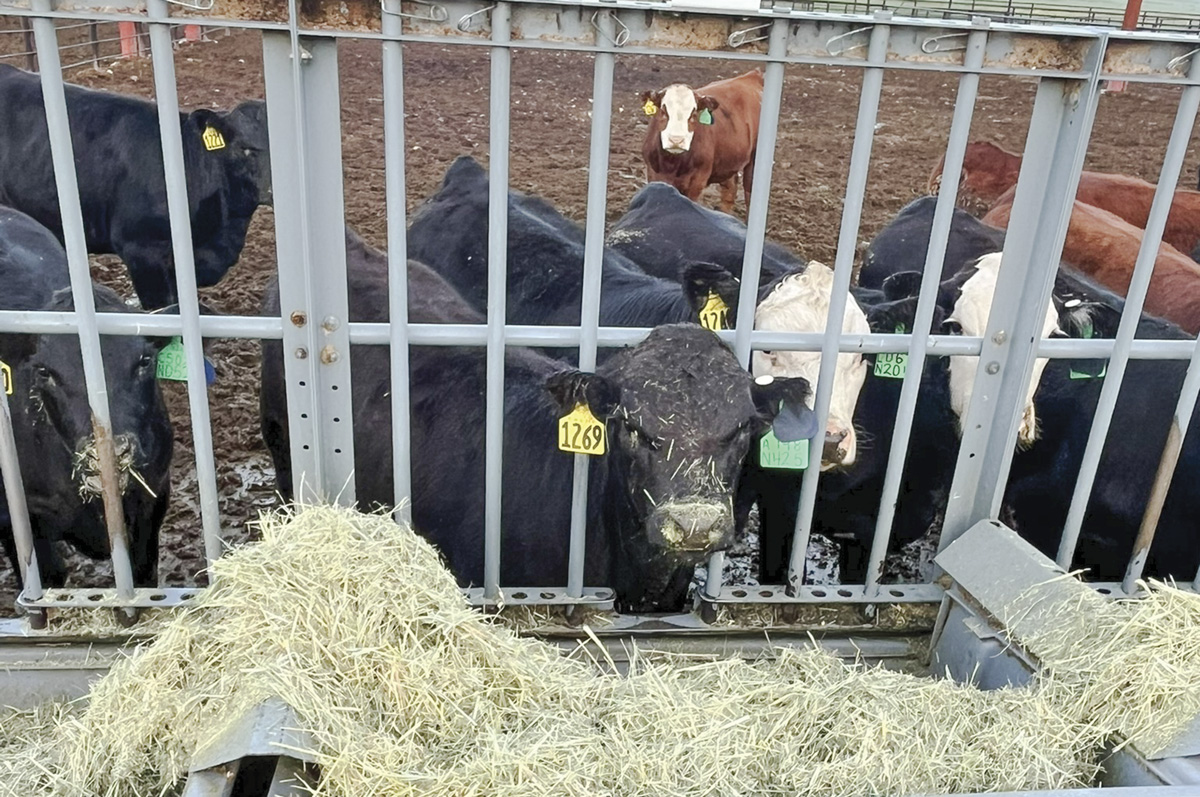
Cattle feed intake is monitored using individual animal tracking equipment. This generates consumption data that complements forage test results and helps producers identify which nutritional values best support their performance goals. Image by Sawyer Fonnesbeck.
As mentioned previously, there are published hay standards by which hay can be graded and categorized. RFV remains the dominant index used for hay marketing and the equation that is included in the USDA Agricultural Marketing Service (AMS) Hay Quality Guidelines. RFQ is more often used by operations using more grass or mixed hays or by operations interested more in the fiber digestibility such as feedlots and dairies. This is because it better predicts intake and energy availability, particularly for those grasses and mixed forages. Some individuals or companies will even base the price of baled forages on these numbers.
A quick note on pricing and marketing hay is in order. As mentioned above, beyond feeding decisions, forage quality metrics play a major role in marketing. Buyers are increasingly relying on laboratory results to compare forage lots and assign value. High RFV or RFQ, combined with strong protein and TDN levels, can command premium prices, particularly in dairy or equine markets. Providing a recent forage test with your hay can improve buyer confidence and transparency, making it easier to justify price differences and build long-term relationships with customers.
Understanding your goals as a forage grower and the nutritional needs of the livestock the forage will be fed to is the right path to determining what stage of maturity you want to cut your forage. Regular testing and consistent forage management allow you to better predict performance and make adjustments that keep your operation on track toward its goals. When interpreting a forage test, the goal is not simply to chase the highest numbers but to match forage quality with the needs of the operation. The balancing of quantity and quality related to your goals will be in everyone’s favor. As long as the weather cooperates.
Other resources
www.ams.usda.gov/sites/default/files/media/HayQualityGuidelines.pdf
https://cropsandsoils.extension.wisc.edu/articles/relative-forage-quality