In American agriculture, tractors and machinery form the backbone of daily operations. They power everything from tillage and planting to harvesting and animal feeding. These powerful tools, however, come with inherent risks. If not appropriately managed, they can lead to severe injuries or fatalities.

Dr. Aaron Yoder, associate professor at the University of Nebraska Medical Center’s (UNMC) Department of Environmental, Agricultural and Occupational Health, has over 20 years of experience in agricultural safety and health. He is also the research director at the Central States Center for Agricultural Safety and Health at UNMC and an associate professor at the University of Nebraska – Lincoln Department of Biological Systems Engineering. Yoder emphasizes the importance of planting the seeds of safety through early training and awareness. His expertise is rooted in a Ph.D. from Purdue University. He holds leadership roles in organizations such as the International Society for Agricultural Safety and Health and the American Society of Agricultural and Biological Engineers. Yoder highlights key hazards, prevention strategies and educational resources to foster a safer farming environment.
“Tractors, as the most widely used farm equipment, pose significant risks due to daily, high-hour use and their versatility,” Yoder says. “They handle diverse tasks, from moving crops as stationary power sources to towing heavy loads during harvest. These machines range from under 20 horsepower on smaller operations to over 200 horsepower. However, their complexity brings common hazards [such as] overturns, entanglements, falls, crushes, burns, shear points and cuts. Fatalities involving tractors account for one-third to one-half of all farm-related deaths. Rollovers and runovers are the leading causes of these fatalities, followed by power take-off entanglements.”
The dangers
Tractors
Tractor rollovers are the most prevalent fatal hazard, occurring sideways – the most common type – or rearward. Sideways rollovers typically happen on steep slopes or along roadways during maintenance or mowing and may also result from excessive speed and centrifugal force during turns.
Gravity plays a central role in tractor rollovers. It shifts the balance point beyond what the tires can support. Rear overturns, which are often more deadly, occur when the front of the tractor lifts and flips onto the driver. This can happen by hooking loads too high, starting too quickly or releasing the clutch too quickly when trying to pull out stuck vehicles.
With these risks in mind, rollover prevention begins with the implementation of engineering controls and adherence to safe practices.
“To prevent sideways rollovers, set the tractor wheels as wide as possible to establish a broader stability base,” Yoder says. “Restrict speed, slow down for turns, use engine braking when traveling downhill, avoid steep slopes, and stay back from ditch edges.”
Attachments such as front-end loaders can raise a tractor’s center of gravity, thereby increasing the risk of tipping. To counter this, rollover protective structures (ROPS) are certified structures with two- or four-post frames or built-in cab enclosures. They limit rollovers to 90 degrees and prevent complete flips.
Seatbelts are integral to the ROPS system, keeping operators within the protected zone. Never use a seatbelt without a ROPS, since this removes the chance of being thrown clear from the machine. Foldable ROPS make it easier to work in low-clearance areas, but they are being phased out due to misuse and accidents. Operators often leave them down, which negates their protective function.
“Runovers, the second-leading cause of injury and fatality, often involve extra riders falling off, children playing near equipment or bystanders,” Yoder says. “Extra riders, especially on single-seat tractors, distract operators. Bumps can eject them, causing runovers by the tractor or trailing implements. This is a major contributor to childhood farm fatalities. Even newer tractors with two seats aren’t designed for two riders. Those seats are to be used only during training.”
To reduce runovers, enforce a strict “no extra riders” policy. One seat means one operator. Never start a tractor from the ground to avoid malfunctioning keys. This disables safety features and may allow tractors to lurch forward. Start tractors only from the driver's seat. Maintain equipment to prevent the bypassing of starting processes, and provide safe play areas for children, keeping them away from operational areas.
Mounting and dismounting
Slips and falls during mounting or dismounting contribute to farm injuries, often because operators do not face the machine or fail to use three points of contact (two hands and one foot, or vice versa). To prevent these injuries, treat all equipment steps like ladders: face the machine, avoid jumping off steps and use all available handrails.
PTO entanglements
Entanglements, especially with power take-off (PTO) shafts spinning up to 1,000 revolutions per minute (rpm), can catch clothing or limbs in seconds. Exposed stub shafts, universal joints with protruding pins and connecting points are common snag sites. Stationary equipment powered by tractors, such as blowers or unloading wagons, increases the risk when workers stand nearby on slippery footing.
Guarding is crucial for reducing entanglement risks. Make sure master shields, bell guards over joints and stub covers are in place and intact. Turn off PTOs when not in use; most modern tractors are equipped to do so. Avoid loose clothing, and stay clear of operating shafts – never step over them. Use only certified guards; homemade guards are not effective.
Roadways
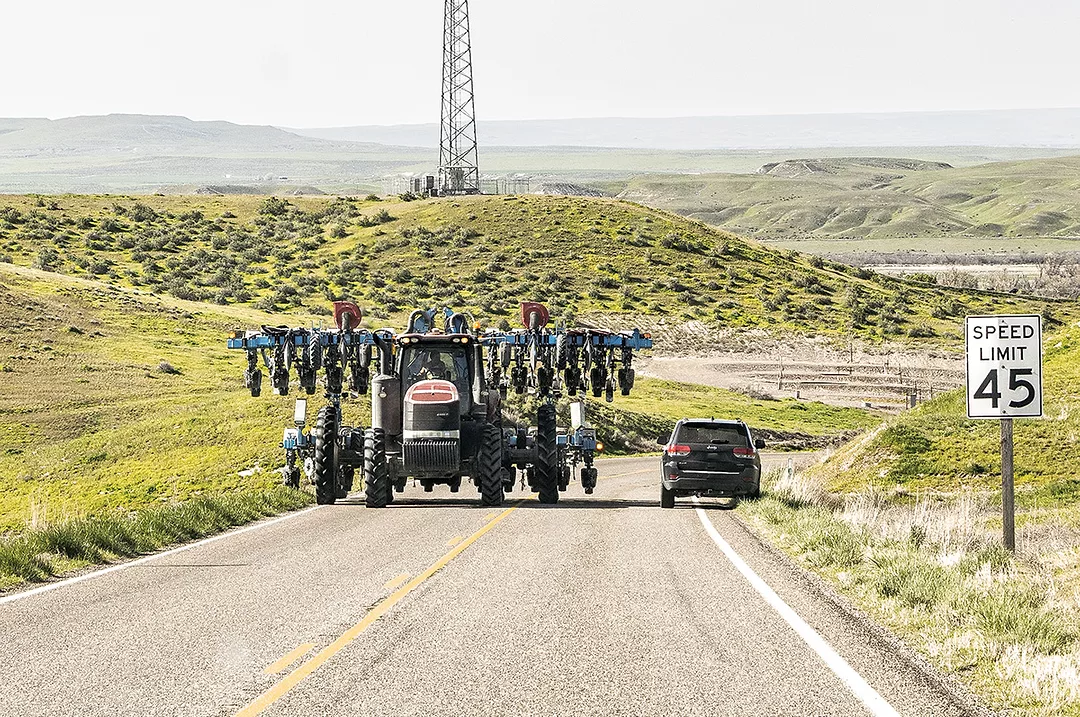
Roadway incidents account for a smaller percentage of tractor fatalities but often result in injuries to motorists who collide with slow-moving, wide equipment. Inadequate lighting, faded slow-moving vehicle (SMV) emblems and poor marking further worsen risks, especially at dawn, dusk or night.
Boost visibility with headlights, flashers, extremity lights, reflectors and SMV emblems mounted 2 feet to 11 feet high. Work during daylight if possible. Use hand signals if turn indicators are not working, and follow traffic laws. Check local regulations for operator age – some allow 14-year-olds with permits, but competence is key. Do not motion vehicles to pass; let them decide based on their visibility.
ATVs
All-terrain vehicles (ATVs) are increasingly used in agriculture and share similar hazards. They have high centers of gravity, move fast and make sharp turns, which can cause rollovers. Viral videos demonstrate how both operators and pets can contribute to increased instability. Helmets must be fastened properly to be effective.
Regardless of the equipment, Yoder emphasizes that training is the foundation of prevention.
Training and prevention
“The best sowing of seeds of safety occurs when we're doing training,” he says. “Plant those seeds early.” Training resources abound through cooperative extension, centers funded through the National Institute for Occupational Safety and Health (NIOSH), such as the Central States Center for Agricultural Safety and Health (search “CS-CASH” or “NYACH Safety Nebraska”), and programs such as Safety in Agriculture for Youth.
Online modules, such as the National Safe Tractor and Machinery Operation Program, cover both general and specific topics. The U.S. Department of Labor requires youth under 16 to have certified training from agricultural education or extension programs to operate tractors for nonparents. 4-H and FFA offer hands-on sessions. Social media sites, such as TikTok, provide real-world, cautionary examples.
“Tractor and equipment safety depends on recognizing hazards, using controls like ROPS and guards, and making training a priority,” Yoder adds. “Farms are operated by people of all ages, from youth with little experience to older adults with ingrained habits. Creating a culture of safety reduces injuries. When workers utilize available resources and collaborate with safety organizations, they maintain productive and protected operations. Remember, what we sow, so we reap. Start with safety for a bountiful, injury-free future.”