We use cookies to provide you with a better experience. By continuing to browse the site you are agreeing to our use of cookies in accordance with our Cookie Policy.
  • Sign In
  • Create Account
  • Sign Out
  • My Account
subscribe / renew
  • Livestock
    • Beef
    • Dairy
      • Canada
      • U.S.
    • Sheep & Goats
    • Other Livestock
  • Crops
    • Grains
      • Barley
      • Wheat
    • Hay
    • Pasture
    • Ensiled Forages
  • Equipment
  • Magazines
    • Progressive Dairy US
    • Progressive Dairy — Canada
    • Progressive Dairy – en francais
    • Progressive Forage
    • Progressive Cattle
    • Progressive Cattle - Canada
    • Idaho Ag Proud
  • Blogs
  • Buyers Guide
  • Advertise
  • Ask AgProud

Progressive Dairy

Progressive Dairy Canada

PD Canada en Francais

Progressive Cattle

Progressive Cattle Canada

Progressive Forage

Agproud Idaho

Home

Home » legacy

Articles Tagged with ''legacy''

1710pd schlund 1 full

Mechanics Corner: Prepare your equipment for the winter months

November 11, 2010
This year’s harvest season has now come to an end, which means it’s time to start the groundwork for next year’s crop season. Have you started winterizing your equipment? Now is a great time to start planning for the next year. Start performing any repairs that may be needed on any of your machinery before you store it. I always like to use my senses whenever I am operating equipment. I use visual indicators to let me know if anything is wrong or needs work. I also try to keep a note pad in case I need to make a note which helps keep track of repairs or maintenance procedures that should be performed on equipment.
Read More
Top25

Use of dried manure solids as bedding for dairy cows

November 11, 2010
to jump to the article. Summary: Researchers at the Cornell Waste Management Institute analyzed six farms, all with a unique way of incorporating dried manure solids into their herds' bedding. Information provided in this article included the economic implications, the potential for spread of Johne's disease and the impact on a herd's feet and legs. Because this article was so popular, we asked Mary Schwarz of the Institute a follow-up question: Q: Why are dairy producers interested in dried manure solids in 2011? A: Dried manure solids (DMS) are of interest to dairy producers for several reasons. Sawdust, a historic bedding of choice, has been hard to come by for the past several years and can be expensive. Other options include low-quality hay, straw and sand, but each of these has an added cost. Manure, on the other hand, is never in short supply and has to be managed in some way.
Read More

On the Edge of Common Sense: Postcard to an old friend

November 11, 2010
I sent the final postcard to Bob before Christmas. For the last twenty years I’ve sent a postcard to Bob and Dottie from every place I traveled to. That would be over a thousand cards. I didn’t write much on them, just where I was, what the weather was doin’, and maybe what group I was speakin’ to. Now and then I would call and once or twice a year Dottie would write.
Read More
1710pd dalton 1 full

Antibiotic residue avoidance in milk and dairy beef

November 11, 2010
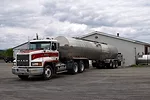
Dairy owners, veterinarians, herd managers and employees play a significant day-to-day role in food safety. Antibiotic residues in milk and dairy beef are an important food safety issue, as antibiotics may cause severe allergic reactions in some people. Milk All farm bulk tank milk and tanker truck milk must be tested for evidence of antibiotic residue prior to processing, according to the Pasteurized Milk Ordinance of the Food and Drug Administration (FDA). Milk found with antibiotic residues is dumped, with the dairy producer bearing the cost for the dumped milk.
Read More

Feed barrier design and its effects on dry matter intake

November 11, 2010
One of the key aspects in dairy production is dry matter intake. It is fundamental to ensure cows eat enough feed to maximize production and prevent diseases. This is particularly important when feeding lactating and close-up cows. Several studies show that when cows eat well before calving, they normally tend to perform well after calving.
Read More

Midwest Dairy Expo preview

November 11, 2010
An exciting slate of speakers is lined up for the Midwest Dairy Expo, Nov. 30-Dec. 1, 2010 in St. Cloud, Minnesota. The event offers two full days of educational programming and networking opportunities. Hosted by Minnesota Milk, there will also be a tradeshow, scholarship auction and evening awards banquet. Below is a sampling of the Wednesday morning sessions. To learn more about the event, visit www.mnmilk.org/MidwestDairyExpo
Read More

Heifer economics

November 11, 2010
Today’s successful dairy operation recognizes that heifers are an important investment in the future. They place high value on the heifer and regard it as a managed resource, whether raised on the farm or contract-grown. Unfortunately, on many farms, the dairy heifer is the most overlooked and undermanaged asset on the farm. The main goal for managing replacement heifers is to freshen them between 22 and 24 months of age to reduce expenditures and to increase total milk production. This can be accomplished through good nutrition and sound animal management practices.
Read More

Don’t let shrink kill you with high feed prices

November 11, 2010
Feed shrink is a major negative economic factor on dairy farms. On most dairies, feed cost will represent the largest single cost center. As feed prices have increased, awareness of this issue has increased. Feed shrink could simply be defined as the amount of feed delivered or raised on the farm that is not consumed by cattle.
Read More

On the Edge of Common Sense: The head catch wreck

November 11, 2010
As many of you regular readers might guess, people tell me their stories. Stories about wrecks; horse wrecks, cow wrecks, sheep wrecks, dog wrecks, financial wrecks, Tyrannosaurus wrecks, any kind of wreck you can think of! ‘Cause all these wrecks couldn’t happen to one guy!
Read More

The View from Here: Development: One of the three D’s in our government’s foreign policy

November 11, 2010
The word development is in the news. As one of the three “D” words (the others are defense and diplomacy) that describe our U.S. government’s foreign policy, the term may be defined as the long-term strategic effort at helping failed or failing states (countries).
Read More
Previous 1 2 … 2067 2068 2069 2070 2071 2072 2073 2074 2075 … 2348 2349 Next
  • RECENT ARTICLES
  • Corn price unchanged at $4.40 per bushel

    June 16, 2026
  • 63585-etienne-getty.jpg

    What Idaho grain producers need to know about ARC-CO and PLC changes

    June 16, 2026
    • Water quality: The problem child on beef operations

      June 16, 2026

FREE NEWSLETTERS

Award-winning coverage of in-depth news and analysis to make your business more profitable.

SIGNUP TODAY
Advertisement
THE GUIDE

How do I get my company listed in your Buyers Guide? 
Submit a request to be listed for FREE in the Buyers Guide here.

Why can I only see so many articles before I have to register for the site?
Find out why here.

SUBSCRIBE to Leading Industry Magazines

Award-winning coverage of in-depth news and analysis to make your business more profitable.

Subscribe/Renew
Advertisement

I'm looking for ________

Find the right products and services for your farm, ranch or operation.

CHECK OUT OUR BUYERS GUIDE
Advertisement
  • FEATURED PODCASTS
  • [Podcast] Changing the Rules of Pre-Fresh Dairy Cows

    Progressive Dairy
    Podcasts
    SPONSORED BY Applied Biotechnologies Inc.
  • [Podcast] Selling Calves in a Record Market: What Ranchers Need to Know Right Now

    Progressive Cattle
    Podcasts
    SPONSORED BY Superior Livestock Auction
PERSONALIZED CONTENT
Create an account and see website content tailored to your operation.  It only takes a few seconds!
SEE RECOMMENDATIONS NOW!
Copyright © 2026 Progressive Publishing

MORE INFORMATION
  • About Us
  • Terms & Conditions
  • Privacy Policy
  • FAQs
  • Advertise
  • Shop
  • Stats Posters

OUR MAGAZINES
  • Progressive Dairy
    • Facebook
    • Twitter
    • Linkedin
  • Progressive Dairy — Canada
    • Facebook
    • Twitter
    • Linkedin
  • Progressive Dairy — en français
    • Facebook
  • Progressive Cattle
    • Facebook
    • Twitter
    • Linkedin
  • Progressive Cattle — Canada
    • Facebook
    • Linkedin
  • Progressive Forage
    • Facebook
    • Twitter
  • AgProud — Idaho
    • Facebook
    • Linkedin

CONTACT INFORMATION

Progressive Publishing
238 West Nez Perce (physical)
PO Box 585 (mailing)
Jerome, ID 83338


info@progressivepublish.com
(800) 320-1424
(208) 324-7513 (Main)
(208) 324-1133 (Fax)