Moj Brodie is a farmer and rancher in Moore, Idaho, about halfway between Arco and Mackay on Highway 93. He raises cattle, grain and alfalfa. He is the president of the Big Lost River Irrigation District (surface water) and a board member on the Big Lost River Groundwater District. Brodie and most of his neighbors in the Big Lost River Valley have used surface water to irrigate their land based on their water rights to the Mackay Reservoir and then pumped groundwater when the surface water dried up. That tradition is now under regulation by water users farther south.

Expanding the aquifer management area
In 2024, the Idaho legislature passed Idaho Code i 42-233c, which authorized the Idaho Department of Water Resources (IDWR) director to expand the Eastern Snake Plain Aquifer (ESPA) Area of Common Ground Water Supply to include tributary basins that affect the ESPA and expanded the current ESPA to include areas that had previously been exempt, like Moore. See Figure 1.
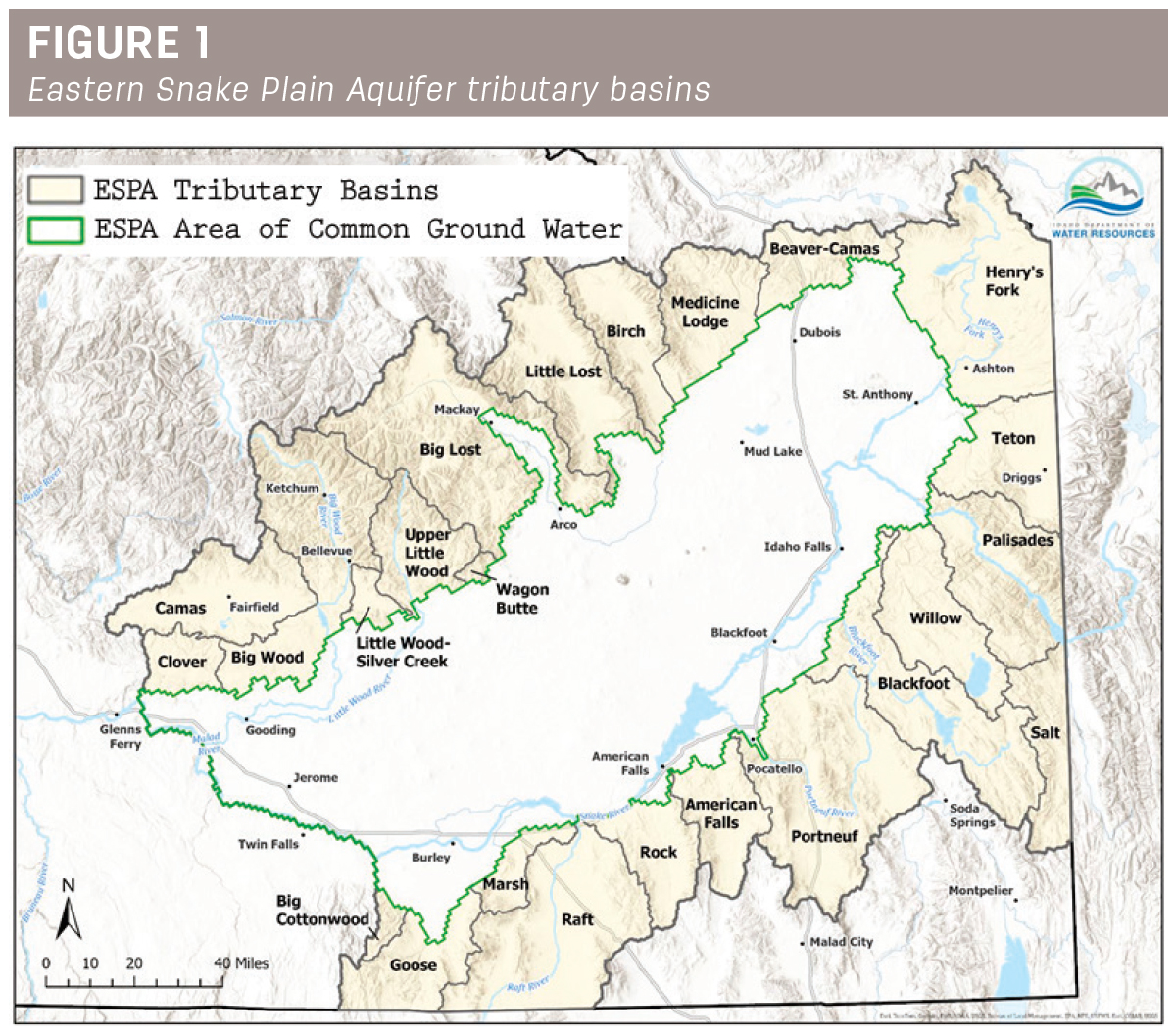
Van Burtenshaw, a farmer, rancher and state senator for District 31, highlighted that the tributary basins were initially left out of the Area of Common Ground Water Supply because in 1994, the aquifer model available to IDWR came with some limitations. Based on that model, the department drew a line called the Rule of 50. Since then, the aquifer model has been updated, and IDWR now has data strongly suggesting that the tributaries are affecting the aquifer.
Idaho's water usage is governed by the prior appropriation doctrine, which means water allocation is based on “first in time, first in right.” Senior water rights are met first. Junior rights are met only after senior rights are satisfied. All groundwater users in Idaho are considered junior right-holders. The Snake River water flows decrease as water is pumped out of the aquifer. Therefore, junior right-holders inside the Rule of 50 boundary line were subject to allocation limits regarding how much water they can pump out of the aquifer and how they must mitigate their impacts because their actions directly impact water access farther down river. To date, groundwater users outside of prior Rule of 50 boundary weren’t regulated.
“Inside the Rule 50 boundary, we've got mitigation, voluntary cutbacks and curtailment,” explains Burtenshaw. “The guys outside the line haven’t needed to meet those same standards. The new model shows how all water usage across the entire aquifer, including the tributaries, impacts downstream flows.”
In March 2025, the IDWR held five public hearings to get feedback on adding five tributary basins to the ESPA: Big Lost Basin, Little Lost Basin, American Falls Basin, Raft Basin and Portneuf Basin, with more basins to be added. Also in March, the IDWR held a public meeting in Driggs and presented options for including groundwater rights in a new or existing water district within the Teton River Basin. A public hearing will be held at a later date.
Leveling the field
Reiterating his point, Burtenshaw says, “It just doesn't make sense that you don't measure from mountaintop to mountaintop, because it all affects the Eastern Snake Plain.”
Burtenshaw notes that surface water users outside of the Rule of 50 boundary are being treated unfairly regarding water access. A farmer with a 1904 water right who uses surface water may be curtailed on a short water year, while his neighbors with 1980 water rights, who pump groundwater, are allowed to draw water all year long, simply because they are located on the other side of the Rule of 50 boundary.
“Everybody has responsibility for that aquifer, and everybody needs to be responsible for the amount of water they use,” he says.
Tributary users react
Burtenshaw estimates that within the next five years, water meters will be installed on all the groundwater pumps in the five basins. These meters will help the IDWR establish historical water use on each basin. From that point, groundwater users will be subject to mitigation, cutbacks and curtailments in dry years.
The expanded ESPA divided the Big Lost River Groundwater District into two parts. Brodie is now located inside the ESPA, but his neighbors to the north and east are part of the Big Lost tributary basin. Now that Brodie’s farm has been added to the ESPA, he says the IDWR is requiring the newly added groundwater users to reduce groundwater usage by 12% and require the district to purchase 3,557 acre-feet of wet water to supply to the Snake River aquifer.
“We're scared that throwing us in the Snake River Aquifer Plain will open a door for people in the lower counties to come up here and grab our water,” says Brodie.
Burtenshaw understands the concern.
“I don't blame them for not wanting to be pulled in. I don't want to be in either,” he states.
Supplying the Snake River with 3,557 acre-feet is a head-scratcher for Brodie, who maintains that his valley is unique compared to other basins closer to the Snake River.
“They're saying that we owe them this amount of water because we affect them more than other areas. But it's hard to swallow because, for one, we can't supply the wet water. We are very separated from the Snake River compared to other districts. Our valley dries up really fast, and it gets wet really fast. And so we have a hard time committing to supplying that amount of water.”
Brodie suggests that rather than a hard figure for wet water, the IDWR use more of a rolling average to account for wet and dry years.
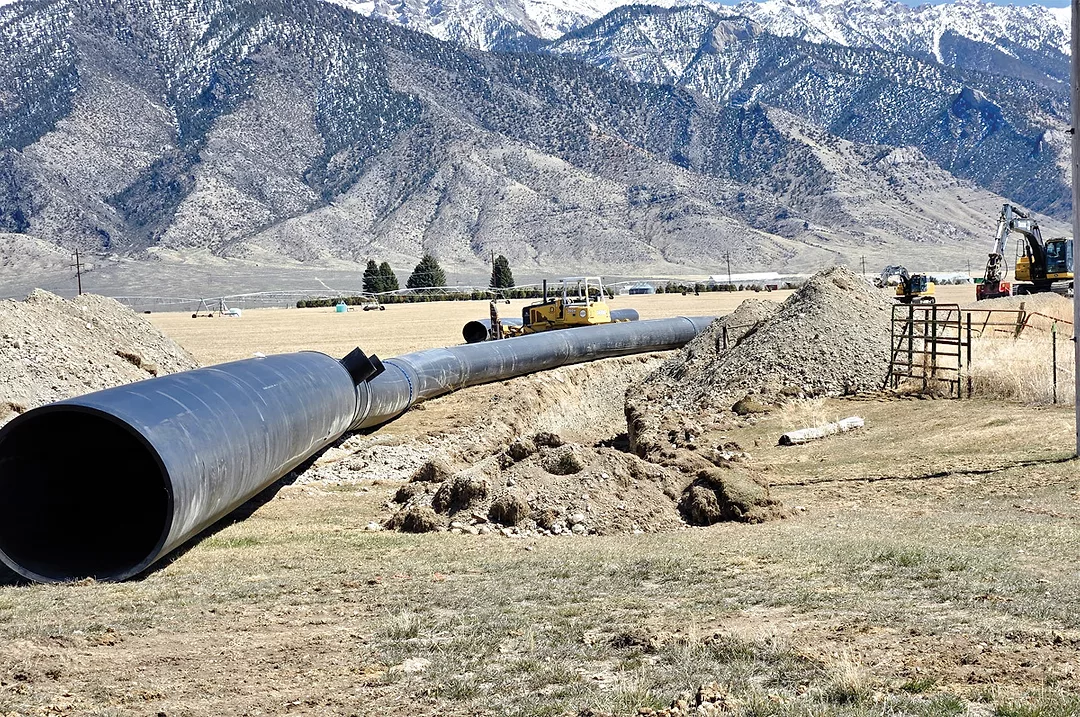
While Brodie and his neighbors aren’t pleased with the IDWR decisions, they recognize that the Snake River aquifer is everyone’s responsibility. The Big Lost River Irrigation District is undertaking a massive water infrastructure project to line its canals and install pipelines wherever it can. Brodie says the motivation behind the project is that 85% of the surface water is lost to shrinkage due to the porosity of the bedrock in the Big Lost River Valley – water that no one is getting credit for.
“About 90 percent of our groundwater users are also surface water users. They only use their groundwater when they can't get their surface water. By being able to deliver their surface water, they'll cut back on their ground pumping. It'll be more useful for our decreed water, which hopefully we can trickle down and help save the aquifer,” he says.




.webp?height=auto&t=1783636475&width=285 "63802-Thomas-GPS-equipment--Automated-Magnum-Tractor--Matt-Skinner-photo(1).jpg")