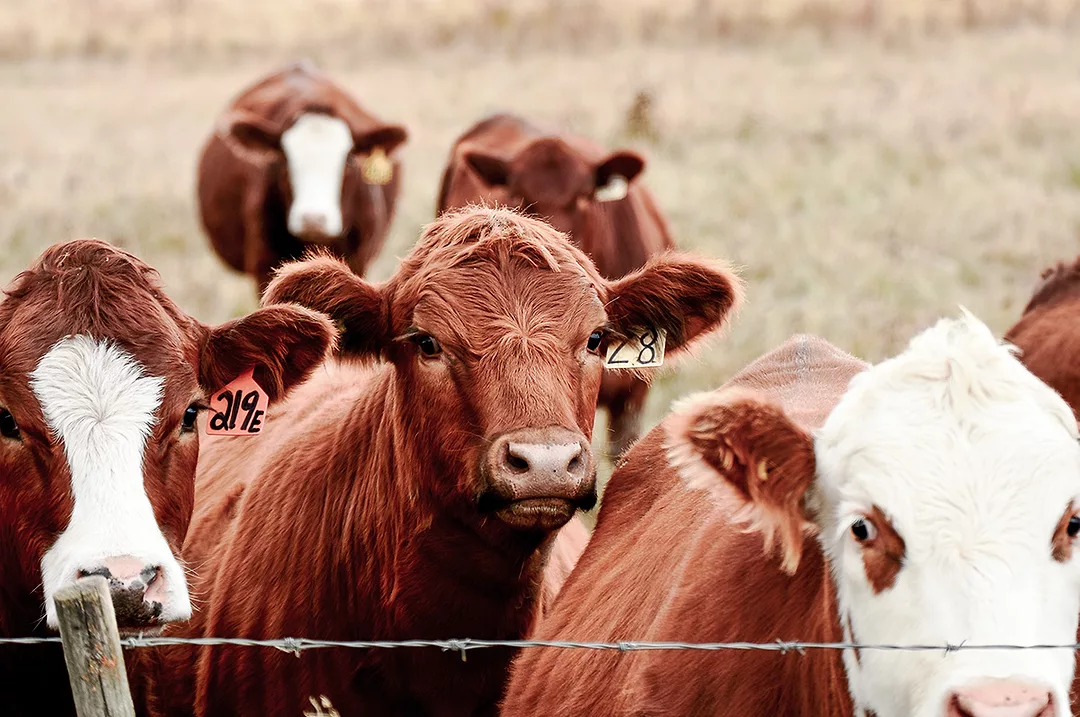
Replacement heifers represent the future for beef producers. This past calving season, producers nationwide awoke at any hour to help the next generation of their cattle draw breath on their ranch. Soon that breath filled their barns and paddocks as the murmurings of cow and calf bonding joined a chorus with whispers of spring that rose above not only the fatigue of a long calving season, but the past year’s tribulations. Success! Many will take morning coffee while enjoying the barnyard show on their 48-inch flat-screen kitchen window as new genetics walk their land.

Some calves are the proud accomplishment of strategic breeding or the next calf from your child’s favourite cow, while others you can trace through records back to your grandparents’ herd to form generational links between the ranch, your herd and yourself. Through this summer, these calves need to grow to fit your herd and goals. Performance for these calves is not by accident, and you are in control.
Although current markets are strong, replacement heifers are a key investment into your herd. Building a solid replacement heifer program is one piece in giving them the best chance to provide health, longevity and productivity to your herd. From a nutrition perspective, calving time, age of first conception and expected mature bodyweight are three of my top considerations.
In order for your heifers to give birth to their first calf at 22 to 24 months old, they must be bred around 15 months old. At the time of breeding, the heifer should weigh 60% to 65% of her expected mature weight at almost 90% of her mature structure size. In dairy data, first-lactation performance is peaked for heifers that gained 1.75 pounds per day from 2 months old until puberty, with additional recommendation that heifers weigh 90% of mature weight and very close to mature frame size at the time of first parturition. For example, a mature cow weight of 1,500 pounds would result in target weights of 750 to 900 pounds at breeding and just over 1,350 pounds at first parturition.
To meet the targets and expectations of your operation, heifers need proper nutrition to build frame size and weight to reach puberty before breeding. They also need proper mineral balance such as phosphorus for bone health and reproductive function. Heifers may also require higher-quality feed than your mature herd. After all, the expectation is for the heifer to properly develop a calf in addition to growing her own bodyweight, all while having smaller rumen capacity. Similar to your mature herd, gut capacity will decrease as the calf gains size closer to parturition, with the total gravid uterus reaching above 130 pounds.
If the winter weather has been favourable and feed quality was adequate, your main herd may stand to lose a little conditioning before calving without detriment. However, special consideration should be given to your heifers to ensure they have the energy and stamina required to not only endure the physical exertion of calving, but also the stress. Putting a little more feed in the bunk for your heifers, especially during a cold snap, is a good practice to avoid performance lulls caused by wasted energy from heat loss. Keeping your heifers on a consistent plane of nutrition and in good health not only saves treatment bills, but it will also maintain feed efficiency, as both poor weather and stress can impact your herd very quickly. Immune system stress is capable of increasing metabolic rate 10% to 40%, resulting in increased energy requirements.
To walk through a scenario, a heifer born in early April weighs in at 450 pounds when weaned on Oct. 14. The target weight at first breeding is 900 pounds, and the target breeding date is July 1, which will result in an April calving. There are 260 days between Oct. 14 and July 1, which requires the heifer to gain 450 pounds at the rate of 1.73 pounds per day. However, plan to reach the target a month early because it is easier to slow down weight gain rather than speed it up when nearing the breeding date. Weigh a representative number of heifers at least once during this growing period, perhaps three months before breeding, to ensure your ration is providing adequate nutrition to meet your goals without overfeeding. Based on National Research Council (NRC) values, to hit 1.73 pounds gain, the heifer will need an average of 8.4 Mcal of energy and 540 grams of metabolizable protein each day to meet this weight gain and achieve a 900-pound bodyweight during this prebreeding period.
During gestation, your heifer must continue to grow. To reach the target of 1,350 pounds (90% mature bodyweight), she must gain another 450 pounds during gestation. Accounting for a 283-day gestation, she must gain 1.6 pounds each day. The requirements for this weight gain are 12.04 Mcal of energy and 842 grams of metabolizable protein each day during gestation. Pregnancy requirements are in addition to these values, and 30 days before delivering a 90-pound calf, the heifer will require another 0.84 Mcal of energy and 160 grams of metabolizable protein.
These estimations of weight gain, combined with a properly formulated and consumed vitamin/mineral protocol, will prepare heifers for proper development. In addition to phosphorus, it is important to ensure manganese is fed at adequate amounts to aid in fertility. On the macromineral side, cattle winter feeding programs in Canada that rely on cereal forages will likely require supplemental calcium. Common premix or mineral supplements may state a 2-to-1 ratio of calcium to phosphorus (Ca to P), and this may be perfect for your herd. However, when considering Ca-to-P ratio, it is not the ratio in your mineral that matters. Rather, it is the final ratio in the feed that your herd consumes on any given day that matters. Current NRC guidelines are to formulate a ration Ca-to-P ratio between 1-to-1 and 7-to-1 if adequate phosphorus is provided (about 0.22% DM for replacement heifers). This, luckily, is a more forgiving range to keep your ration within than the NRC specification for micromineral supplements such as sulphur.
To clarify, while earlier in this article I have advised to hit target weights early and to feed on the side of providing growing heifers with more than your heifers need, I do not advise disregard of proper mineral supplementation. If heifers are not reaching target average daily gain, advice to “hit target weight early” should not be misconstrued as advice to haphazardly increase feeding cost without careful consideration. If a ration is lacking some calcium, advice to “feed a little more than is required” should not be interpreted as advice to double mineral supplementation. While this will increase the calcium in the ration, it will also double everything else, including microminerals such as sulphur and copper, which could have negative effects on your heifers’ health.
From the day they are born, the growth and nutrition status of your replacement heifers should be formulated with the future of your herd in mind. Proper considerations of breeding timing, appropriate target bodyweights and correct mineral supplementation will maximize your heifers’ contribution to your herd for years to come.
References omitted but are available upon request by sending an email to the editor.