We use cookies to provide you with a better experience. By continuing to browse the site you are agreeing to our use of cookies in accordance with our Cookie Policy.
Water quality is critical for good reproduction rates, herd health and growth. New solutions are available for producers to test water quality without sending it to the lab.
When formulating your herd’s nutrition plan, don’t forget the importance of a high-quality water source. Without that, even the best feed management may be for naught.
Effective water and feed management are the cornerstones of a profitable and healthy beef cattle operation. When properly executed, these two elements work in tandem maximizing performance, reducing health issues and improving overall efficiency.
Trace minerals are the quiet bottleneck in reproduction, and addressing deficiencies and antagonisms can lift fertility, embryo survival and herd profitability.
Reproductive efficiency is a main driver of profitability in beef operations, as an open cow still eats and grazes but doesn’t produce a weaned calf. Herds often focus on genetics, body condition and synchronization, yet trace mineral status is a common, hard‑to‑see limiter of conception, embryo survival and calving season length.
Anyone who is at least somewhat familiar with the cattle industry knows there is a long list of products and product types that can be used for providing supplemental nutrients to cattle.
As environmental pressures and market dynamics shift, producers are taking a closer look at how early weaning, paired with precise nutrition and management practices, can unlock both short-term flexibility and long-term gains.
Feeding hay is often just part of the cattle business, and it's almost an afterthought to some. Habit and routine can sometimes overshadow a piece of your cattle business that deserves further evaluation.
In addition to traditional fly control methods, modern insect growth regulators, prebiotics and heat regulation technologies can help protect your cow herd from the nuisance of multiple fly species.
Fly control is a constant battle for cattle producers. As temperatures rise and cattle move into summer grazing systems, flies become more than just a nuisance and can negatively impact cattle comfort, grazing behavior and overall productivity.
Forage is the foundation of most beef cattle diets. Whether cattle are grazing pasture, eating hay or being fed silage, these feeds provide the bulk of nutrients for cow-calf, stocker and backgrounding operations.
Producers often have questions about why their cattle aren’t consuming as much protein and mineral supplement as they’d like. The answer might be an excess of salt in the diet.
In recent years, a growing number of ranchers across the West have begun asking a similar question: Why, when salt is offered in multiple forms, do cattle suddenly stop consuming their mineral supplement?
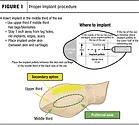
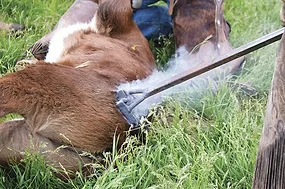
Implant strategies are known resources for gain in your calves, but the efficiencies also extend into environmental sustainability with fewer inputs and more beneficial payouts.
While many Canadian cattle producers have a reluctance to use growth implants in their herds, the science shows they are a proven tool to help build profits and enhance efficiency.

 RSS
RSS