Feeding hay is often just part of the cattle business. It is almost an afterthought to some. Habit and routine can sometimes overshadow a piece of your cattle business that deserves further evaluation.

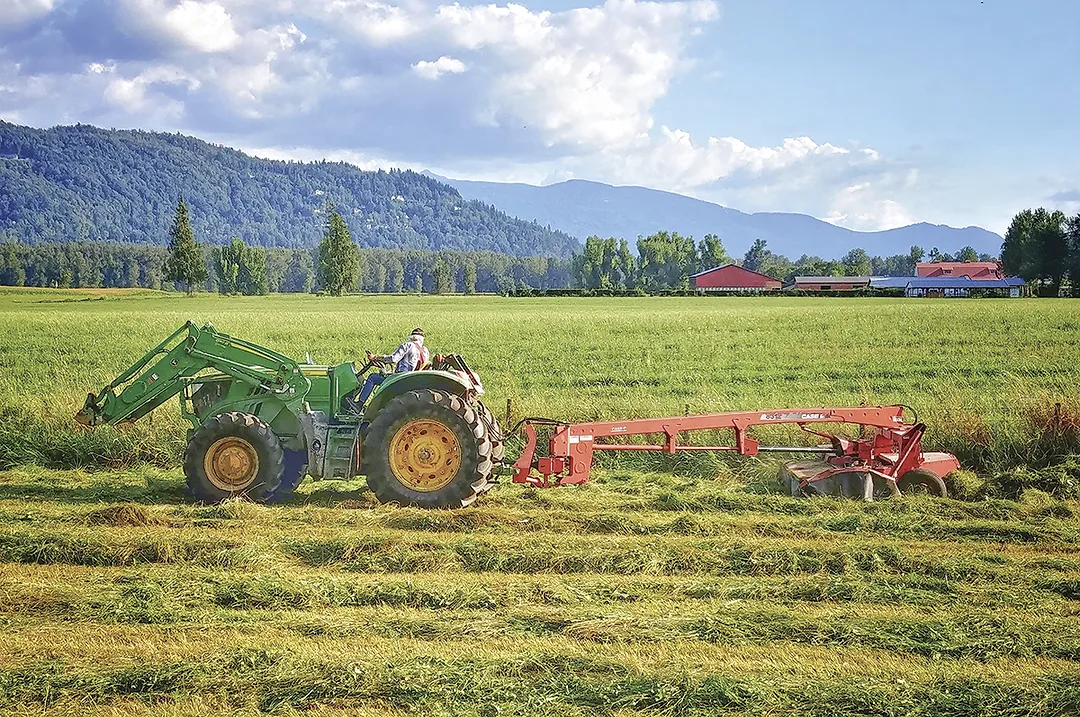
Intuitively, we know that hay cost is a primary factor in deciding whether to purchase hay or grow your own hay. However, it is common for those growing their own hay to not include the value of time, cost of labour, or equipment maintenance and depreciation costs. So comparing apples to apples sometimes is difficult for farmers to accomplish. Even so, there are many more considerations that go into making the correct decision on your farm. Here are a few factors that you may consider:
Buy hay if you
- Have limited land resources to use for hay production
- Are busy, have limited time to devote to hay production
- Are short on labour
- Must purchase hay equipment or update old equipment
- Are set up to handle byproduct/alternative feeds
- Have access to a reliable hay source
- Know there is a limited market for excess hay
- Are unable to store and carry over hay with little waste
- Own low acreage in hay that cannot self-support an investment in equipment
Grow hay if you
- Have land available for hay production
- Have adequate time and a flexible schedule to accommodate hay production
- Know labour needs are adequate or can be sourced economically
- Can share some equipment costs with other enterprises
- Absolutely need to control harvest time and hay quality
- Lack flexibility in feeding setup or your infrastructure is geared toward feeding hay
- Know there is a good demand for hay, potential diversification of farming business
- Can store excess hay, carry over hay with little waste
- Have hay acreage that supports equipment payments and regular updates
Even in cases where some aspects of the farm may support growing your own hay, sometimes the opportunity cost is too high, and buying hay can allow better use of time and equipment to focus on more profitable portions of the farming operation. Farming practices like spraying or fertilizing row crops may be more economically important when compared to baling hay. Are there other uses of your time and labour that could yield more benefit to the farm?
If you are purchasing hay, the fertilizer value of hay is important to consider, realizing that if these nutrients are evenly spread over pastures during winter feeding, the benefit could be quite large to helping distribute additional nutrients to poorer-fertility sections of a pasture. With a little thought and management when feeding hay, producers can build pastures up, reduce manure handling and help make the most out of purchased hay. Rolling out hay or bale grazing on low-fertility land can offer some added benefit to the nutrient value in hay. With current fertilizer prices, a 544-kilogram (1,200-pound) round bale contains approximately $25 ($18 USD) of fertility.
Land price and availability are big constraints on herd expansion. Diverting hay ground to managed pastures can be beneficial for allowing your herd to add numbers. Converting hay ground to pasture or avoiding haying established pastures can result in more grazing acres. Properly managed pastures can allow increased herd size or stocking rates and can result in lower fertilizer and fuel needs to support the cattle operation.
Even if you do not plan to expand cow numbers, adding grazable acres could allow you to entertain custom grazing. Custom grazing other cattle or sheep could be a far more profitable enterprise than making hay. It could also better match limited labour scenarios or add flexible stocking rates in times of drought.
Now, one big hurdle when purchasing hay from others is the variability. Variable quality, palatability differences and unfamiliarity of plants within the hay bale can be concerns when buying hay. It is best to ask questions about the forage species and request a nutrient analysis on the hay you purchase. Sometimes this is hard to obtain, and if buying “cheap” hay, the seller is unlikely to pay for testing. So if your animals depend on high-quality or palatable forages to meet performance goals, purchasing hay may not be the best option.
Unfamiliarity with the source of the hay can also increase risk of the presence of poisonous plants, contaminants, or even metal or wire.
Purchasing hay during a drought comes with a slightly heightened level of risk. While not common in normal production environments, in times of drought, the risk for elevated nitrate levels in hay increases.
Every farm is different. There are good reasons to grow your own hay and good reasons to purchase hay. Take a look at what your farm does best and what synergies may exist with harvested forages and your cattle operation. The ability to market extra hay at a premium and share equipment with another farm enterprise is likely needed to make it profitable on your farm. In my experience, those producers that reduce the need for purchased feeds and limit hay feeding are more profitable than those that devote significant time, money and resources to producing and feeding hay.