Typically, when I consult with a horse owner, it is to address lameness. Most owners have concerns about equine metabolic syndromes such as equine diabetes or pituitary pars intermedia dysfunction (PPID). So their focus is nonstructural carbohydrates (NSC). However, there is much more we can do nutritionally to prevent lameness in horses. Ensuring a well-balanced diet along with monitoring body condition can go a long way in preventing lameness and delaying the onset of some metabolic issues.

Regularly monitor body condition
This is the marathon of preventing lameness in our horses. Monitoring their body condition with intentionality can help ensure we notice when they are carrying extra weight or have gotten too slim. Carrying extra weight puts unnecessary stress on joints. Furthermore, just like in humans, excess weight is also associated with the development of insulin resistance.
Consistently monitoring body condition can help owners make management decisions, such as restricting intake or increasing exercise. There are several apps available to help producers track body condition score (BCS). These apps can store a photo of the horse with the date and make notes with any action steps that need to be taken. For most mature horses, a BCS of 5 to 6 is ideal. Beyond visual evaluation of BCS, getting hands on the horse can help understand the condition of the horse. Physically evaluating a horse by feeling for fat deposits and using girth tapes to estimate weight can provide more precise insights.
Protein and energy balance
Forage is the primary source of nutrients for horses. Protein requirements (typically 8% to 10% on a dry basis) can usually be met with the forage. However, a protein-deficient diet can slow hoof growth. This means if the horse does injure their hoof, it will be a longer recovery time.
Conversely, energy in many forages often exceeds equine requirements (typically 0.82 to 1 Mcal per pound dry basis). It is important to test the hay and pasture to determine if any management tools need to be implemented.
For example, when grazing pastures, the maturity of the forage can make energy variable throughout the day. Lush green, actively growing pastures in the vegetative state will accumulate sugars during the day and utilize them at night. So for horses needing lower energy to maintain their healthy BCS, grazing in the early morning would be ideal, and they may even need to wear a grazing mask. When sampling these forages, it is key to take the sample at the time of day when horses will be grazing to get an accurate representation of the energy in the hay. This issue resolves as the grass matures and has more fiber content and less sugars actively accumulating during photosynthesis.
Macrominerals
A proper balance of calcium (Ca) and phosphorus (P) is key to maintaining bone health. We commonly think of disorders such as rickets in young animals and osteomalacia in older animals. Both disorders result in soft, weak bones that easily break and thus are associated with lameness. But a more subtle issue can occur when intake ratio of Ca-to-P is less than 1, hyperparathyroidism. This results in what is commonly known as big head disease – horses’ facial bones soften and swell while their limbs exhibit lameness from bone softening as well as musculature issues from lack of calcium needed for contractions.
Moreover, deficiency of P and excess of magnesium (Mg) can also manifest in the same symptoms as Ca deficiency and an out-of-balance P ratio. An additional symptom when the disorder is P deficiency is pica. Pica is when horses eat dirt or chew on wood. Calcium, P and Mg concentrations in forages are correlated with protein. So typically, higher-quality forages have more macrominerals as well.
Microminerals
Several microminerals are key to avoiding lameness in horses. Zinc (Zn) and copper (Cu) are both responsible for proper formation of hair, hooves and other epithelial linings. Furthermore, a deficiency of Zn can also contribute to stiffness of joints and swelling in the hooves. Manganese (Mn) is a key nutrient for foals as they grow and develop. Deficiency of this mineral during this critical growth period can result in malformation of the leg bones. These micronutrients are not typically found in adequate concentrations in forages. Therefore, it is important to provide a trace mineralized salt at a minimum, even when no other supplements are necessary.
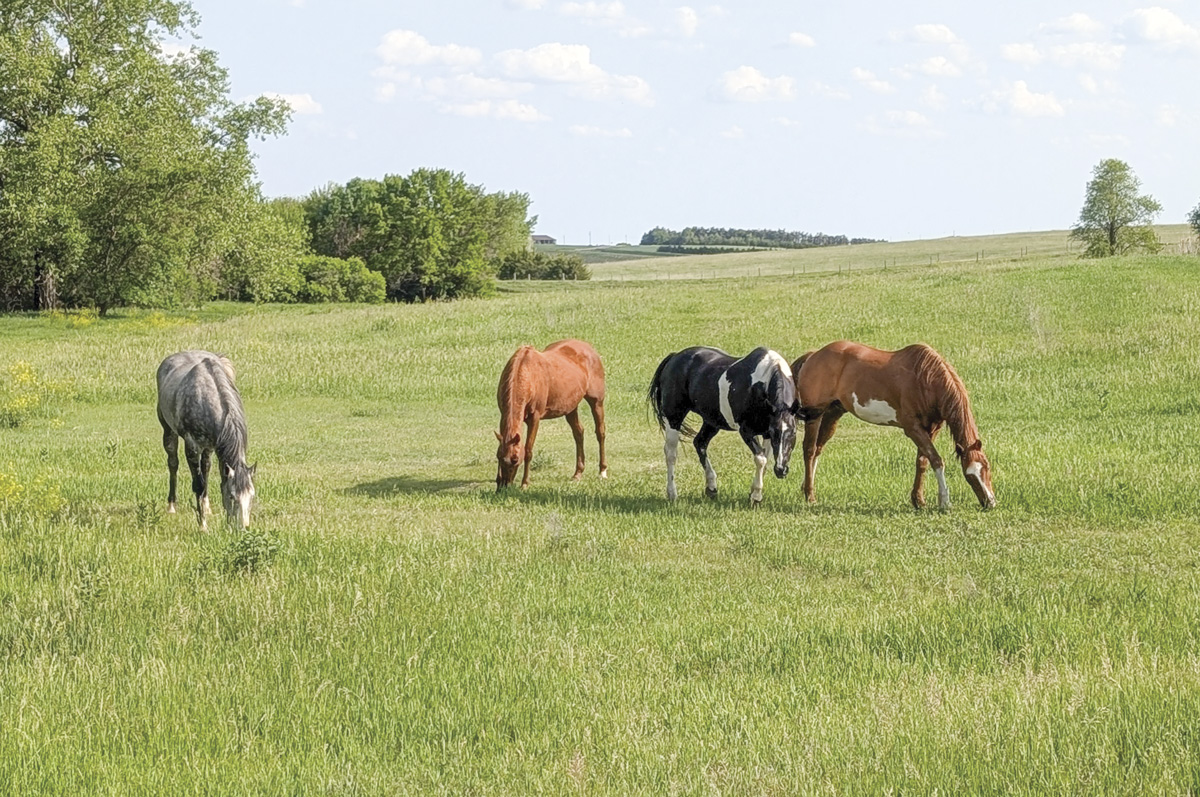
Horses graze mature grass pasture. Image by Aleisha Ziegenbein.
Selenium
Selenium (Se) is also often a hot topic when I work with equine owners. Horses are extremely sensitive to Se toxicity at just 5 parts per million (ppm), yet they require 0.3 ppm in their total diet on a dry basis. Furthermore, the amount of Se that can be added to a horse’s diet in the form of a supplement is regulated by the U.S. Food and Drug Administration. So it is not a recommendation to be taken lightly.
Selenium deficiency can cause lameness issues including weak, stiff muscles, but this is an extremely rare condition in horses. A toxicity, on the other hand, can occur from accidental overdose of supplements and can result in death without symptoms.
However, Se toxicity can also be the result of horses consuming forages high in Se. These forages are grown in areas where soil Se concentrations are elevated. Grazing horses can also develop Se toxicity, also known as "alkali disease," from grazing Se-accumulating weeds such as milk vetch or prince's plume. Symptoms when alkali disease progresses include hair loss and poor appearance of mane and tail as well as abnormal hoof growth. In extreme cases, hoof cracking, separation and sloughing can occur. As a result of the painfulness of this condition, these horses also develop anorexia as a secondary disorder.
Nonstructural carbohydrates
OK, time to talk about it! Once we have put in place preventive measures such as maintaining a healthy BCS and ensuring balanced macro- and micronutrients in the diet, but we still have a horse genetically inclined to struggle with an equine metabolic syndrome, it is time to look at controlling NSC intake. The goal for feeding these horses is hay with less than 10% NSC on a dry basis. This can be a challenge to find a forage with adequate energy to maintain these horses. As well as finding a forage with low NSC that also has low enough fiber content (acid detergent fiber [ADF] less than 45% dry basis, amylase neutral detergent fiber [and] less than 65% dry basis) to not restrict intake.
Luckily, there are tools we can use to get diets aligned for these challenging horses. Ration balancers with low starch and sugar content, slow feeders and we can incorporate some lower-quality straw forages into the diet as well. When struggling to build a diet, test forages, use the supplement guaranteed analysis and work with a nutritionist or veterinarian.
In conclusion, NSC is typically the topic of conversation when consulting with horse owners on their forage analysis. However, we should start with preventive measures first. To start with, we should ensure growing horses have adequate macro- and micronutrients as they develop. Then, we need to monitor mature horses for a healthy BCS and adjust their nutrition and exercise along the way. These preventive nutritional measures can help reduce the need to be so focused on the NSC and reduce the incidence of lameness in our horses.