Mobile irrigation testing lab creates informed irrigation decisions
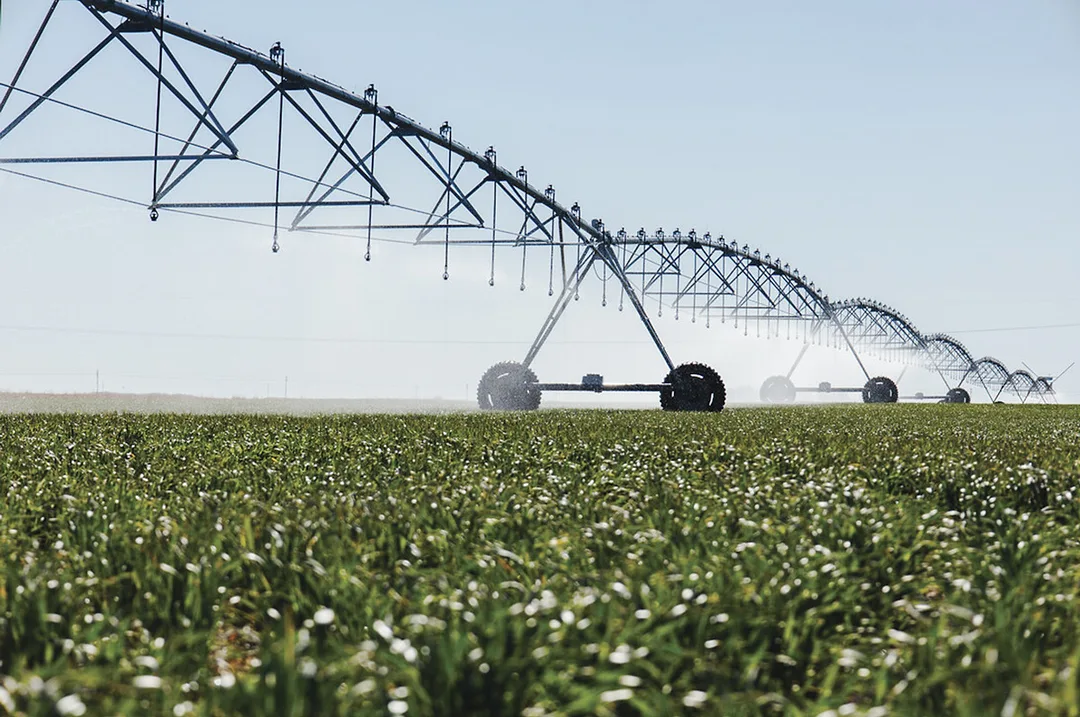
The Irrigation Water Management Lab at the West Central Research, Extension and Education Center is helping western Nebraska farmers make more informed irrigation decisions through on‑farm evaluation of emerging tools. Its Mobile Irrigation Testing (MIT) Lab works directly with producers to assess soil moisture sensors, satellite‑based crop monitoring and irrigation scheduling platforms under real field conditions.
With support from Nebraska Extension, the Twin Platte Natural Resources District and irrigation technology companies, the lab enables farmers to irrigate based on data rather than intuition. Participants have reduced irrigation frequency while maintaining yields, saving roughly 2.5 inches of water per season.
Nebraska producers benefit from access to the Ogallala Aquifer, one of the nation’s most important groundwater sources. As other states face increasing groundwater challenges, Nebraska growers have an opportunity to demonstrate proactive stewardship through improved irrigation management.
The MIT Lab provides a practical next step for producers wanting to strengthen their irrigation practices. The mobile, field‑based program brings technology directly to farms and emphasizes return on investment through hands‑on learning. Traditional irrigation decisions often rely on weather observations, past experience and intuition, but these methods lack the precision now available through soil moisture data, crop temperature measurements, evapotranspiration‑based water‑use estimates and crop stress monitoring.
Participation begins with a field visit to assess a producer’s goals and preferred data streams. The MIT team installs the selected technology and continues support through field check‑ins, troubleshooting and data interpretation. Collected information helps determine crop water use, soil moisture availability, nitrate‑leaching risk and crop stress levels. With clearer insight into field conditions, producers can schedule irrigation with greater confidence and strengthen long‑term groundwater stewardship.
For more information, contact Abia Katimbo.
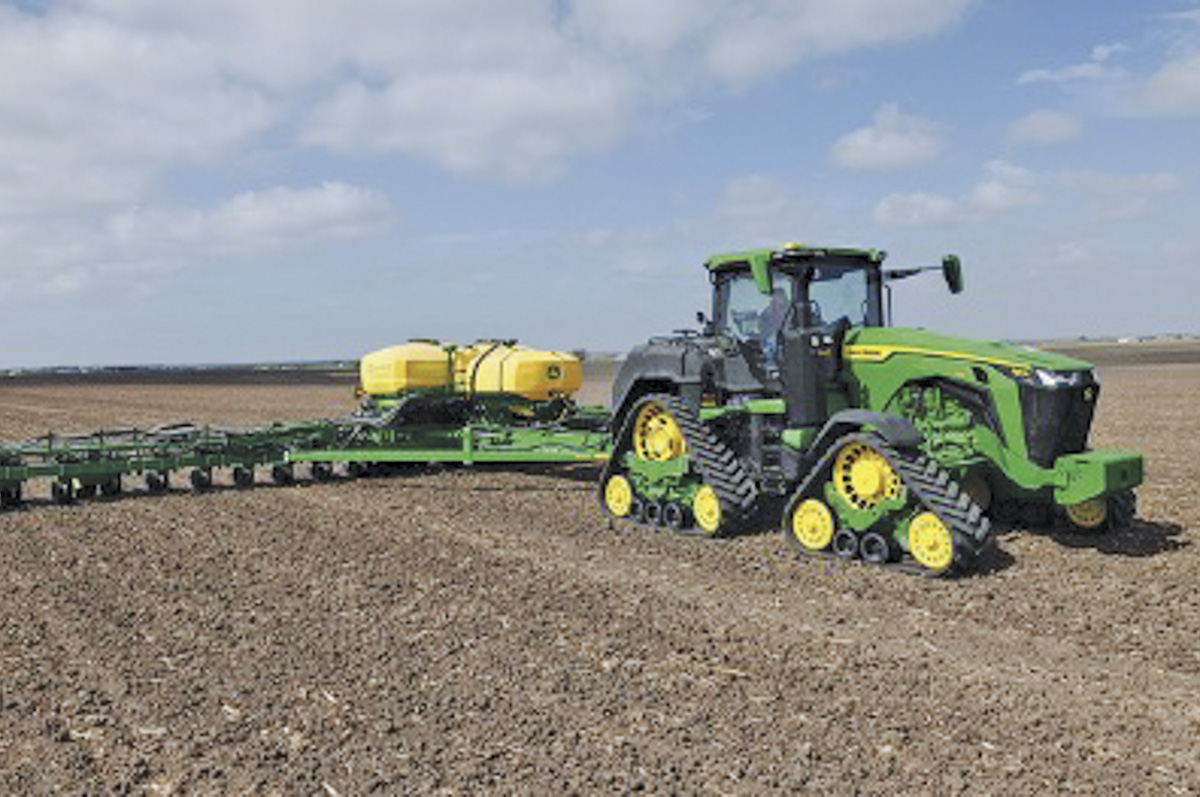
Image courtesy of John Deere.
John Deere extends enhanced operator experience across 8 Series lineup
John Deere has expanded its enhanced operator experience to all 8 Series tractors, bringing comfort, customization and consistency across the 250 to 410 horsepower 8R, 8RT and 8RX lineup. The updates build on the redesigned operator environment introduced earlier this year for high‑horsepower models.
Reactive command steering, available on select 8R tractors, improves maneuverability with automatic wheel‑centering and three adjustable feedback settings so operators can tailor steering feel for fieldwork or transport. The operator station adds three new transmission drive‑lever options – CommandX, CommandX Plus and CommandX Pro – each offering increasing levels of customization while maintaining Deere’s established drive strategy.
A modernized, configurable CommandARM layout further standardizes the operator interface across Deere production systems.
Cab updates include a convenience display for HVAC, radio and seat settings; quick‑access buttons; integrated wireless phone charging; electric CommandARM adjustment; full‑length seat cushion adjustment; improved seat ventilation; and a door‑cinch system for smoother closing.
For planting, EVT‑equipped tractors now support 56V Power Offboarding, allowing electrically driven planters to connect through a single harness. Hitch Active Downforce on 8R and 8RX models helps maintain consistent seed depth in variable conditions for integral and drawn planters.
MY27 tractors remain autonomy‑ready and feature the G5 Plus display with access to AutoTrac Turn Automation, AutoTrac Implement Guidance, AutoPath, Machine Sync and optional JDLink Boost connectivity for improved data capture.
For more information, visit the website.
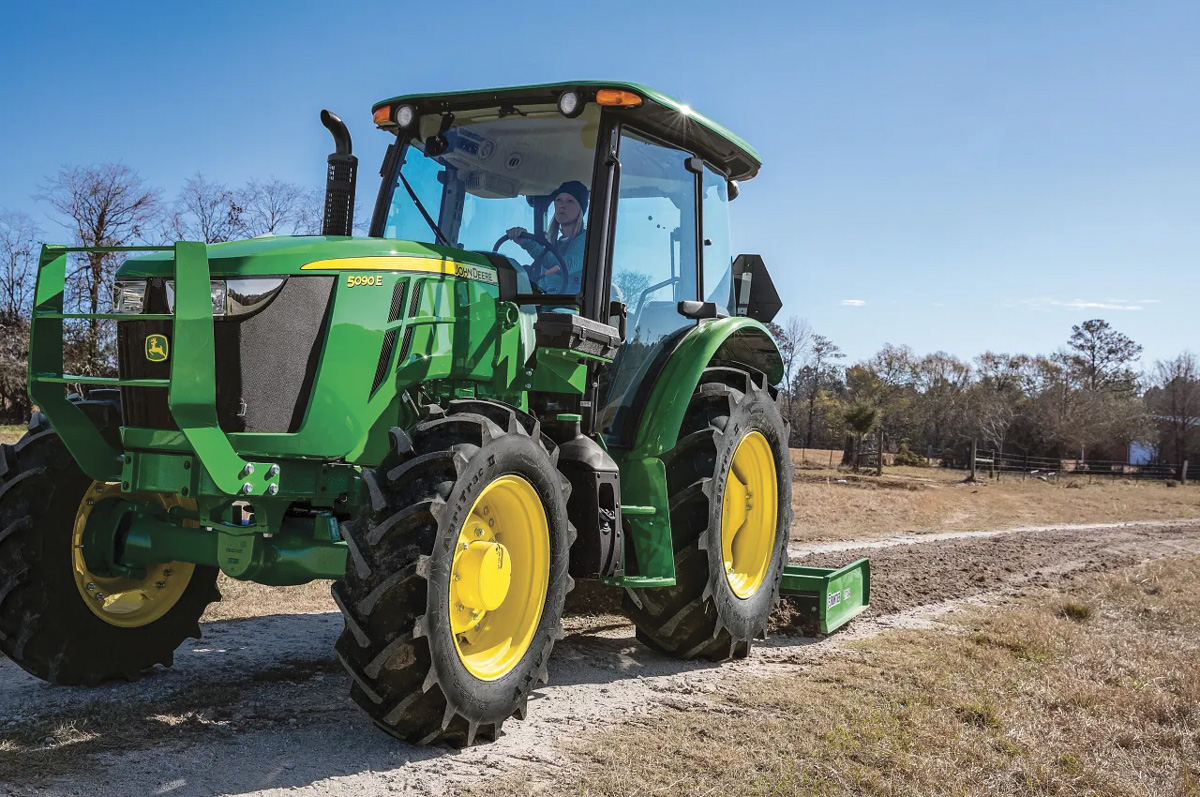
Image courtesy of John Deere.
John Deere introduces new 5E 3-cylinder utility tractor
John Deere has introduced the new 5E 3‑cylinder utility tractor, the first in its class to feature an electronically controlled eHydro transmission. Designed for ease of use, versatility and dependable performance, the tractor helps operators of all experience levels handle a wide range of rural lifestyle, specialty crop and small‑farm tasks.
The breakthrough eHydro system brings a suite of smart, efficiency‑focused features. TwinTouch pedals simplify directional control, while automotive‑style cruise maintains consistent speed across varying terrain. SpeedMatch sets a maximum travel speed, and LoadMatch coordinates engine and transmission response to prevent stalling under heavy loads. MotionMatch adjusts acceleration and deceleration feel, and speed governance supports controlled operation across different operators. Together, these features create a more intuitive driving experience and help reduce operator fatigue.
Built for customers who need capability without added complexity, the 5E 3‑cylinder tractor delivers consistent performance across chores such as loader work, mowing, material handling and specialty crop tasks. Its design reflects how rural property owners and part‑time producers use their tractors day to day, prioritizing reliability and straightforward operation.
Additional updates strengthen comfort and usability. Go‑home lighting provides extended illumination in low‑light conditions. A smaller steering wheel improves ergonomics, and upgraded electrical connections reduce contamination risk. Select cab models offer a swivel seat for better visibility during loader or rear‑implement work.
For more information, visit the website.
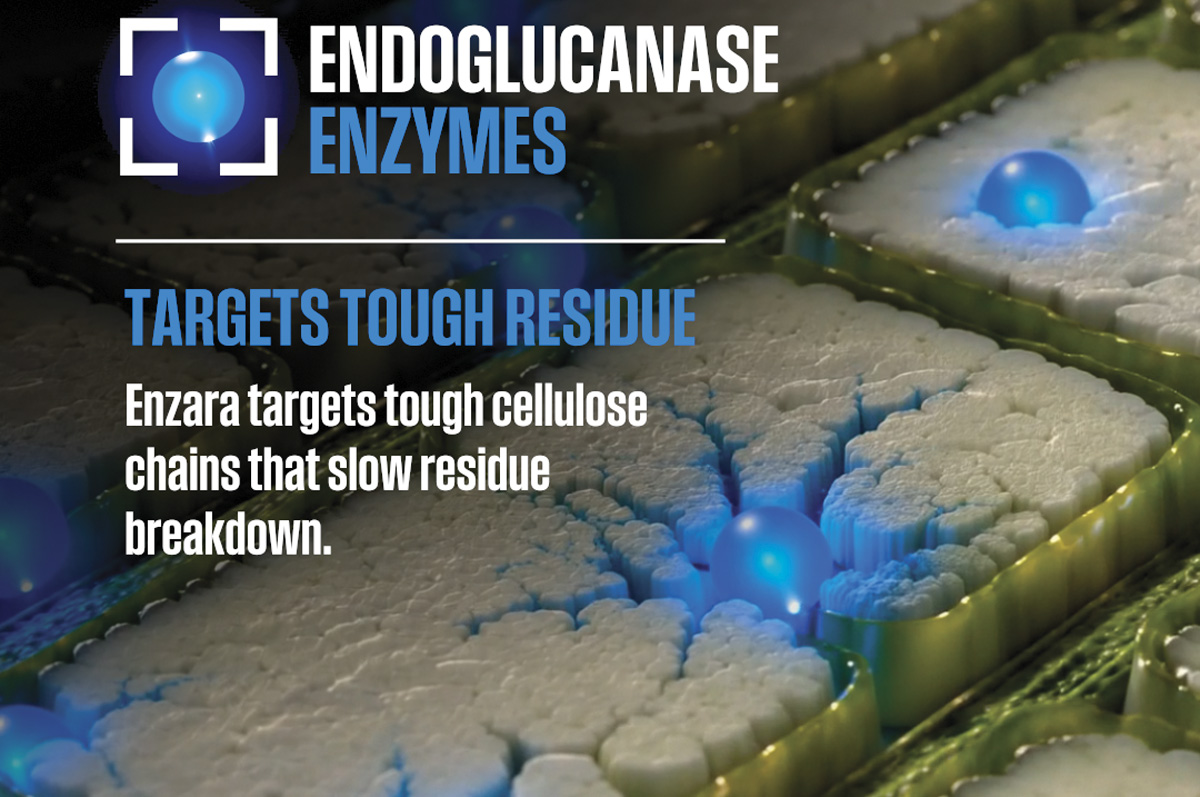
Image courtesy of Mosaic Bioscience.
Introducing Renuvis Enzara: A new crop residue degradation technology
Renuvis Enzara is a new enzyme‑based residue degradation technology designed to help growers manage increasing residue loads and improve planting conditions. As corn‑on‑corn acres expand, residue is driving extra tillage, added fuel, planter wear and lost efficiency. Enzara provides a faster, more predictable residue solution that fits easily into existing fall or spring passes.
Available August 2026 for fall application, Enzara accelerates breakdown of heavy crop residue to create cleaner strips, more uniform emergence and stronger early‑season crop performance. Fields warm and dry more evenly, soil conditions stay more consistent and residue interference at planting is reduced. The result is improved seedbed quality and earlier plant‑ready conditions.
Enzara’s mode of action centers on targeted enzyme technology that weakens tough structural fibers in residue. With easier access, naturally occurring microbes move in faster, speeding decomposition and supporting uniform emergence and early growth. This agronomic lift helps growers get more from the systems they already run without adding complexity.
Retailers can position themselves as trusted partners by using Enzara’s product education, trial results, selling tools, acre targeting and program integration resources to support grower conversations and expand opportunities.
By reducing residue challenges and improving planting conditions, Enzara strengthens early crop performance and supports long‑term soil health. With faster breakdown, cleaner fields and more consistent emergence, Renuvis Enzara offers growers a practical, high‑value approach to residue management.
For more information, visit the website.
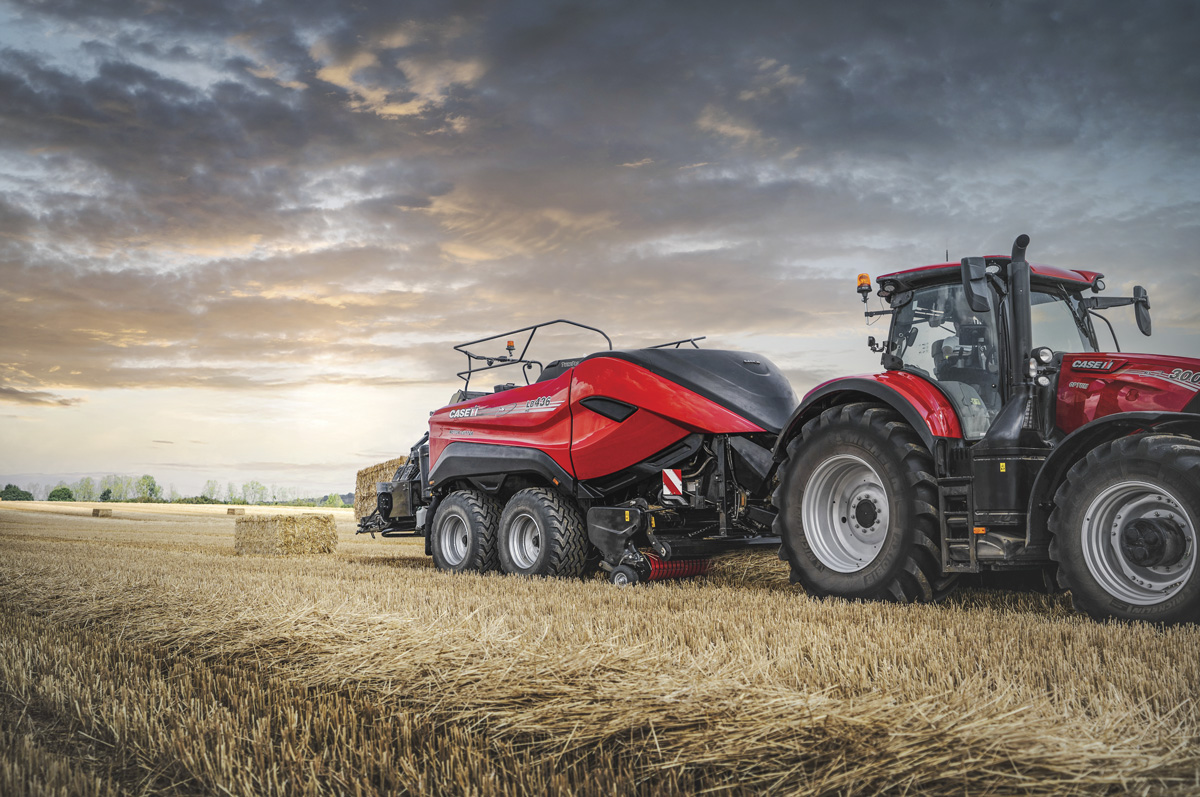
Image courtesy of Case IH.
Case IH introduces baler lineup updates
Case IH is introducing major updates across its baler lineup, aimed at helping farmers and contractors maintain productivity, reduce interruptions and benefit from expanded automation and connectivity. The LB4 and LB6 large square balers receive significant enhancements focused on throughput, durability and operator control.
A new rotor feeder option delivers continuous, controlled crop flow for higher performance across varying conditions. The rotor cutter version now offers up to 57 knives and a lightweight knife drawer for faster access, easier cleaning and flexible cut‑length adjustment supported by individual knife protection.
An updated driveline concept combines hydraulic‑controlled slip clutching, on‑the‑go torque measurement and a real‑time load indicator to help operators maintain optimal capacity. A redesigned Large Square Baler Automation interface consolidates visibility and control into a single operating environment.
The RB6 round baler series gains improvements in durability, bale consistency and ease of operation. A strengthened bale chamber and upgraded core components support long‑term reliability. Expanded monitor options and factory‑ready Tractor and Baler Automation simplify operation by automatically stopping the tractor, wrapping and ejecting the bale.
The RB6 HD Pro series, built for high‑demand operations, receives mechanical updates to improve crop flow and sustain output. Enhanced FieldOps connectivity provides extended baling data, advanced bale tracking and mapping for better planning and logistics.
Case IH also introduces Nature’s Net Wrap, a compostable, plant‑based option for RB6 and RB6 HD Pro balers that maintains wrapping performance while reducing plastic waste and disposal needs.
For more information, visit the website.
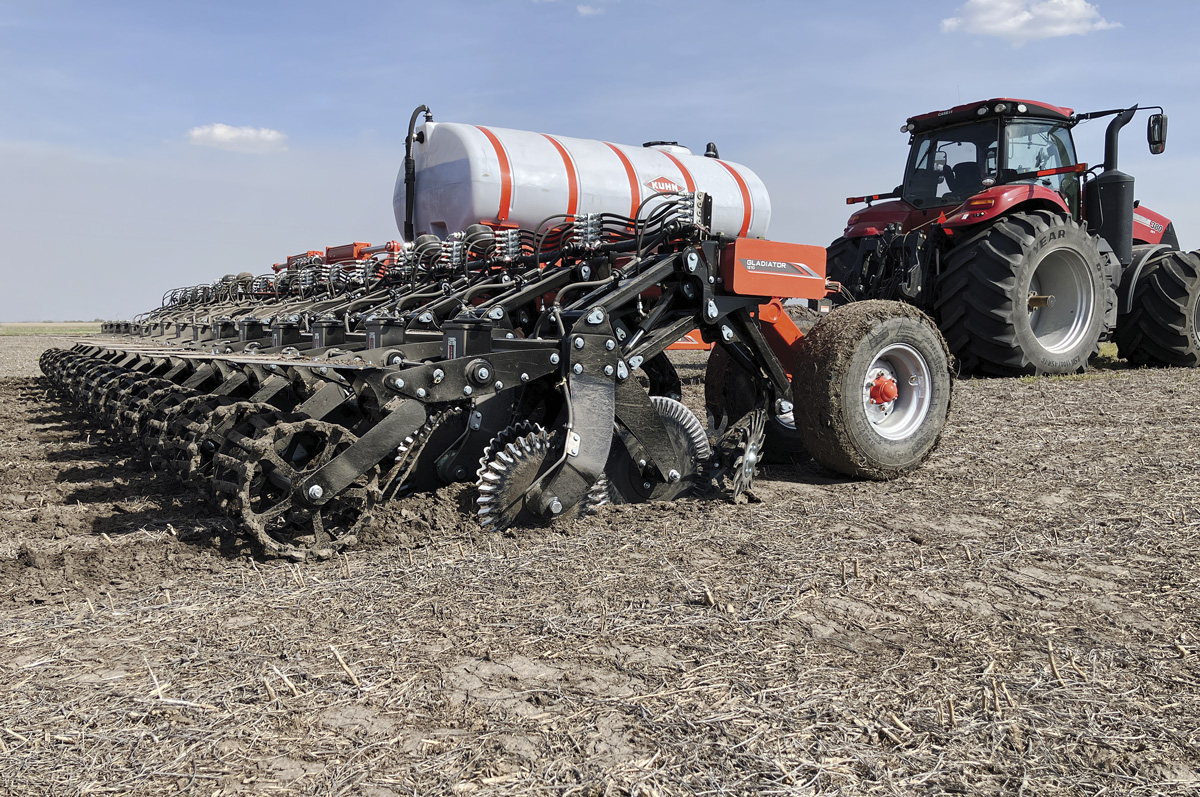
Image courtesy of Kuhn.
Kuhn Krause introduces VT‑PRO strip‑till row unit for Gladiator toolbars
Kuhn Krause has introduced the VT‑PRO strip‑till row unit, a high‑speed, high‑precision addition to the Gladiator platform designed to meet modern agronomic demands. Operating at 7 to 10 miles per hour, VT‑PRO builds a uniform, high‑quality seedbed while placing fertilizer 2 to 5 inches deep to support early root development and nutrient availability.
A touchscreen interface enables on‑the‑go adjustment of row cleaners and downforce, helping operators maintain consistent strip quality across changing field conditions. Like the ST‑PRO II, VT‑PRO incorporates sealed bearings, greaseless bushings and tool‑free adjustments for depth and berm formation, reducing maintenance and simplifying setup. Its wide strip design promotes uniform emergence and smoother planting.
Paired with Liqui‑PRO, the system enhances nutrient management by applying liquid fertilizer 2 to 3 inches off the seed zone at rates up to 80 gallons per minute at 10 miles per hour, improving uptake and yield potential. A rear basket provides accurate depth control, and the unit requires only 12 to 17 horsepower per row, supporting efficient operation across a range of field conditions.
VT‑PRO is compatible with 30‑inch Gladiator toolbars in both pull‑type and mounted configurations and performs well in spring applications, including rocky or wet soils. The Gladiator equipped with VT‑PRO row units is available in 3‑point models from four to 16 rows and pull‑type models in 12‑ or 16‑row configurations, all on 30‑inch spacing.
Overall, VT‑PRO reflects Kuhn Krause’s focus on productivity, efficiency and soil health by combining speed, precision and agronomic performance in a durable, easy‑to‑operate strip‑till solution.
For more information, visit the website.