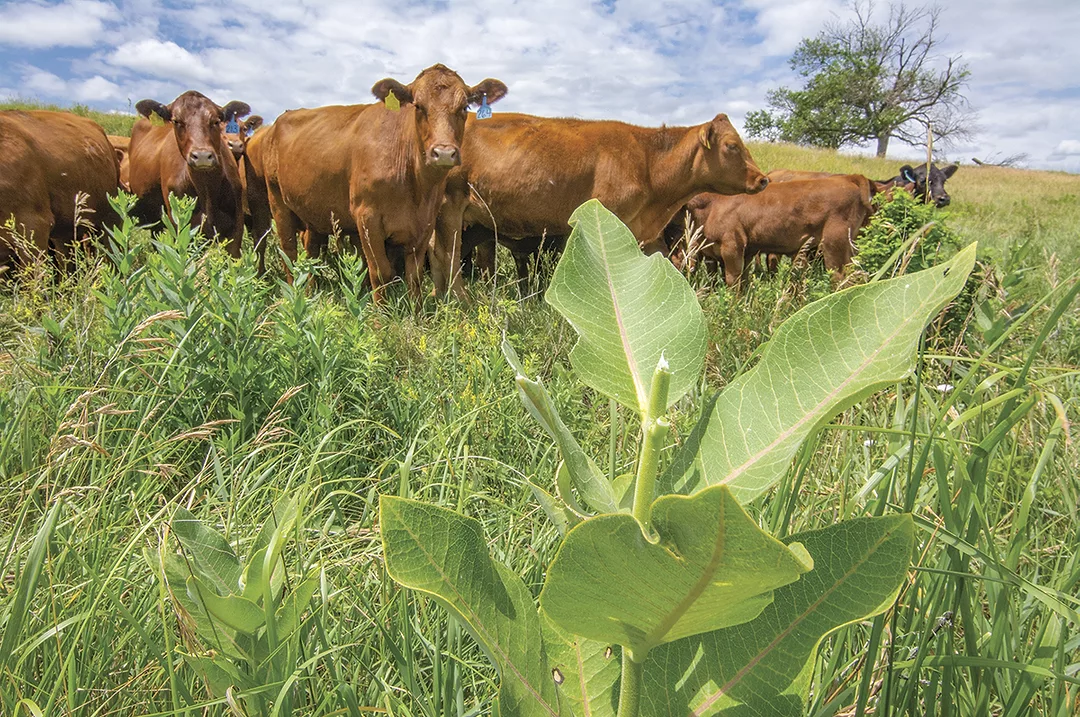
Though rangelands are known and valued for their expansive waves of grass, native wildflowers and shrubs are also important, providing a wide array of services that increase the resilience of rangelands while also contributing to livestock nutrition.
Rangeland wildflowers have traditionally been viewed as undesirable, mistaken for invasive weeds and seen as competition for grasses, unpalatable for livestock or potentially toxic. Consequently, thousands of rangeland acres receive aerial broadcast sprays of broadleaf herbicide to control nongrass plants, including invasive and problematic species. However, large-scale sprays can have unintended consequences, eliminating nontarget plants like wildflowers.
Research has shown that broadleaf herbicide sprays have highly variable impacts on grass biomass production and limited net benefit to livestock production. Additionally, wildflowers and shrubs are sources of protein, nutrients and minerals for livestock, sometimes providing forage quality and minerals at levels greater than key forage grasses. Native wildflowers and shrubs also contribute to the overall health of rangelands, supporting soil health, water infiltration, rangeland resilience to drought and wildlife habitat, including habitat for pollinators.
Livestock eat native wildflowers and shrubs
Wildflowers and shrubs may comprise 20% to 45% of cattle diets throughout the year on rangelands; however, it’s difficult to describe a wildflower species as palatable or unpalatable because there are many factors that affect when livestock graze these plants and which parts of the plant they might choose to eat.
Livestock diet selection is dynamic and dependent on many factors, such as abundance and diversity of forage, grazing management practices, mineral content of the forage, time of year, precipitation and topography, as well as livestock species, breed, age class and learned grazing behaviors.
Native rangeland wildflowers provide nutrition for livestock
Grasses and other graminoids are the primary forage for cattle, bison and other livestock, and forage quality at different growth stages and locations has been researched. Although wildflowers and shrubs represent a considerable portion of the aboveground biomass in rangelands, comparable comprehensive research on the forage quality and mineral content of native rangeland wildflowers has not been done until recently.
In order to effectively advocate for rangeland wildflowers and the value of diverse native rangelands, the Xerces Society for Invertebrate Conservation (Xerces), North Dakota State University (NDSU), the Natural Resources Conservation Service (NRCS), South Dakota State University (SDSU) and other partners decided to collect plant material from common, abundant rangeland wildflowers eaten by livestock and valuable to pollinators, and analyze its nutritional content.
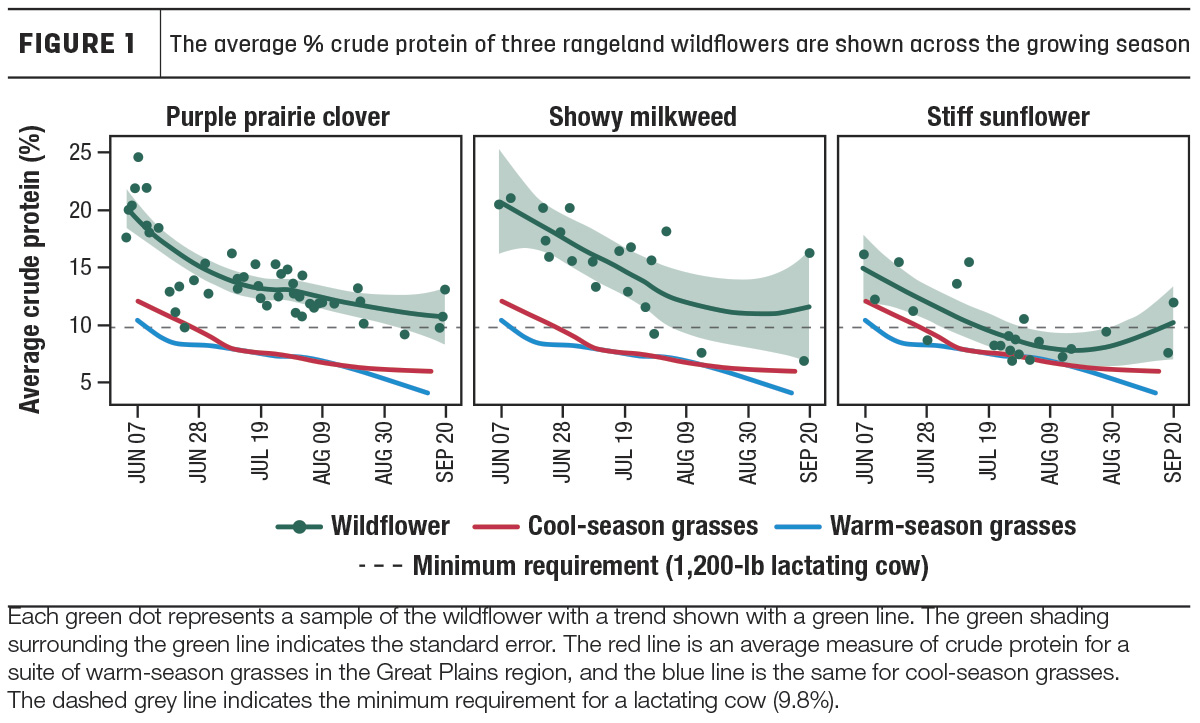
We sampled from 2021 to 2024 in nine states in the Great Plains and Midwest: North Dakota, South Dakota, Nebraska, Minnesota, Montana, Colorado, Iowa, Oklahoma and Kansas. Additionally, we also sampled a limited number of forbs on California rangelands. We aimed to collect samples of each species in multiple growth stages – vegetative, prebloom, bloom and postbloom. The forage quality and mineral levels of grasses vary greatly through the growing season, and we predicted wildflowers would also change through time. In total, 1,829 samples of 102 species were collected.
When averaged across the growing season, 96% species of wildflowers and shrubs sampled met or exceeded the minimum requirements of total digestible nutrients for a 1,200-pound lactating cow, and 69% of plants met or exceeded the minimum requirements of crude protein for a 1,200-pound lactating cow. Forage that meets the needs of a lactating cow will provide ample nutrition for the rest of the herd, as nutritional needs peak during lactation.
Additionally, many wildflowers are providing important minerals, sometimes exceeding minimum cattle requirements. Minerals such as phosphorus, calcium, potassium, copper and zinc are often present in wildflowers and shrubs at higher levels than the grass community. Mineral content in grasses and wildflowers is linked to soil type and varies accordingly.
This dataset shows that a diverse plant community will provide more opportunities for livestock to meet their nutritional and mineral needs, while also providing forage and shelter to wildlife, including pollinators such as bees, moths, butterflies, beetles, flies and wasps.
Without pollinators on rangelands, many native wildflowers and flowering shrubs couldn’t persist on these landscapes, as they need pollinators to move pollen from flower to flower, allowing the plant to set seed and reproduce. Therefore, it’s important to have healthy pollinator communities on rangelands to support diverse plant communities that can, in turn, support livestock performance and health.
Pollinators need rangelands and wildflowers
Native rangelands are invaluable pollinator habitat, providing vast areas of connected habitat with a diversity of wildflowers. Wildflower communities with overlapping bloom periods provide valuable food resources (pollen and nectar) for pollinators throughout the growing season. Many pollinators and other beneficial insects (like predators that provide pest control or decomposers that help keep soils healthy) nest, shelter or overwinter in rangeland soil, plant stems, bunchgrasses and leaf layers. Furthermore, diverse wildflower and grass communities offer caterpillar host plants for many butterflies and moths.
In addition to pollination, insects on rangelands are critical food sources for many other species of wildlife, supporting a resilient food web, and other beneficial services such as pest control, decomposition and improved soil health. Pollinators and other invertebrates support a diverse ecosystem that can, in turn, support livestock performance and health, wildlife and provide valuable ecosystem services.