Cows are scheduled to start moving into new facilities at the Michigan State University (MSU) Dairy Cattle Teaching and Research Center on south campus in East Lansing, Michigan, by Aug. 1, with the entire project expected to be completed by the end of 2025. At capacity, the dairy herd will expand from the previous herd size of 220 up to 550.

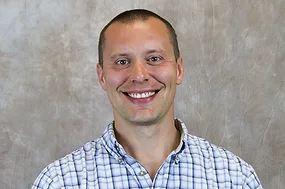
“Once we move cows from the old site to the new facility, we will still have another five months of work to do on the original site, starting with the demolition of the oldest barns,” says Barry Bradford, the Clinton E. Meadows Chair in Dairy Management at MSU.
Once complete, nearly all the barns housing cows will be new. The new tunnel-ventilated barn has capacity for 680 cows in different configurations and is located in what was previously a crop field adjacent to the old barn. The older barns – except for one freestall barn used for dry cows – will be demolished and replaced with a concrete pad for silage. The anaerobic digester and feed infrastructure will remain the same.
Bradford says getting all the right people in the room when specific decisions needed to be made was challenging, but he is “very pleased” with the outcome.
“Building anything is difficult. There are so many cost-benefit analyses to be carried out, usually with lots of unknowns,” he says. “That is even harder at a university, where there are many stakeholders and a blend of missions. Aside from the daily care of the animals, there are also research, teaching and outreach objectives to meet. The very first drawings showed a lot of smaller barns focused on different research capabilities, but we found that putting all the cows under one roof offered significant cost savings. Although this gives us a little less flexibility in controlling the environment for specific studies, we viewed it as a good trade-off for our focus areas at MSU, allowing us to get to the scale where we can provide enough cows to keep our faculty consistently moving forward.”
Forty percent of the funding was provided by the state of Michigan, while the university funded the remainder. Bradford says they are looking for partners to help them achieve their full vision for this facility.
Research and teaching
Increased research and teaching capabilities are two of the advantages of more than doubling the herd size.
“It will also make cows available for teaching needs, which has been a challenge in the past,” Bradford says. “In terms of specific capabilities, we will have two milking robots on campus for the first time. We will also be able to do nutrition research in free-housed cows rather than cows in tiestalls. This not only decreases the labor burden associated with research but also puts the cows in an environment that more closely mimics commercial farm conditions. Additionally, with this expansion, we are upgrading our digester system, giving us a very unique system to demonstrate to farms how sand bedding can be used with anaerobic digestion.”
They also hope to attract more students interested in dairy to the university by providing more opportunities for them to learn about modern dairy production and the variety of careers available on and off the farm.
Agritourism
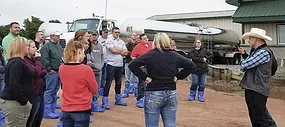
Aside from faculty and students, another audience they hope the new dairy benefits is the general public. They plan to open the university dairy for tours to showcase modern dairy farming.
“We are having ongoing conversations about exactly what this will look like, but part of the mission of the new facility is to educate the public about the modern dairy industry. We will likely have several tiers of engagement, from simply walking through a visitor center and seeing cows through the glass to a full tour of the site. We are still developing a funding plan to have the personnel to maximize public outreach opportunities,” Bradford says.
Excitement from the local dairy community
Throughout the planning and construction process, the overall feedback from the Michigan dairy community, faculty and students has been excitement for the opportunities that lie ahead with the new dairy.
“When we engage with producers and explain in detail what the new facility will enable from a research standpoint, they are typically pretty excited about the insights we’ll gain,” he says. “But even for those who don’t see as much value in research, they tend to be excited about the opportunities this facility will provide to expose youth and students to the modern dairy industry and, hopefully, to even draw a larger number of talented college students into the dairy sphere after graduation. After one of my colleagues went through the site for the first time, he wished he could tack another 20 years onto his career!”