Productive pastures depend on healthy soils. Managing for soil health provides ecological and economic benefits. For optimum soil health, five main principles should be considered:

- Armor the soil; keep the soil covered to minimize bare ground.
- Minimize soil disturbance by utilizing reduced/no-till practices on cropland and adaptive grazing strategies on pastures.
- Increase plant diversity of all crop types, warm- and cool-season grasses and forbs.
- Keep living roots in the ground all year.
- Integrate livestock grazing.
Jeff Goodwin, Ph.D., directs the Center for Grazinglands and Ranch Management at Texas A&M University. The center works with farmers and ranchers around the country, focusing on stewardship and ranch-relevant research – directly related to decisions farmers and ranchers can make.
The basics are as important today as ever – managing the land and thinking about principles before practices.
"This means that before you spray weeds, plant grass, graze or utilize any specific practice, you should think about the five basic health-building principles," says Goodwin. "When I spray weeds, I need to think about whether this decision is aligned with these principles to help me reach my goal or hinder me. My target may be to increase fertility, production, forage quality or extend the grazing season. I ask producers to weigh the economic and ecological cost of a decision before making it.”
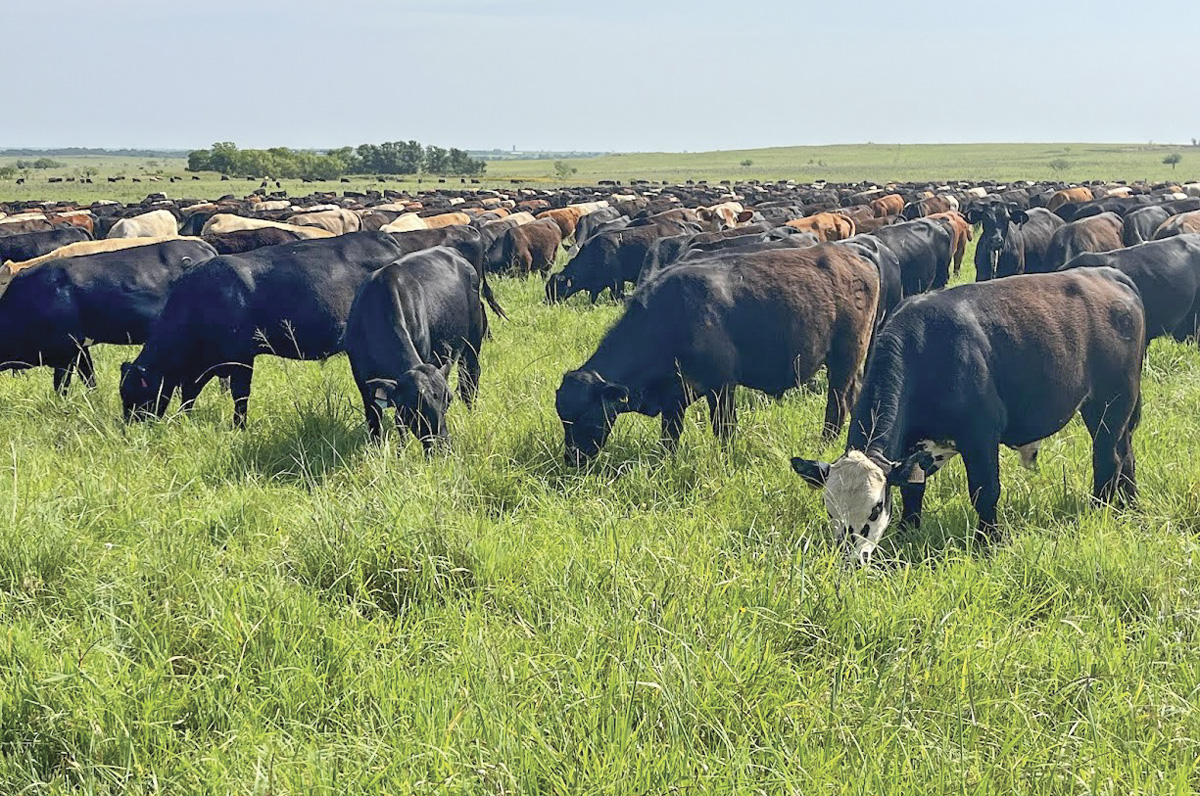
A herd of cattle grazes across a well-managed pasture. Through rotational grazing and hoof action, these animals help stimulate plant regrowth, enhance nutrient distribution and encourage the formation of soil aggregates – key benefits of managed grazing systems that support resilient, productive landscapes. Image provided by Jeff Goodwin.
Goodwin emphasizes that these practices are just tools and can be utilized in many ways. Many farmers who are interested in regenerative agriculture think haying is not a regenerative practice. It may be a practice that is limited, but it’s more important to know how and why these practices are implemented and under what context, rather than the practice itself. Regeneration is not a label that can stick onto certain practices.
Regenerative agriculture is a philosophy that must be outcome-based. There are many pathways to reach the expected goal or outcome. A person might be regenerating healthy soil, profitability or quality of life. Success is often achieved with multiple paths. It’s all about monitoring and measuring the outcome, adjusting, replanning and executing, then monitoring some more. How you get there is irrelevant.
"If your application of practices helps regenerate ecological processes on your property, you have found a regenerative process that works for you and your farm," says Goodwin, and adds that farmers and ranchers need to determine what fits their context. Often, people try to simplify actions rather than focus on outcomes. Some think a "regenerative grazier" has to move cows every day, but they work with many people who are not moving their cows every day, who are regenerating their land. The key is to be adaptive to conditions and use the tools accordingly.
The tool in this case, to increase herd impact, might be stock density. To increase herd impact, an option is to increase the animal units on small parcels of land for short periods of time. This increases forage utilization, distribution and allows longer recovery on the resting acres.
Goodwin says this might be an effective objective in the spring, when grass is growing swiftly, but not fall, and that it’s regionally context-dependent; it may be the opposite in other regions. He explains that trouble comes when managers overfocus on mandatory daily moves and miss the point about adaptively managing conditions, and adds that it's important to be flexible.
“Folks who are most successful adapt to their conditions," says Goodwin. "Sometimes they might need higher stock densities, and other times they may not. The management must fit the ranch and the rancher. All these practices can work, most of the time, on any place but may not fit the rancher’s goal. He or she might not want to move cows two or three times a day or even three times a week. There’s no perfect system that will work everywhere all the time. Find the combination that works best for you and be prepared to change it next year.”
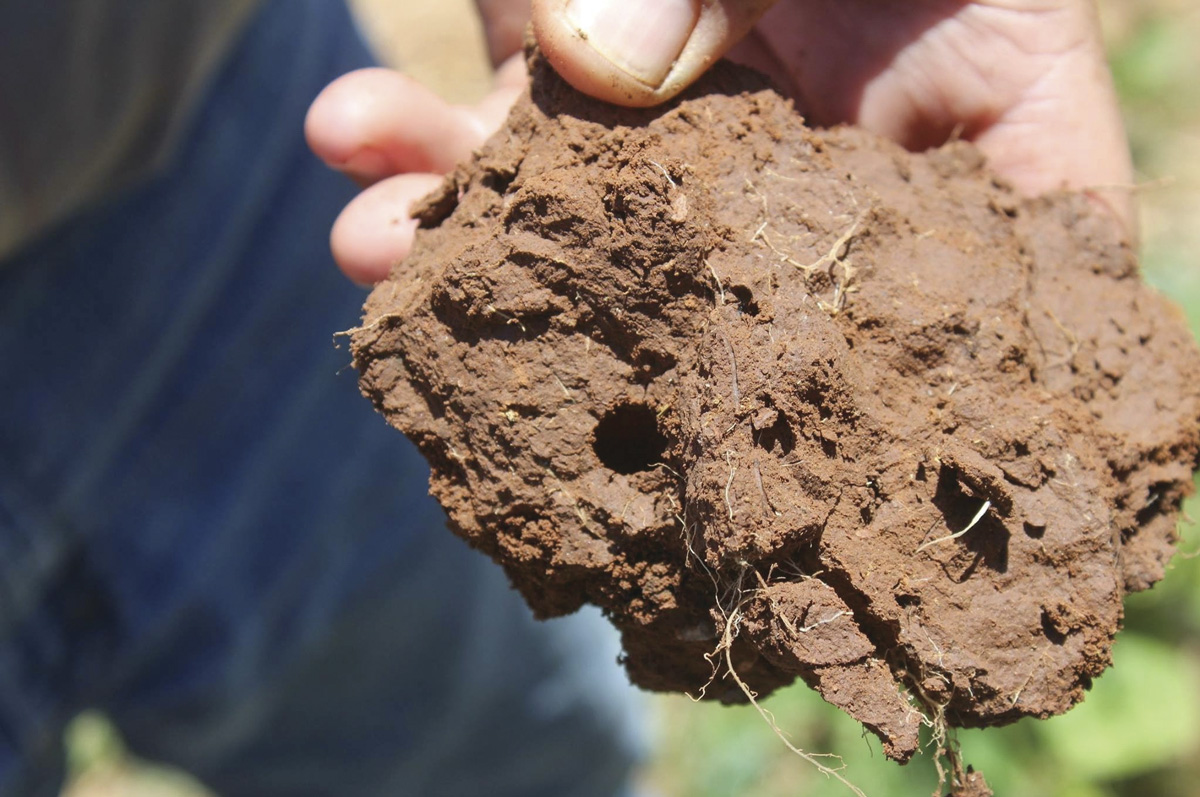
A close-up of a clump of soil showcases visible roots and porous structure. These naturally formed aggregates, held together by organic matter and microbial activity, reflect healthy soil biology. Image provided by Jeff Goodwin.
Farmers and ranchers must continually monitor practices to know if they are making progress or going backward. One of the hardest challenges is getting people to measure their outcomes. Often, farmers and ranchers get so busy farming and ranching that they tend to neglect follow-up measurements to see if what they decided to do was successful or not.
The Center for Grazinglands and Ranch Management works with the Noble Research Institute, Michigan State University and Colorado State University on a five-year 3M (metrics, management and monitoring) project.
“We are monitoring soil health, carbon flux, etc. – everything from soil to space on 59 ranches around the country – and getting good data,” Goodwin says.
They haven’t analyzed all the data yet to look at specific outcomes, but they’re monitoring grazing management on those ranches and measuring the ecological and socioeconomic responses. They want to understand why producers make the decisions they make and what kind of information might help them make future decisions. There are many tools to help producers assess their baseline and monitor progress.
Checking and monitoring soil health
“We can do something as simple as taking soil samples," says Goodwin. "There are several soil tests available to get a baseline to start from – an estimate of the macronutrients and organic matter and soil pH.”
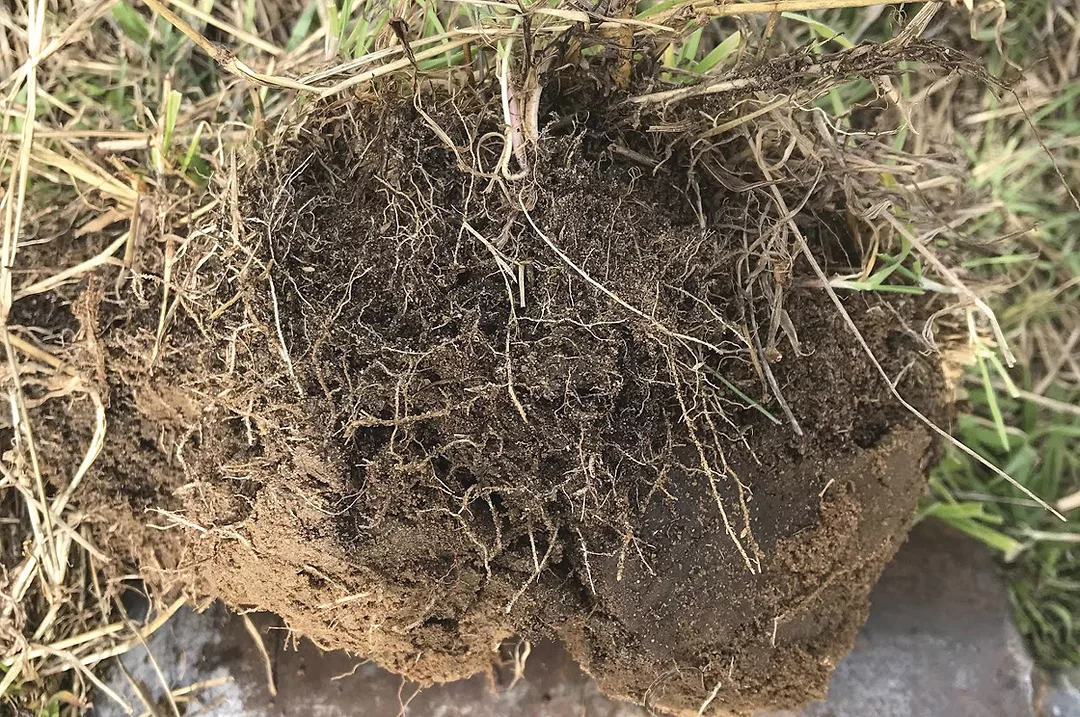
There are also visual indicators such as ground cover and digging a hole to look at the soil to see if the soil at the top is becoming a little darker. The darker the soil, the more organic matter there is.
“You can also look for presence of biological activity – like earthworms and dung beetles," says Goodwin. "Even if you don’t find those organisms, you might find indications, like earthworm castings on top or earthworm channels down into the roots."
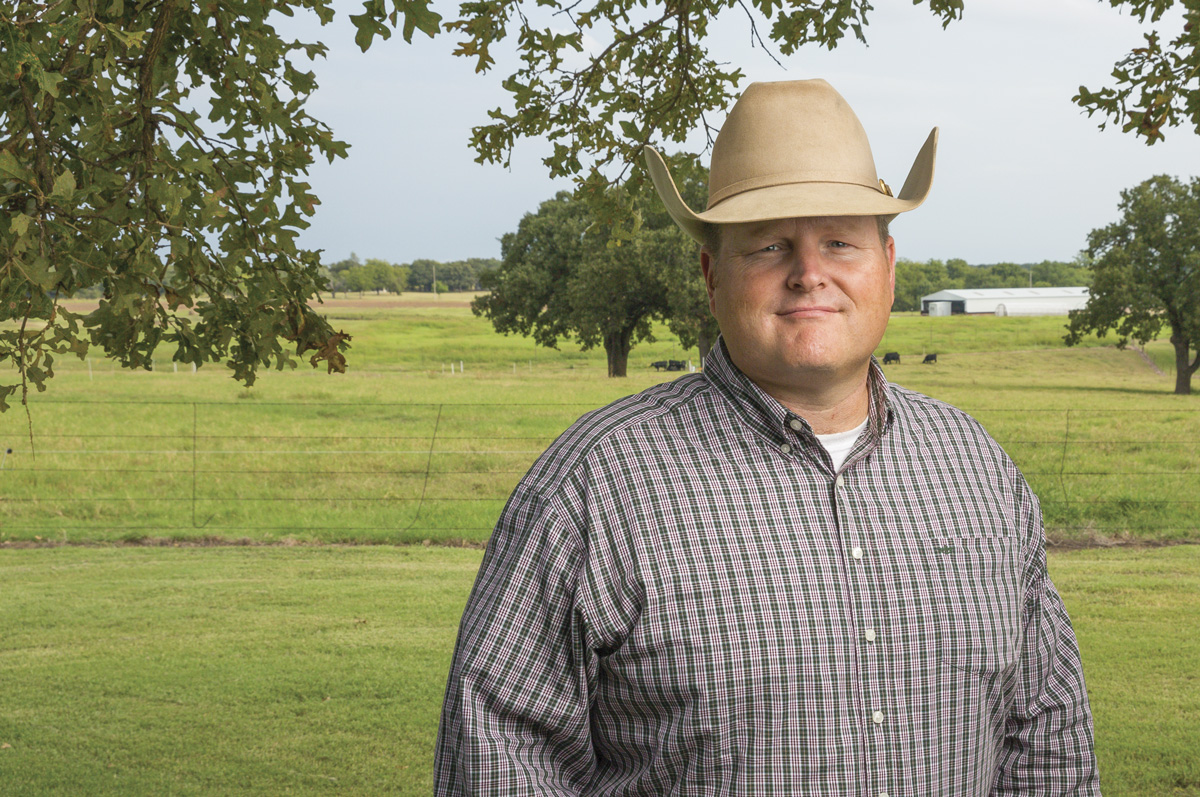
Jeff Goodwin, director of the Center for Grazinglands and Ranch Management at Texas A&M University, stands in a pasture with cattle grazing in the background. Goodwin encourages regenerative grazing practices and the stewardship of rangeland ecosystems across the southern Great Plains. Image provided by Jeff Goodwin.
Root depth and resistance can reveal soil limitations. Taproots that grow straight down but then veer may be encountering a hardpan layer that can’t be penetrated. Another diagnostic tool? Smell. “A rich, earthy, musky scent suggests biologically active soil,” says Goodwin.
Soil structure also tells a story: Avoid horizontal, platelike formations or soil that falls completely apart. Instead, look for porous aggregates that cling together – these support better water infiltration and moisture retention.
Monitoring forage
Step transects offer a quick way to gauge forage composition. Walk across a pasture, recording what’s underfoot with each right step – plant, bare ground, litter or rock. “With 100 steps, you can calculate a rough estimate of ground cover percentage,” says Goodwin.
A temporary enclosure also helps evaluate forage use. Set up a circular enclosure using 16-foot cattle panels and T-posts to exclude grazers. Compare forage growth inside versus outside the panel throughout the season to assess grazing impact.
“We move them in the fall at the end of the growing season and reinstall in spring,” Goodwin adds.
Another simple tool is photo points. Select an area that is representative of the pasture and find a spot with a permanent landmark such as a tree in the background that can be recognized from year to year. By taking a photo at the same time of year, or maybe one in mid-growing season and one just before frost, one can get an idea of what it looks like each year and how it changes over time.