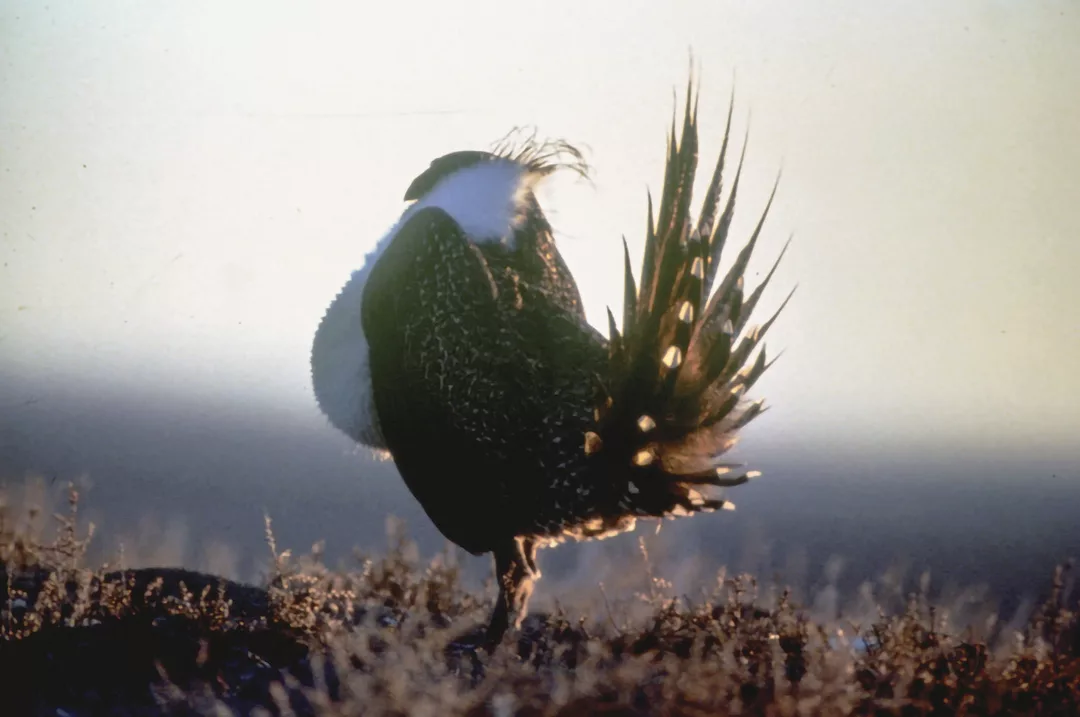
The greater sage grouse has become a poster child for a keystone species in decline across the West: a symbol of the sagebrush steppe being converted, degraded and fragmented. “When I was a kid, I remember seeing a lot more of them,” says rancher Richard Ward of Malta.

In 2010, the U.S. Fish and Wildlife Service (USFWS) listed the greater sage grouse as a candidate for listing under the Endangered Species Act. This status spurred land management agencies to increase efforts to protect and improve remaining habitat before it was too late. In 2015, USFWS ruled that listing was not warranted because of the ongoing conservation efforts.
The ranching community joined in the push to save the sage grouse, both due to conservation concerns and potential implications of a listing. Some groups assumed that cattle grazing was one of the factors influencing their decline. “Some people were saying that we shouldn’t graze [public lands] until mid-July,” recalls Ward. This would have drastically cut available animal unit months (AUMs). “Some historical permits on Jim Sage [a BLM allotment on the Idaho-Utah border] authorize grazing on April 1, and the bulk of the permits are authorized on May 1.”
Wendy Pratt, who with her husband, Mark, ranches near Blackfoot, was an early collaborator on the sage grouse question, serving on the East Idaho Uplands Sage Grouse Local Working Group and the Statewide Advisory Council. More recently, she served with Ward on the planning team for a 10-year (2014-23) University of Idaho (U of I) study known as the “Grouse and Grazing Project.” Researchers collaborated with Idaho Fish and Game (IDFG), Bureau of Land Management (BLM), ranchers and other groups to measure the effects of light-to-moderate grazing on sage grouse habitat. “One of the hallmarks of this research was the collaborative team which engaged throughout the study,” says Pratt.
“We very clearly, in this unprecedented big study, under the conditions we examined … showed that none of our grazing treatments affected nest success or brood success,” says U of I professor of rangeland ecology Dr. Karen Launchbaugh. “Results of this study imply that cattle grazing at levels examined is compatible with sage grouse nesting and reproduction.” Launchbaugh was not surprised by this conclusion, but she was pleased by the strength of the results.
IDFG Wildlife Bureau Chief Shane Roberts, who as a research biologist has been involved with the project since near the beginning, also highlighted the study’s strength. “The length and sample sizes and ability to manipulate grazing make it a powerful study … to back up the claims made in the general report,” Roberts says. “It allows us to check that box – properly managed grazing is one less thing to focus on.”
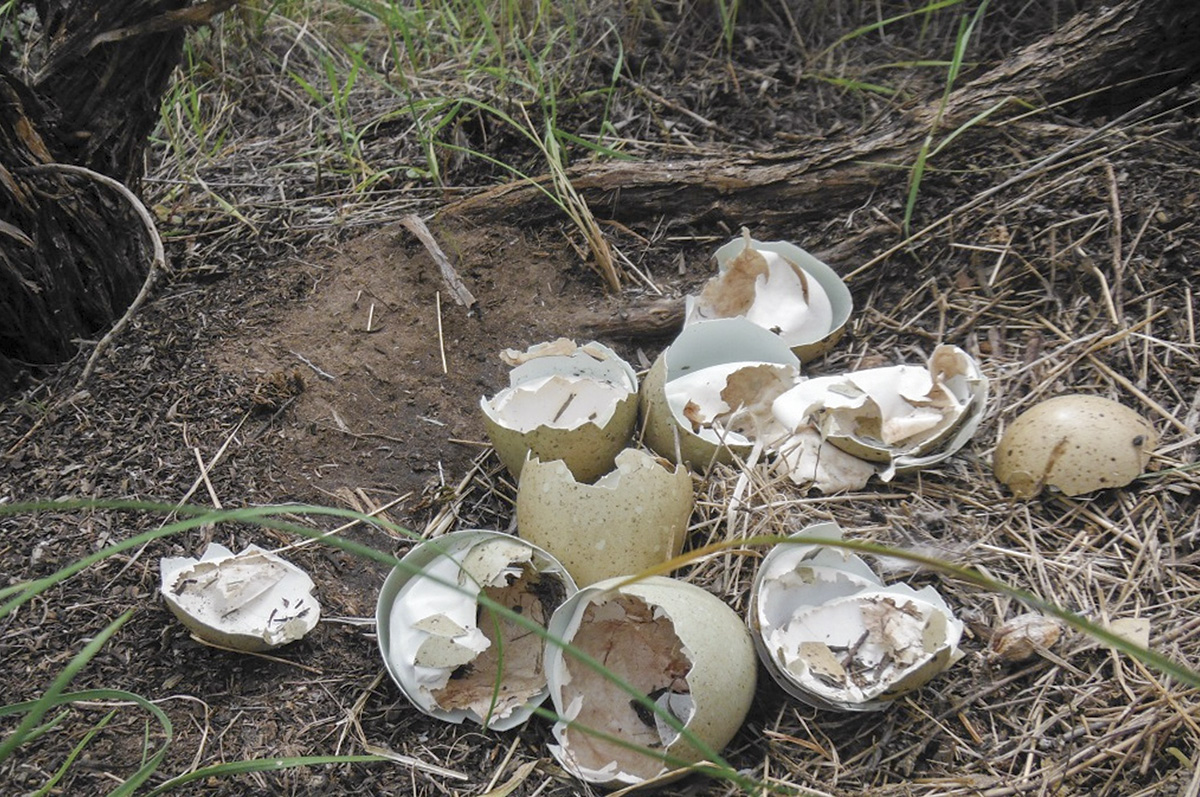
“Successful” – hatched – nests are one metric that researchers tracked. Image by Devin Englestead, BLM.
Five sites, 10 years and more data than you can shake a stick at
Sage grouse require good-condition sagebrush steppe habitat for all stages of life, but particularly nesting in the spring. Successful nests depend a great deal on concealment (grass and sagebrush) and chick food (insects and forbs). “Grass height is a really important one in the grouse world – there is lots of previous research showing that nests in areas with different grass height have different success,” says Roberts. “Grazing reduces grass height, so there has been this presumption that it must be bad.” However, the Grouse and Grazing Project was the first study to look at this question at the pasture level.
“We didn’t believe that [grazing harmed sage grouse], but we couldn’t prove it,” says Ward. He and other members of the Jim Sage Grazing Association agreed to participate in the study because, he says, “We knew it would be a little more inconvenience for how we graze, but it would be worth it.”
“The ranchers wanted to know the answer and knew they could deal with it,” says Launchbaugh. “They weren’t afraid of the cows pushing the grouse off – what they were afraid of was being kicked off their grazing allotments with no justified reason.”
To provide sufficient strength to overcome climate and site variation, researchers chose five south Idaho study sites, all considered good sage grouse habitat. They spent two years measuring various metrics before introducing treatments, beginning with two sites in 2016. Research at all sites wrapped up between 2021 and 2023.
Researchers used a deferred-rotation grazing system common on sagebrush steppe: Cattle grazed each pasture every other spring. “This is a normal rotation in an Idaho BLM permit,” says Launchbaugh. Four sites also included a spring-and-fall treatment, which received spring and fall grazing in alternate years. Grazed treatments were compared with rested pastures, where grazing was removed for the duration of the study. Researchers measured metrics describing the vegetation, sage grouse and insects present.
“The breadth of the data, the commitment from the research team, the sheer magnitude of what it took logistically to study the natural systems and fit it in a box that research requires was … a real learning experience for me,” says Pratt. “I need to thank the ranchers who actually participated. They’re the backbone of the research who put up with the additional fencing, the on-site researchers and the inconvenience, all while doing all the other requirements of a working ranch.”
At Jim Sage, Ward and other permittees worked with BLM to restructure their grazing around the study. “Some of it was rested over 10 years, and the rest was rested every other year,” Ward says. “Thankfully, there’s a lot of range on Jim Sage.” The allotment size and historically conservative stocking rates provided forage options outside the rested pastures.
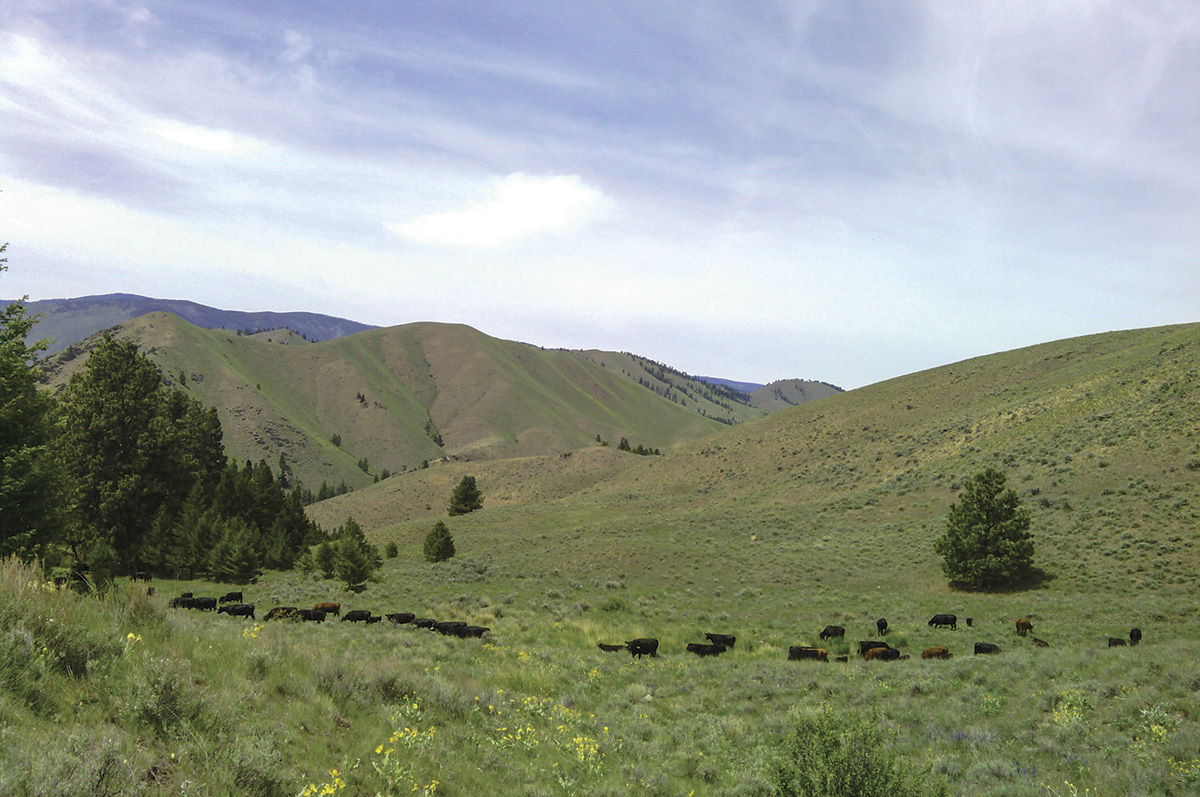
For many producers, spring grazing on BLM or USFS allotments are a key component of their operation. Image by Julia McCarthy.
Outcomes and implications
Predictably, researchers found that within a pasture, grass was taller around successful nests than unsuccessful. Grazed pastures averaged shorter grass and less grass cover than ungrazed pastures, but, says Launchbaugh, “This study documented that sage grouse nesting success is no greater in pastures rested for four to eight years than those currently or recently grazed.” Roberts suggests that nest site selection by individual birds is probably more important than grazing treatment. Nor did the researchers find significant differences between grazed and ungrazed treatments for nest density or brood survival.
“Overall, precipitation seems to have a much larger effect on these grass metrics than the grazing treatments, especially during the drought year of 2021,” the report states. Researchers also noted that a cold, wet spring was tied to poor brood survival. “There’s no amount of grazing or ungrazing that can trump that,” Launchbaugh says.
After hatching, insects matter. “All life stages of sage grouse use insects,” says Roberts, “but especially chicks – they’re exceedingly important in the first month.” Some species were higher in grazed pastures and others in ungrazed. Notably, ants and some beetles (species important to chicks) were higher in grazed pastures. However, there is much more to learn about these interactions.
“I hope they can focus in on that,” says Pratt. “It makes sense that cows, cycling grass, depositing their urine, saliva, and manure, freshening plants, attracting birds, etc., all adds to the ecosystem in ways that are good for insect abundance. Too often we think of grazing as ‘extractive’… when instead, if managed appropriately, it adds to the total life of the ecosystem.”
More to learn
The 90-page report released in June 2025 just scratches the surface of the data collected, Launchbaugh says. “There’s a whole treasure trove of data from which we’ll be able to answer specific management questions.”
One limit is that the study only included light-to-moderate stocking rates. “Some may criticize the study for not involving heavier levels of grazing,” says Roberts, “but it adequately covered grazing scenarios that occur on the majority of sage grouse habitat in Idaho.” Increasing stocking rate above the permitted use level on federal allotments is challenging, and researchers were not willing to jeopardize the entire study by doubling down on a more intensively grazed treatment.
For Launchbaugh, a next question is whether grazing can be manipulated to improve grouse habitat. “It’s good that we can see no detriment,” she says. “But if we understood grouse and cattle better … could we use cattle to improve grouse habitat?”
“One of the main themes of this project is its practical application,” says Pratt. “Scientists and those individuals that live on and from the land need to look at research questions together … It’s only when we come together that we get the kind of research we need to address the extreme challenges we face today.”




.webp?height=auto&t=1783636475&width=285 "63802-Thomas-GPS-equipment--Automated-Magnum-Tractor--Matt-Skinner-photo(1).jpg")