National Farm Safety and Health Week is an event dedicated to increasing awareness about the health and safety challenges faced by farmers, ranchers and agricultural workers. It aims to promote safe farming practices, prevent accidents and address physical and mental health concerns prevalent in the farming community. For 2025, National Farm Safety and Health Week will be recognized Sept. 21-27.

When a farm injury, disability or chronic condition threatens more than a livelihood, AgrAbility of Wisconsin steps in with solutions rooted in resilience.
“From adaptive technology to vocational rehabilitation, this program has helped more than 3,500 farmers stay on their farms – proving that a disability doesn’t mean the end of a farming career, but is the beginning of a new way forward," says Richard Straub, co-director of AgrAbility of Wisconsin and emeritus professor at the University of Wisconsin – Madison.
Straub worked with AgrAbility of Wisconsin project for more than 15 years, serving eight years as project leader. Though he is now retired, he continues to support the program. Since it started in 1991, AgrAbility of Wisconsin, which is a partnership between the University of Wisconsin Extension and Easter Seals Wisconsin, has worked to ensure that farmers and farm families facing injuries or chronic conditions can continue to farm safely, effectively and independently. Roughly 97% of clients served by AgrAbility continue to farm, thanks to the support they’ve received.
Adapting the farm to the farmer
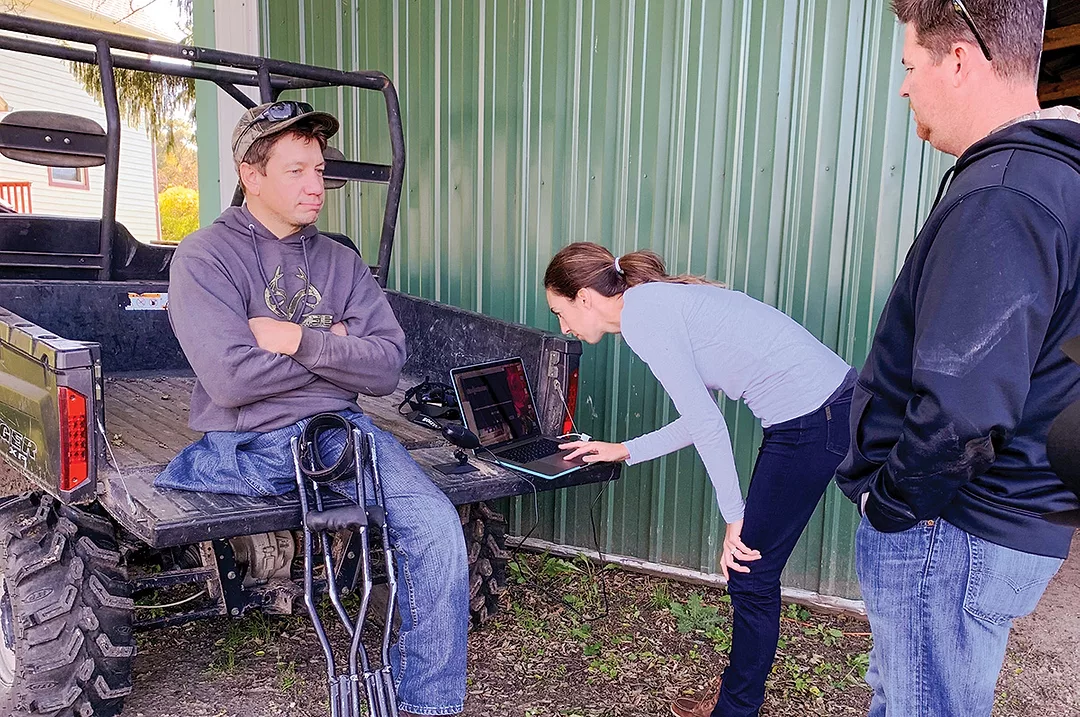
One of AgrAbility’s services is helping clients find adaptive technology solutions tailored to their specific needs and their unique farming operations. These modifications can be simple, such as adding safer steps to a tractor or improving seat comfort, or more complex systems, including:
- Lifts and automatic hitching systems for easier equipment access
- Camera systems for monitoring livestock remotely
- Utility terrain vehicles (UTVs) to transport individuals and supplies
- Automated feeding systems to reduce labor-intensive tasks
- Horizontal storage systems to replace hard-to-access vertical silos
- Side-entry skid steers, bale slicers and boom lifts with safety enhancements
“These tools don’t just restore function; they restore independence and allow farmers to continue doing what they love with dignity and purpose,” says Straub.
A network that supports recovery
AgrAbility works through an interconnected support system. As a University of Wisconsin Extension initiative, its strength lies in collaborative networks across agriculture, health care and rural communities.
Straub explains, “Because extension staff are central to the program’s success, AgrAbility relies on their networks to raise awareness among farmers.”
Outreach activities include:
- Partnerships with ag organizations, such as Wisconsin Farm Bureau Federation, Wisconsin Farmers Union, lending institutions and cooperatives
- Connections with rural medical professionals – including occupational and physical therapists and students from the Wisconsin Academy for Rural Medicine – to help health care providers refer patients
- Presence at statewide ag events, including Wisconsin Farm Technology Days, WPS Farm Show, Wisconsin Corn/Soy Expo, Wisconsin Agribusiness Classic and World Dairy Expo, where staff demonstrate adaptive tools and share success stories
- Neighbor-to-neighbor meetings hosted on client farms, giving new or potential participants a chance to see real examples in familiar settings
- An annual Outreach Summit to share updates, celebrate progress and foster connections among professionals and families involved in agriculture and rural health
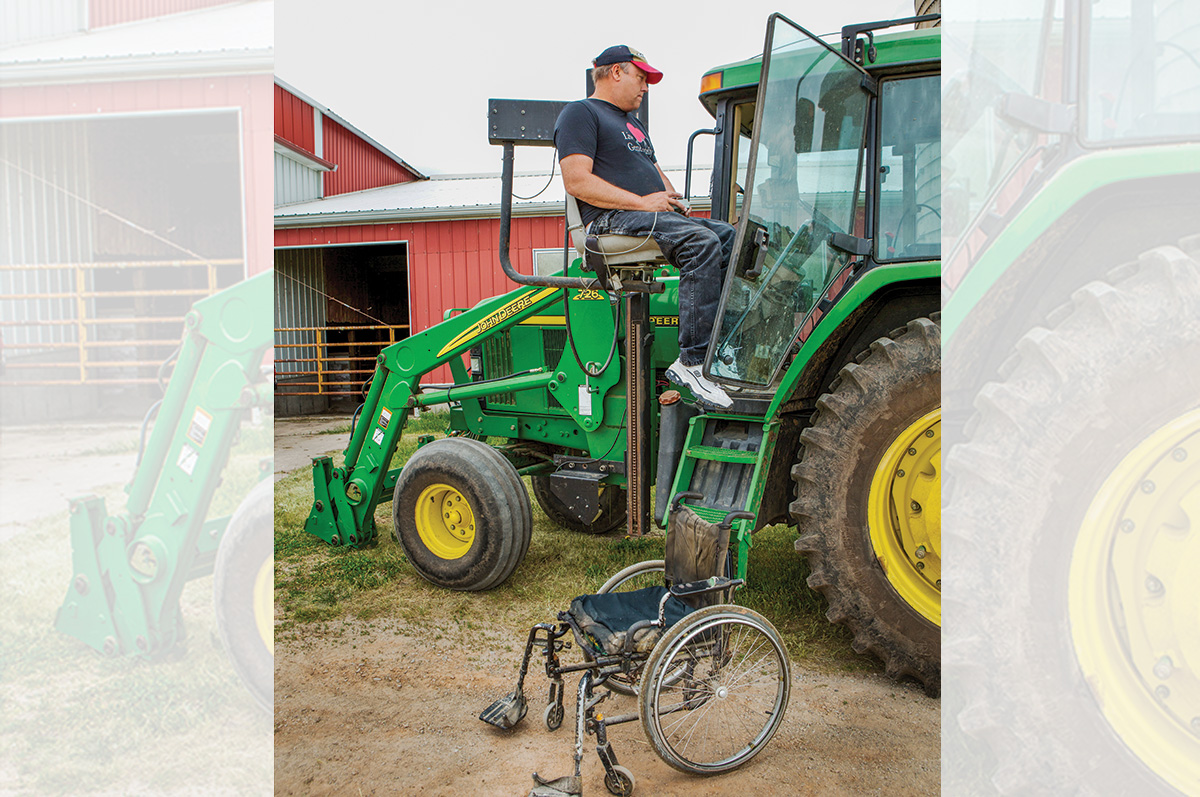
An AgrAbility client utilizes a tractor lift to safely transition from his wheelchair to the operator’s seat, highlighting how adaptive equipment enables farmers to continue managing their operations with greater ease and independence. Image courtesy of AgrAbility of Wisconsin.
Promoting safety by changing the conversation
AgrAbility’s mission is focused on helping farmers with disabilities remain active in agriculture – not just by recovering from injuries or adapting to diagnoses, but by changing how people think about prevention and support. Although safety education is not the central mission, the program incorporates it through its outreach efforts.
Straub emphasizes that accidents often result from a mix of stress, fatigue and familiarity. “Farmers are used to pushing through. They’re tired, in a hurry or relying on muscle memory – and that’s when things go wrong. Safety has to stay front and center.”
He adds, “Today, tractors are more likely to have rollover protective structures, but many farmers are still using older equipment – because they have to, economically.”
The emotional and economic toll of injury affects entire families and communities. Encouraging farmers to think proactively about safety – and helping their support systems get involved – can make a major difference.
Straub acknowledges that many farmers are reluctant to seek help even when they need it. “We know how farmers are. They’re stoic. They think, ‘We’ll just muddle through.’ Especially with chronic injuries, they often hesitate to reach out.”
That’s why AgrAbility focuses not just on direct outreach to farmers but also on educating those around them – their spouses, families, friends, lenders, neighbors and agribusiness contacts.
The breakdown of injuries among AgrAbility clients is roughly:
- 60% with chronic conditions: arthritis, Parkinson’s disease, cardiovascular disease, joint pain
- 20% with injuries from farm accidents
- 20% from non-farm accidents, e.g., sports, vehicle accidents
Many farmers don’t see themselves as eligible for support – until they’re shown what’s available.
“Whether it’s AgrAbility or the Division of Vocational Rehabilitation, these programs are designed to help farmers stay productive and independent,” says Straub. “They’re not taking anything away from anyone – they’re accessing what’s meant for them.”
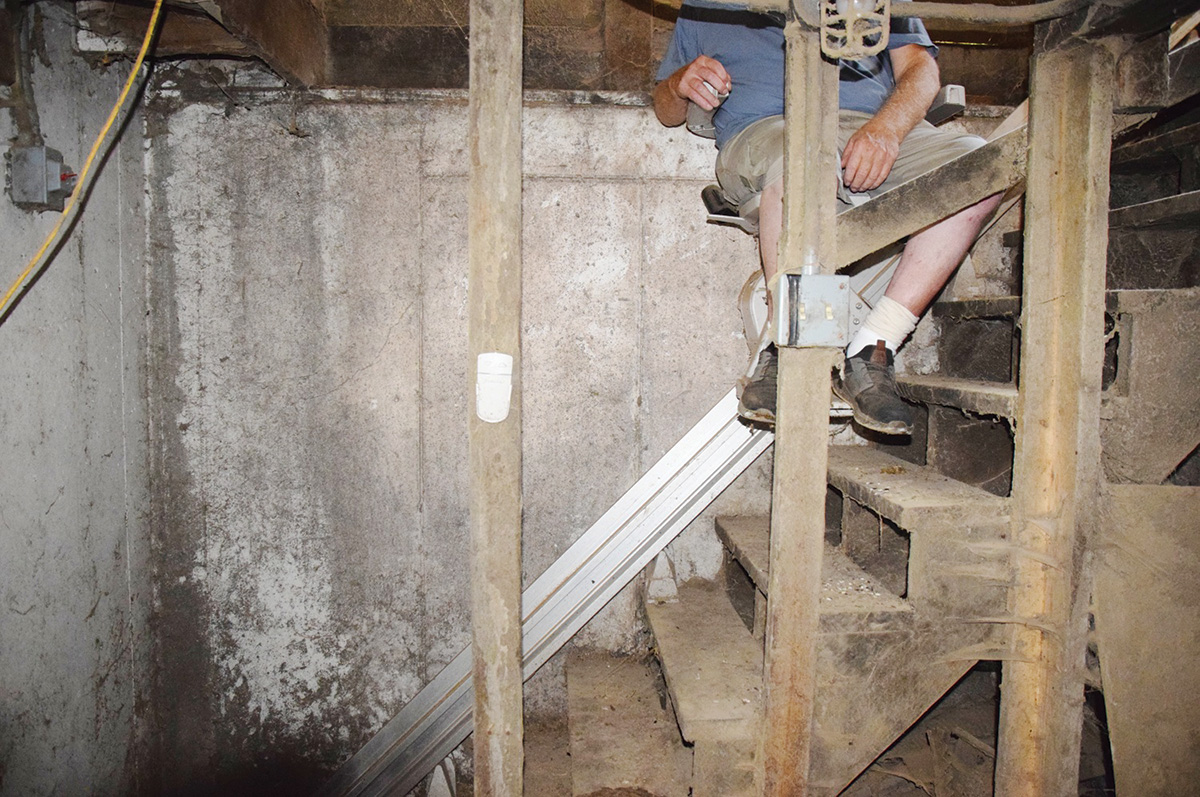
An AgrAbility client uses a motorized stair lift to access the upper level of his barn, allowing him to safely transport materials and maintain full participation in daily farm operations. Image courtesy of AgrAbility of Wisconsin.
A moment can change everything
Straub shares an example of the risks farmers face. A distant relative of his who lives in Minnesota was moving large bales with a loader while keeping an eye on her children. One bale rolled backward, crushing her. The loader lacked a grapple, and the bale bent her over the seat, breaking her back. She lived for many years but was paralyzed from the waist down.
“Forage harvesting can be deceptively dangerous,” Straub says. “People think of tractor rollovers, but there are many risks like silage pile collapses or entanglements with machinery. When accidents happen, they’re not just injuries; they can be life-changing or even fatal.”
A recognized leader
Recently, AgrAbility of Wisconsin was recognized nationally as part of the USDA AgrAbility Program, which was named to the Forbes Accessibility 100 list. This list highlights global leaders making a significant impact in accessibility across industries such as mobility, education and the workplace.
“Through services like on-farm assessments and adaptive technology recommendations, the program helps ensure that Wisconsin’s agricultural communities remain strong and inclusive,” says Straub.
Staying involved
Although officially retired, Straub continues to support the project he helped build. “They lost their outreach specialist at one point, and I stepped back in part time,” he explains. “Now, I attend project meetings and go to shows like Wisconsin Farm Technology Days or the WPS Farm Show.”
Straub also voices concern about the program’s future. “I worry about what’s happening at the federal level,” he says. “We rely on federal funding, and I hope people don’t overlook how impactful programs like AgrAbility are – not just for individuals but for entire communities.”
Lasting impact
“It’s rewarding to know you’ve made a difference in people’s lives,” Straub reflects. “Especially when you see a family stay active with their farming operation when otherwise they might have had to give it up entirely.”
Whether through customized tools, community outreach or support networks, AgrAbility of Wisconsin continues to fulfill one of its goals: keeping farmers farming with dignity, safety and with purpose.
For more information, visit online.