The word silo originated from the Greek word “siros,” meaning “corn pit” or “pit for holding grain.” The use of forages, processed by fermentation for long-term storage, has been an agricultural practice for thousands of years.

While the use of silos to store dry grain has been historically common, preserving forages or high-moisture grain has been a more recently adopted practice. Fabrication of crop storage silos for pressing crops into silage was first reported in the U.S. in about 1875. Due to a lack of technology to adequately chop and transfer a crop into storage, the practice was still relatively rare by the end of the 19th century.
By the mid-1900s, the use of tower or vertical silos increased to more than 500,000. Over time, due to limited capacity, high energy requirements to fill and unload contents, potential human exposure to toxic gases and the physical effort required by owners to climb and access the top surface of the silage to service distribution and unloading equipment, construction of vertical towers rapidly declined in the 1960s and 1970s.
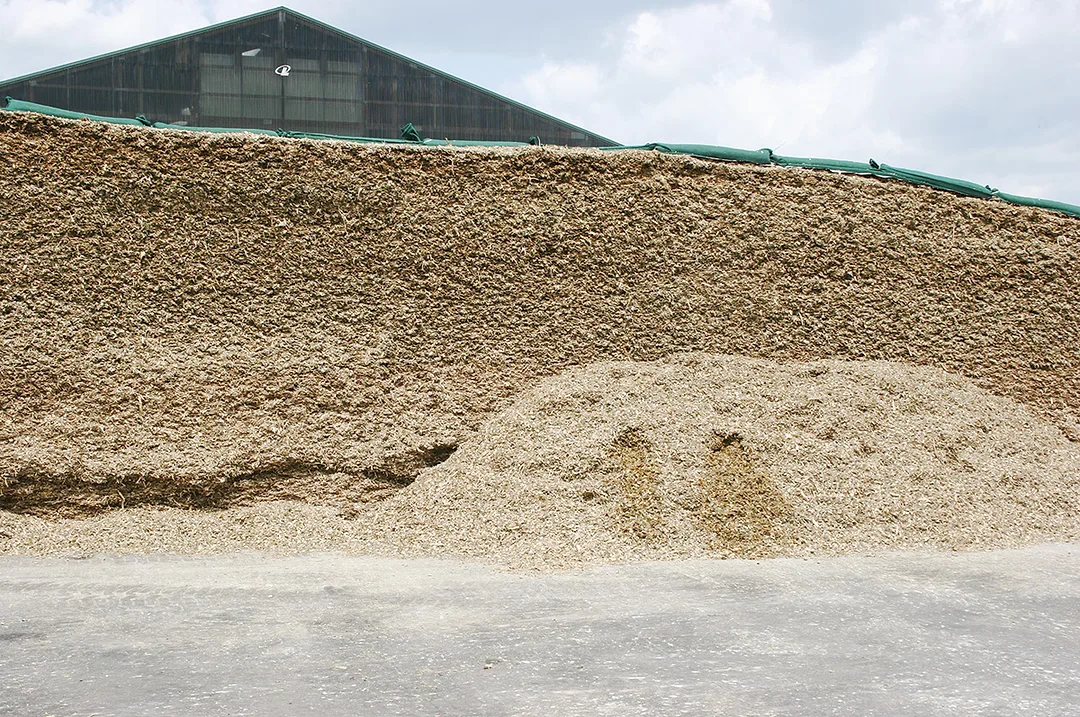
Today, bunker silos have largely replaced many tower silos, although some vertical silos remain in use. Bunk silos have parallel retaining walls that are open on both ends. Early designs consisted of concrete slabs for flooring with no containment walls. Current designs are generally prefabricated concrete slabs or poured concrete walls. Capacities of open and bunk silos can reach thousands of tons. As with any new technology, the widespread adoption of open silage piles and bunk silos brought new hazards. Anyone working in or around a silo needs to be well trained in the safety practices related to these storage facilities.
William E. Field, Ed.D., professor and director of the National AgrAbility Project, Purdue University Agricultural and Biological Engineering, and his research team recently undertook the first-of-its-kind study of fatalities and injuries related to horizontal bunks and open pile silos to determine if current bunker silo safety practices need to be more comprehensive. Their findings, documented in approximately 2,400 cases, were published in “A summary of fatalities and injuries involving horizontal bunk or open pile silos used in agricultural production.”
“Historically, there has been no reliable assessment of the frequency and severity of bunker silo incidents that can be used to develop effective evidence-based prevention strategies or assess relative risk between silage-handling practices,” their report states. “This research was intended to gather and analyze available incidents. The study revealed that the incidence of injury and fatality between 1962 [when bunker silos were in widespread use] and 2023 was significantly less than anticipated, with 33 cases and 35 victims.”
While the incidence rate was less than expected, the researchers learned that 74.3% of the incidents were fatal, making the proportion of cases involving fatal injuries much higher than the proportion of fatal victims in other types of confined space incidents. Research also revealed that a veterinarian obtaining a sample for nutritional analysis was among the fatalities, perhaps suggesting that raising awareness needs to be extended to a broader range of industries.
Silage storage now appears to be moving away from horizontal bunk silos to increased use of bagged silage systems, which is likely to further reduce tower and horizontal bunk silo-related incidents.
The research report notes that, “The vast majority of incidents reviewed in this research project could have been prevented by taking simple safety precautions. There is a need for targeted safety information for the relatively small number of workers exposed to these structures, especially on large dairy and beef operations.”
Research findings included:
- All the victims in the 35 cases were male, and approximately 74% of incidents were fatal.
- Four primary activities related to injury/death included engulfment in a silage avalanche (54%), tractor rollover while packing (26%), contact with silage-handling equipment (14%) and falling from the top of the pile or retaining wall (6%).
- Incidents were identified from 17 states, with the most being in Kansas, Michigan, New York and Wisconsin (major dairy and beef states).
- Victim age range was between 11 and 84.
- The majority of cases (in which time was documented) occurred in the afternoon.
- Approximately half of the incidents occurred in September and October (peak silo-filling months).
“There is justification for continuing to raise awareness of the potential risks of this form of silage storage, especially for operators of large livestock operations, as the size of these facilities increases in capacity and height,” the report states. “Investments with the greatest potential for safety and health enhancements will be on keeping unprotected workers away from the face of the silage as silage is being removed, especially if unloading is done in a way that forms silage overhangs due to storage pile height and the type of defacing equipment used.”
The report authors recommend that safety strategies be developed, implemented and promoted to completely eliminate the need for unprotected workers to approach the face of the silage. This could include restricting inspection or sampling of silage from the face by utilizing silage moved by protected unloading equipment to a safe location.
“Attention needs to be given to preventing tractor or equipment rollovers during silage-packing operations,” the report notes. “Heavy equipment should not be allowed to be operated near the retainer walls of bunk silos, especially after the silo is filled to the height of the walls. Bunk silos should not be overfilled and slopes of open piles of silage should be kept below 3-to-1 in the direction of travel to reduce the risk of equipment tipping.”
Use of sidewall and unloading face safety railing or barrier systems may not be justifiable considering potential cost and risks of installation. Railings could possibly interfere with effective packing near the sidewalls.
“In addition, evidence shows that falls from the sidewalls or silage face are extremely rare,” the report says. “However, safer access to the top surface of the silage should be incorporated into original silo designs to reduce the risk of falls while accessing the surface to remove protective covers.”
Field and his research team recommend use of uniform or standard safety signage developed by the American Society of Agricultural and Biological Engineers (ASABE) on all bunk silos and at the site of open storage piles of silage.
“Signage should clearly warn of hazards such as silage avalanche or collapse and falls from the structure,” the report states. “Given the significant number of Hispanic or Spanish‑speaking workers employed on dairy and beef operations, signage should be posted in both English and Spanish.”
Additional recommendations include:
- Workers should be trained to keep no less than the height of the silage pile away from the face of the silage when entering the silo for any reason, including when sampling silage.
- Discourage overfilling silos.
- Restrict packing equipment to only those fitted with rollover protective devices (ROPs).
- Restrict unprotected worker access to the silage face at all times.
- Implementing prevention strategies should focus on dairy and beef production operations.
- Consideration should be given to incorporating recommendations on safe work practices in the current ASABE bunk soil design standard.
- Designers, manufacturers and fabricators of horizontal bunk silos need to provide safety information concerning their potential risks to exposed workers.