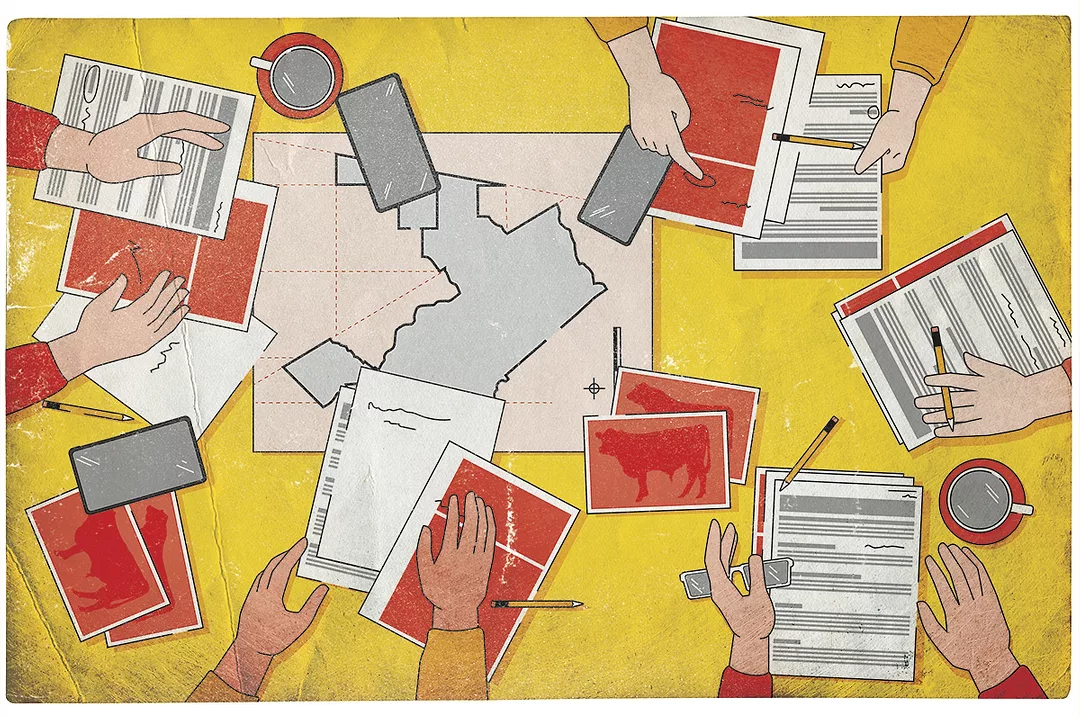
Estate and succession planning can feel overwhelming, and it’s no surprise that many producers put it off. Many factors and unknowns come into play and can include: fear of losing your identity, not wanting to give up control, ego, fear of things changing and not wanting to hurt people’s feelings. For farmers and ranchers, additional consideration could also include:

- Communicating your estate plans could mean the loss of your “hired hand”
- Not wanting your heirs to struggle in production agriculture like you had to
- A worry that the heir(s) may take over and not know what to do
- Not understanding current financials of the operation or the financials of retirement
- A reluctance to spend the money for a lawyer
- Not knowing how to get the process started
- A sense that you don’t have – or can’t make – the time
These and many others are reasons why the vast majority of producers have not done estate planning or have a transition plan in place. What is yours?
A Score.org study looked at the survival rates of family businesses across generations and found that only 30% of family-owned businesses survive into the second generation, 12% into the third generation and only about 3% into the fourth and beyond. It was noted that only 13% of family businesses remain in the family for more than 60 years. Lack of succession planning, the erosion of entrepreneurial spirit, family conflicts and market changes were listed as some key factors for the loss of family-owned businesses across generations. This study characterized family-owned businesses as “any business in which two or more family members operate the company, and the majority of ownership lies within a family.”
It is difficult to specifically break out ag operations from the family-owned business data. However, there are a lot of similarities across family-owned businesses and family-owned farms. Consider data from Agriculture and Agri-Food Canada’s Census of Agriculture that shows the number of farms in Canada peaked in 1941 at just under 733,000, and as of 2021, there were just shy of 190,000. In 80 years, the number of farms has decreased by 74%. The rate of farm disappearance is similar in the U.S. The more I talk to producers, of all generations, the more I’ve learned that the numbers of farms have decreased because of the same key factors listed above.
I travel and talk to people involved in and across all aspects of production agriculture and its supporting businesses. As I talk to the next generations working in and looking to enter production agriculture, there is one resounding statement I’ve heard, and that is that they wish they could have had the conversation about their options and what the future of the family farm looks like. They simply want to sit down, have a non-emotional conversation and discuss the future and whether there is a place for them and what that looks like. Will they get to take over, and what is the timing and plan? Will they be the “hired hand” and then have everything split “three ways to make it fair” in the end and be forced to make a career change because the operation is no longer big enough to support them? Should they simply choose a different career path now because there isn’t an option to be in production agriculture?
No one thinks the worst will happen to them, that it will never hit that close to home, that we will have the perfect opportunity to talk about what we want and that our family won’t “act that way.” Yet we all know families that have been destroyed, operations broken up and sold, legacies lost, resentment created and money gone because conversations weren’t had, no planning was done and decisions were left to others.
No one is immune. In September, I would have been married for 10 years. In my early 30s, I met an amazing woman and, in a whirlwind of her choosing me after a couple dates (she relocated and uprooted her life), we started to plan our life together. We bought a house and moved in, dated for six months before getting engaged and got married six months after that. Through our premarriage counseling classes, we were advised to have the hard conversations about, “What if?” That advice forced us to discuss how we wanted things handled with finances, assets, personal belongings, burial, etc.
The day we got married, our wills and what we wanted if the worst was to happen went into effect. Looking back, it was tough, but it might be the best advice I’ve ever gotten. Six months after our wedding date, I never dreamt that I was going to have to exercise her wishes. I was able to settle her estate in a matter of weeks, without lawyers, without family intervention, without huge money outlay, without worry about how my life was going to change (outside of the obvious), and it gave me some relief, at least from the business side of life. I got to carry out her wishes and no one else was to decide, for her or me, what happened.
All too often, it boils down to money. “What is this worth?” “What is the value of that?” “They got this, and I got that; how is that equal?” “What is my inheritance?” “How much do I get?”
In today’s agriculture landscape, land, equipment, livestock, etc., are worth an enormous amount of money. When life happens and decisions haven’t been made ahead of time, when discussions and conversations haven’t been had, when others get to decide how to divide, things tend to get divided equally. You either make the decision or the decision gets made for you. It reminds me of the expression, “Fair isn’t always equal, and equal isn’t always fair.”
Life and legacy don’t have to, and in my opinion shouldn’t, come down to money. Estate and succession planning isn’t an easy thing to do, and the larger the operation and the more people involved, the more difficult it is. But it can start with a conversation. There are many reasons why producers haven’t done estate planning. I ask you to find a reason to start a conversation. What is yours?