The Idaho State Department of Agriculture (ISDA) announced in July that its Animal Health Laboratory has officially been accepted as a member of the National Animal Health Laboratory Network (NAHLN), becoming the first laboratory in Idaho to earn this designation. According to the press release, the Animal Health Laboratory passed a U.S. Department of Agriculture NAHLN audit in June 2025, following several years of preparation and the opening of the new facility in 2022. This recognition is an advancement in Idaho's animal disease diagnostic capabilities and highlights the state's commitment to protecting animal health and agriculture. This is major for the industry and overall animal disease monitoring and response in Idaho. Ag Proud – Idaho’s Cassidy Woolsey caught up with ISDA's laboratory bureau chief, Dan Salmi, to learn more.

What does being part of the NAHLN mean for Idaho livestock producers?
SALMI: With Idaho’s Animal Health Laboratory, now part of the National Animal Health Laboratory Network, producers can count on faster and more reliable test results. That means quicker health clearances or rapid action to manage sick animals, helping protect their herds and livelihoods.
Earlier this year, avian influenza was detected in Idaho dairies. How will NAHLN certification change how quickly those cases can be identified and addressed in the future?
SALMI: NAHLN certification allows our lab to perform avian influenza PCR testing, instead of sending samples outside Idaho. For example, in years past we have been sending out hundreds of samples to NAHLN labs located in Iowa, Utah or Washington state. Now that we are performing the testing, we can provide results to the state veterinarian within 24 hours after receiving the samples. Previously, it would take approximately a week to get results from out-of-state labs.
What other diseases are the lab preparing to test for under NAHLN authorization?
SALMI: Just in the past month, the lab became certified to perform avian influenza PCR on avian samples such as swabs or serum. In addition, we can now perform avian influenza serology testing on milk or serum. Our ability to test for avian influenza on multiple sample types gives customers more and sometimes easier methods to collect and submit samples. The Animal Health Lab can also test for Newcastle disease, which is a highly contagious and often fatal viral disease affecting poultry. What tests we add in the future will be primarily dictated by the needs of Idaho’s livestock industry.
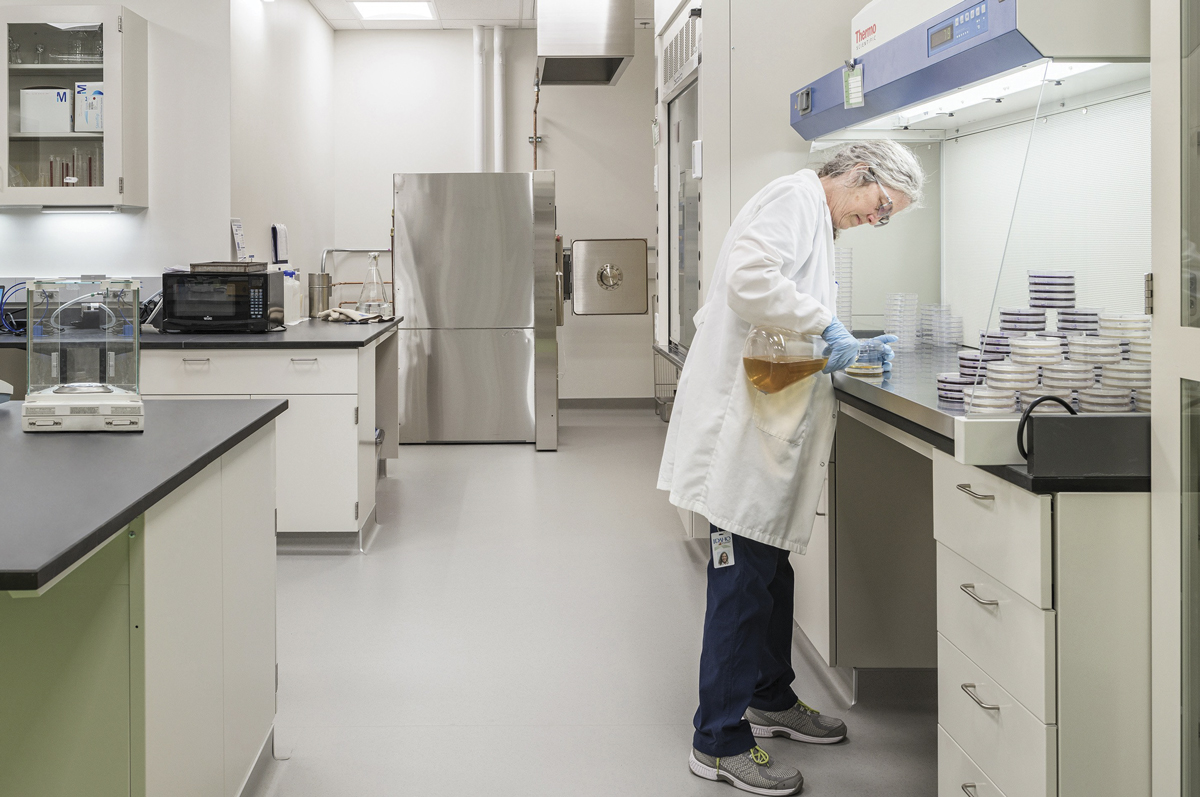
An ISDA employee works in the Animal Health Laboratory. Image courtesy of ISDA.
How does this move position Idaho compared to neighboring states in terms of animal health readiness?
SALMI: As the name indicates, the National Animal Health Laboratory Network (NAHLN) consists of a network of 60-plus labs located throughout the United States. NAHLN labs safeguard the nation's animal health, protect the food supply and ensure public health by providing rapid and reliable diagnostic testing during animal disease emergencies. The network can also offer additional support throughout the country if an outbreak occurs and disease testing requirements outweigh an individual’s state testing capabilities. The ISDA Animal Health Lab can now not only respond to Idaho’s needs sooner, but we can also help other states that need assistance.
What do you see as the long-term vision for the Animal Health Lab and its role in Idaho agriculture?
SALMI: We are currently updating several of our diagnostic procedures to utilize more PCR-based procedures which are more sensitive and faster. Much of the molecular technology implemented during our NAHLN certification will now be used in other disease diagnostic procedures. This includes updating our Plant Pathology Lab’s ability to identify harmful plant bacteria, fungi and viruses. We are well positioned now to quickly onboard new tests for Idaho’s agriculture industry.
Is there anything else you would like Idaho livestock producers to know?
SALMI: We are always working to improve our services for Idaho’s livestock industry, from increasing efficiency to expanding in-state expertise. All of these efforts strengthen Idaho’s ability to respond quickly and effectively to disease outbreaks, and we welcome producer feedback to ensure the lab continues to meet the industry’s needs.



.webp?height=auto&t=1783636475&width=285 "63802-Thomas-GPS-equipment--Automated-Magnum-Tractor--Matt-Skinner-photo(1).jpg")