We use cookies to provide you with a better experience. By continuing to browse the site you are agreeing to our use of cookies in accordance with our Cookie Policy.
  • Sign In
  • Create Account
  • Sign Out
  • My Account
subscribe / renew
  • Livestock
    • Beef
    • Dairy
      • Canada
      • U.S.
    • Sheep & Goats
    • Other Livestock
  • Crops
    • Grains
      • Barley
      • Wheat
    • Hay
    • Pasture
    • Ensiled Forages
  • Equipment
  • Magazines
    • Progressive Dairy US
    • Progressive Dairy — Canada
    • Progressive Dairy – en francais
    • Progressive Forage
    • Progressive Cattle
    • Progressive Cattle - Canada
    • Idaho Ag Proud
  • Blogs
  • Buyers Guide
  • Advertise
  • Ask AgProud

Progressive Dairy

Progressive Dairy Canada

PD Canada en Francais

Progressive Cattle

Progressive Cattle Canada

Progressive Forage

Agproud Idaho

Home

Home » Keywords » treatment protocols

Items Tagged with 'treatment protocols'

ARTICLES

Pulsed electromagnetic field therapy as a supportive tool for mastitis

In addition to antibiotic treatments and/or veterinary advice, pulsed electromagnetic field therapy can aid in mastitis treatment.
June 10, 2026
Jason Anderson

PEMF uses low-frequency electromagnetic pulses to interact with tissue. In dairy applications, PEMF should be viewed as a supportive, non-invasive tool. Its role is to support the biological environment in which healing occurs, especially when inflammation and poor circulation become limiting factors.


Read More
63361-junior_d4a2695-dixon.jpg

Mannheimia haemolytica: When balance is lost, respiratory disease follows

Bovine respiratory disease causes major economic losses. Mannheimia haemolytica usually lives harmlessly in airways, but stress, commingling and viral infection allow virulent strains to dominate. Leukotoxin drives inflammation and lung damage. Prevention emphasizes stress reduction, management and targeted vaccination.
June 4, 2026
Rogerio Eduardo de Souza Junior

Bovine respiratory disease (BRD) remains one of the most significant health and economic challenges in both beef and dairy production.


Read More

Case study: How a high-producing dairy herd cuts antibiotic use by 78%

A routine dry-off review revealed reduced treatment potential. Using individual somatic cell count data, the herd reduced its antibiotic use, saving $2,500 in one month and projecting over $30,000 annually.
June 2, 2026
Greg Palas

For this herd, the opportunity wasn’t solving a visible problem, it was uncovering unnecessary cost. By using individual cow data to guide dry-off decisions, they reduced treatment, maintained herd performance and captured additional value.


Read More
63327-johnson-1794.jpg

Does your deworming program align with the data?

A fecal egg count reduction test (FECRT) can help identify parasites that wreak havoc on herd health and productivity. Implementing strategic timing in your deworming program can help provide season-long parasite control and safeguard cattle health and gains.
May 1, 2026
Kevin Johnson

As a cattle producer, you are constantly managing to give your herd the best chance at production, health and well-being. Unfortunately, an unseen obstacle can be working in the background to derail your efforts: internal parasites.


Read More
Progressive Cattle Podcast

[Podcast] Third-party verification programs and addressing antimicrobial resistance with Mindi Birkeland and D. L. Step

April 30, 2026

Join the Progressive Cattle crew and guests as they discuss the current cattle market, the best pickups on the market, third-party verification programs and antimicrobial resistance in beef cattle.


Read More
63206-pollreisz-getty.jpg

Autogenous vs. commercial vaccines: Exploring the trade-offs

As cattle producers continue to evolve herd health and disease management practices, the use of an autogenous vaccine is sometimes considered. Some examples of autogenous vaccines include pinkeye or bovine respiratory disease (BRD) vaccines.
April 30, 2026
John Pollreisz

As producers and veterinarians consider vaccination programs, it’s important to understand the key differences between autogenous and commercial vaccines.


Read More
62623-ellison-auroch.jpg

What your mother never told you about the 21-day cortisol surge in cattle

The 21-day cortisol surge in cattle, triggered by stressors such as weaning and transport, impairs immunity, weight gain and vaccine response. Understanding and managing this ancient biological response can improve cattle health and industry efficiency.
January 7, 2026
Blaine N. Ellison

The 21-day cortisol surge in stressed cattle is a common problem that costs the combined beef and dairy sectors millions of dollars annually in mortality, morbidity, drug and labor costs, and impaired efficiencies in animals. And, yet, this inescapable reality is poorly understood and seldom planned for in producer protocols.


Read More
62560-alley-woolsey.jpg

Considerations for deworming the cow-calf herd

Parasite control in cow-calf herds requires strategic timing, accurate dosing, pasture management and rotating ingredient families to prevent resistance. Regular monitoring and collaboration with veterinarians are essential for effective deworming.
December 22, 2025
Mark Alley

As parasites continue to adapt, the cattle industry must do the same to stay ahead of them. With no new molecules on the horizon, we must take a proactive approach to our deworming programs.


Read More
62231-woolsey-DanSalmi.jpg

A Q&A with Dan Salmi on advancing animal disease readiness in Idaho

October 1, 2025
Cassidy Woolsey

The Idaho State Department of Agriculture (ISDA) announced in July that its Animal Health Laboratory has officially been accepted as a member of the National Animal Health Laboratory Network (NAHLN), becoming the first laboratory in Idaho to earn this designation.


Read More
61763-george-1213.jpg

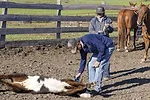
To treat or not to treat: Setting antibiotic re-treatment intervals benefits calves and producers

It is important to stick to an antibiotic’s set post-treatment interval (PTI) and not treat too early. They are critical to antibiotic efficacy, animal welfare and operational efficiency, improving success without compromising animal health.
August 4, 2025
Abigail George

To treat or not to treat? That’s the question producers often face when it comes to re-treating sick calves. It's hard to treat a calf for respiratory disease and not see immediate results. But sticking to an antibiotic’s designated post-treatment interval (PTI) is essential for both calf health and producer success.

Read More
More Articles Tagged with 'treatment protocols'
  • RECENT ARTICLES
  • 63610-mccarthy-Shrestha-biochar.jpg

    Biochar-ging the soil

    June 19, 2026
  • 63597-kubesch.1.jpg

    Stockpiling native warm-season grasses for the fall forage gap

    June 19, 2026
    • Why sustainable branding matters for dairy farms, custom applicators

      June 19, 2026

FREE NEWSLETTERS

Award-winning coverage of in-depth news and analysis to make your business more profitable.

SIGNUP TODAY
Advertisement
THE GUIDE

How do I get my company listed in your Buyers Guide? 
Submit a request to be listed for FREE in the Buyers Guide here.

Why can I only see so many articles before I have to register for the site?
Find out why here.

SUBSCRIBE to Leading Industry Magazines

Award-winning coverage of in-depth news and analysis to make your business more profitable.

Subscribe/Renew
Advertisement

I'm looking for ________

Find the right products and services for your farm, ranch or operation.

CHECK OUT OUR BUYERS GUIDE
Advertisement
  • FEATURED PODCASTS
  • [Podcast] Matthew Evangelo talks mastitis management at Bar E Dairy

    Progressive Dairy
    Mastitis
  • [Podcast] Changing the Rules of Pre-Fresh Dairy Cows

    Progressive Dairy
    Podcasts
    SPONSORED BY Applied Biotechnologies Inc.
PERSONALIZED CONTENT
Create an account and see website content tailored to your operation.  It only takes a few seconds!
SEE RECOMMENDATIONS NOW!
Copyright © 2026 Progressive Publishing

MORE INFORMATION
  • About Us
  • Terms & Conditions
  • Privacy Policy
  • FAQs
  • Advertise
  • Shop
  • Stats Posters

OUR MAGAZINES
  • Progressive Dairy
    • Facebook
    • Twitter
    • Linkedin
  • Progressive Dairy — Canada
    • Facebook
    • Twitter
    • Linkedin
  • Progressive Dairy — en français
    • Facebook
  • Progressive Cattle
    • Facebook
    • Twitter
    • Linkedin
  • Progressive Cattle — Canada
    • Facebook
    • Linkedin
  • Progressive Forage
    • Facebook
    • Twitter
  • AgProud — Idaho
    • Facebook
    • Linkedin

CONTACT INFORMATION

Progressive Publishing
238 West Nez Perce (physical)
PO Box 585 (mailing)
Jerome, ID 83338


info@progressivepublish.com
(800) 320-1424
(208) 324-7513 (Main)
(208) 324-1133 (Fax)