The producer-led watershed protection program that started in Wisconsin about a decade ago has had a ripple effect – not only in the state’s waterways but in other states as well. The goal for Wisconsin’s program is to improve soil and water quality by advancing producer-led solutions that increase conservation practices and farmer participation in local watershed efforts, according to the Wisconsin Department of Agriculture, Trade and Consumer Protection (DATCP).
In 2016, the state’s legislature approved $250,000 for the grant program. To be eligible, there had (and continues) to be at least five farmers within the same watershed and at least one collaborator, such as a county land conservation department, the University of Wisconsin Extension, the Wisconsin Department of Natural Resources or a nonprofit organization. That collaborator generally handles the grant award and other administrative functions. Each group was eligible to receive a maximum award of $40,000. Fourteen groups were awarded grants, which were administered through DATCP.
The amount awarded has since increased during the past nine years. In 2025, 49 producer-led groups received a total of $1 million in grants.
“We’re anticipating an additional five groups to participate in the program later this year,” says Dani Heisler, producer-led program manager at DATCP. “We’ve had exceptional growth and have lost only three groups since 2016, which is the real metric of success; producers are seeing the program’s value. They can identify local challenges and come together over common goals. We incentivize producers to be creative and innovative.”
Michigan’s Department of Agriculture and Rural Development is expected to launch a model similar to Wisconsin in 2026. Heisler has worked with officials in Michigan on how to start the program and maintain momentum.
“The best results are the one-on-one connections between producers,” adds Heisler.
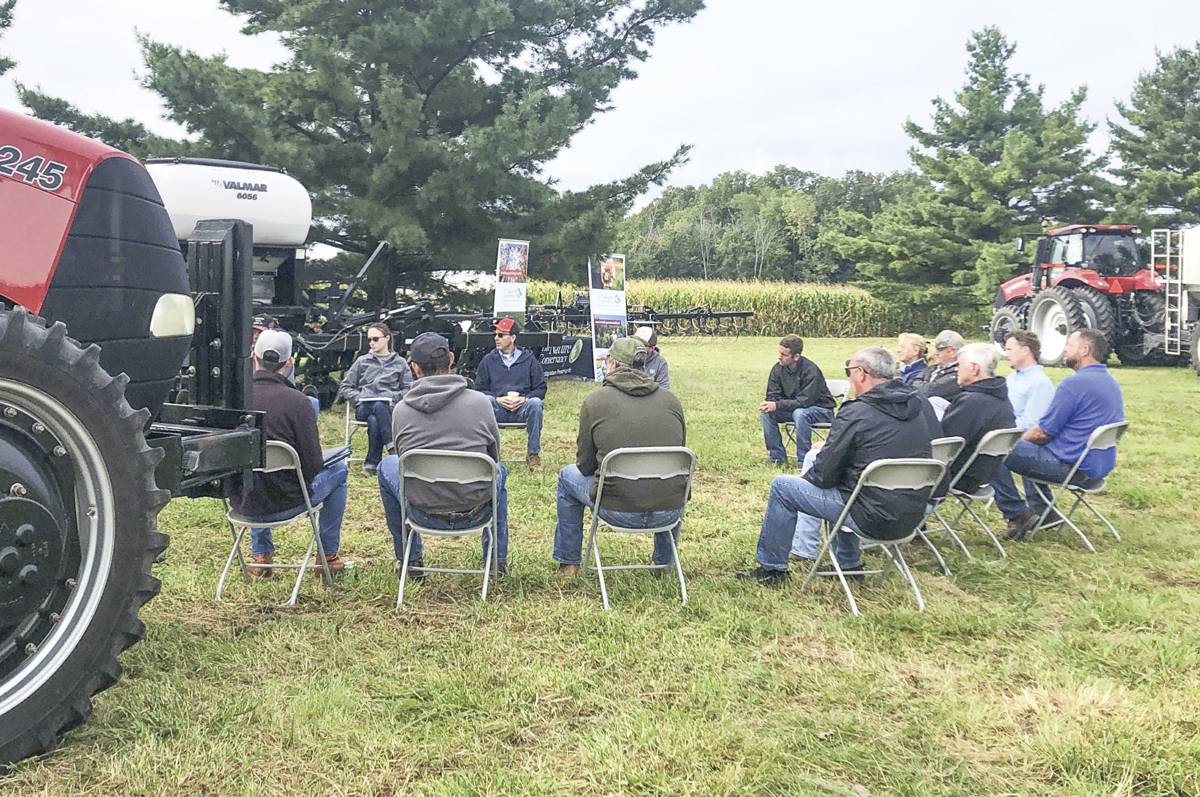
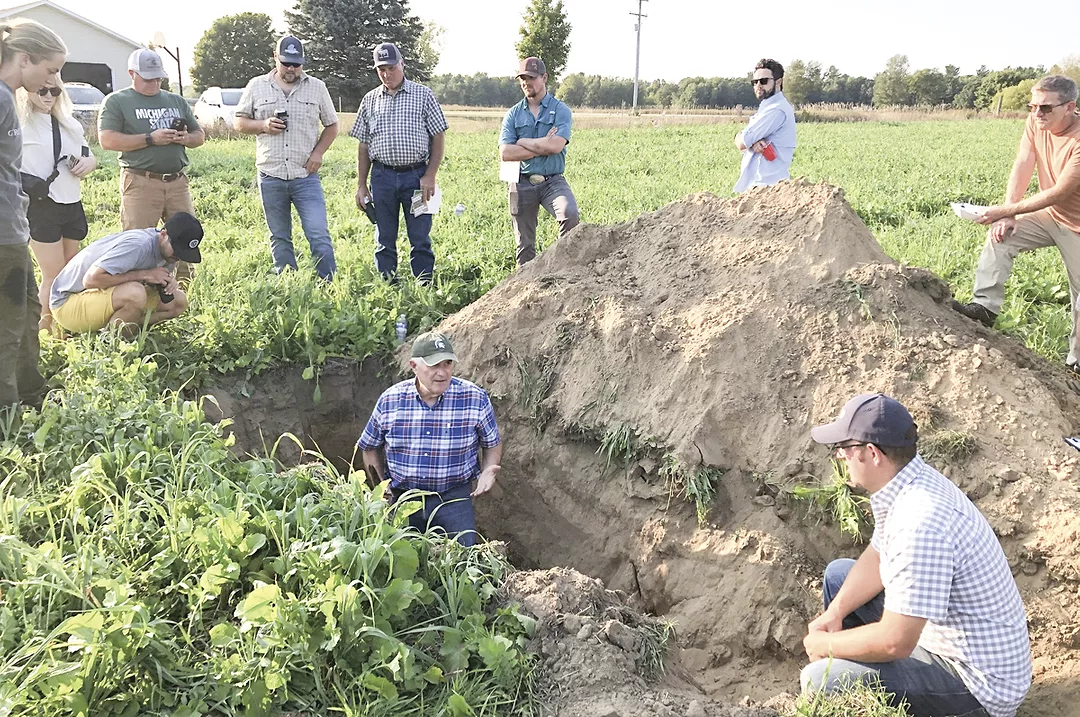
Field days, such as one recently held in the Saginaw Bay area of Michigan, support farmer-peer networks in their efforts to accelerate soil health, learning and knowledge exchange, and provide financial as well as technical assistance to producer-led conservation efforts. The Nature Conservancy provides financial and technical assistance to producer-led conservation efforts. Image by Rebecca Hagerman, The Nature Conservancy.
Every other month she hosts a “Homegrown Innovation Call” for her counterparts in other states. The calls address what’s happening with Wisconsin’s producer-led program as well as metrics to be met. Others are welcome to join the call.
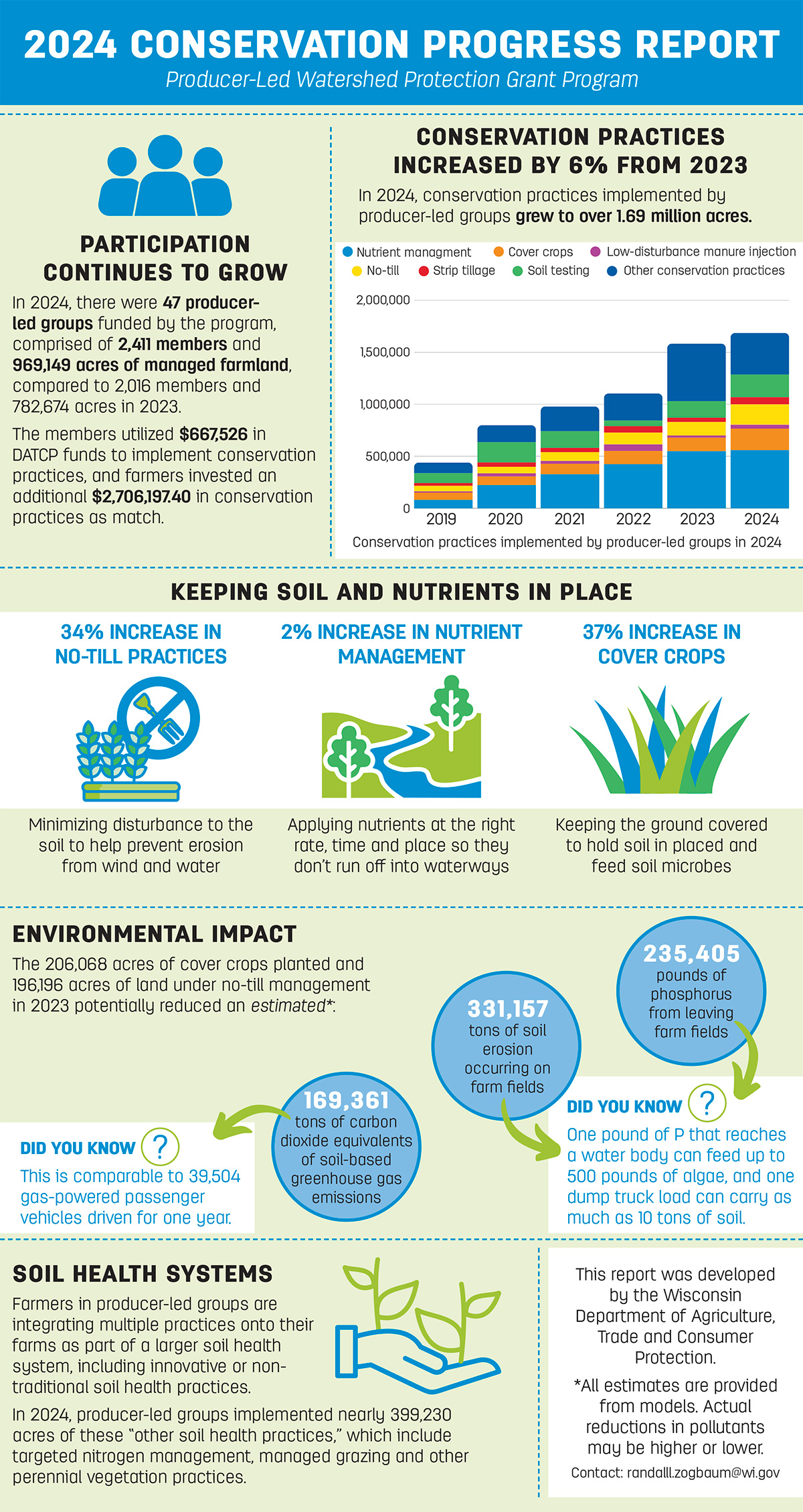
DATCP provides an annual Conservation Progress Report. It features the impact the producer groups’ efforts are having on reducing phosphorus (P) loss from farm fields, soil erosion and soil-based greenhouse gas emissions.
In addition to state funding and assistance from non-governmental organizations, Wisconsin farmers have contributed money to the effort, Heisler says. "The producer-led concept represents a paradigm shift."
“[Programs like this] tend to be structured from the top down,” she adds. “This program works from the bottom up with incentives. It’s a shift in how we do things in our agency. The question is how to replicate it regionally. It can be impactful for landscape-level change.”
Mary Fales, The Nature Conservancy’s Midwest division regenerative crop systems director, says her organization provides financial as well as technical assistance to producer-led conservation efforts. In the Midwest, The Nature Conservancy supports such efforts in Wisconsin and Michigan as well as Ohio, Illinois and Indiana.
“We provide in-person and online training to farmers who are early adopters of conservation practices and help them spread their knowledge to other farmers in their communities,” says Fales.
Ben Wickerham, agriculture program director for The Nature Conservancy in Michigan, adds, “Supporting farmer-peer networks is a way to accelerate soil health, learning and knowledge exchange and overcome challenges.”
The organization in Michigan also sponsors the Soil Health Hero award program. The awards ceremony, which recognizes farmers who implement healthy soil practices, is held every other year during the Great Lakes Crop Summit. The peer-nominated program was established in 2017.
“Most award winners have since gone on to lead a producer-led group,” says Wickerham.
Sand County Foundation also has actively worked to advance producer-led conservation efforts throughout the Midwest. In November 2023, for example, it was awarded $13.8 million in Regional Conservation Partnership Program (RCPP) funds to advance farmer-led water quality improvement during a five-year period.
The American Farmland Trust launched Farmer-Led Advances in Soil Health (FLASH) with RCPP funds, which Sand County Foundation administers. FLASH is a statewide initiative in Illinois where farmers are leading efforts to improve soil health and protect water quality in priority watersheds. In addition to American Farmland Trust, it’s supported by local soil and water conservation districts.
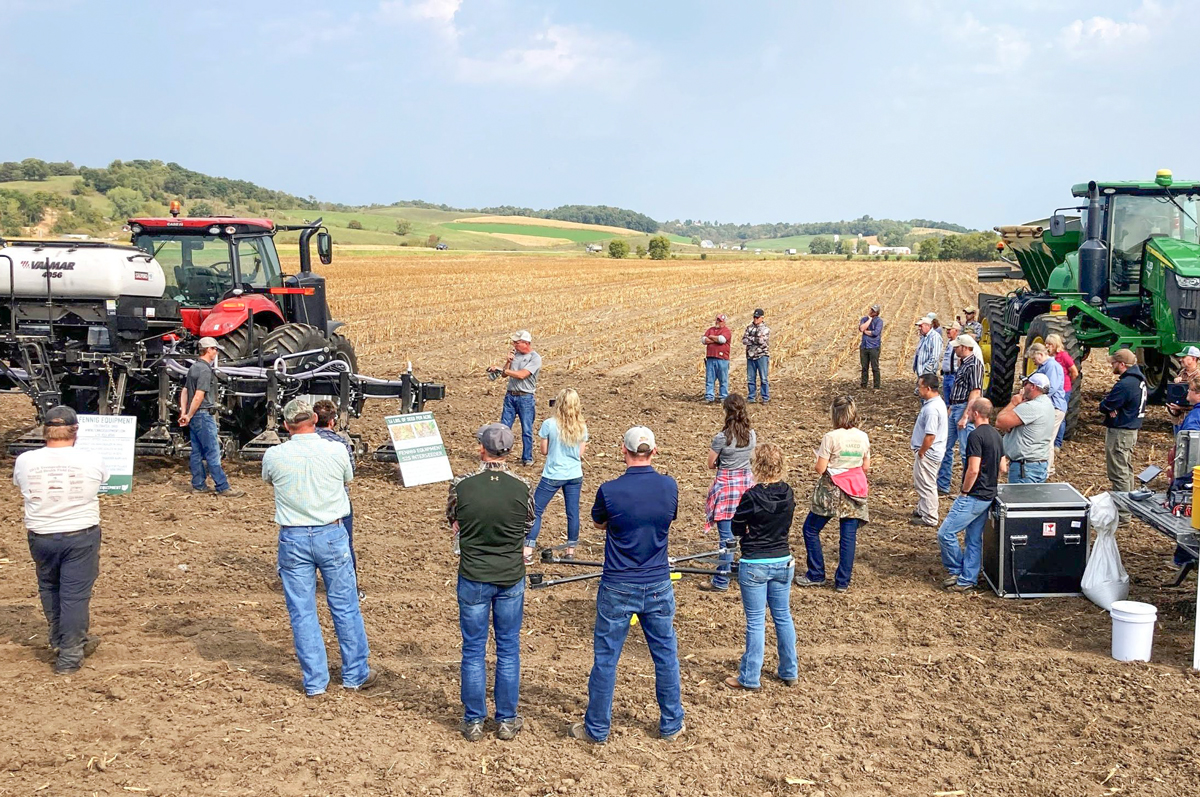
The Buffalo Trempealeau Farmer Network hosts a field day. It’s one of 49 producer-led watershed protection groups in Wisconsin. Image courtesy of Buffalo Trempealeau Farmer Network.
“This initiative was inspired by Wisconsin’s producer-led groups,” says Craig Ficenec, senior director of agricultural conservation at the Sand County Foundation.
Illinois has an additional new feature – the “Batch and Grow” Cover Crop Program, in which producer-led groups are offered free cover crop seed and free custom application. Each one of the five participating FLASH groups has selected two to five cover crop mixes adapted to their local area. Participating farmers can choose from the mixes. The mixes will then be drone-seeded or custom applied to their fields in August through December 2025, depending on the cover crop chosen.
Sand County Foundation will use RCPP funds to further assist an existing producer-led group in Dubuque County, Iowa. The Dubuque Soil and Water Conservation District is contributing staff time and Dubuque County is providing matching funds.
In 2024, Sand County Foundation and Dubuque County Watersheds had a Batch and Grow program. They worked with 75 farmers to seed 8,500 acres of cover crops via drone technology in late 2024. The program was free for producers in 2024. In 2025, farmers in the county will pay $10 per acre.
Ficenec says the program is a way of helping get more farmer "skin in the game" and work toward normalizing conservation practices without subsidies by the end of the five-year RCPP project.
“We have about double the enrollment this year – 125 farms and 15,000 acres,” adds Ficenec.
The remaining amount of RCPP funding will be awarded to existing producer-led groups in Wisconsin. Recently, Sand County Foundation awarded $680,000 to nine Wisconsin groups through its Farmer-Led Fund for Watershed Improvement. The fund provides locally designed incentives and technical assistance. Various partners also have provided in-kind support to support Wisconsin groups.
The producer-led ripple effect is also spreading to northwestern Iowa. The Nature Conservancy is working with the Northwest Iowa Ag Stewardship Alliance, which is currently comprised of seven farmers in the Big Spirit Lake and Five Island Lake area. The National Fish and Wildlife Foundation, the Mosaic Company and the Wright Foundation also are supporting the alliance.
“We saw the impact of producer-led groups in Wisconsin and wanted to bring it to Iowa,” says Paige Frautschy, agriculture program director for The Nature Conservancy in Iowa. Prior to moving to Iowa, she was the agriculture strategies manager for The Nature Conservancy in Wisconsin.
The Nature Conservancy in Iowa helped the Northwest Iowa Ag Stewardship Alliance host its first field day in June. It helps the group manage a cost-share program and membership communications, including a Facebook page. It also is working on a water quality modeling study that can help producers see what specific conservation practices can provide the best possible impact.
In the western Corn Belt, The Nature Conservancy of Ohio helped to create the Farmer Advocates for Conservation model, a train-the-trainer program.
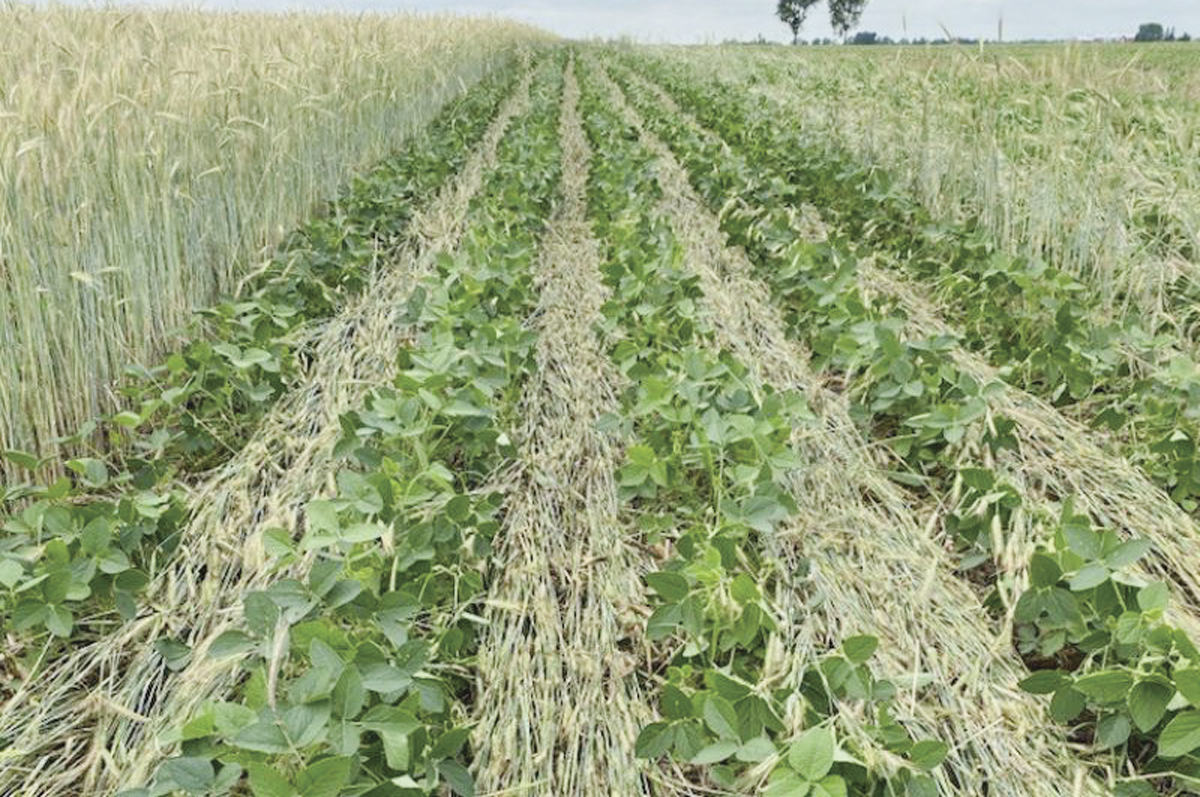
Rye is rolled between soybean rows. The cover crop was planted by Ben Grove, a member of Biological Farming Friends, a producer-led watershed protection group in Wisconsin. Image by Marie Raboin, Dane County Land and Water Resources Department.
Indiana also has a producer-led mentor program called Farm Advisors. It’s supported by the Indiana Soybean Alliance and the Indiana Corn Marketing Council. The program connects interested farmers with mentors who have been implementing soil health practices on their own operations for decades.
One of the keys to success of producer-led programs is the focus on the particular needs of a different watershed or area, states Randy Romanski, DATCP secretary.
“The work being done in Wisconsin’s Central Sands, for example, is different than in other parts of the state,” he says. “The soil types and topography are so different. This isn’t a one-size-fits-all approach, and farmers are the ones driving the decisions. That benefits all of us from the standpoint of healthy soil and clean water.”
Producer-led groups offer opportunities to learn from one’s neighbors, talk about what is and isn’t working, and experimenting on the ground. They can find ways to replicate opportunities in their area. The success of one program leads to interest in other parts of the state.
“Success in one area breeds success in another,” adds Romanski.
He also points to strong collaborations from support groups, such as county land and water conservation departments, university extension, nonprofits and government agencies.
“It’s important to remember that effective programs like [the producer-led groups] be incentivized,” says Romanski. “The state of Wisconsin has set this as a priority. The strong foundation of this program has encouraged our state to continue funding it.”
Additional resources
For more information, visit The Nature Conservancy and the Sand County Foundation websites.
Illinois: Visit the American Farmland Trust website.
Indiana: Visit the Farm Advisors website.
Iowa: Visit The Nature Conservancy website.
Michigan: Visit The Nature Conservancy website here and here.
Ohio: Visit the Farmer Advocate for Conservation website.
Wisconsin: Email Dani Heisler or call (608) 640-7270 or visit the Wisconsin Department of Agriculture, Trade and Consumer Protection website.