.webp?t=1767733418&width=1080)
For dairy farms and cattle operations, maintaining a reliable supply of high-quality forage is essential for both productivity and profitability. Silage is central to this goal, providing a consistent feed source through seasonal fluctuations and variable pasture growth.

Silage is a preserved, high-moisture feed made from fresh green fodder crops that are compacted and stored in airtight conditions to undergo controlled anaerobic fermentation. This fermentation process, driven mainly by lactic acid-producing bacteria, stabilizes the feed, prevents spoilage and retains much of the crop’s nutritional value.
The process of making silage involves harvesting the crop at a high moisture content, chopping it into small pieces and then tightly packing it into a storage structure, such as a silo, pile, pit or bunker. The airtight conditions help promote anaerobic fermentation by lactic acid bacteria, which preserves the forage.
However, traditional silage storage methods often fall short, allowing oxygen exposure and spoilage to erode the value of carefully grown grass, alfalfa, corn and cereal grains. As a result, many producers are turning to bagged silage, which tightly seals forage, protects nutrients and reduces losses while improving feed quality and consistency.
What follows is a Q&A interview with Steve Cullen, president of Versa Corporation, an Astoria, Oregon-based company recognized globally for its leadership in agricultural silage bagging and handling.
He explains how the bagging process protects silage from deterioration and helps maintain its nutritional profile, outlines the resulting benefits for feed consistency and overall herd performance, addresses its influence on reproductive efficiency and breeding outcomes and highlights the criteria producers should evaluate when selecting bagging equipment.
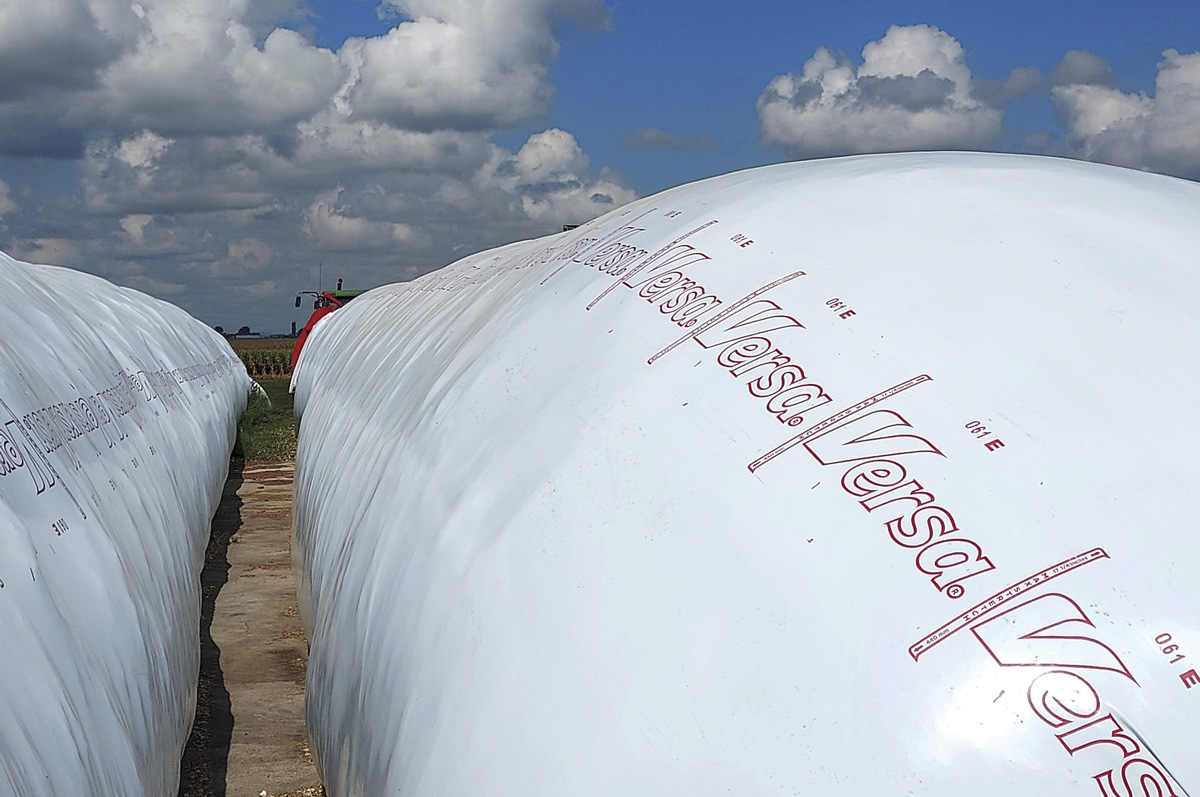
Individual silage bags allow producers and nutritionists to segregate forages by crop, field or harvest date, improving ration precision and inventory management. Image courtesy of Versa.
Q: Are farms losing valuable silage because of their handling or storage practices?
CULLEN: One of the biggest challenges when making silage with traditional methods like piles, pits or bunkers is the high risk of spoilage and loss. In some situations, it can reach nearly 30%.
The issue with these usual methods is that they let in too much oxygen, which makes silage break down quickly. To keep silage in good condition, it really needs to be packed tightly. If it isn’t packed well enough and oxygen isn’t pushed out, the ensiled dry matter can spoil, leading to unnecessary feed loss.
With silage bagging, the oxygen is removed almost instantly, and fermentation begins almost immediately. Sealed bags protect silage quality and maintain favorable fermentation conditions even when conditions aren’t ideal, such as during rain, high moisture, extreme dryness or long storage periods.
Q: For a dairy farm, specifically, what is the financial impact of silage loss?
CULLEN: Silage losses can take a financial toll on dairy operations, no matter what size they are.
To put the scale in perspective, a smaller dairy with roughly 100 cows may handle a couple thousand tons of silage each year, while larger herds can move well into the tens of thousands of tons. When feed is valued at typical harvest-time prices, cutting shrink by even a conservative 15% can translate into savings that range from a few thousand dollars per year for smaller dairies to tens of thousands for larger ones.
It is also important to remember that spoilage is an annual expense. These losses recur every year.
Q: Do storage and handling practices have an impact on feed quality?
CULLEN: High-quality silage stored in bags helps reduce feed costs because it preserves more of the crop’s natural nutrients. By limiting oxygen exposure, the bags reduce the risk of yeast and mold growth, which would consume valuable carbohydrates and proteins. That loss not only lowers digestibility but can also lead to mycotoxin production that puts livestock health at risk.
When those microorganisms are kept under control, the feed retains more of the nutrients the crop had to begin with. As a result, cattle get cleaner, more nutrient-dense forage that supports growth, milk production and overall performance without the added stress of dealing with contaminants.
A well-packed silage bag also promotes strong lactic acid formation, which signals a healthy fermentation process. Higher lactic acid levels make the feed more digestible and support better nutrient uptake, with much of that organic acid easily absorbed into the bloodstream along with other essential nutrients.
Q: For beef cattle operations, how does improved nutrient retention affect breeding and finishing?
CULLEN: For breeding herds, silage can help maintain good body condition at calving, support steady milk production and calf growth and provide the nutrition needed to promote fertility.
Silage can be fed to calves as young as three months, but some supplementary concentrates are required. Superior silage can also be fed to weaners and feeder cattle to maintain the growth rate of young cattle to ensure they reach a satisfactory weight-for-age by the start of the finishing period.
To further promote herd health, the silage can be mixed with proteins, minerals and other feed additives into total mixed rations (TMR) for cattle whenever desired. TMR is a well-established feeding method that lets producers blend different forages, commodities and feed additives to match each animal’s production stage and nutritional needs.
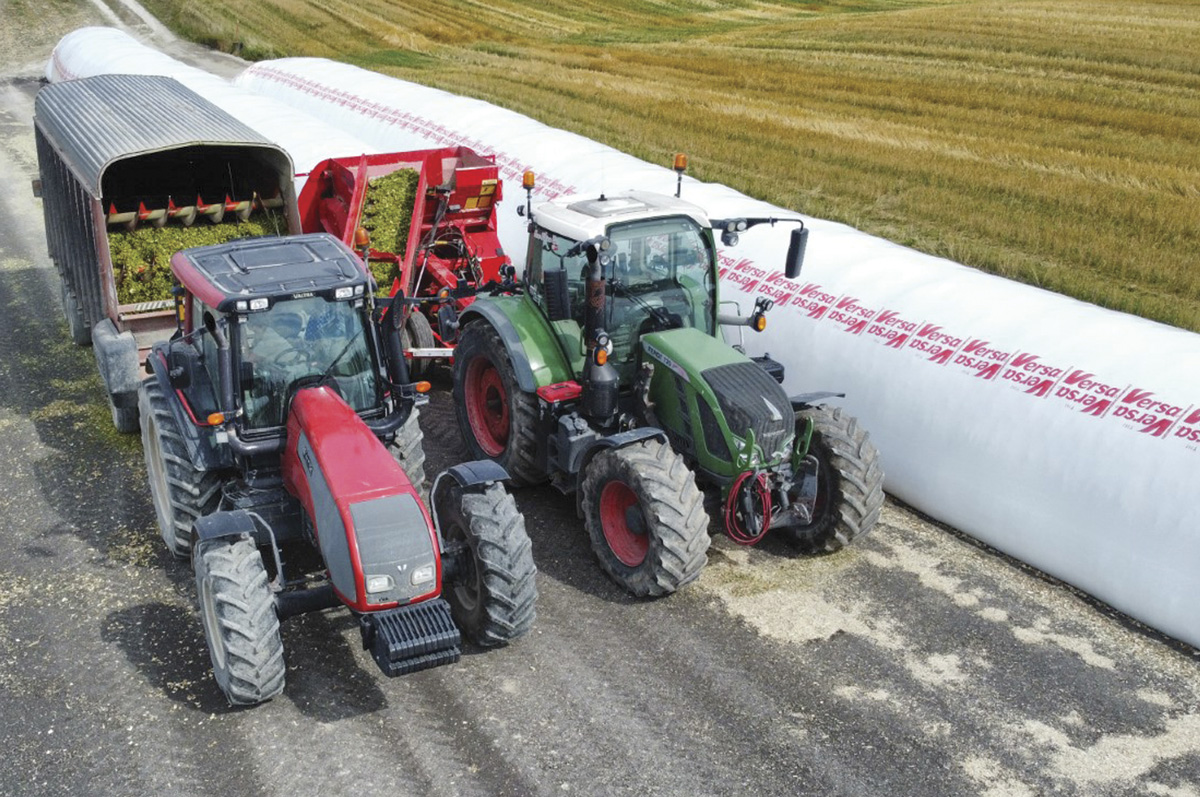
Bagged storage maintains forage stability by limiting oxygen infiltration, which helps preserve dry matter, maintain palatability and reduce feed refusals. Image courtesy of Versa.
Q: How does improved nutrient retention affect breedback, conception and reproduction for dairy farms?
CULLEN: High-quality silage can play a significant role in improving reproductive efficiency in dairy herds.
In a dairy operation, breedback intervals are critical to maintaining consistent milk production and profitability. Ideally, cows should be pregnant again within 60 days after going dry so they can return to lactation on schedule. Modern herd management software tracks these intervals, and many dairies report an average breedback of approximately 85 days. While they aim to shorten this time frame, challenges such as poor nutrition or herd health issues can extend it as much as 90 to 120 days, which is a major financial loss.
One of the leading causes of reproductive loss in cattle is exposure to mold and toxins found in spoiled feed. Properly bagged silage significantly reduces the risk of mold development, thereby lowering the likelihood of mycotoxin contamination. While the percentage of feed losses may not seem overwhelming, the financial impact of losing thousands per cow due to poor feed quality is a risk no producer can afford to overlook.
Q: Which features are important to consider when selecting bagging equipment?
CULLEN: The ability of the equipment to create proper packing pressure should be a key factor to consider for equipment selection. The goal is to firmly pack the bag without overstretching the bag while gradually moving the machine forward as the bag fills. For that, you need a good balance between the pressure caused by the packing rotors and the density system of the bagging machine.
Among silage bagging equipment, packing is approached in various ways. Ideally, the equipment would firmly pack the bag without overstretching it while gradually moving the machine forward as the bag fills.
Some systems utilize a cable system with a heavy net backstop, a concept first introduced in North America in 1976. After each bag is filled, the cables must be rewound and the backstop moved to the next location, a cumbersome process.
One approach that has gained traction in recent years is the use of internal density systems. This involves an adjustable density cable or heavy-duty density belt system inside or under the silage bag, which allows it to be packed more tightly, helping to reduce air pockets and spoilage while increasing overall storage capacity.
It also helps to select a bagger that is genuinely “farmer-friendly,” allowing the placement of the bags close together, saving much valuable space. A simple, practical inline design, without complex controls or hydraulics to slow things down. It should also be easy to service the equipment, using common, locally sourced parts rather than specialized components, making routine maintenance straightforward and much less costly.
For more information, visit the website.