For farmers with livestock, feed costs represent the largest expense for operations, often accounting for more than 50% of total operating costs. Bagging silage has emerged as an effective strategy to reduce feed waste, but its benefits extend far beyond basic preservation. When integrated into the broader feed management system, silage bagging can significantly lower operating costs across multiple areas of the operation.

Bagging silage allows for improved fermentation, better nutrient retention and extended shelf life compared to traditional storage methods such as bunkers or pits. While the initial investment in bagging equipment may seem high, producers who evaluate the long-term savings – from reduced feed loss and labor to improved herd health and productivity – often find the financial return compelling. This approach shifts the discussion from equipment cost to operational efficiency and profitability, offering a clearer path toward sustainable feed management.
Reducing silage loss
One of the main disadvantages of storing silage using traditional methods like piles, pits and bunkers is the considerable risk of spoilage and loss, which can amount to as much as 30%. This combined loss is often referred to as “shrink.”
A key advantage of properly bagged silage is the smaller feedout face, which reduces daily exposure to air, thereby minimizing spoilage. This design ensures that silage is consumed more quickly, preserving its freshness and maintaining its nutritional value.
Even at a conservative 15%, the savings derived from reducing shrink are substantial.
Let’s take a simple example: If a producer’s feed is worth $72 per ton at harvest, and they are putting up 10,000 tons of feed, a 15% reduction in loss means they are saving 1,500 tons of feed. At $72 per ton, that translates to a savings of $108,000.
More retained nutrients mean less feed needed
The higher-quality silage produced in bags further reduces feed costs by providing greater nutrient density. Limiting oxygen (O) exposure reduces the risk of yeast and mold growth. These contaminants consume essential carbohydrates and proteins, leading to nutrient losses, lower digestibility and potential mycotoxin production that can harm livestock health.
“The feed is more nutritious because we are not losing nutrients to those spoilage microorganisms, and we are not introducing contaminants into an animal that we are asking to grow rapidly and efficiently or make large volumes of milk,” explains Keith A. Bryan, technical service manager for silage and dairy for Novonesis.
Longer feed life
Livestock naturally choose the highest-quality feed available, just as they would do in a pasture. Keeping feed fresh in the bunk is essential for reducing waste and improving efficiency.
Bagged feed stays fresh and consistent longer, making it more appealing and reducing discarded feed. This extended feed life translates to cost savings since more of the feed is consumed rather than discarded.
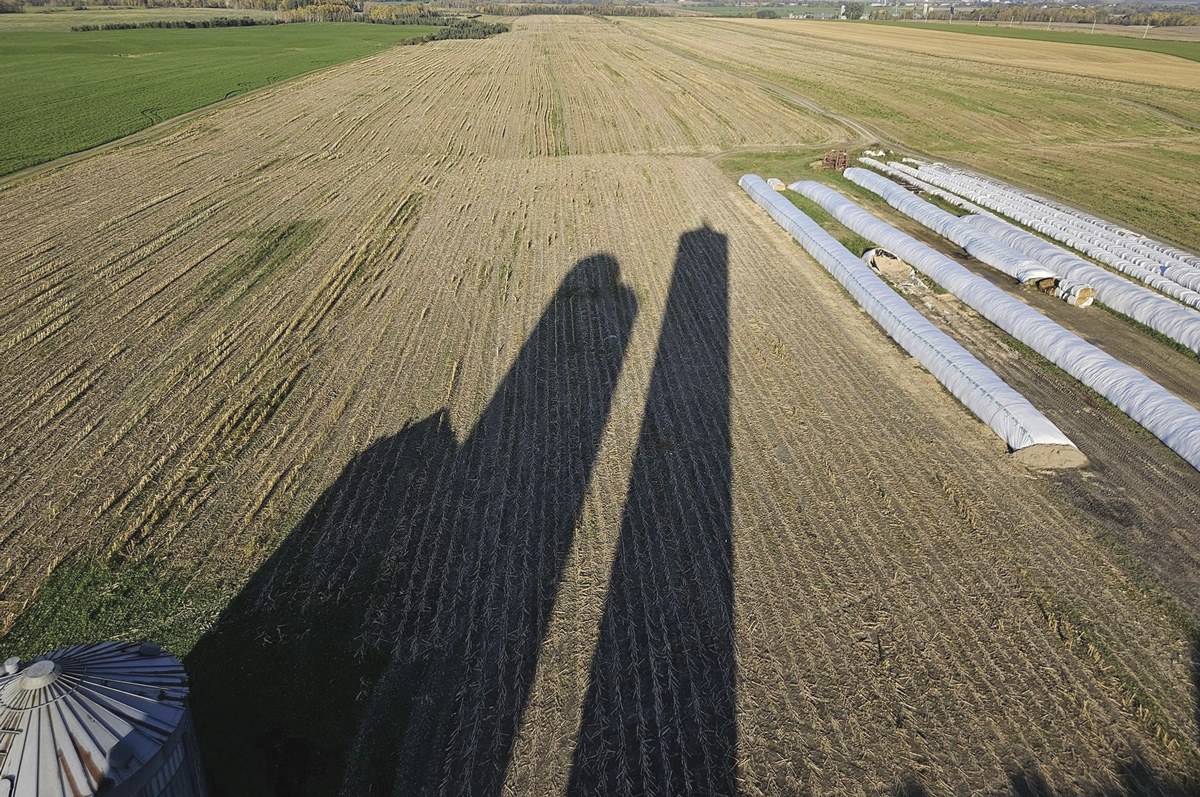
Bagged feed stays fresh and consistent for longer, making it more appealing to livestock and reducing discarded feed. Image courtesy of Versa Corporation.
Improved herd health
Properly stored and well-preserved silage maintains higher nutrient density, particularly in terms of energy, protein and digestibility, all of which contribute to better overall cow health and fertility.
Although assigning a dollar value to a healthier herd is more challenging than calculating feed savings, producers who have transitioned to bagging frequently report noticeable reductions in veterinary expenses and treatment costs.
“Bagged silage can have a huge impact on profitability, herd health and milk production,” says Bonni Kowalke, fermentation researcher, practitioner and owner of Stem Ag Consulting LLC, a firm that specializes in monitoring and optimizing dairy farm inputs and outputs at all forage production stages.
Improved breedback, conception, reproduction
High-quality silage plays a key role in improving reproductive efficiency in dairy and beef herds. In dairy operations, timely breedback is essential for consistent milk production. Ideally, cows should conceive within 60 days of drying off, but poor nutrition or health issues often extend this from 90 to 120 days, causing major financial losses. For example, a 30-day delay in a cow producing 35 pounds of milk daily equals 1,050 pounds of lost milk – about $189 per cow. Across 1,000 cows, that’s $189,000 in lost revenue.
Bagged silage helps mitigate this risk by preserving nutrients and preventing mold growth, which reduces exposure to mycotoxins – a recognized contributor to reproductive challenges. Producers have reported faster breedback and higher conception success rates after switching to bagging, further boosting productivity and profitability.
Improved feed management brings savings
Bagging becomes a valuable tool for cost-effective farm management. The increased flexibility and versatility reduce labor, enhances safety, eliminates the need for additional equipment and allows for the storage of a broader range of high-value feed options.
One of the primary benefits of using a bagging machine is the ability to store and manage small quantities of different feed types such as alfalfa, corn, grass-legume mix, sorghums or oats. If needed, producers can designate sections within a single bag for different crops, such as marking one portion for wheat and another for corn. This method allows for greater versatility in feed storage without the inconvenience of physically separating crops in a silo, where it would be challenging to determine where one type starts and another ends.
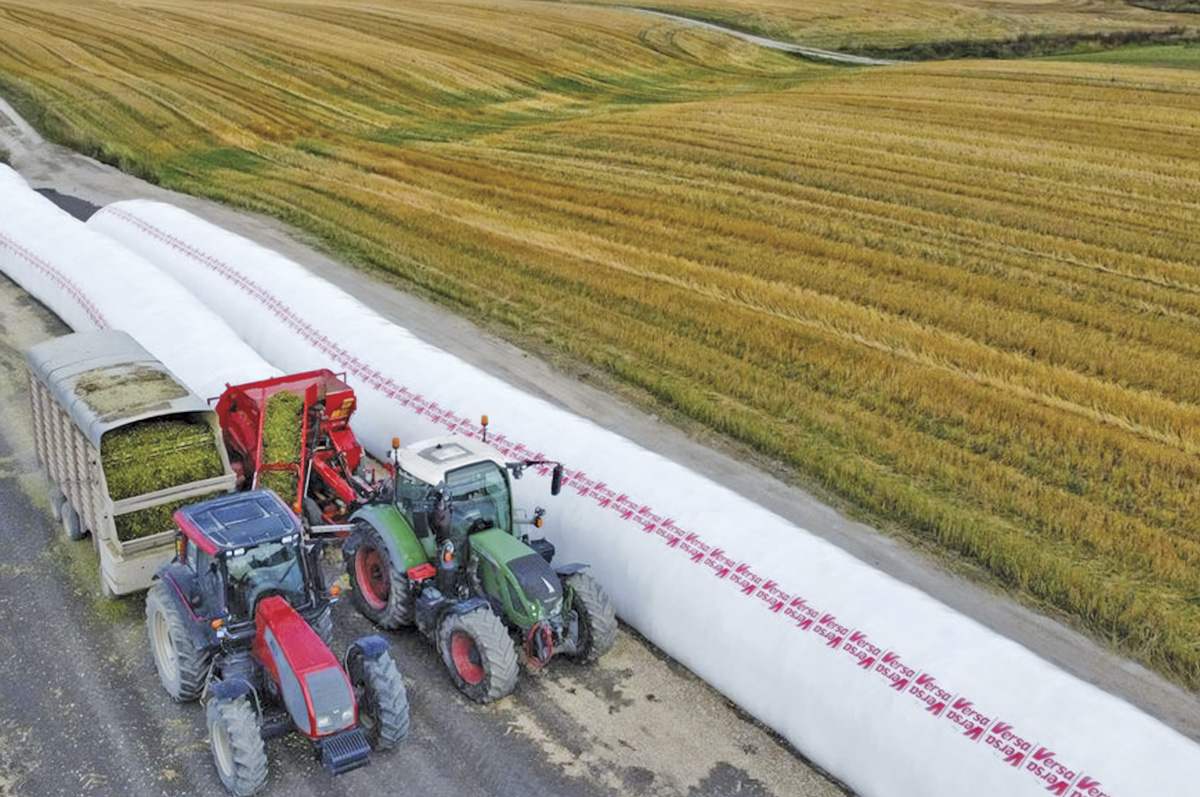
While silage has traditionally been stored in silos, bunkers, piles or pits, more producers are shifting to bagged silage to maintain optimal fermentation and ensure long-term feed quality. Image courtesy of Versa Corporation.
Bagging silage can eliminate baling
Many producers believe they must invest in a baler and a silage bagger, but switching to bagged grass or alfalfa silage can eliminate the need for baling altogether. This method preserves dry matter, digestibility and essential nutrients, offering a more efficient alternative.
Removing the need for ideal drying conditions, bagging allows for more frequent harvests and a higher yield per cutting. Traditional baling often leads to substantial dry matter loss as plant material respires during the drying process. Based on these factors, bagging offers at least 40% more value per acre compared to baling.
Baling is also labor-intensive work. Bagging reduces the need for heavy lifting, stacking and hauling, cutting down on labor hours and the risk of injury. It also streamlines storage, allowing more forage to be processed in less time with fewer workers.
Creative financing, revenue opportunities
The portability of bagging equipment allows relocation to different sites, optimizing usage and allowing cost-sharing or reduced investment expenses.
Shared ownership among neighboring farms helps lower the financial burden by splitting acquisition and maintenance expenses. By leveraging its mobility, producers can also use the bagger for local contract work, offering silage bagging services to other operations. This can serve as an additional income stream or a way to reduce overall harvesting costs.
Add up the savings
Silage bagging presents a compelling financial advantage for producers.
Producers can save thousands of dollars annually while maintaining higher nutrient retention, extending feed life and improving herd health. The ability to better control feed quality and minimize spoilage not only enhances overall milk production but also leads to improved reproductive efficiency, reduced veterinary costs and lower labor expenses.
For more information, visit the Versa website.