
Potatoes are one of my favorite foods (especially love my french fries) and are my favorite starchy vegetable. Unfortunately, many fungi, bacteria and bugs feel the same way. There are over 80 different diseases, disorders and pests that can afflict the modest spud. Fortunately, potato growers have many tools to help them mitigate these pests and produce the beautiful potatoes we love to eat.

Some of these tools are pesticides. By definition, a pesticide is any substance or mixture intended for preventing, destroying, repelling or mitigating pests, including insects, weeds, fungi, rodents and bacteria. Pesticides can also include plant regulators, defoliants, desiccants and nitrogen stabilizers. Pesticides are heavily regulated by the EPA to ensure that they are safe to use and do not cause unreasonable harm to the environment.
Additionally, the USDA Agricultural Research Service (ARS) conducts an annual Pesticide Data Program (PDP) to determine the public’s exposure to pesticide residues in food. The PDP samples food products with emphasis on those which may be consumed by infants and children from over 600 sites representing approximately 50% of the U.S. population. Samples are tested for over 450 pesticides and pesticide breakdown products. Fruits and vegetables are evaluated every year, and other products (such as nuts and fish in 2024) are periodically added to the list.
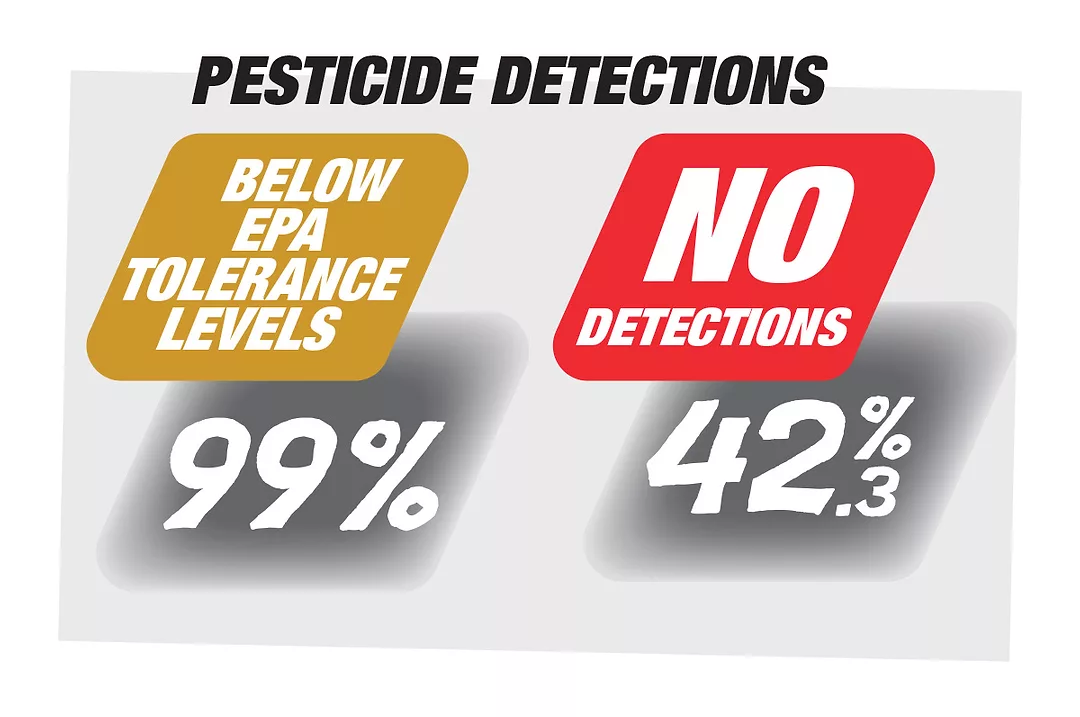
The most recent report for 2024 data was published in December of 2025. A total of 9,872 samples were evaluated for 597 pesticides (and breakdown products) and 21 environmental contaminants. Over 99% of all samples had pesticide detections below EPA tolerance levels and 42.3% of all samples had no detections. Of particular interest in this discussion is that potatoes were included in this year’s report.
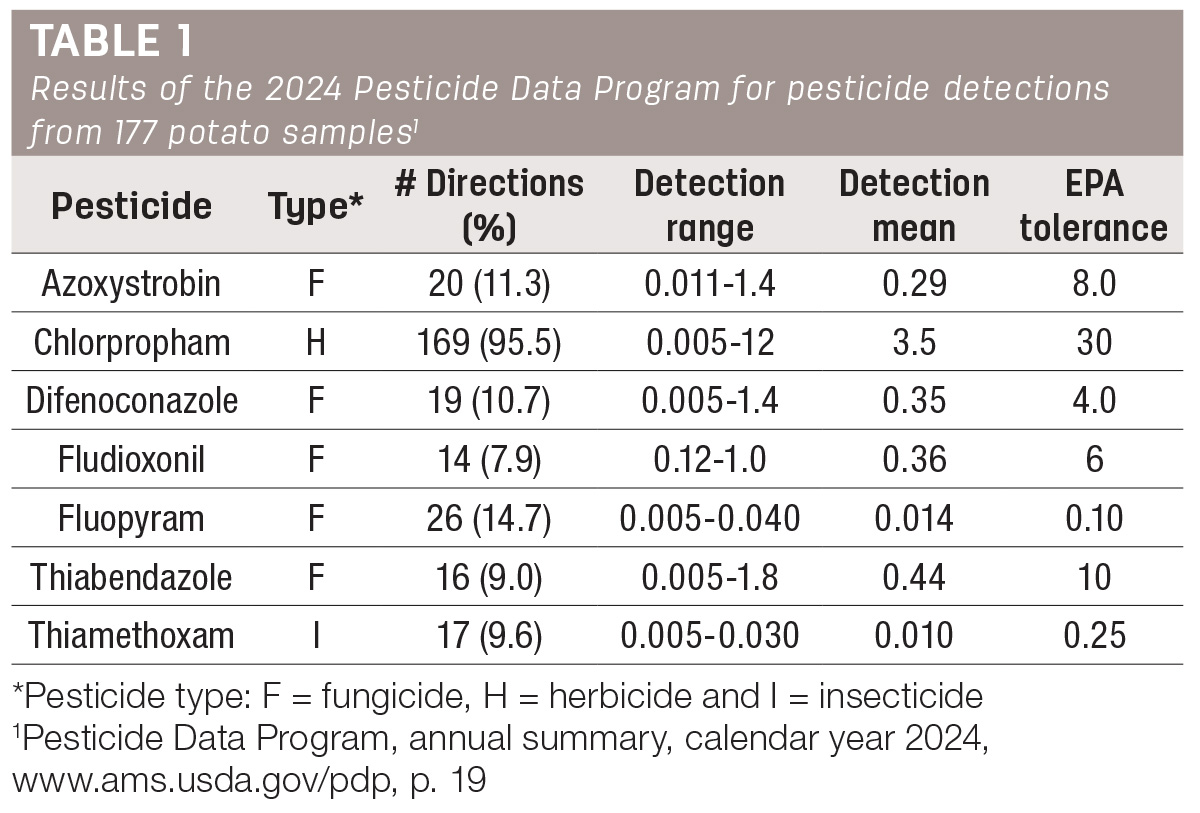
Out of 177 samples of potatoes purchased off the shelf from grocery stores, none of the samples had pesticide residues above EPA tolerance levels (Table 1). The pesticides listed in Table 1 represent some of the most common pesticides used in potatoes today. Chlorpropham was detected the most and this was not surprising. Chlorpropham is the active ingredient in CIPC, the primary product applied to potatoes to prevent them from sprouting during storage. Even though most potato samples had chlorpropham residues, the mean residue detected was almost a tenth of the EPA tolerance. The use of common pesticides in potato production is not leading the unsafe residues in our food. If this were school, potato growers would receive an A+ grade.
The nonprofit Alliance for Food and Farming has created a website to help put pesticide residues in perspective. Their website has a pesticide residue calculator constructed using data collected from the PDP program. When you first use the calculator, you select a type of person (man, woman, teen or child). This is done because the EPA tolerance for some pesticides is lower for different types of individuals. For example, tolerance levels are often set 10 times lower for children than for adults due to the fact that their bodies are still developing.
For our example, I selected “Child.” The next step is to select the fruit or vegetable of interest. And of course, I selected “Potatoes.” Based on the research available to date, the calculator indicates a child could consume 1,468 servings of potato in one day without any effect if those potatoes had the highest residues recorded by the PDP program. This is great news! As long as my child doesn’t go back for his 1,469th serving of potatoes, he should be OK.
I don’t think you will ever meet a potato grower who loves to spray pesticides. Most of them love what pesticides do for them, however. Common pesticides used in potato production can cost anywhere from around $4 to more than $300 per acre. The decision to use these crop protection products is not made lightly and is only done when the grower deems it necessary to protect the crop.
Some social media influencers have vocalized the idea that our current agricultural system needs an overhaul. I agree that we need to be using the best science available to improve crop production and minimize adverse effects on the environment. But pesticide use is condemned too quickly without understanding the benefit their use brings in protecting the crop. We do not need to be afraid of our food, especially my favorite starchy vegetable. Rest assured – our potatoes are safe. Enjoy that next baked potato!





.webp?height=auto&t=1783636475&width=285 "63802-Thomas-GPS-equipment--Automated-Magnum-Tractor--Matt-Skinner-photo(1).jpg")
