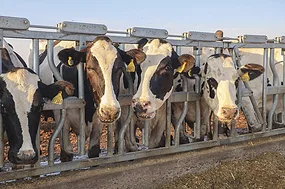
Despite high beef prices, a smaller dairy herd and unprecedented high prices for dairy cow replacements have now impacted cull cow slaughter rates for over a full year.

Based on latest USDA monthly Livestock Slaughter data released on Feb. 19, the number of dairy cull cows marketed through U.S. slaughter plants in January 2026 was estimated at 246,800. While down 1,600 from December, it was also 1,000 less than January 2025.
January 2025 had 27 nonholiday weekdays and Saturdays while January 2026 also had 27 days. Slaughter averaged 9,100 head per business day this year, down 100 head from a year earlier.
Weekly slaughter toward the end of 2025 reversed a long-term trend where weekly dairy cow slaughter had trailed year-earlier levels with a total decline of nearly 556,100 head. However, in the weeks since September 2025, it has increased 38,408 head from the same period a year earlier.
The USDA estimated there were 9.58 million dairy cows in U.S. herds in January 2026, up 14,000 from the December estimate and putting the January culling rate at about 2.6% of the herd. Based on the monthly data, year-to-date (January) dairy cull cow slaughter now stands at about 246,800 head, down 1,000 from the same period a year ago and the lowest one-month total since 2010.
Read: Milk production rises, dairy herd grows into January 2026
Heaviest dairy cow culling during January occurred in the Upper Midwest (Illinois, Indiana, Michigan, Minnesota, Ohio and Wisconsin) at 61,500 head. That was followed in the Southwest (Arizona, California, Hawaii and Nevada) at 55,800 head.
Other monthly regional totals were estimated at 33,700 head in Arkansas, Louisiana, New Mexico, Oklahoma and Texas; 33,800 head in Delaware, Maryland, Pennsylvania, West Virginia and Virginia; and 32,500 head in Alaska, Idaho, Oregon and Washington.
Primary data for the USDA’s Livestock Slaughter report is obtained from reports from about 1,100 federally inspected plants and nearly 1,825 state-inspected or custom-exempt slaughter plants.
Read also: Dairy replacement cow prices set new records in late 2025