Depending on the year, beef producers in western Canada notice their cattle rubbing and developing bare patches of hair during late winter or early spring. Although lice are often suspected, follow‑up checks by producers and veterinarians show that lice are rarely the cause. Itching and the resulting hair loss in cattle are multifactorial in origin, and there is rarely a single cause behind hair loss. Notably, a recent study identified significantly lower copper levels in itchy cattle compared to those with little hair loss.


In the absence of intense louse infestations, the cause of itchy cattle has never been identified. Three years ago, the Beef Cattle Research Council (BCRC) issued a call for research proposals to investigate the cause of itchy cattle. A collaborative team from Alberta Veterinary Laboratories (AVL), Chinook Contract Research (CCR) and Lakeland College successfully secured funding from BCRC and Alberta Beef Producers (ABP) to investigate the cause(s) of itching in cattle. The goal was to examine as many potential contributors to itchy behaviour in field conditions as possible. Knowing there would be one chance to explore each animal going through the chute, the team explored every relevant measurement and sample imaginable during that single opportunity.
Partnering with veterinarians and AVL, the team was able to connect with local veterinarians who had received calls from producers concerned that delousing products were not working. Herds to investigate were identified across the three Prairie provinces. Each of these herds had a minimum of 30% of the cattle exhibiting itching. Within each herd, the team aimed to thoroughly examine and collect samples from 10 itchy cattle and five non-itchy cattle. Producers from each herd completed a detailed survey covering treatments, nutrition and environmental conditions, and they provided feed, water and bedding samples for analysis.
External parasites
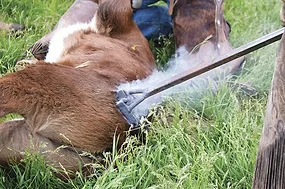
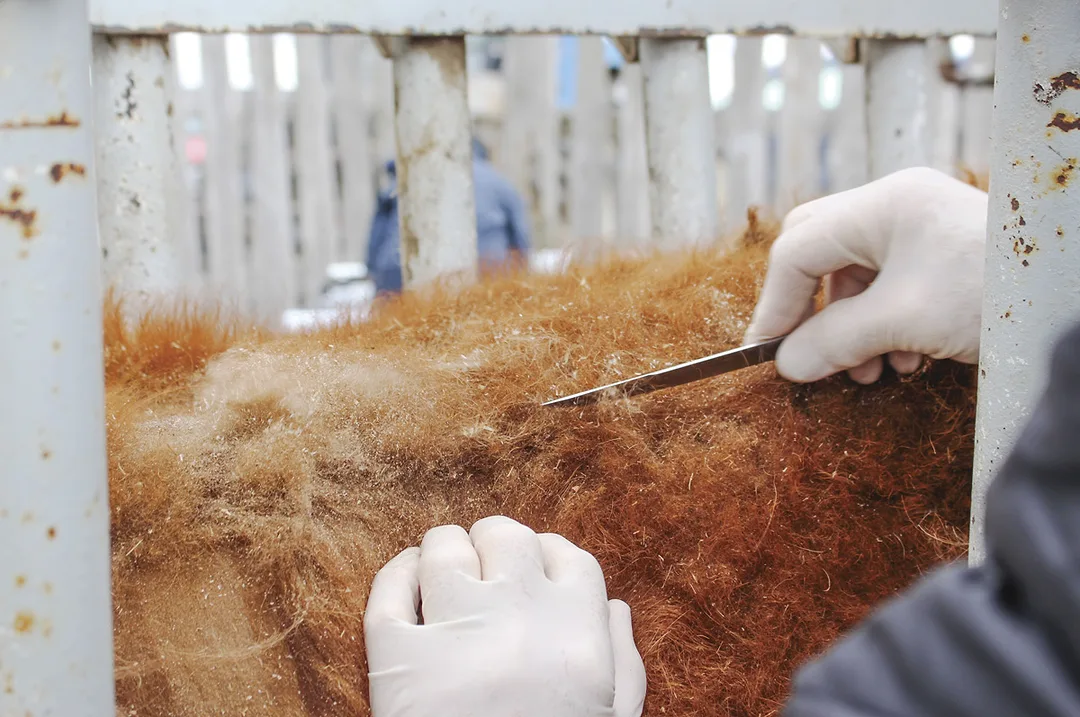
The first potential cause investigated – and the one most blamed for itchy cattle – was external parasites such as lice (both chewing and sucking types) and mites (skin and straw). Each animal was inspected for lice in specific body regions, skin scrapings were collected to check for mites, and photos were taken and scored for every animal’s level of infestation. Bedding samples were also collected and examined for straw mites, which can irritate cattle while they’re lying in the bedding pack.
Out of the 101 cattle tested, only 21 had any lice at all, and even then, the numbers were very low. All of these were sucking lice, which typically cause far less irritation than chewing lice. There was also no meaningful relationship between the animals that did have lice and those showing signs of itching. In addition, no straw mites were found in any of the bedding samples.
Dry skin
Because people often experience dry, itchy skin in winter, the team wanted to explore whether cattle might face a similar issue. Since this type of assessment had never been done in cattle before, a new protocol was developed using a Corneometer, a tool commonly used in the human cosmetics industry to measure skin hydration for products like hand creams. The team compared the moisture levels of itchy, hairless patches with nearby areas that still had hair for each animal. It was found that bald patches tended to have lower skin moisture than the haired regions on the same animal. However, this raised the “chicken‑and‑egg” question: Did dry skin lead the animal to scratch off the hair, or did the skin become dry after the hair was removed for some other reason?
When overall skin moisture was evaluated within each herd, there were no significant differences among most herds, with one exception. Comparing across herds was not practical because nutritional differences – such as feeding canola meal or soybean meal – can influence skin oils and hydration. Although there are nutritional supplements capable of improving skin moisture in animals, results suggest that dry skin was not a major contributing factor in this study.
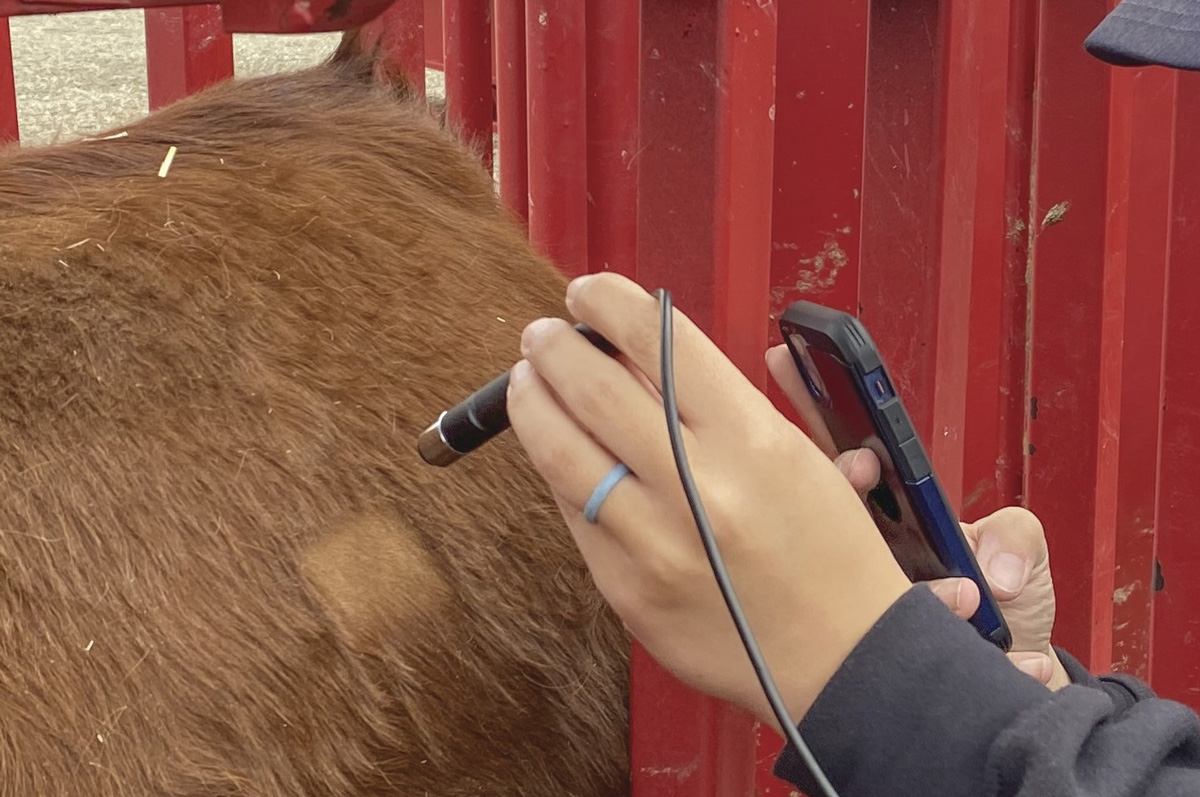
A tool called a Coreometer was used to test skin moisture in affected cattle. Courtesy image.
Dermal hypersensitivity (skin allergy tests)
Next, allergens were tested to determine if they may be contributing to the itchiness. Just as people undergo allergy testing, the team wanted to see if cattle reacted to common allergens they encounter in their environment. From each herd, five animals were selected for testing: four showing hair loss and itching, and one that appeared normal.
To guide the team through this part of the project, Frédéric Sauvé, a veterinary dermatologist from the University of Montreal, was consulted. He helped to determine which allergens should be included. The panel consisted of a seven‑grass mix, alfalfa, a mold mix, a weed mix, grain dust, histamine (as a positive control) and saline (as a negative control).
For the test, a small area on each animal was shaved and marked, and the allergens were injected into specific locations on the skin. After 10 minutes, swelling was measured at each site and compared to the reactions from the positive and negative controls. An infrared camera to detect heat associated with any inflammatory response was also used.
Out of the 35 cattle tested, only one animal reacted – and that was to alfalfa. Based on these results, allergens do not appear to be a significant cause of itching in these herds.
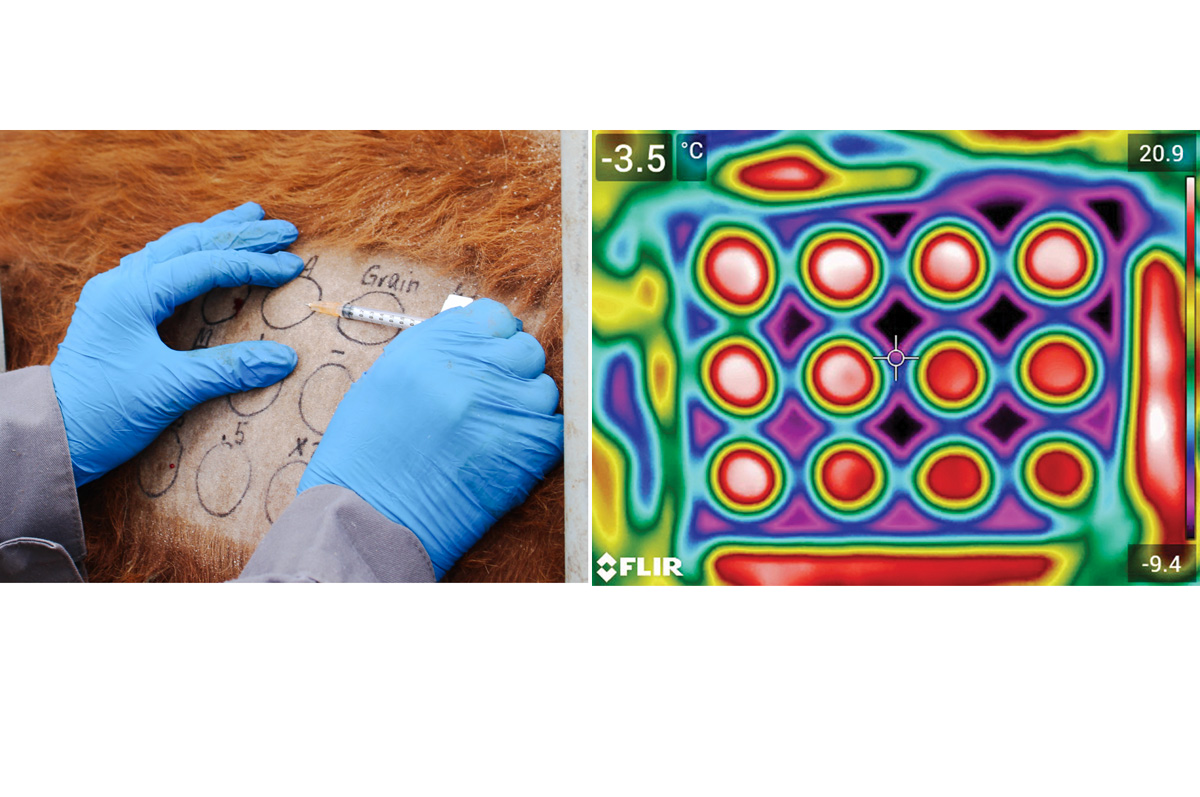
Allergen testing in the study indicated that allergies are not a significant source of cattle itching. Courtesy images.
Nutritional deficiencies and mycotoxins
The team also examined whether nutritional deficiencies or mycotoxins could be contributing to the itchiness observed in these cattle. To start, blood samples were collected to compare itchy and non-itchy animals within each herd, testing for vitamin A, vitamin E, copper, manganese, cobalt, iron, magnesium, molybdenum, selenium and zinc. Mycotoxins were screened using kidney and liver panels, since certain feedborne toxins can cause skin irritation; all mycotoxin tests were negative.
Partway through the project, it was determined that liver biopsies would be greatly beneficial for a more accurate picture of mineral and vitamin status. Liver tissue provides a more accurate assessment of an animal’s mineral and vitamin status than blood samples because many essential minerals and fat‑soluble vitamins are stored in the liver.
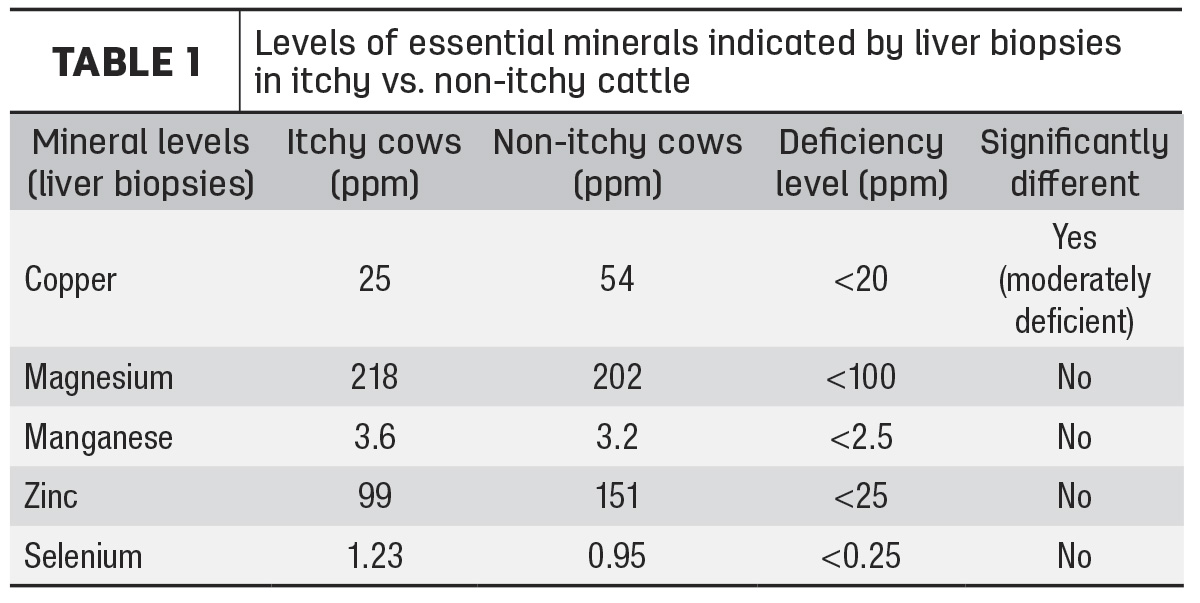
Blood serum results showed no meaningful differences between itchy and non-itchy cattle. However, in the animals that received liver biopsies, copper levels were significantly lower in the itchy cattle compared to those without symptoms. As seen in Table 1, the copper level is slightly above what is considered deficient. However, emerging research has prompted the beef nutrition community to reassess these levels, as it may no longer reflect the requirements of modern cattle. Although the number of biopsy samples was limited, this finding is notable and suggests that copper status may play a role in itchiness.
To support these results, all participating herds had their feed tested for mineral and vitamin content, and their water sources were analyzed for mineral levels to determine whether mineral interactions could be affecting absorption.
So what?
The study suggests that itching and the resulting hair loss in cattle are multifactorial in origin. Much like calving difficulty or scours, there is rarely a single cause behind hair loss.
In this project, lice and mite infestations, mycotoxins, skin allergies and dry skin did not appear to be major contributors to the itching observed – though it is recognized that these factors can cause hair loss under other circumstances. The most interesting finding came from the small group of animals that received liver biopsies: Cattle showing hair loss and itching had significantly lower liver copper levels compared to the control animals. This raises an important question: Could improving copper status help reduce itchiness in some herds?
So what does this mean for producers dealing with itchy cattle? It is recommended that the issue is approached using a simple decision tree process, starting with the easiest causes before moving to more complex ones.
1. Rule out external parasites first
Perform a physical check for lice or mites. There are helpful online resources, or a veterinarian can assist. If parasites are present, treat them appropriately and monitor whether the itching resolves.
2. Evaluate your mineral and vitamin program
If parasites aren’t the cause, or if treatment doesn’t solve the problem, the next step is to assess the herd’s mineral and vitamin intake. Analyzing the feed (and more specifically, the mineral and vitamin levels) the herd is consuming could indicate high levels of some minerals that could have adversely affected other mineral levels. Free‑choice mineral and vitamin programs can result in uneven consumption within the herd, leaving some animals deficient. A nutritionist or veterinarian can help determine whether mineral issues (including potential copper deficiency) are contributing to the problem and recommend adjustments, such as revising the mineral and vitamin program, offering a total mixed ration (TMR) or providing targeted supplementation.
3. Investigate the less common causes, if needed
If neither parasites nor mineral/vitamin issues explain the problem, then move down the list to other possibilities, such as mycotoxins or environmental factors. A veterinarian can help guide this investigation.
In most cases, working through the first two steps should resolve the issue.