Success starts at birth. A recent webinar titled “Strategies for reducing calf losses: Eastern Canadian veterinary insights,” hosted by the Beef Cattle Research Council (BCRC), highlighted just how critical those early decisions are, from pre-calving management to colostrum intake and postnatal care. It’s about stacking small advantages, like nutrition, environment, timing and intervention, right from the start.

Start before calving ever begins
Calf health begins long before the calf hits the ground, said Van Mitchell, DVM, Metzger Veterinary Services.
“We can’t control every pathogen out there,” Mitchell said, “but we can do a pretty good job of trying to get them as resistant as possible.”
That resistance starts with the cow herd. Body condition, mineral status and vaccination protocols all play a role in ensuring calves are born with the best chance to thrive. Colostrum quality, in particular, is a direct reflection of pre-calving management.
“Colostrum is huge,” Mitchell said. “It gets the immunity in and the right vitamins into that calf.”
Mineral deficiencies for vitamin A, vitamin E and selenium can quietly undermine calf vigour and immune response. Producers may not always see “textbook deficiencies,” but the signs show up in weaker calves, higher sickness rates and increased mortality.
“You might get a handful of those frustratingly slow calves that just don’t get up,” Mitchell said. “And then you [can] get more scours and pneumonia.”
Beyond nutrition, environment plays a major role. Clean calving areas aren’t just a nice-to-have, they’re a frontline defence.
“We know what a dirty udder looks like, and that’s the first thing that gets in its [the calf’s] mouth with bacteria and viruses,” Mitchell said. “That’s why a pre-calving area really is important to keep clean.”
Managing the calving process
Even with the best preparation, calving itself is where things can go wrong quickly.
“Calving is more of an art than a science,” said Lisa Freeze, DVM, New Brunswick (NB) Department of Agriculture.
Knowing when to step in is one of the most important skills a producer can develop. While cows naturally take breaks during labour, prolonged delays are a red flag.
“If she’s been in active labour for more than half an hour and is not making any progress, you should check on her,” Freeze said.
Recognizing normal versus abnormal calf presentations is key. While most calves should arrive front first with both legs and head aligned, issues like oversized or backward calves can complicate delivery.
“The biggest one that we see is still that the calf is too big for the cow, or especially too big for the heifer,” Freeze said.
That’s why genetics matter. Selecting calving ease bulls can significantly reduce intervention rates.
“If you have more than 5 percent assisted calvings, you probably need to make some changes to your program,” Freeze said.
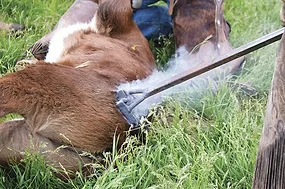
When assistance is required, proper technique is critical. Tools like calving jacks can be helpful, but only when used correctly.
“It’s not a tool meant to yank the calf out,” Freeze said. “You’re meant to use it to hold the calf so when the cow stops pushing, you don’t lose ground.”
The goal is always a live, healthy calf and a cow that can breed back successfully.
The first hours matter most
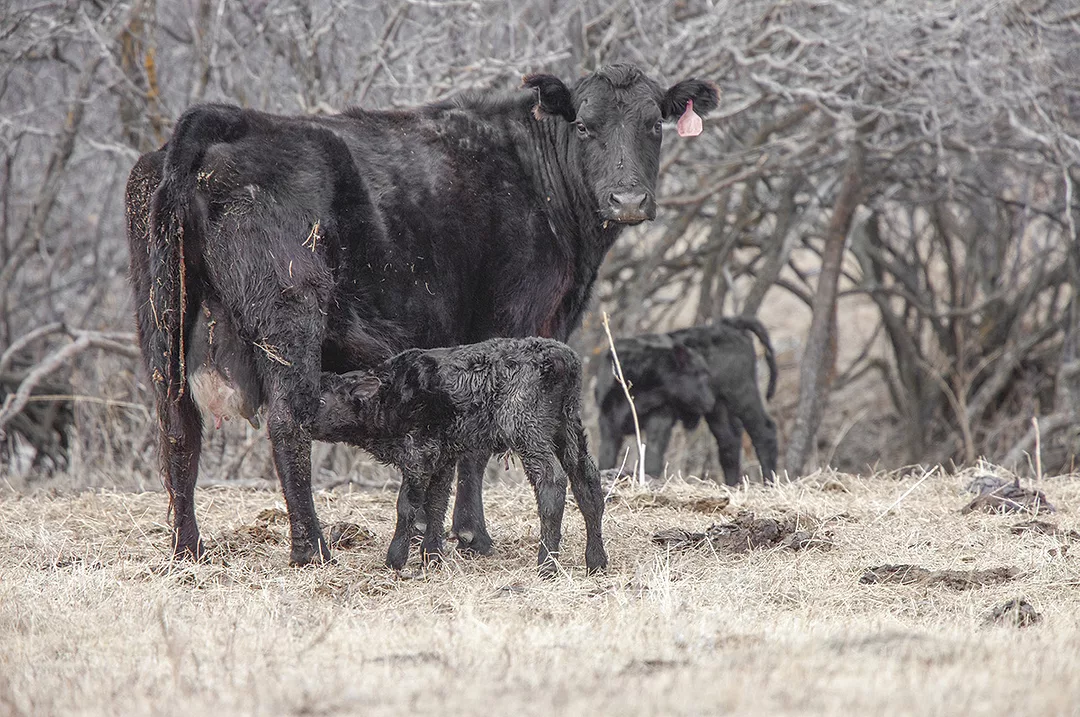
Once the calf is born, the clock starts ticking. The first 24 hours, and especially the first four, are crucial for setting up lifetime health.
Failure of passive transfer (FPT) remains one of the biggest contributors to calf sickness and death, said Lauren Wilson, DVM, Peterborough Veterinary Services.
“Calves are not going to get antibodies from the placenta,” Wilson said. “It’s all coming from the colostrum.”
The window for absorption is short.
“By 12 hours, we’ve lost 50 percent of that ability, and total gut closure happens at 24 hours,” Wilson said.
That’s why early nursing is nonnegotiable.
“If calves are not up and nursing by four hours, they are at an increased risk for failure of passive transfer and mortality,” Wilson said.
High-risk calves like those from difficult births, heifers or twins require extra attention.
“These are the calves that I would be going in and tubing colostrum,” Wilson said.
And when supplementation is needed, quantity matters.
“In order to supplement them, we need at least 200 grams of IgG antibody – probably more,” Wilson said.
The biggest threats: Scours and pneumonia
After the first day, the biggest threats to calf health shift toward disease such as scours and pneumonia.
Together, these account for a significant portion of calf mortality.
“Scours and respiratory – that’s where the majority of our death rate is coming from,” Mitchell said.
Both diseases are closely tied to environment and management. For scours, contamination is the primary driver.
“These pathogens are fecal-oral,” Wilson said. “Calves are getting feces through their mouth and getting infected that way.”
Simple practices like increasing bedding and keeping calves dry can make a major difference.
“If you kneel down and get back up and you’re wet, they need more bedding,” Wilson said.
Treatment strategies are evolving as well. While antibiotics still have a place, supportive care is often more critical.
“Oral electrolytes are super, super important,” Wilson said. “They’re not just to replenish fluids.”
However, pneumonia is often starting with viruses and compounded by bacteria.
“Cold, dry air is better than warm, wet air,” Wilson said, highlighting the importance of ventilation.
Small improvements, big returns
Across all three presenters, one thing remained the same: The little things add up.
From clean bedding and proper nutrition to timely intervention and colostrum management, each step plays a role in reducing losses and improving performance.
“Improve colostrum consumption to set your calves up to succeed,” Wilson said.
Mitchell added, “What can we control? We can control the environment, and we can do a lot to reduce exposure.”
Ultimately, building a strong start in calves begins with producers being willing to focus on the fundamentals, with the payoff showing up in healthier calves, lower death loss and a more productive herd.