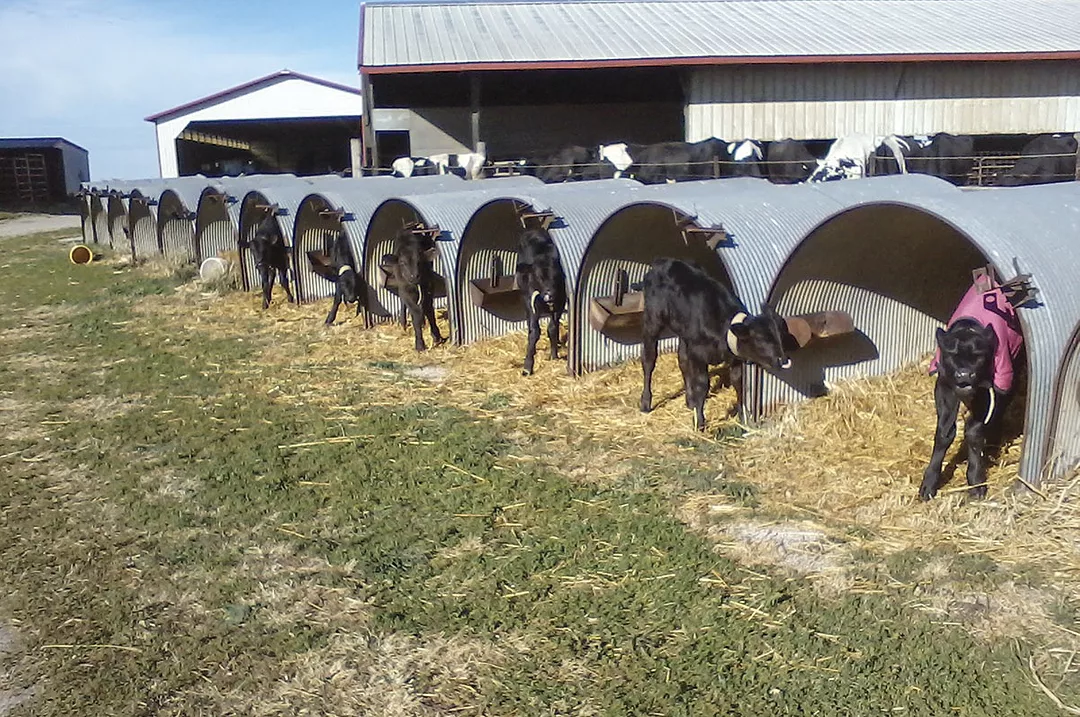
In central Wisconsin 50 years ago, the use of a beef bull in dairy herds was fairly common for some dairy producers to improve calving ease in heifers or settle a cow that would not conceive after a couple rounds of artificial insemination (A.I.) with a dairy bull. These resulting calves, like now, tended to bring a little better premium than a dairy calf at the sale barn and moved into the beef supply quite nicely, with the buyers of these calves coming back to buy more.

The interest today in making these calves is a bit more calculated with the availability of sexed semen and high feeder calf values. When fed aggressively, beef-on-dairy calves are hard to differentiate from native beef cattle by an untrained eye; however, these calves tend to be plagued with a fairly high incidence of liver abscesses, and this occurrence was the basis for our investigation.
Native beef calves tend to have a diet of milk and grass for the first four to six months of life. Dairy calves are typically weaned by 2 months old and provided with a grain-based starter that tends to have a pretty high concentration of sugar and starch, collectively referred to as nonstructural carbohydrates (NSC). With this thought in mind, Figure 1 provides an outline of our trial’s design. Here, two pelleted starters were used. One, a higher NSC starter (HS) with about 30% NSC, as is usually recommended in the industry today. The other pelleted starter contains about 17% NSC (LS). The post-weaning diets were either another pellet (pel) similar to this initial HS starter or a fairly energy- and protein-dense total mixed ration (TMR), with the calves from the initial starters being split and allocated to the subsequent pellet or the TMR. At approximately 5 months old through the rest of their lives, all calves were then fed the same diet. It should also be noted that these calves were moved/fed in a different location as they grew in a manner comparable to what often occurs in the industry. Thus, a birth to weaning location, a grower location and then a final finishing feedlot location with feedstuff unique to that location were built into the experimental design.

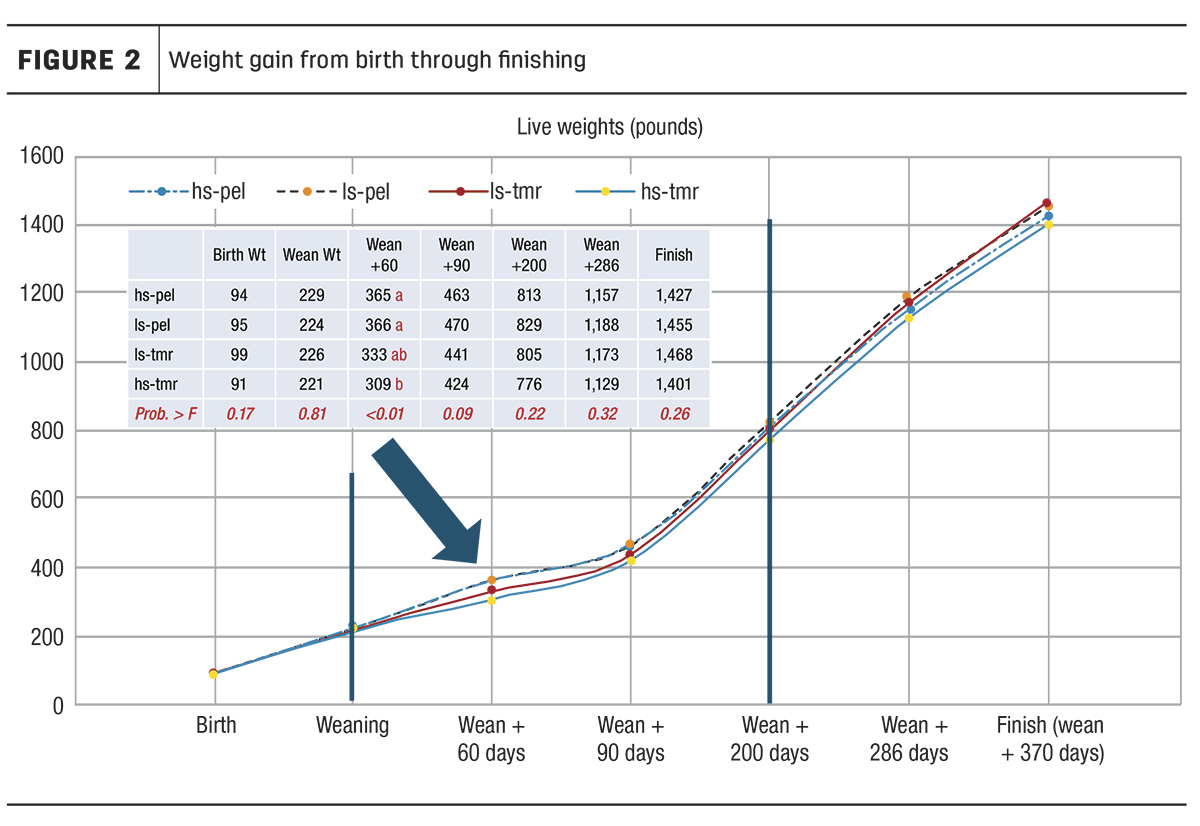
Figure 2 provides the resulting weight gain from birth through the final finishing weight of about 1,450 pounds. There are weight differences that would be considered significant 60 days post-weaning, with the group provided with the higher NSC starter (HS) and maintained on a similar NSC diet 60 days post-weaning being on top and the group that started on the HS diet and moved to the TMR on the bottom. Data such as this is probably the biggest driver for our current calf feeding recommendations since bodyweight gain tends to be the focus; however, the story is not finished 60 days post-weaning. Note as we move to the finish, the LS groups pass both HS groups. Also, consider that the LS-TMR group’s average daily gain (ADG) curve really does not show the drop between the last weigh periods, and it is plausible if these calves would have been fed longer – say to 1,600 pounds as many cattle in the Midwest are currently being fed – we may see some significance in final market weights. This, however, is speculation, so back to the trial.
Going through all the feedout data as we compare daily gain and feed conversion, there really is no significant difference between treatments at this 1,450-pound end point, although there became a small numeric trend that supported the LS-TMR treatment over the others. The same also held true with the carcass hanging weights, quality grade and yield grades. As we move into health data, and this probably has some bearing on the carcass and feedlot results, Figure 3 provides an illustration of health issues. The blue bars show total health issues (note that multiple health treatments contributed to a percentage greater than 100%) and the orange bars indicate the percent of animals in each treatment that needed attention. Here, the LS-pel group did the best while the HS-pel group struggled the most.

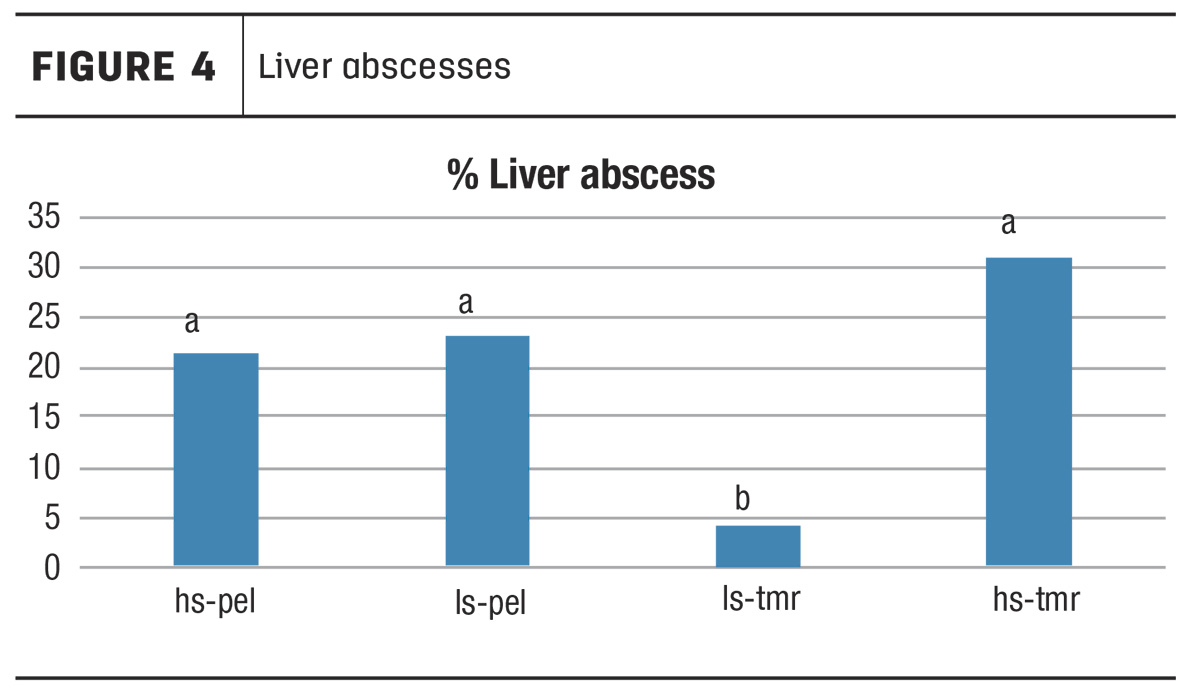
Going further in the health differences, Figure 4 provides the results of the treatment effect on creating liver abscesses. The LS-TMR treatment was significantly lower in abscess incidence than the other three treatments. The high incidence was surprising but not unheard of in commercial feeding of these crossbred calves. It was also interesting that 45% of the animals with abscesses in this study also had a rumen/gastrointestinal ulcer or lung condemnation at the packing plant.
Trials such as this provide a big-picture result of what might happen. For those who use a texturized starter versus a pelleted starter, health issues may not be as severe. Likewise, if calves are not moved multiple times in their lives with subsequent multiple feed ingredient changes, the fallout may also not be as severe. Going forward, we do know that the diet makes a difference, and it appears much of this difference occurs in the first months of life.
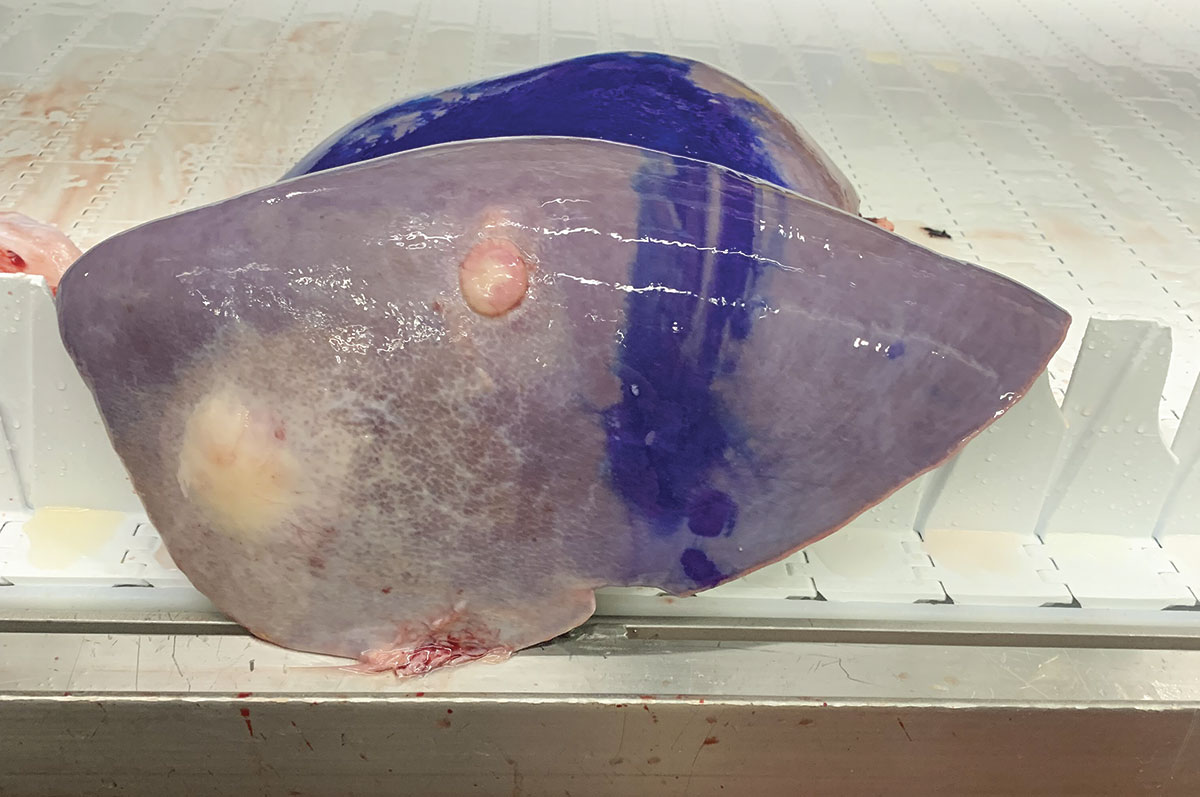
A condemned abscessed liver from the trial. Image by Garland Dahlke.